
Banded Whip-tail
Coelorinchus fasciatus
- Usual depth217–667 m
- Water temperature6–19 °C
- Best monthsFebruary
- How commonCommon
About this species
The banded whiptail is a species of rattail found with a circumpolar distribution in the Great Southern Ocean at depths of between 70 and 1,100 m. Its length is between 25 and 45 cm.
Text from the Wikipedia article “Banded whiptail”, licensed CC BY-SA 4.0. Read the article
Where and when
Where it has been recorded
Worldwide
Loading the map
Best months
Worldwide (open data)
- January: 1,294 records
- February: 9,763 records
- March: 713 records
- April: 731 records
- May: 1,749 records
- June: 503 records
- July: 1,377 records
- August: 303 records
- September: 1,643 records
- October: 2,109 records
- November: 2,592 records
- December: 397 records
Depth and water temperature
Depth
Mostly recorded at 217–667 m · Deepest record: 5,744.5 m
Water temperature
Recorded in surface water of 6–19 °C
Names and classification
- English
- Banded Whip-tail, Banded Whiptail, Rattail, Striped Whiptail
Other scientific names: Caelorinchus fasciatus, Coelorhynchus fasciatus, Coelorhynchus patagoniae, Garichthys fasciatus, Macrurus fasciatus
Similar species
- Bollons' rattail
Coelorinchus bollonsi
- Innotable Whiptail
Coelorinchus innotabilis
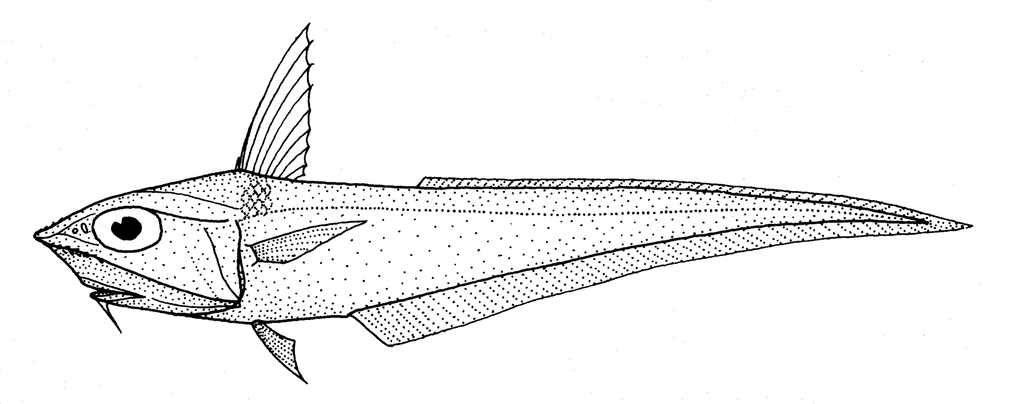 Gargoyle Fish
Coelorinchus mirus
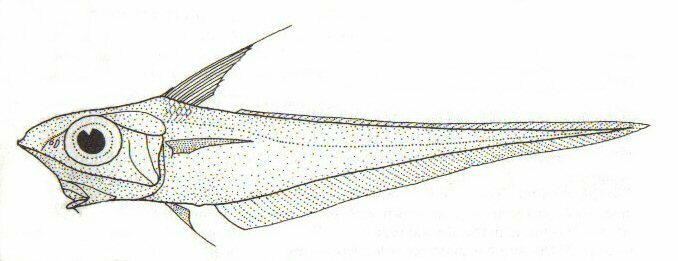 Hawknose grenadier
Coelorinchus oliverianus
- Spottyface Whiptail
Coelorinchus acanthiger
- Oblique banded rattail
Coelorinchus aspercephalus
Sources and credits
Names and taxonomy: WoRMS (CC BY 4.0) and the GBIF Backbone (CC BY 4.0). Photos: iNaturalist observers, each under the licence shown (CC0, CC BY or CC BY-SA).
- Depth, temperature, months and maps: records from OBIS and GBIF under CC0 or CC BY.
- Descriptions: Wikipedia, licensed CC BY-SA, each linked to its article.
- Conservation status as published by GBIF (IUCN Red List).
- 29,418 open-data records from 1876 to 2023.
- Species data updated November 1, 2026.
Log what you see on your next dive
The free DiveHive diver app keeps your logbook with every sighting and shows what lives at the site you dive next.