
Painted tree-oyster
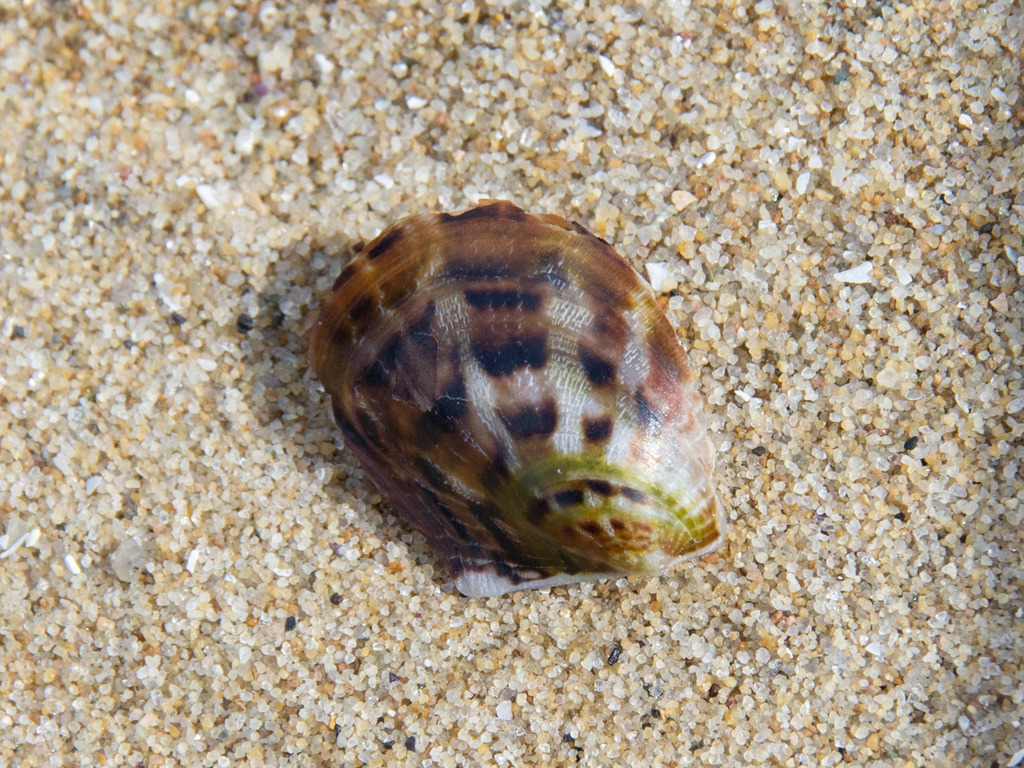
Crenatula picta
- Water temperature14–29 °C
- Best monthsJanuary, February, and September
- How commonRare
About this species
Crenatula picta is a species of marine bivalves in the family Pteriidae. The pteriomorph is known from Madagascar and the Red Sea.
Text from the Wikipedia article “Crenatula picta”, licensed CC BY-SA 4.0. Read the article
Where and when
Where it has been recorded
Worldwide
Loading the map
Best months
Worldwide (open data)
- January: 24 records
- February: 26 records
- March: 21 records
- April: 17 records
- May: 18 records
- June: 23 records
- July: 16 records
- August: 11 records
- September: 24 records
- October: 23 records
- November: 13 records
- December: 11 records
Depth and water temperature
Water temperature
Recorded in surface water of 14–29 °C
Names and classification
- English
- Painted tree-oyster, painted tree-oyster
Names in 1 more languages
- German
- Bunte Baummuschel
Other scientific names: Crenatula avicularis, Crenatula bicostalis, Crenatula crassidentata, Crenatula elegans, Crenatula flammea, Crenatula folium, Crenatula inflata, Crenatula lamarcki, Crenatula modiolaris, Crenatula mytiloides, Crenatula nakayamai, Crenatula nigrina, Crenatula pergaminea, Crenatula phasianoptera, Crenatula reeveana, Crenatula travisii, Crenatula viridis, Isogonum alaphasiani, Ostrea picta
Similar species
 common butterfly shell
Electroma papilionacea
- Raven's wing
Electroma alacorvi
Sources and credits
Names and taxonomy: WoRMS (CC BY 4.0) and the GBIF Backbone (CC BY 4.0). Photos: iNaturalist observers, each under the licence shown (CC0, CC BY or CC BY-SA).
- Depth, temperature, months and maps: records from OBIS and GBIF under CC0 or CC BY.
- Descriptions: Wikipedia, licensed CC BY-SA, each linked to its article.
- Conservation status as published by GBIF (IUCN Red List).
- 304 open-data records from 1903 to 2025.
- Species data updated November 1, 2026.
Log what you see on your next dive
The free DiveHive diver app keeps your logbook with every sighting and shows what lives at the site you dive next.