
Starry flying gurnard
Dactyloptena peterseni
- Usual depth64–214 m
- Water temperature16–29 °C
- Best monthsJune, October, and November
- How commonRare
About this species
Dactyloptena is a genus of flying gurnards native to the Indian and Pacific Oceans.
Text from the Wikipedia article “Dactyloptena”, licensed CC BY-SA 4.0. Read the article
Where and when
Where it has been recorded
Worldwide
Loading the map
Best months
Worldwide (open data)
- January: 9 records
- February: 2 records
- March: 2 records
- April: 11 records
- May: 7 records
- June: 22 records
- July: 10 records
- August: 15 records
- September: 16 records
- October: 18 records
- November: 17 records
- December: 8 records
Depth and water temperature
Depth
Mostly recorded at 64–214 m · Deepest record: 510 m
Water temperature
Recorded in surface water of 16–29 °C
Names and classification
- English
- Starry flying gurnard, One-spined Flying-gurnard, Onespine Flying Gurnard, starry flying gurnard, Starry Helmet Gurnard
Names in 3 more languages
- Japanese
- ホシセミホウボウ
- Korean
- 별쭉지성대
- Simplified Chinese
- 單棘豹魴鮄, 海胡蠅, 番雞公, 皮氏豹魴鮄, 皮氏飛角魚, 紅飛魚, 雞角, 飛角, 飛角魚
Other scientific names: Dactyloptena petersoni, Dactylopterus peterseni, Daicocus peterseni, Diacocus peterseni
Similar species
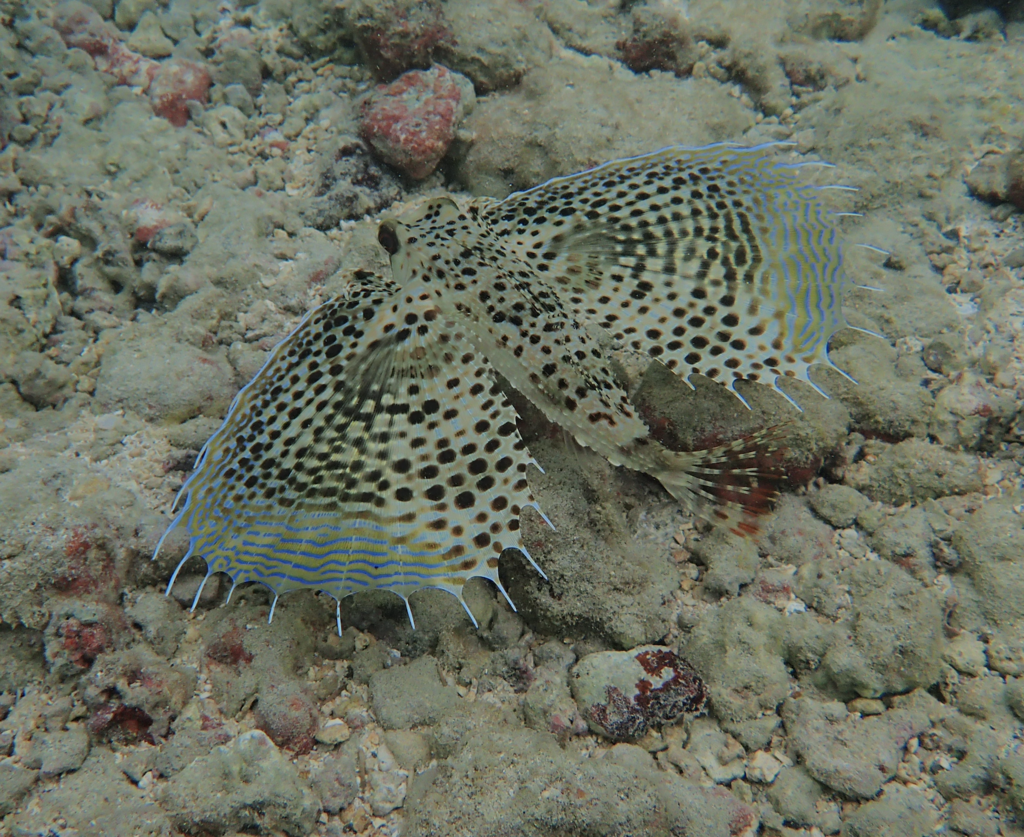 Oriental flying gurnard
Dactyloptena orientalis
- Butterfly Engloute
Dactyloptena papilio
- Flathead Helmet Gurnard
Dactyloptena gilberti
- Plain Helmet Gurnard
Dactyloptena tiltoni
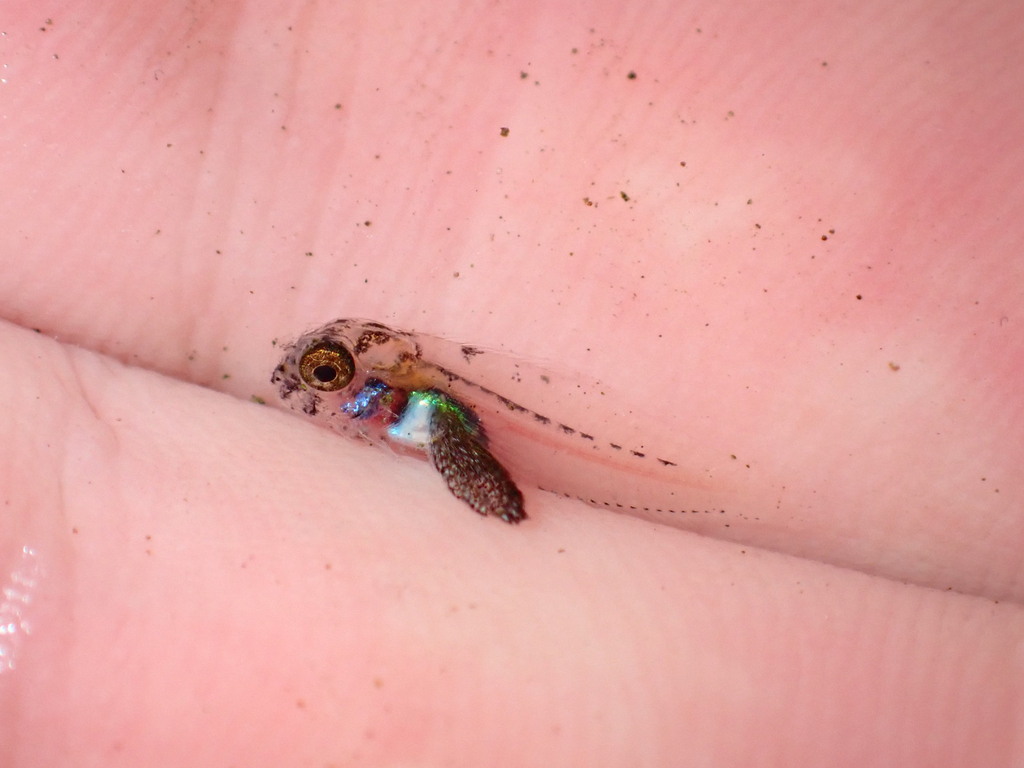 Flying gurnard
Dactylopterus volitans
Sources and credits
Names and taxonomy: WoRMS (CC BY 4.0) and the GBIF Backbone (CC BY 4.0). Photos: iNaturalist observers, each under the licence shown (CC0, CC BY or CC BY-SA).
- Depth, temperature, months and maps: records from OBIS and GBIF under CC0 or CC BY.
- Descriptions: Wikipedia, licensed CC BY-SA, each linked to its article.
- Conservation status as published by GBIF (IUCN Red List).
- 253 open-data records from 1887 to 2014.
- Species data updated November 2, 2026.
Log what you see on your next dive
The free DiveHive diver app keeps your logbook with every sighting and shows what lives at the site you dive next.