
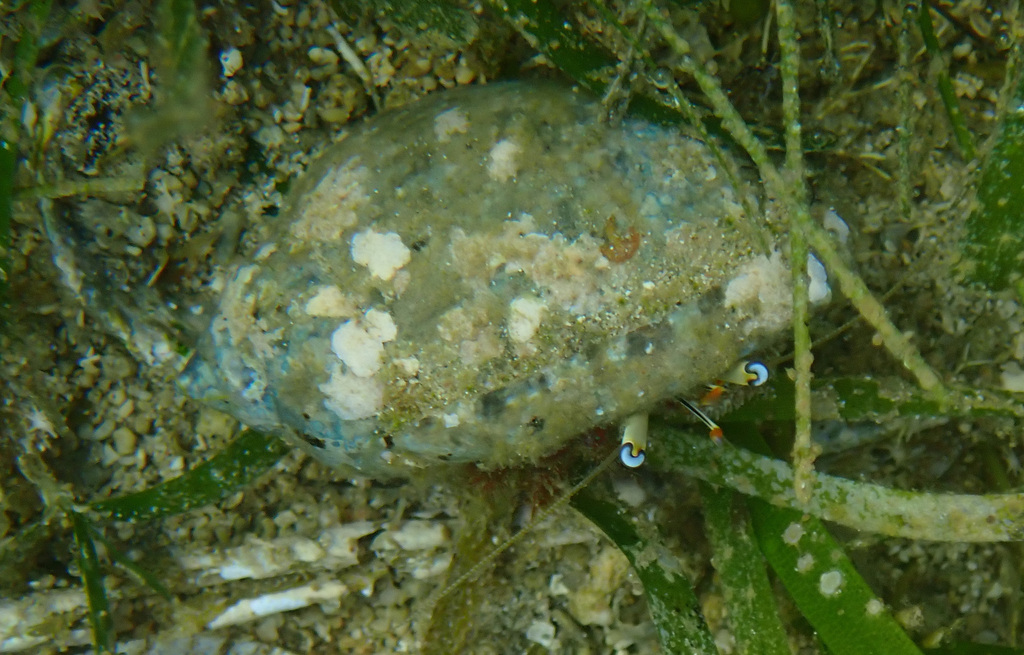
Blue-eyed Hermit Crab
Dardanus scutellatus
- Usual depth0–1 m
- Water temperature24–29 °C
- Best monthsMay and July
- How commonRare
Photo credit: (c) portioid, some rights reserved (CC BY), uploaded by portioid · CC BY · iNaturalist
Where and when
Where it has been recorded
Worldwide
Loading the map
Best months
Worldwide (open data)
- January: 35 records
- February: 18 records
- March: 33 records
- April: 33 records
- May: 40 records
- June: 24 records
- July: 61 records
- August: 33 records
- September: 30 records
- October: 29 records
- November: 24 records
- December: 24 records
Depth and water temperature
Depth
Mostly recorded at 0–1 m · Deepest record: 1 m
Water temperature
Recorded in surface water of 24–29 °C
Photos
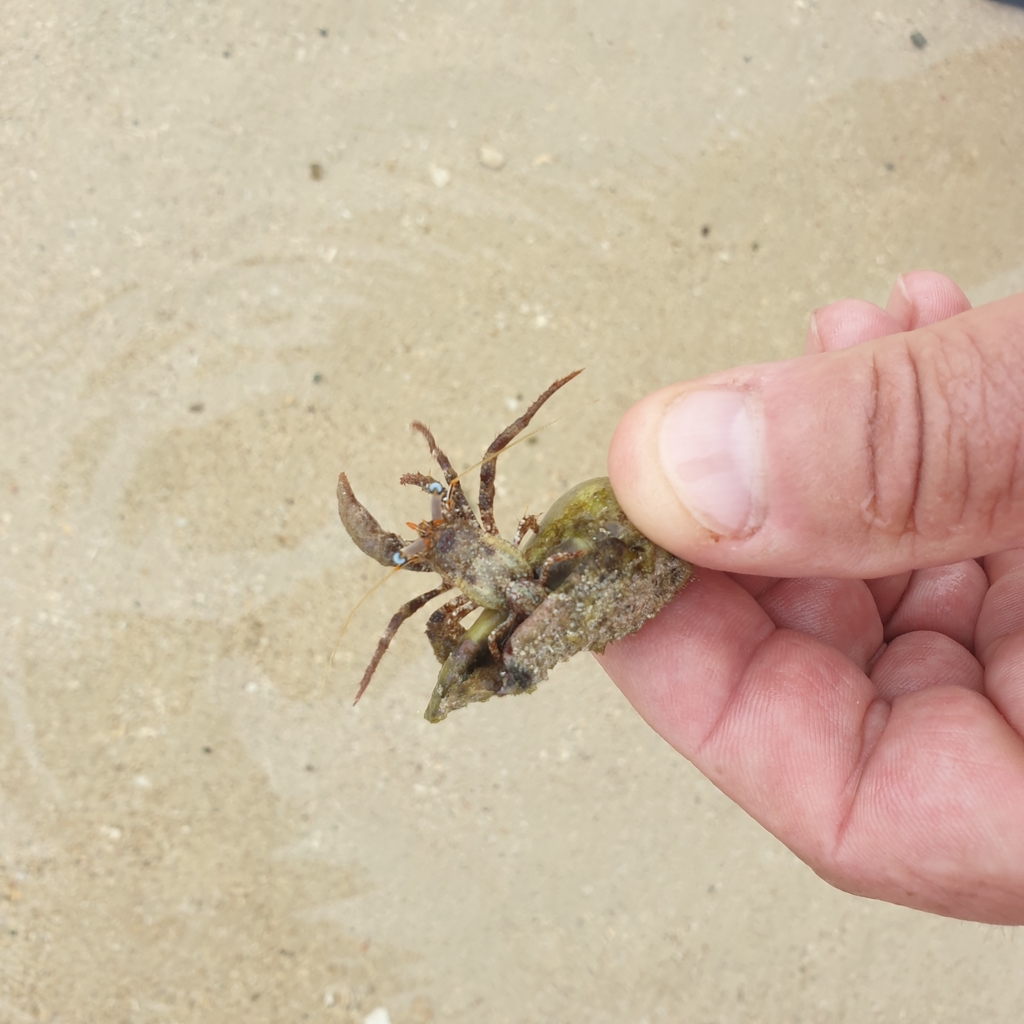
(c) Shelomi Doyle, some rights reserved (CC BY) · CC BY · iNaturalist 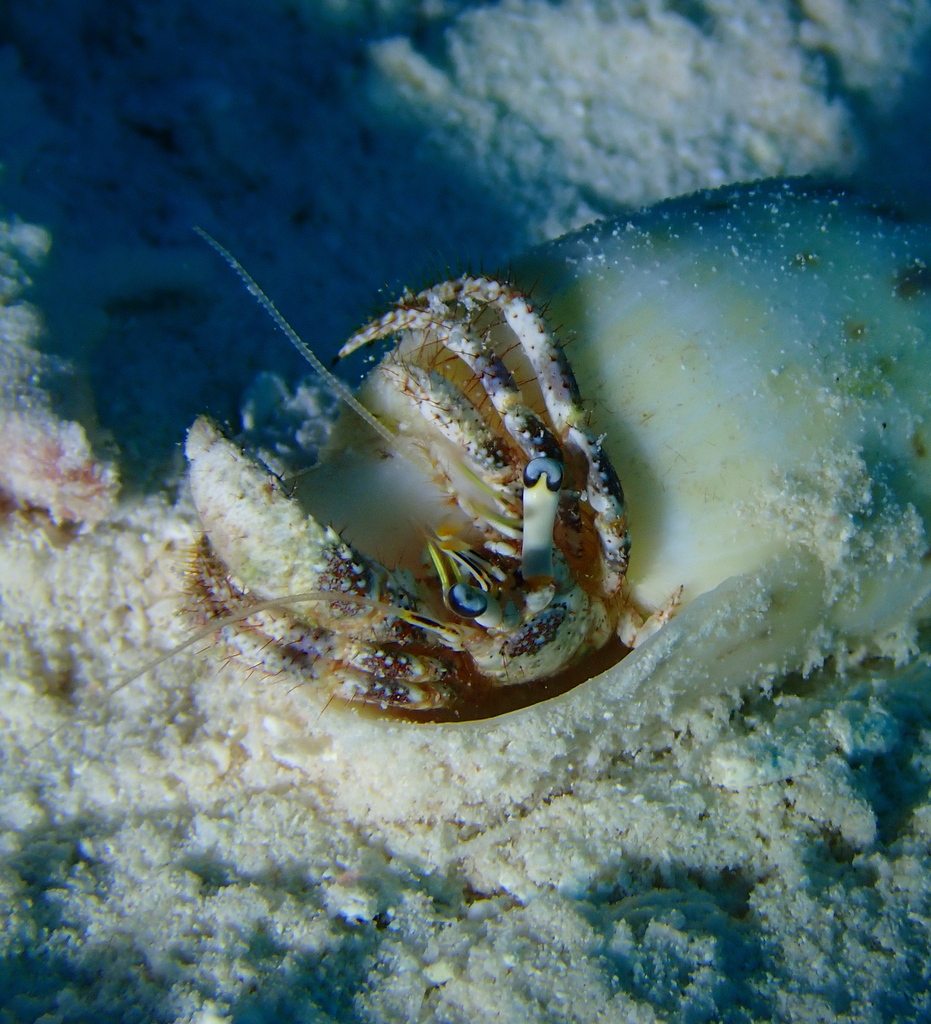
(c) Debra Baker, some rights reserved (CC BY) · CC BY · iNaturalist 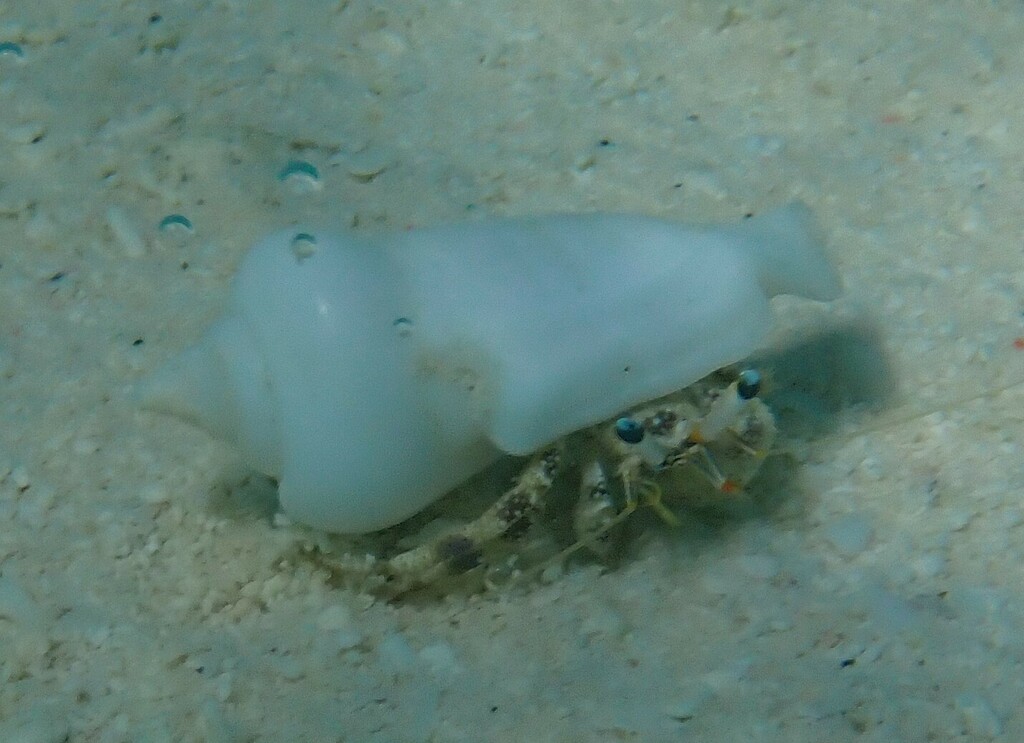
(c) Debra Baker, some rights reserved (CC BY) · CC BY · iNaturalist 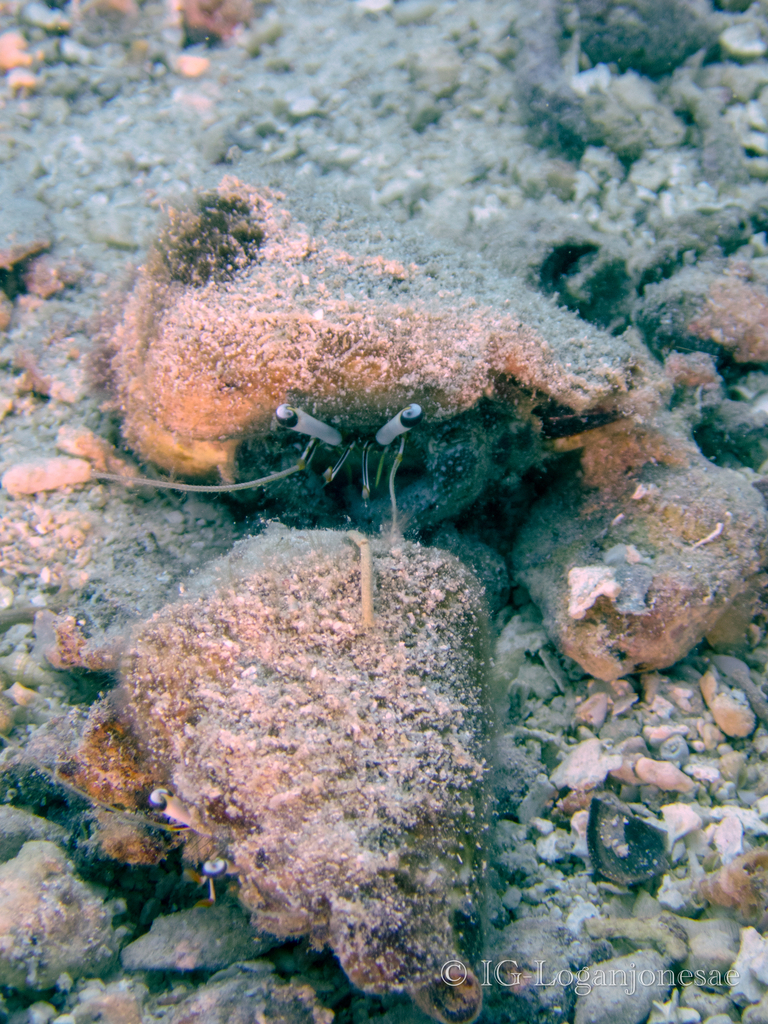
(c) Logan Jones, some rights reserved (CC BY) · CC BY · iNaturalist 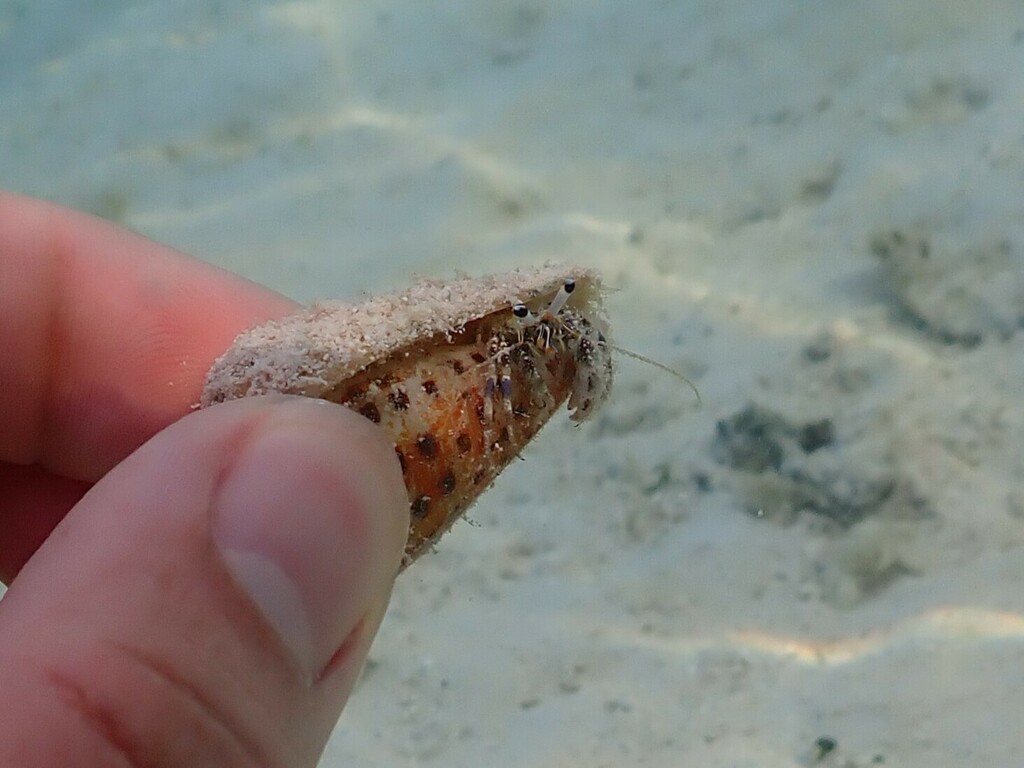
(c) Matt Muir, some rights reserved (CC BY) · CC BY · iNaturalist
Names and classification
- English
- Blue-eyed Hermit Crab
Names in 2 more languages
- French
- Pagure aux yeux bleus
- Japanese
- ヒラテヤドカリ
Other scientific names: Dardanus fabimanus, Pagurus fabimanus, Pagurus scabrimanus, Pagurus scutellatus
Similar species
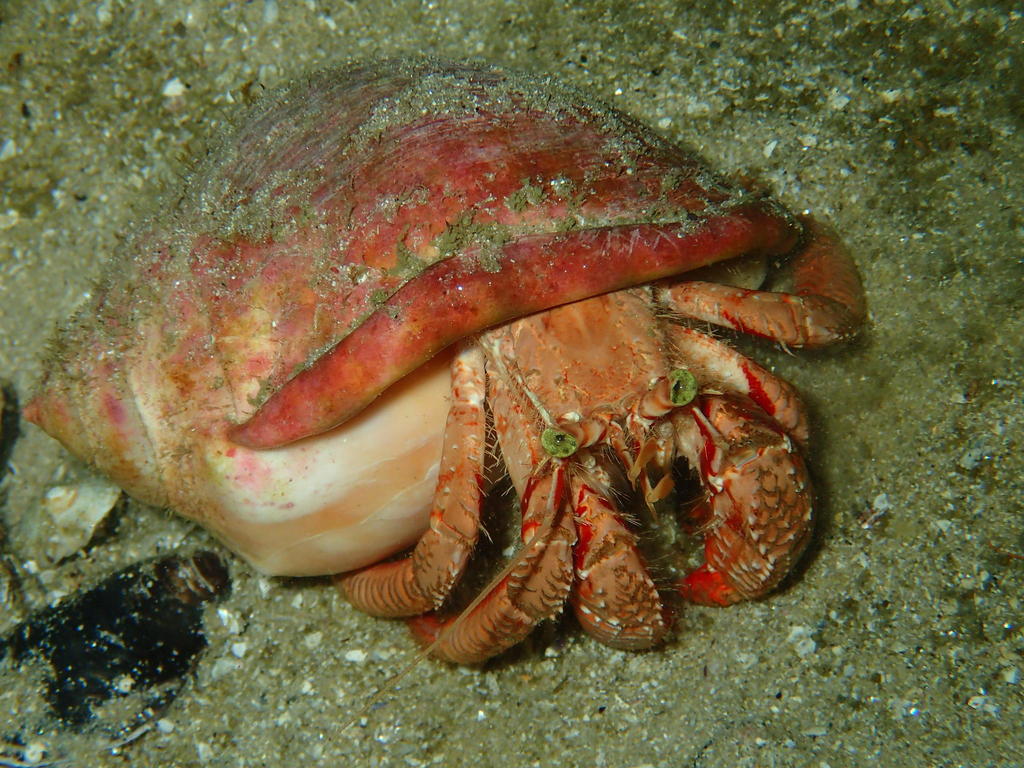 Striated hermit crab
Dardanus arrosor
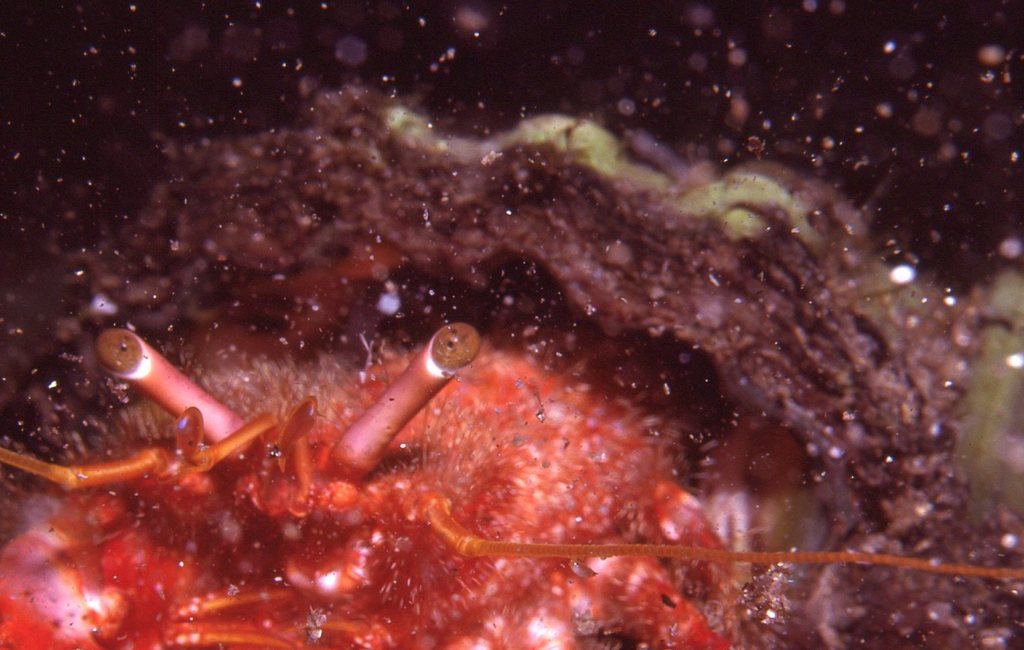 Mauve Eyed Hermit Crab
Dardanus crassimanus
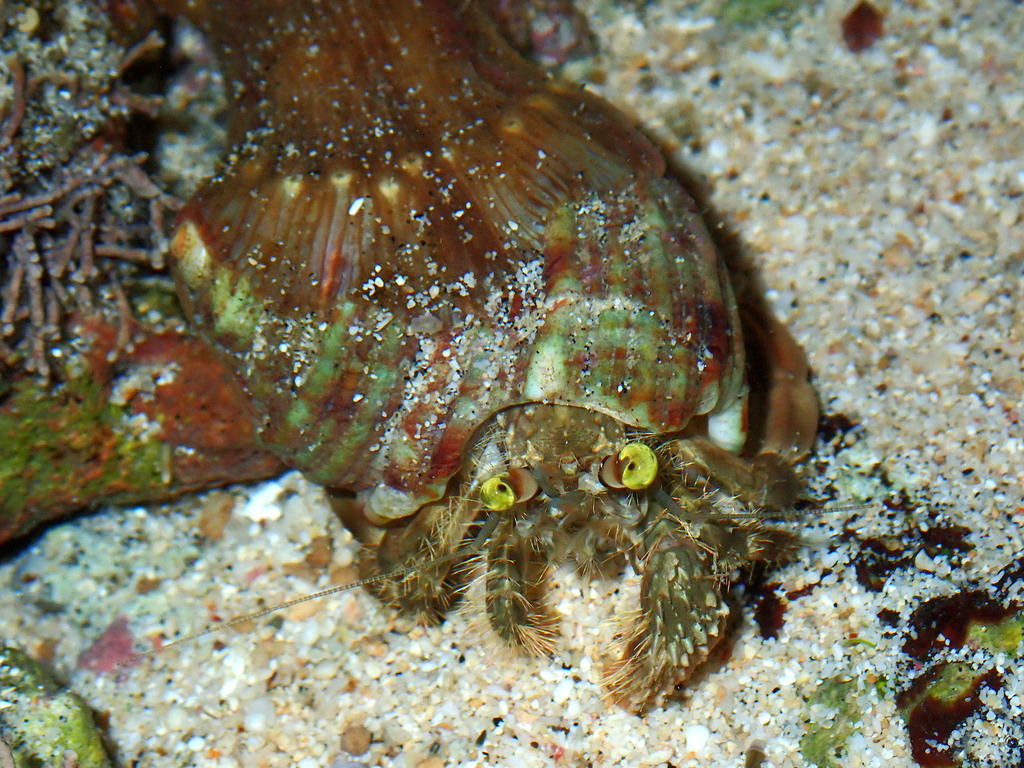 Pale anemone hermit
Dardanus deformis
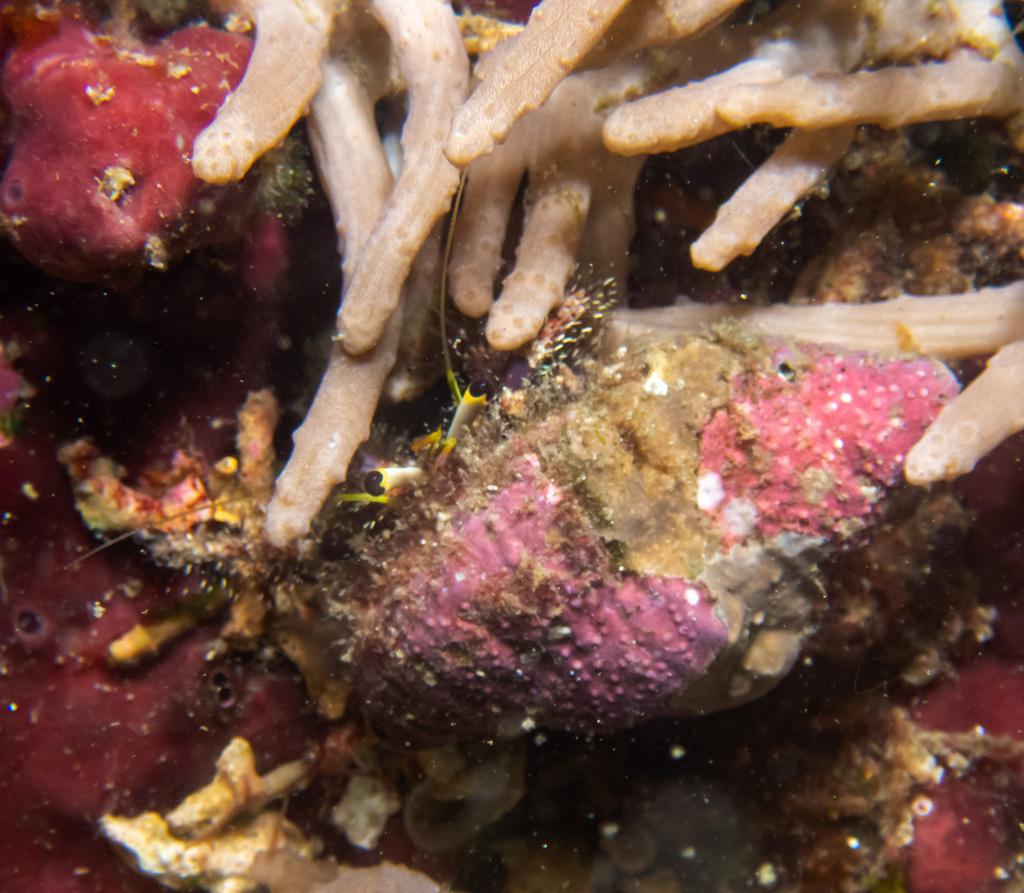 Black-eyed hermit crab
Dardanus lagopodes
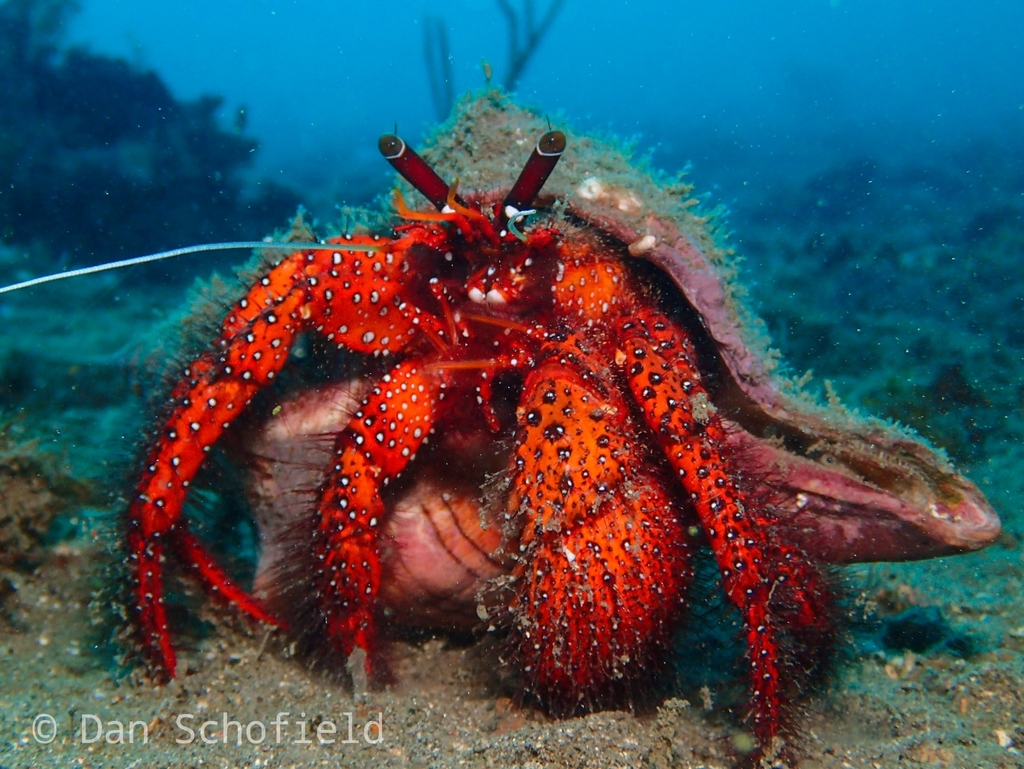 Spotted hermit crab
Dardanus megistos
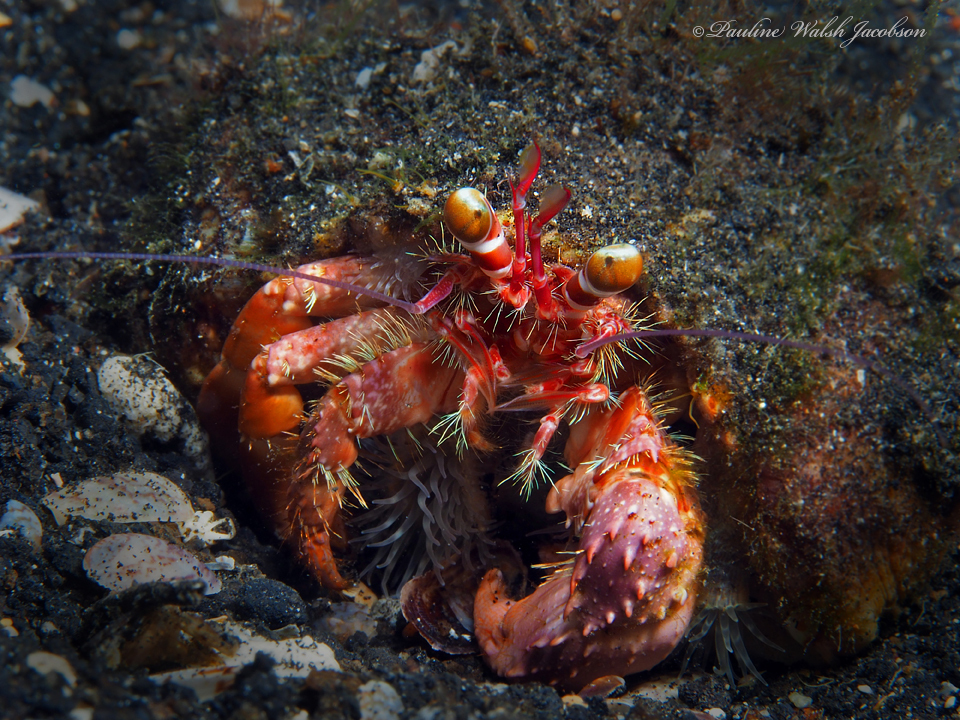 Anemone hermit crab
Dardanus pedunculatus
Sources and credits
Names and taxonomy: WoRMS (CC BY 4.0) and the GBIF Backbone (CC BY 4.0). Photos: iNaturalist observers, each under the licence shown (CC0, CC BY or CC BY-SA).
- Depth, temperature, months and maps: records from OBIS and GBIF under CC0 or CC BY.
- Conservation status as published by GBIF (IUCN Red List).
- 159 open-data records from 1848 to 2009.
- Species data updated November 2, 2026.
Log what you see on your next dive
The free DiveHive diver app keeps your logbook with every sighting and shows what lives at the site you dive next.