
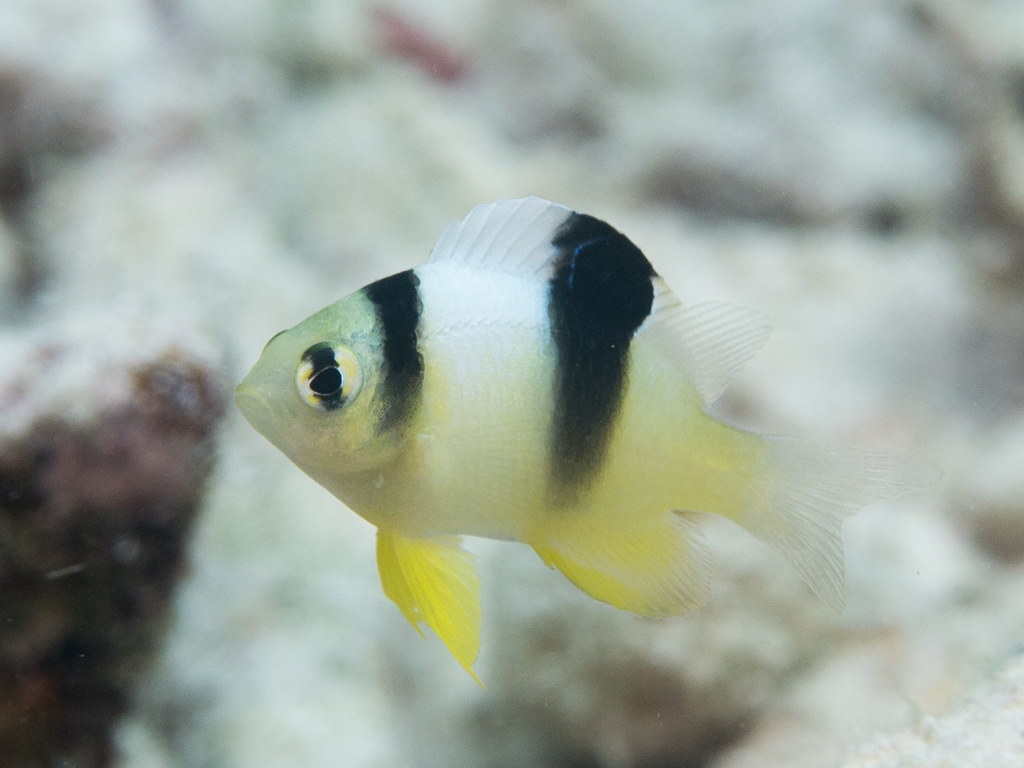
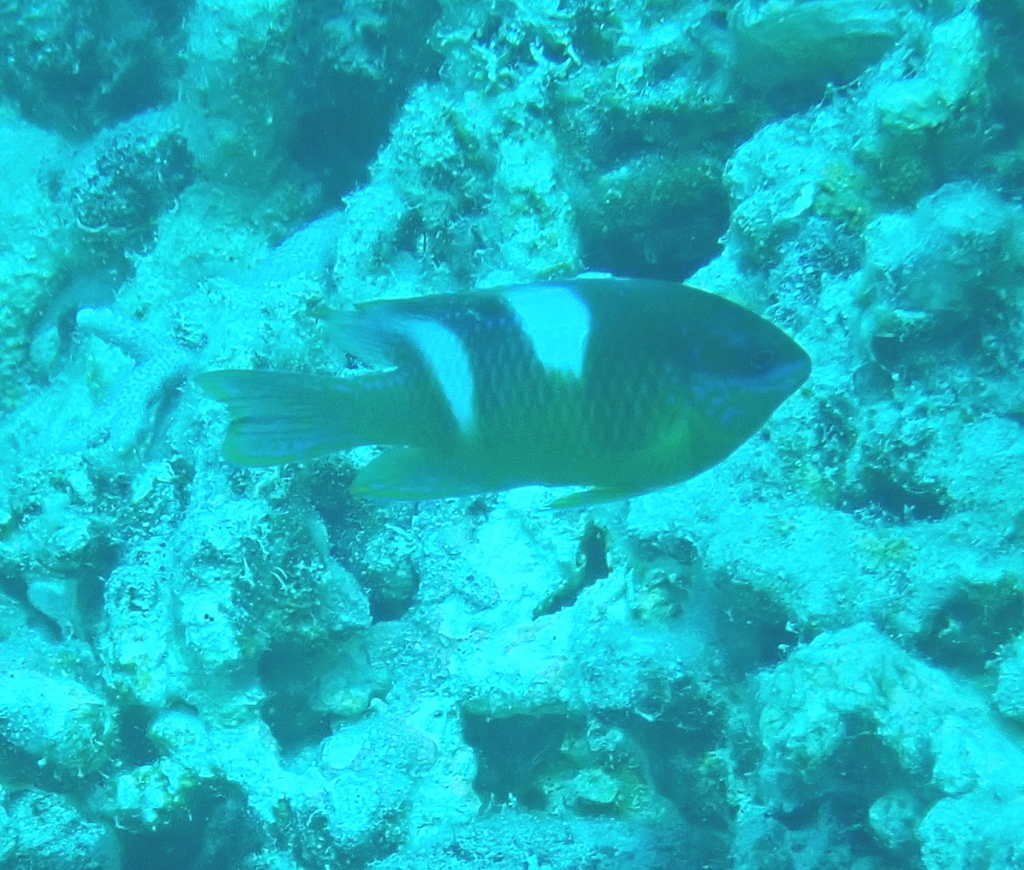
Two-barred Puller
Dischistodus perspicillatus
- Usual depth1–8 m
- Water temperature24–30 °C
- Best monthsSeptember, October, and November
- How commonOccasional
Photo credit: (c) Rickard Zerpe, some rights reserved (CC BY) · CC BY · iNaturalist
About this species
Dischistodus perspicillatus, commonly known as the white damsel, is a species of fish native to the Andaman Sea and eastern Indian Ocean.
Text from the Wikipedia article “Dischistodus perspicillatus”, licensed CC BY-SA 4.0. Read the article
Where and when
Where it has been recorded
Worldwide
Loading the map
Best months
Worldwide (open data)
- January: 82 records
- February: 92 records
- March: 90 records
- April: 86 records
- May: 60 records
- June: 55 records
- July: 89 records
- August: 78 records
- September: 109 records
- October: 102 records
- November: 116 records
- December: 94 records
Depth and water temperature
Depth
Mostly recorded at 1–8 m · Deepest record: 19 m
Water temperature
Recorded in surface water of 24–30 °C
Photos
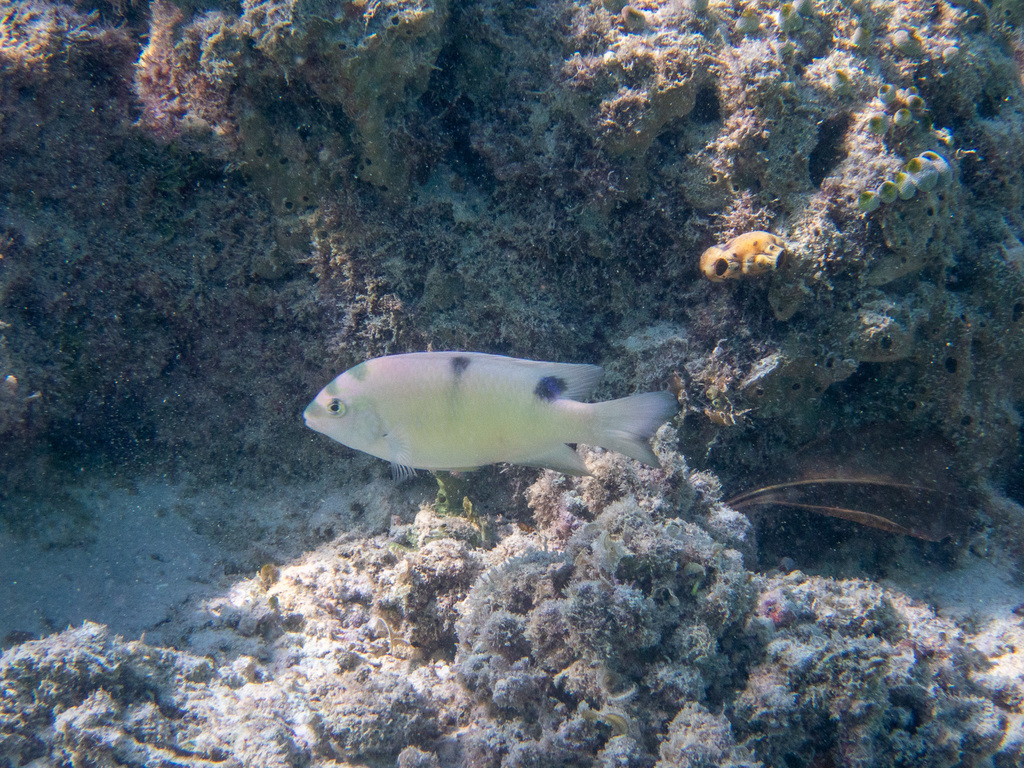
no rights reserved · CC0 1.0 · iNaturalist 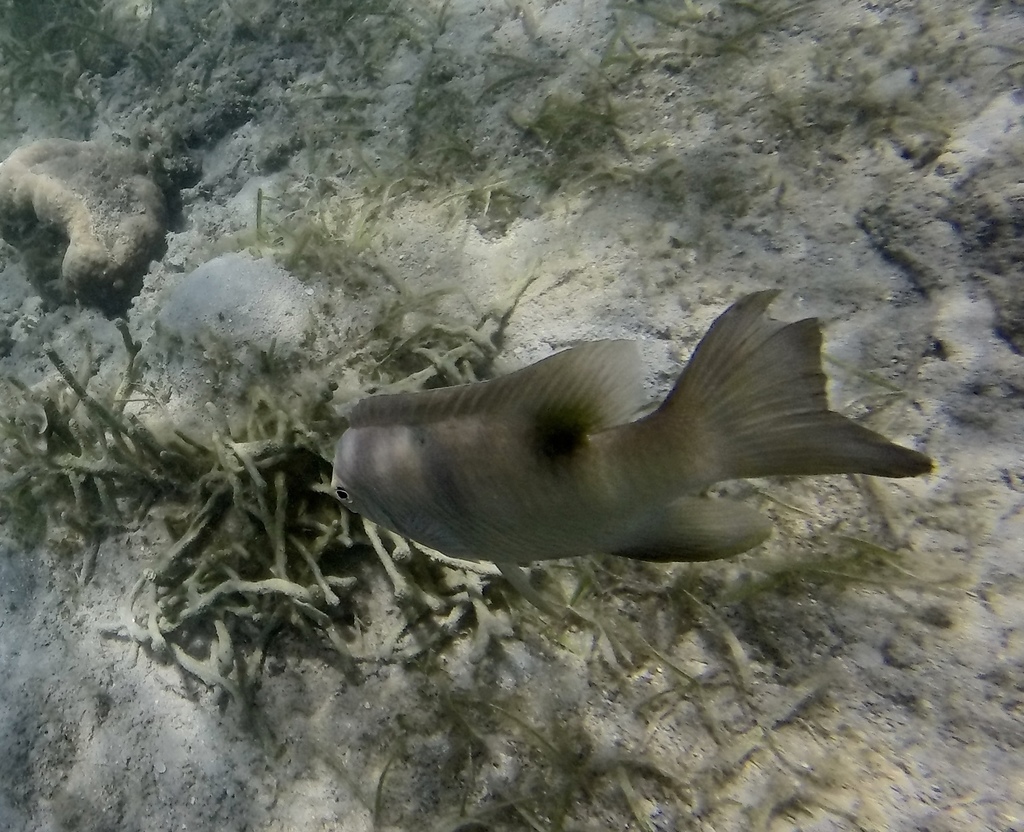
(c) Mike Bowie, some rights reserved (CC BY) · CC BY · iNaturalist 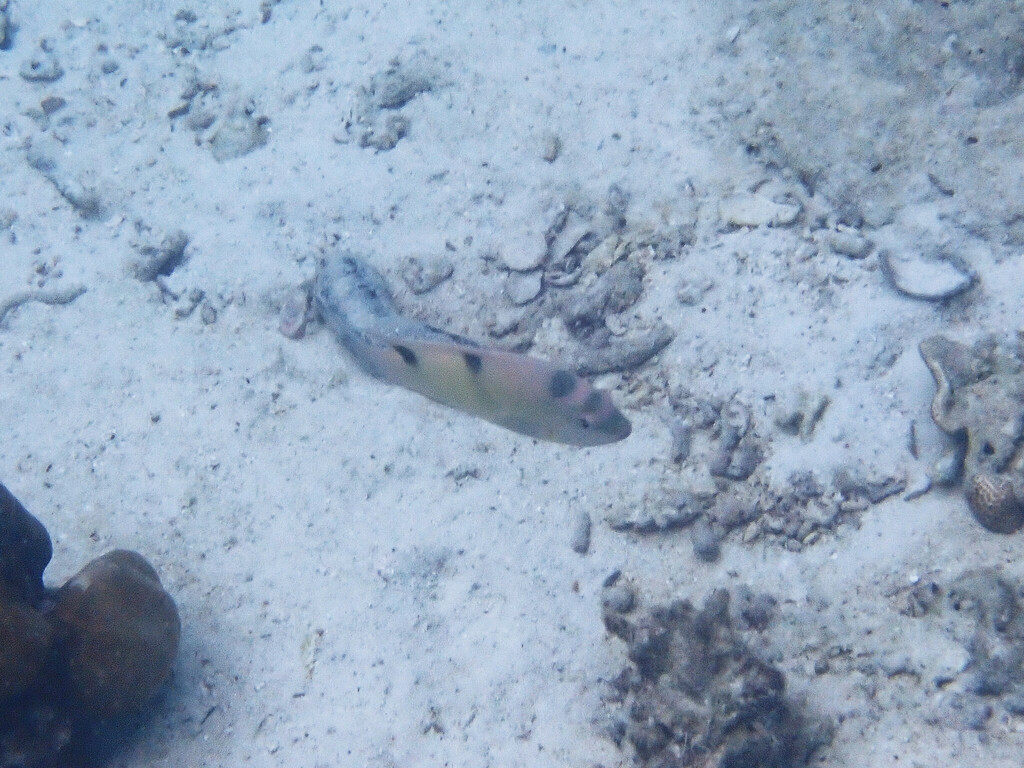
(c) Donald Davesne, some rights reserved (CC BY) · CC BY · iNaturalist 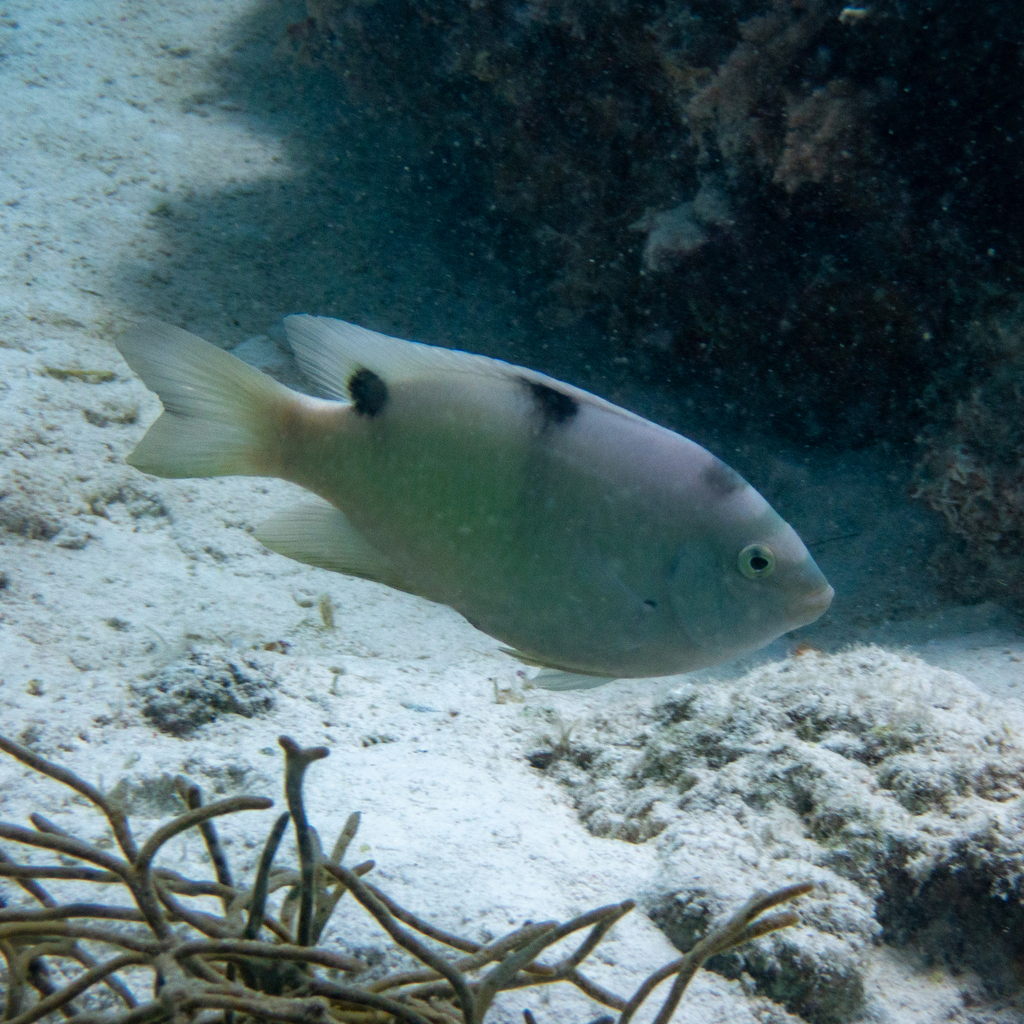
(c) Pierre Pericard, some rights reserved (CC BY) · CC BY · iNaturalist 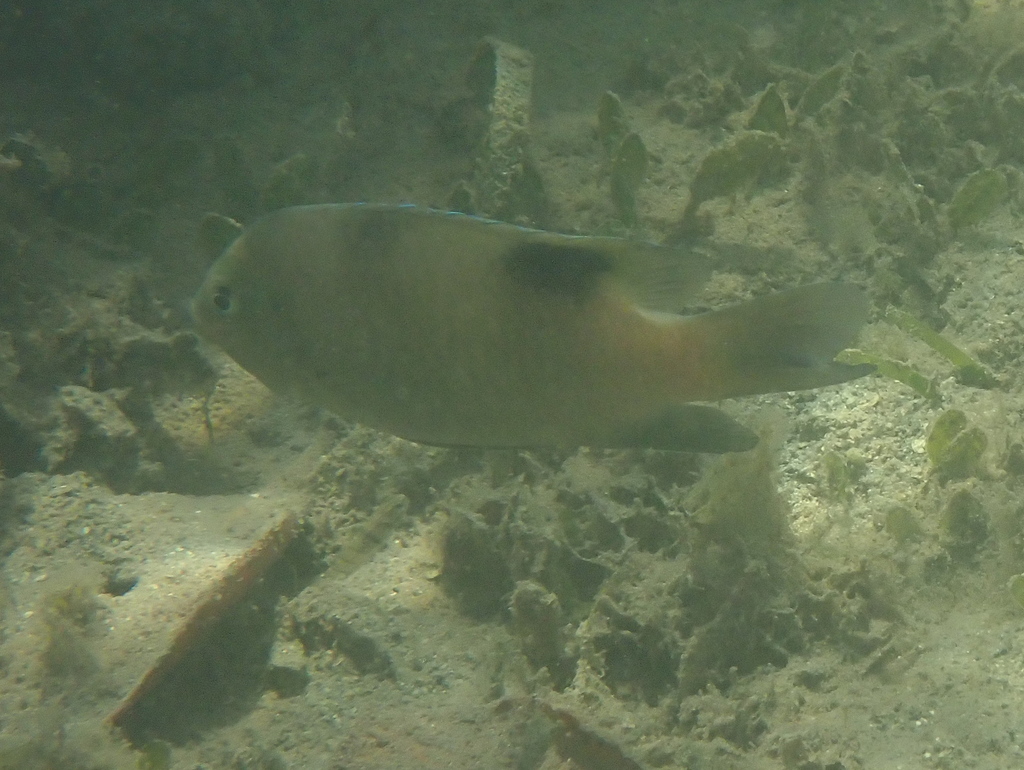
(c) Debra Baker, some rights reserved (CC BY) · CC BY · iNaturalist 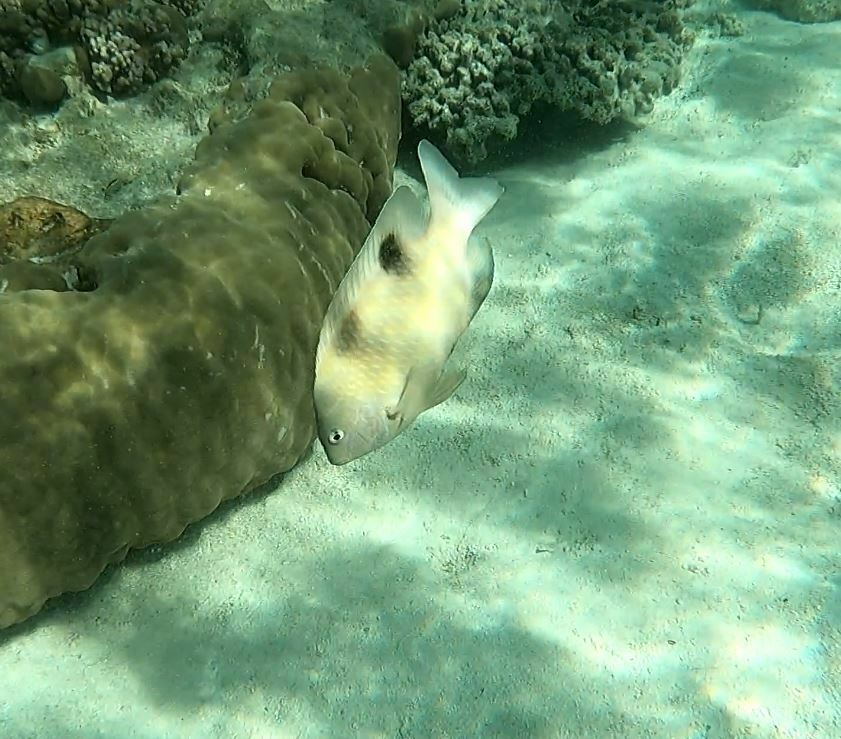
(c) Tim, some rights reserved (CC BY) · CC BY · iNaturalist 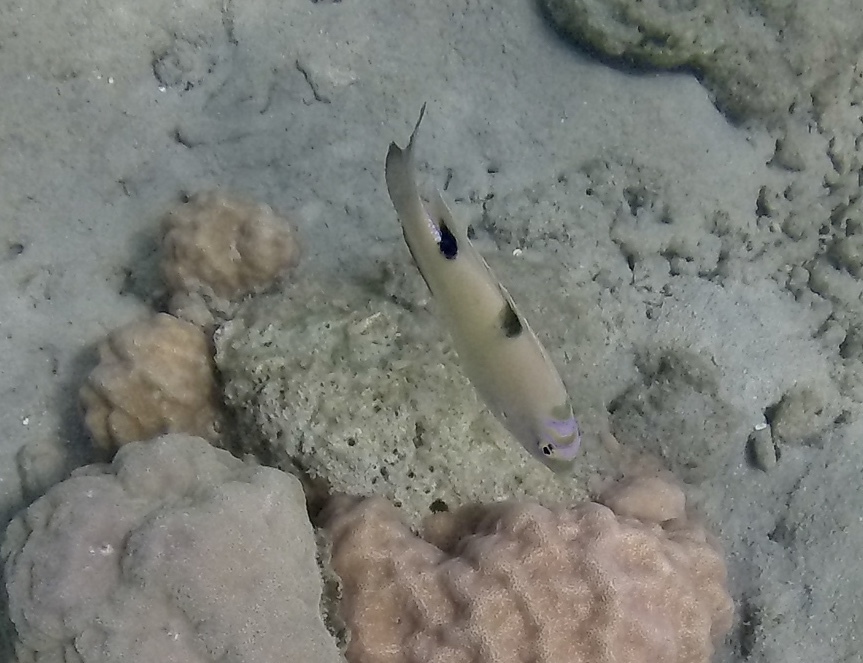
(c) Mike Bowie, some rights reserved (CC BY) · CC BY · iNaturalist
Names and classification
- English
- Two-barred Puller, White Damsel, White damselfish, White Demoiselle
Names in 5 more languages
- German
- Weisser Riffbarsch
- French
- Demoiselle blanche
- Japanese
- ミツボシクロスズメダイ
- Thai
- ปลาสลิดหินลายเสือ
- Simplified Chinese
- 显盘雀鲷
Other scientific names: Chromis humbug, Dischistodus trimaculatus, Pomacentrus bifasciatus, Pomacentrus dorsomaculatus, Pomacentrus frenatus, Pomacentrus perspicillatus, Pomacentrus trimaculatus
Similar species
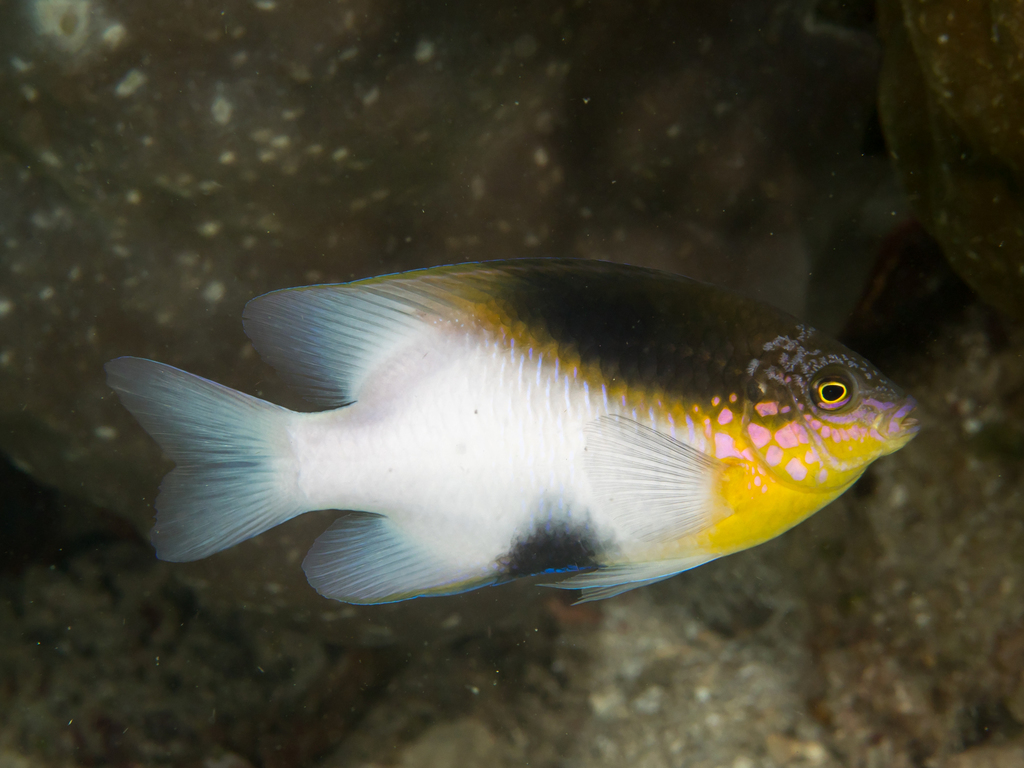 Black-vent damsel
Dischistodus melanotus
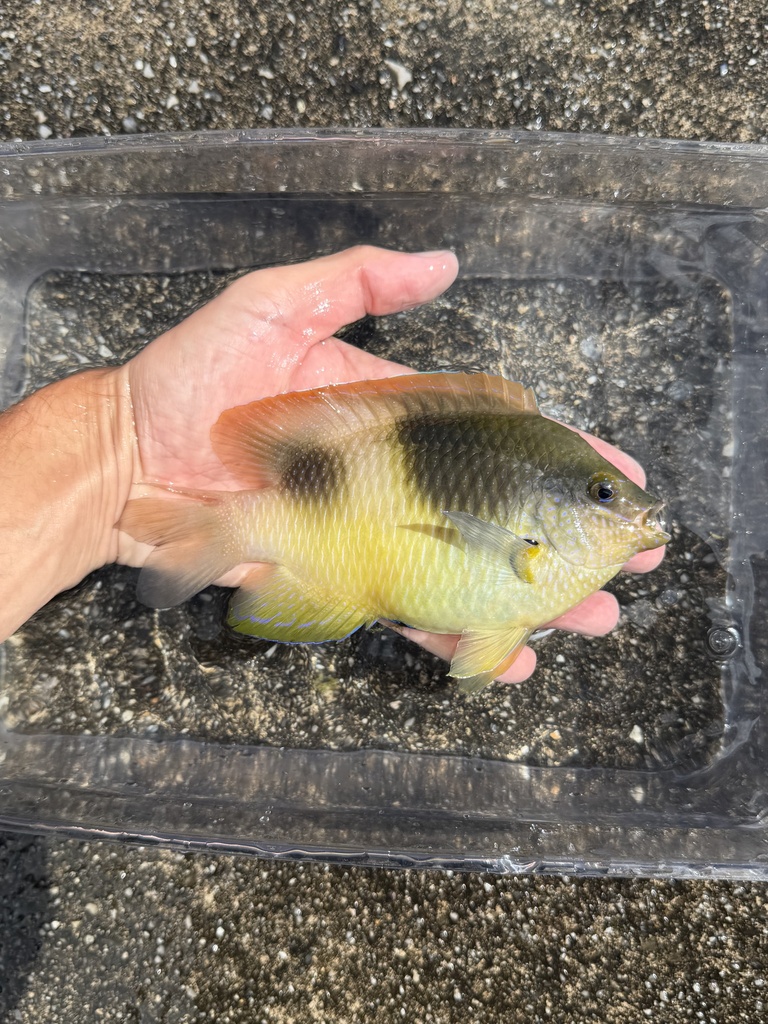 Honey-breast Damsel
Dischistodus prosopotaenia
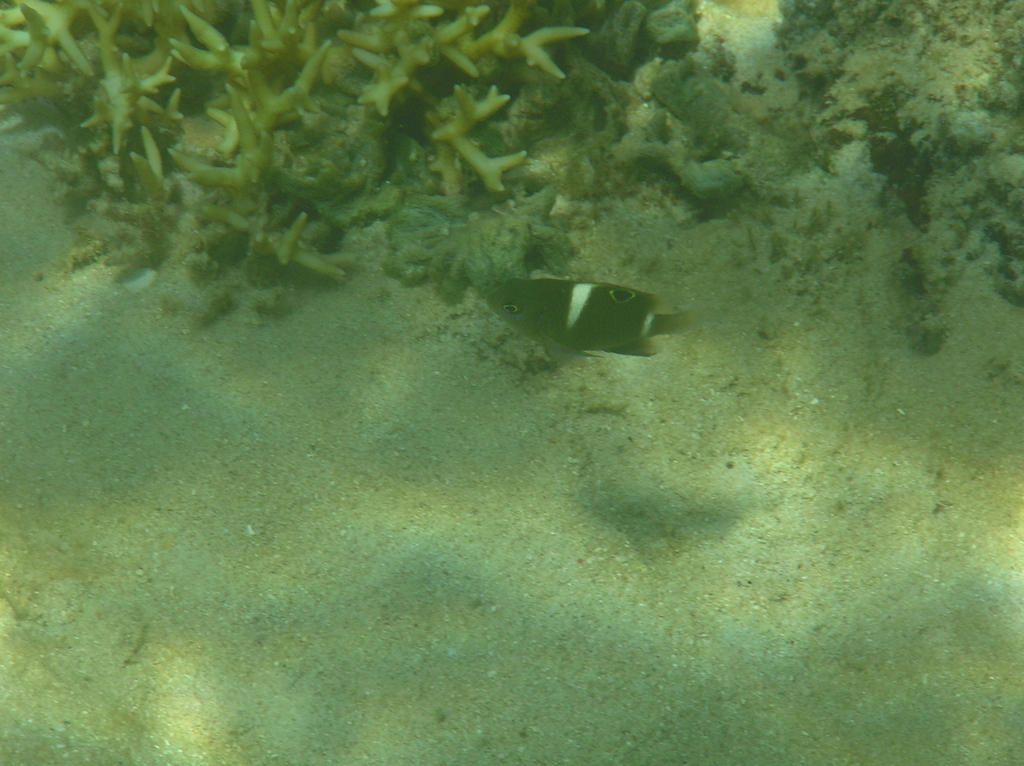 Pale-spot Damsel
Dischistodus chrysopoecilus
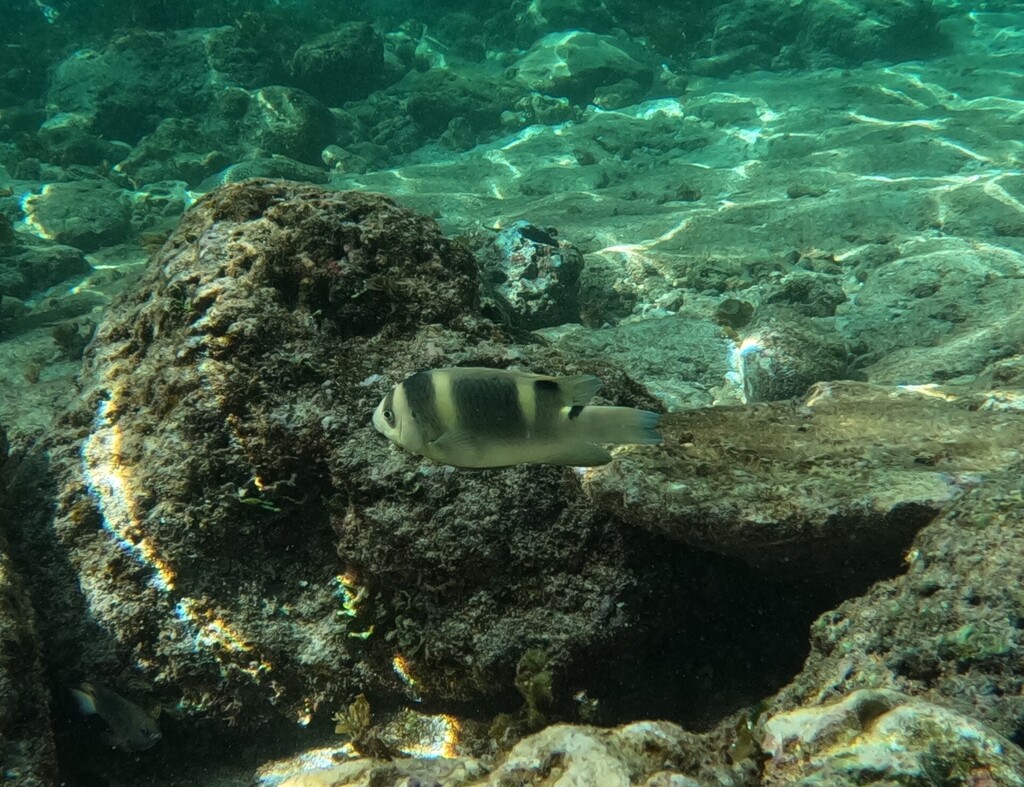 Banded Damsel
Dischistodus fasciatus
 Monarch Damsel
Dischistodus pseudochrysopoecilus
 Cow pilot
Abudefduf saxatilis
Sources and credits
Names and taxonomy: WoRMS (CC BY 4.0) and the GBIF Backbone (CC BY 4.0). Photos: iNaturalist observers, each under the licence shown (CC0, CC BY or CC BY-SA).
- Depth, temperature, months and maps: records from OBIS and GBIF under CC0 or CC BY.
- Descriptions: Wikipedia, licensed CC BY-SA, each linked to its article.
- Conservation status as published by GBIF (IUCN Red List).
- 701 open-data records from 1829 to 2023.
- Species data updated October 26, 2026.
Log what you see on your next dive
The free DiveHive diver app keeps your logbook with every sighting and shows what lives at the site you dive next.