
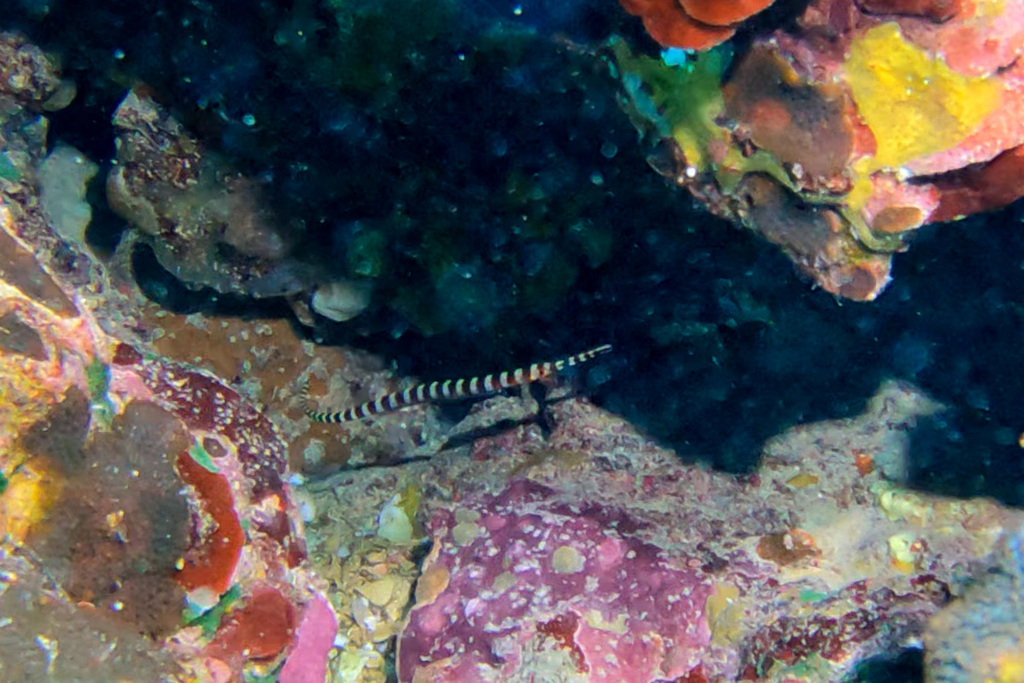
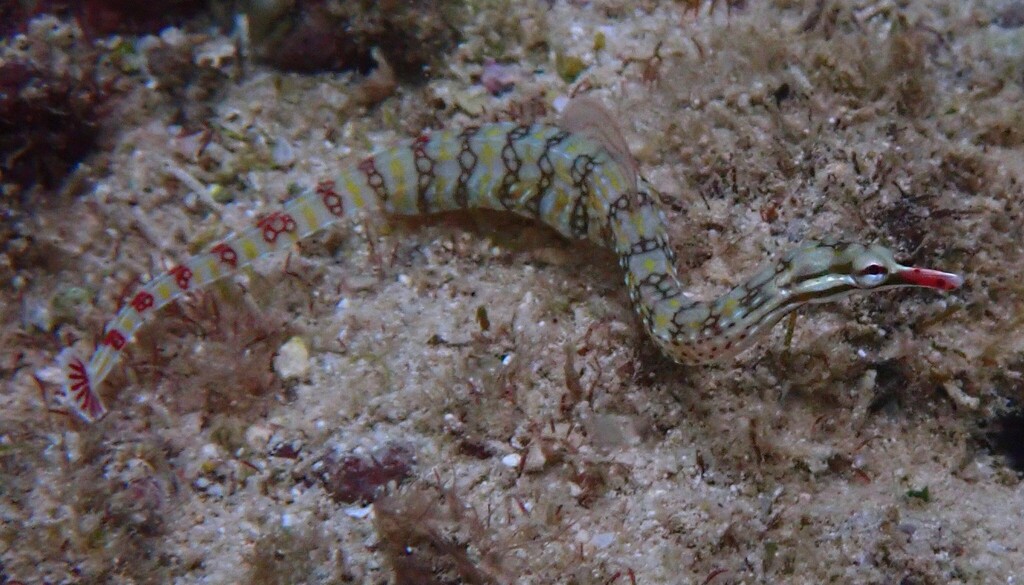
Broad-banded Pipefish
Dunckerocampus boylei
- Usual depth27–58 m
- Water temperature24–26 °C
- Best monthsApril
- How commonRare
Photo credit: (c) Tom Heijnen, some rights reserved (CC BY) · CC BY · iNaturalist
About this species
Dunckerocampus boylei is a species of marine fish of the family Syngnathidae. It is found in the Red Sea, Mauritius, and Indonesia, but it is thought to be widespread throughout the Indian Ocean. It lives in coastal caves and crevices at depths of 20–40 metres (66–131 ft), where it can grow to lengths of 16 centimetres (6.3 in). It feeds on small crustaceans that grow on other fish species. This species is ovoviviparous, with males carrying eggs and giving birth to live young. The specific name honours Bill Boyle, an underwater fish photographer who drew the attention of Kuiter to the species.
Text from the Wikipedia article “Dunckerocampus boylei”, licensed CC BY-SA 4.0. Read the article
Where and when
Where it has been recorded
Worldwide
Loading the map
Best months
Worldwide (open data)
- January: 1 records
- February: 2 records
- March: 1 records
- April: 6 records
- May: 2 records
- June: 2 records
- July: 1 records
- August: 2 records
- September: 0 records
- October: 2 records
- November: 1 records
- December: 1 records
Depth and water temperature
Depth
Mostly recorded at 27–58 m · Deepest record: 57.5 m
Water temperature
Recorded in surface water of 24–26 °C
Names and classification
- English
- Broad-banded Pipefish
Names in 2 more languages
- German
- Breitband-Seenadel
- French
- Syngnathe à larges bandes
Similar species
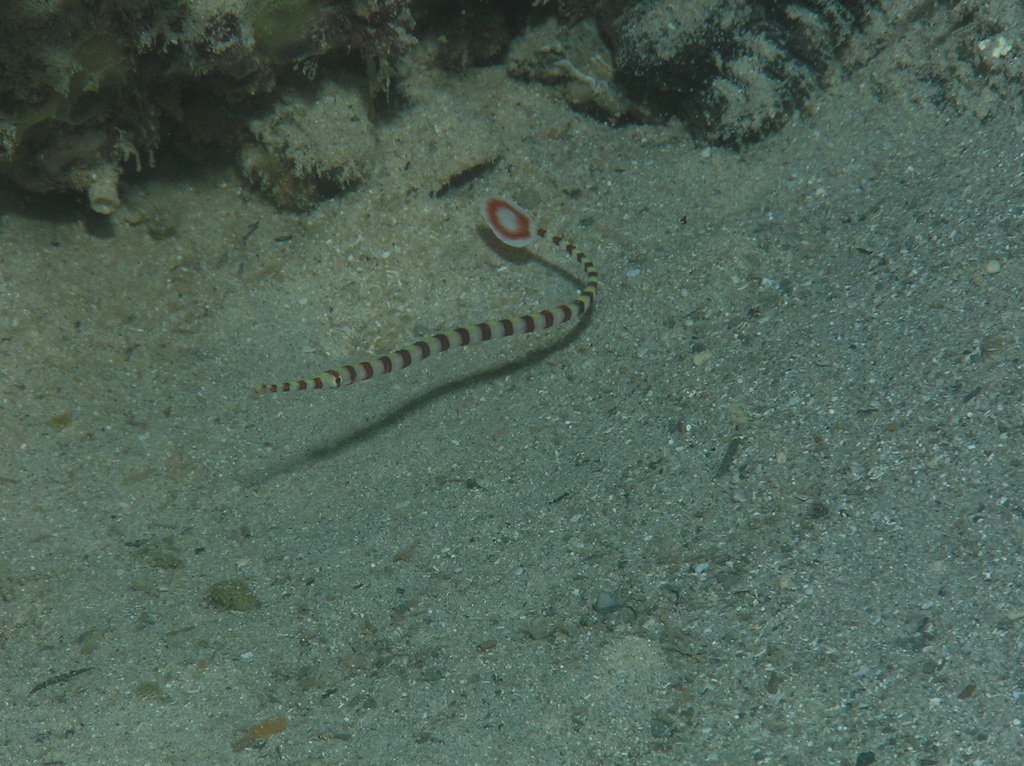 Banded Pipefish
Dunckerocampus dactyliophorus
 Baldwin's Pipefish
Dunckerocampus baldwini
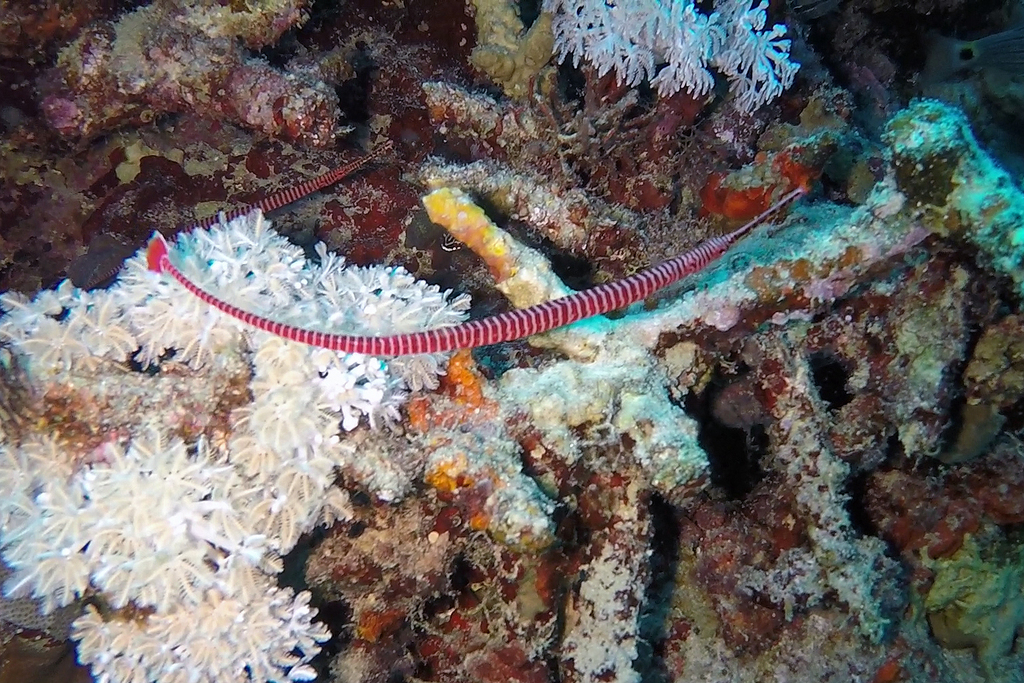 Multibar pipefish
Dunckerocampus multiannulatus
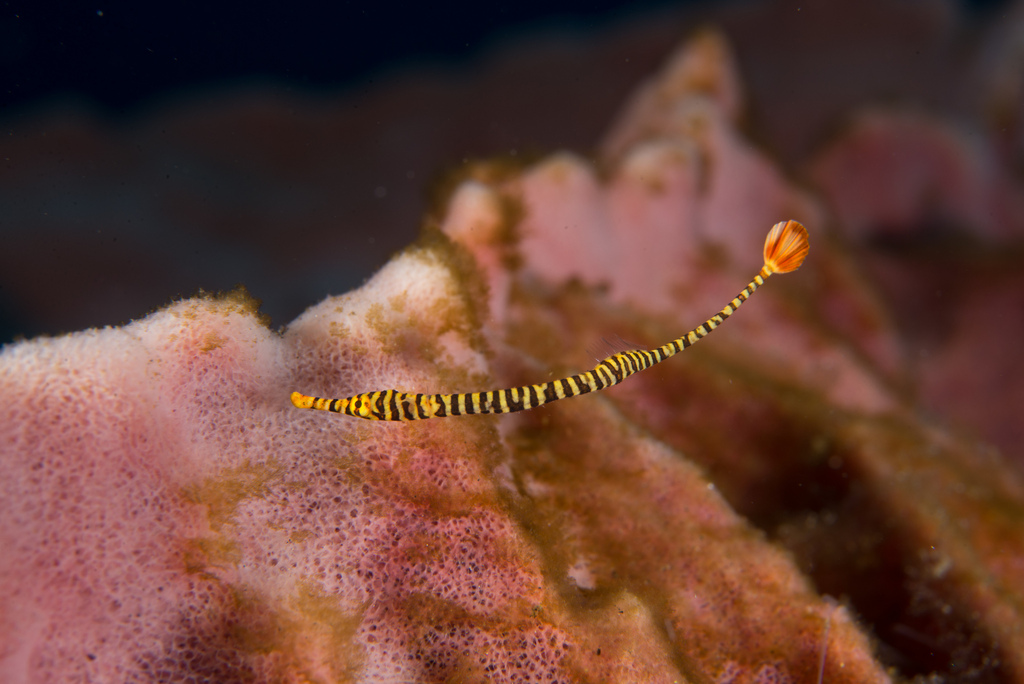 Orange-banded Pipefish
Dunckerocampus pessuliferus
- banded pipefish
Dunckerocampus chapmani
 Banded Pipefish
Corythoichthys flavofasciatus
Sources and credits
Names and taxonomy: WoRMS (CC BY 4.0) and the GBIF Backbone (CC BY 4.0). Photos: iNaturalist observers, each under the licence shown (CC0, CC BY or CC BY-SA).
- Depth, temperature, months and maps: records from OBIS and GBIF under CC0 or CC BY.
- Descriptions: Wikipedia, licensed CC BY-SA, each linked to its article.
- Conservation status as published by GBIF (IUCN Red List).
- 10 open-data records from 1979 to 2007.
- Species data updated November 2, 2026.
Log what you see on your next dive
The free DiveHive diver app keeps your logbook with every sighting and shows what lives at the site you dive next.