
Finned Snake Eel
Echelus uropterus
- Usual depth106–370 m
- Water temperature19–30 °C
- Best monthsMarch, October, and November
- How commonRare
About this species
The Finned worm eel is an eel in the family Ophichthidae. It was described by Coenraad Jacob Temminck and Hermann Schlegel in 1846. It is a marine, tropical eel which is known from the Indo-Pacific, including East Africa, the Society Islands, and southern Japan. It is known to dwell in reefs. It is the only worm eel in its region which possesses pectoral fins. Males can reach a maximum total length of 60 centimetres.
Text from the Wikipedia article “Finned worm eel”, licensed CC BY-SA 4.0. Read the article
Where and when
Where it has been recorded
Worldwide
Loading the map
Best months
Worldwide (open data)
- January: 1 records
- February: 2 records
- March: 6 records
- April: 6 records
- May: 2 records
- June: 1 records
- July: 4 records
- August: 2 records
- September: 2 records
- October: 9 records
- November: 7 records
- December: 1 records
Depth and water temperature
Depth
Mostly recorded at 106–370 m · Deepest record: 377.5 m
Water temperature
Recorded in surface water of 19–30 °C
Names and classification
- English
- Finned Snake Eel, Finned Worm Eel
Names in 3 more languages
- Japanese
- Hireanago, ヒレアナゴ
- Korean
- 날붕장어
- Simplified Chinese
- 小尾鰭蠕鰻, 硬骨仔, 硬骨篡, 篡仔, 蠕鰻, 鰻仔
Other scientific names: Conger uropterus, Myrophis uropterus
Similar species
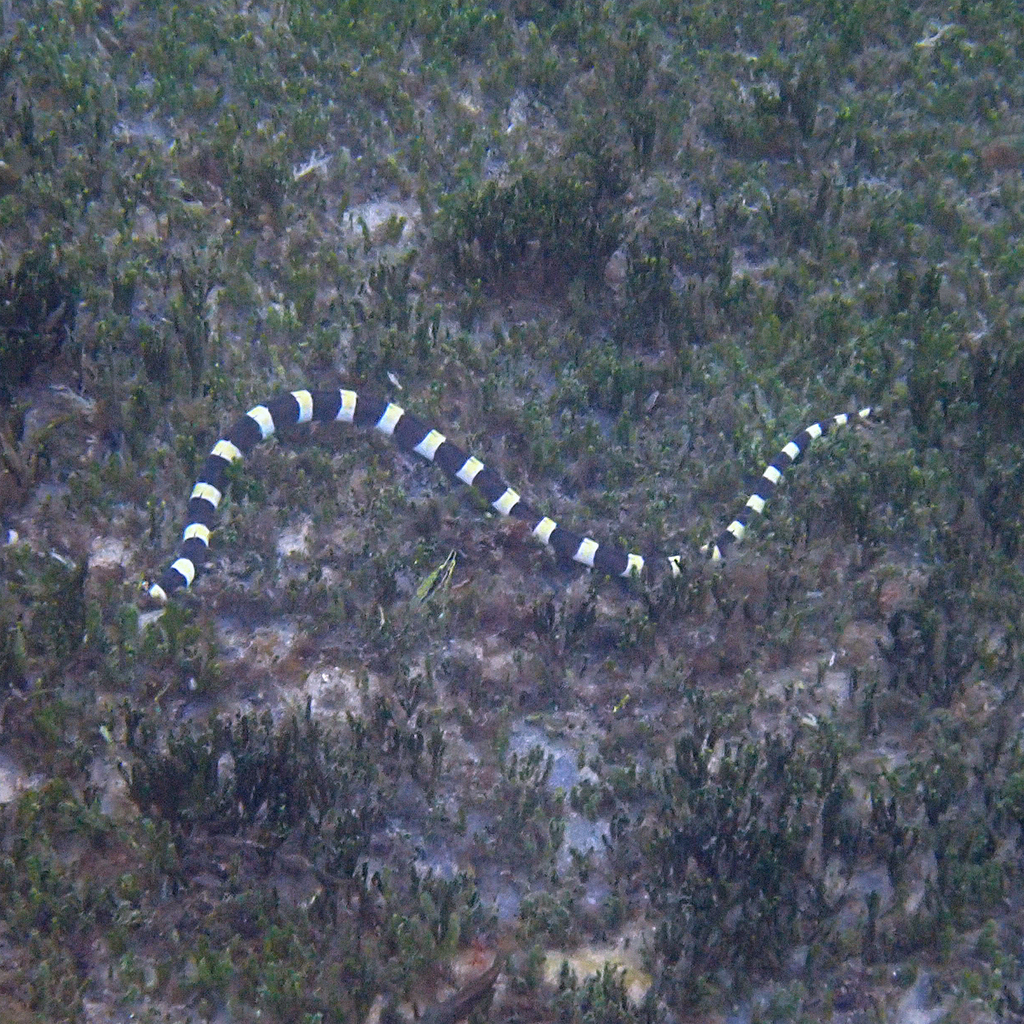 Saddled snake-eel
Leiuranus semicinctus
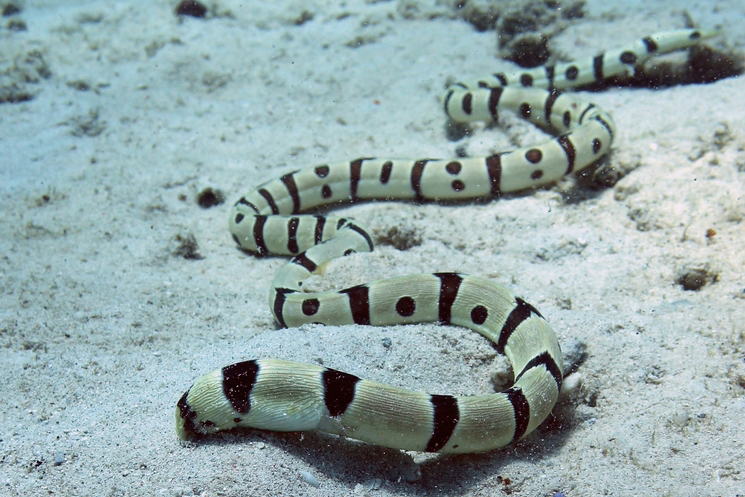 Harlequin snake-eel
Myrichthys colubrinus
 Tiger snake-eel
Myrichthys maculosus
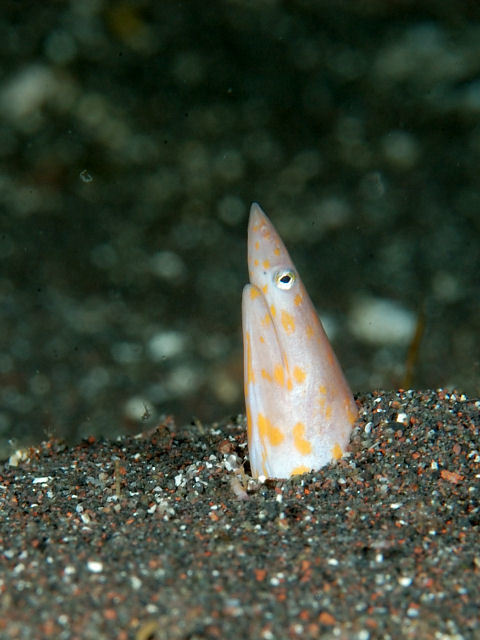 Pencil Snake Eel
Apterichtus klazingai
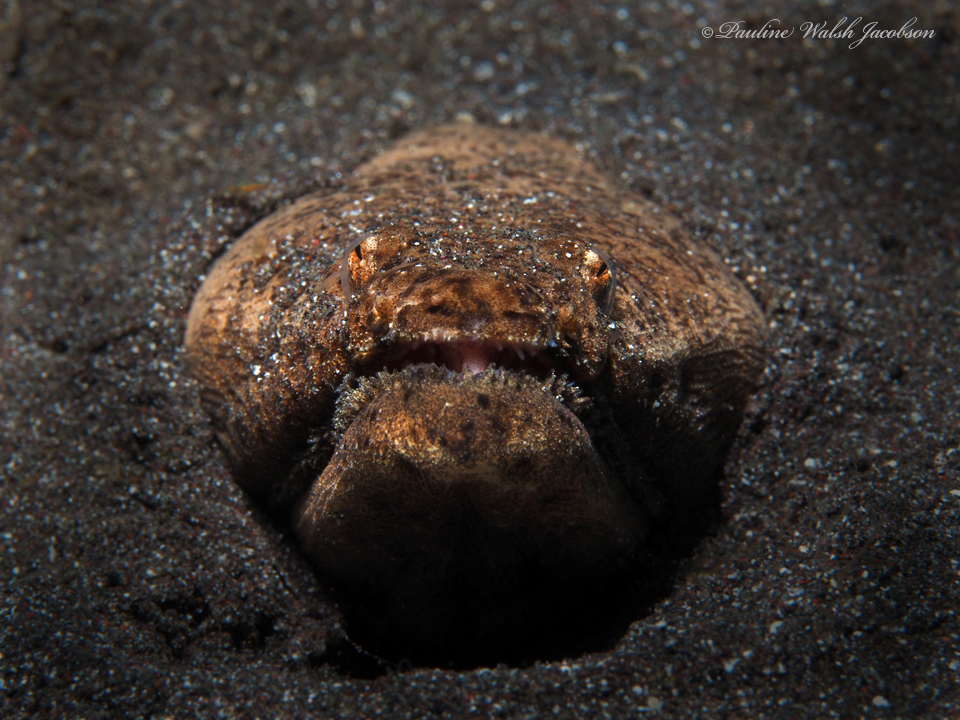 Stargazer Snake Eel
Brachysomophis cirrocheilos
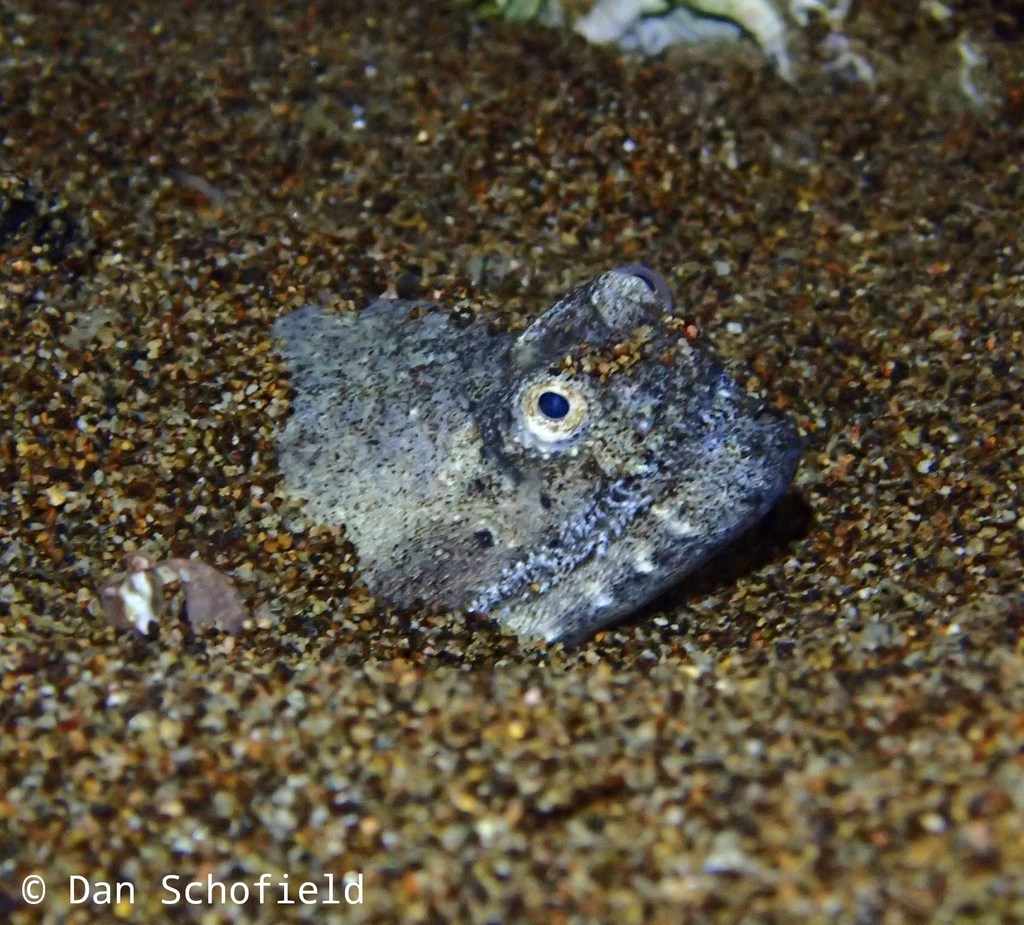 Crocodile snake eel
Brachysomophis crocodilinus
Sources and credits
Names and taxonomy: WoRMS (CC BY 4.0) and the GBIF Backbone (CC BY 4.0). Photos: iNaturalist observers, each under the licence shown (CC0, CC BY or CC BY-SA).
- Depth, temperature, months and maps: records from OBIS and GBIF under CC0 or CC BY.
- Descriptions: Wikipedia, licensed CC BY-SA, each linked to its article.
- Conservation status as published by GBIF (IUCN Red List).
- 76 open-data records from 1903 to 2017.
- Species data updated November 2, 2026.
Log what you see on your next dive
The free DiveHive diver app keeps your logbook with every sighting and shows what lives at the site you dive next.