
Elysia atroviridis
- Usual depth2–15 m
- Water temperature13–23 °C
- Best monthsJanuary, February, and March
- How commonRare
About this species
Elysia atroviridis is a benthic species of sea slug belonging to the family Plakobranchidae native to the northwest pacific. E. atroviridis slugs live up to three meters deep, and are generally dark green in skin colour with small, black spots all around the body. E. atroviridis is a member of the superorder Sacoglossa, and thus possesses the ability to perform kleptoplasty. E. atroviridis and Elysia marginata are notable for possessing the ability to completely autotomize their bodies and grow them back within 20 days.
Text from the Wikipedia article “Elysia atroviridis”, licensed CC BY-SA 4.0. Read the article
Where and when
Where it has been recorded
Worldwide
Loading the map
Best months
Worldwide (open data)
- January: 24 records
- February: 27 records
- March: 31 records
- April: 20 records
- May: 17 records
- June: 10 records
- July: 10 records
- August: 3 records
- September: 2 records
- October: 1 records
- November: 4 records
- December: 10 records
Depth and water temperature
Depth
Mostly recorded at 2–15 m · Deepest record: 25 m
Water temperature
Recorded in surface water of 13–23 °C
Names and classification
Names in 2 more languages
- Japanese
- クロミドリガイ
- Korean
- 초록날씬이갯민숭이붙이
Other scientific names: Elysia setoensis
Similar species
 Tri-banded Taco Slug
Elysia marginata
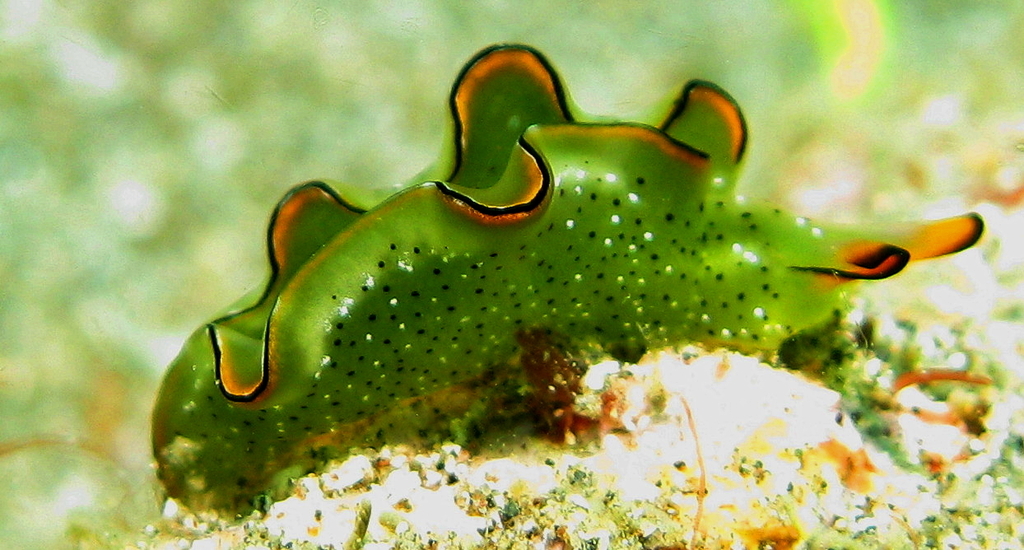 Lettuce slug
Elysia ornata
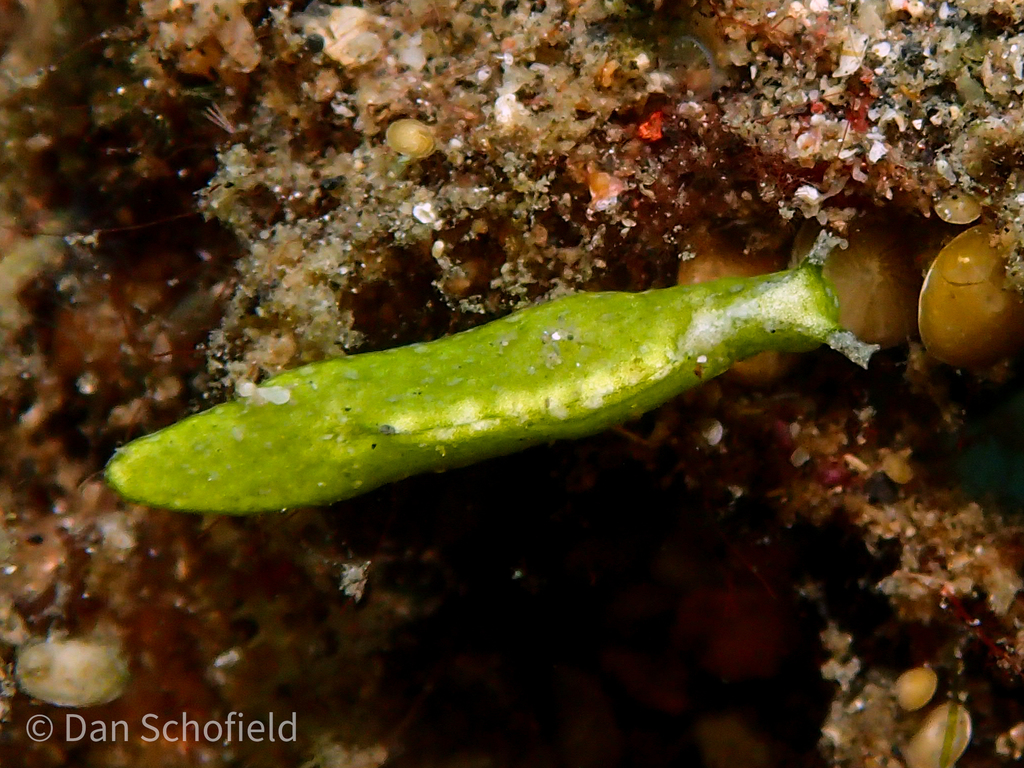 Halimeda Taco Slug
Elysia pusilla
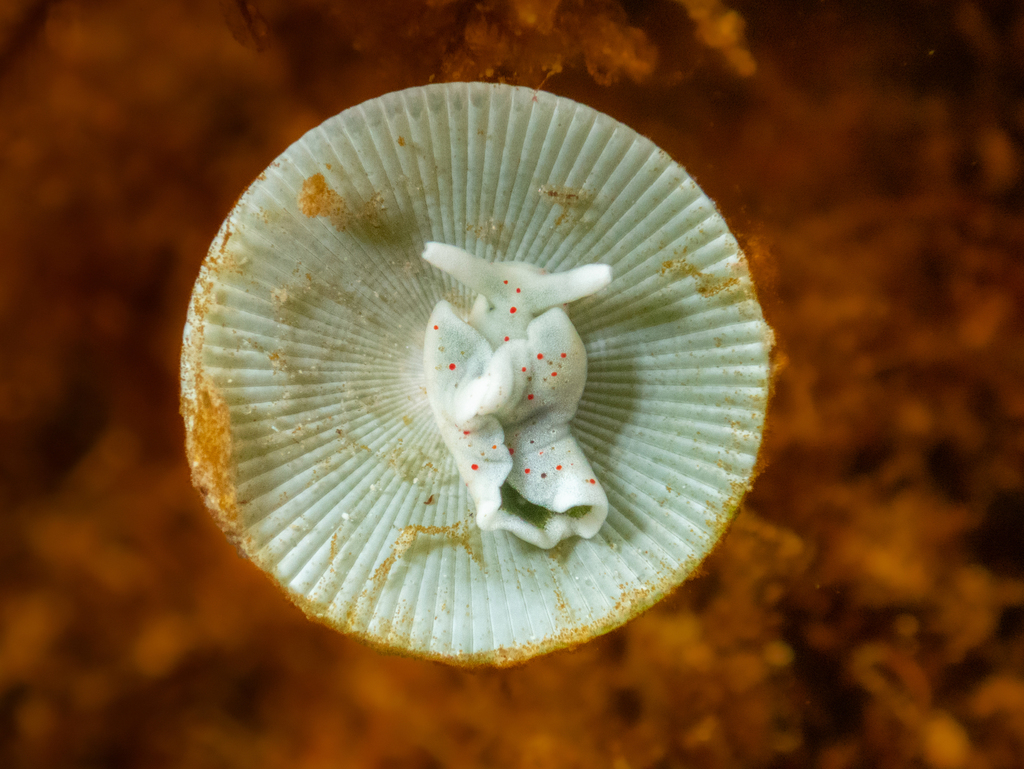
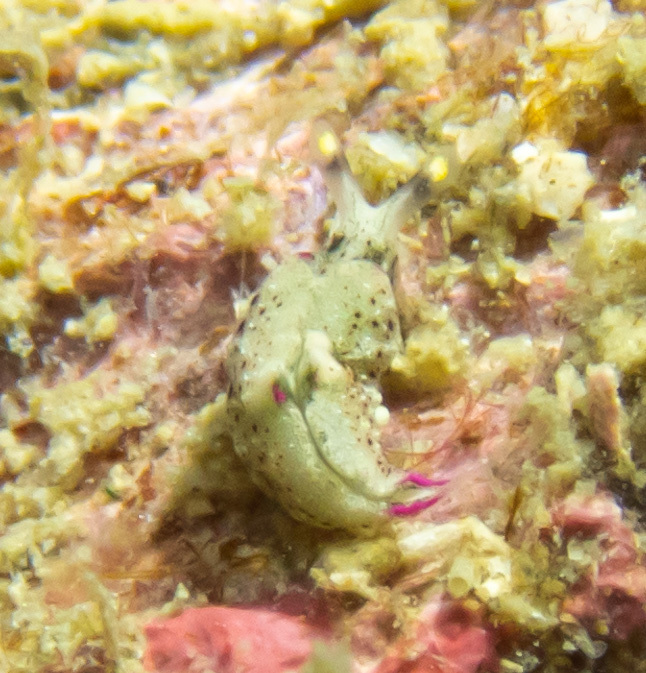

Sources and credits
Names and taxonomy: WoRMS (CC BY 4.0) and the GBIF Backbone (CC BY 4.0). Photos: iNaturalist observers, each under the licence shown (CC0, CC BY or CC BY-SA).
- Depth, temperature, months and maps: records from OBIS and GBIF under CC0 or CC BY.
- Descriptions: Wikipedia, licensed CC BY-SA, each linked to its article.
- Conservation status as published by GBIF (IUCN Red List).
- 215 open-data records from 1969 to 2026.
- Species data updated November 2, 2026.
Log what you see on your next dive
The free DiveHive diver app keeps your logbook with every sighting and shows what lives at the site you dive next.