
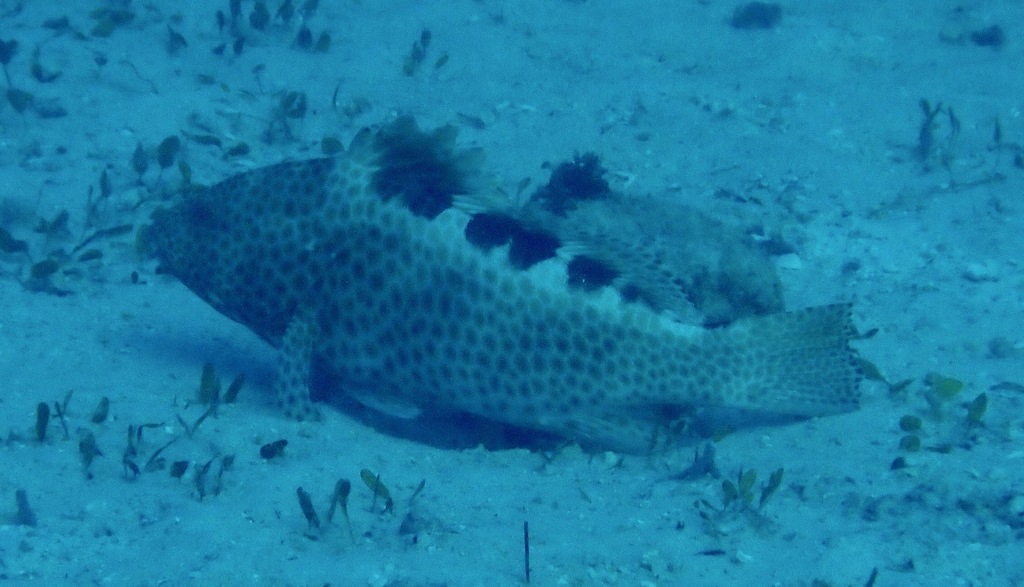
Brown-spotted Rock-cod
Epinephelus bilobatus
- Usual depth4–85 m
- Water temperature25–28 °C
- Best monthsApril and September
- How commonOccasional
Photo credit: (c) desertnaturalist, some rights reserved (CC BY) · CC BY · iNaturalist
About this species
Epinephelus bilobatus, commonly known as the twin-spot groper or the frostback rockcod, a species of grouper from the subfamily Epinephelinae. E. bilobatus is known from around northwestern Australia and from West Papua (Indonesia). Found in coral reefs and rocky bottom in depths of 4 to 50 m. It is characterized by its greyish-brown color overall with hexagonal brown spots. The maximum total length is 33 cm (13 in).
Text from the Wikipedia article “Epinephelus bilobatus”, licensed CC BY-SA 4.0. Read the article
Where and when
Where it has been recorded
Worldwide
Loading the map
Best months
Worldwide (open data)
- January: 3 records
- February: 2 records
- March: 3 records
- April: 9 records
- May: 6 records
- June: 4 records
- July: 6 records
- August: 4 records
- September: 14 records
- October: 4 records
- November: 8 records
- December: 1 records
Depth and water temperature
Depth
Mostly recorded at 4–85 m · Deepest record: 84.5 m
Water temperature
Recorded in surface water of 25–28 °C
Photos
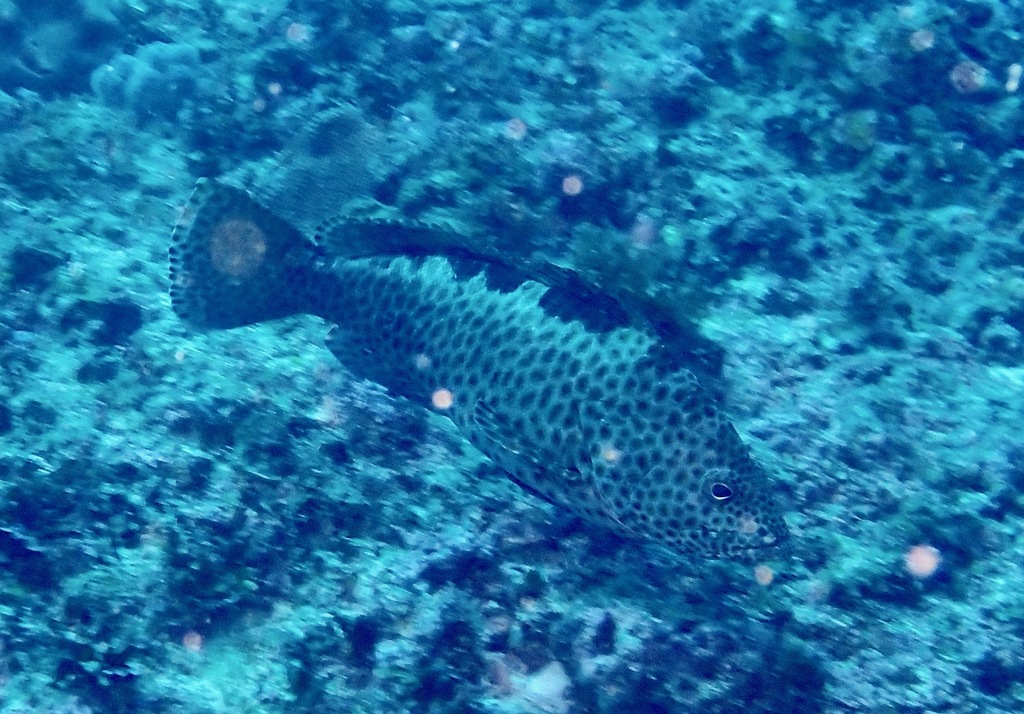
(c) desertnaturalist, some rights reserved (CC BY) · CC BY · iNaturalist
Names and classification
- English
- Brown-spotted Rock-cod, Frostback Cod, frostback rockcod, twinspot grouper
Names in 3 more languages
- Spanish
- Mero De Pintas Gemelas
- French
- Merou Gemine
- Simplified Chinese
- 點鰭石斑魚
Similar species
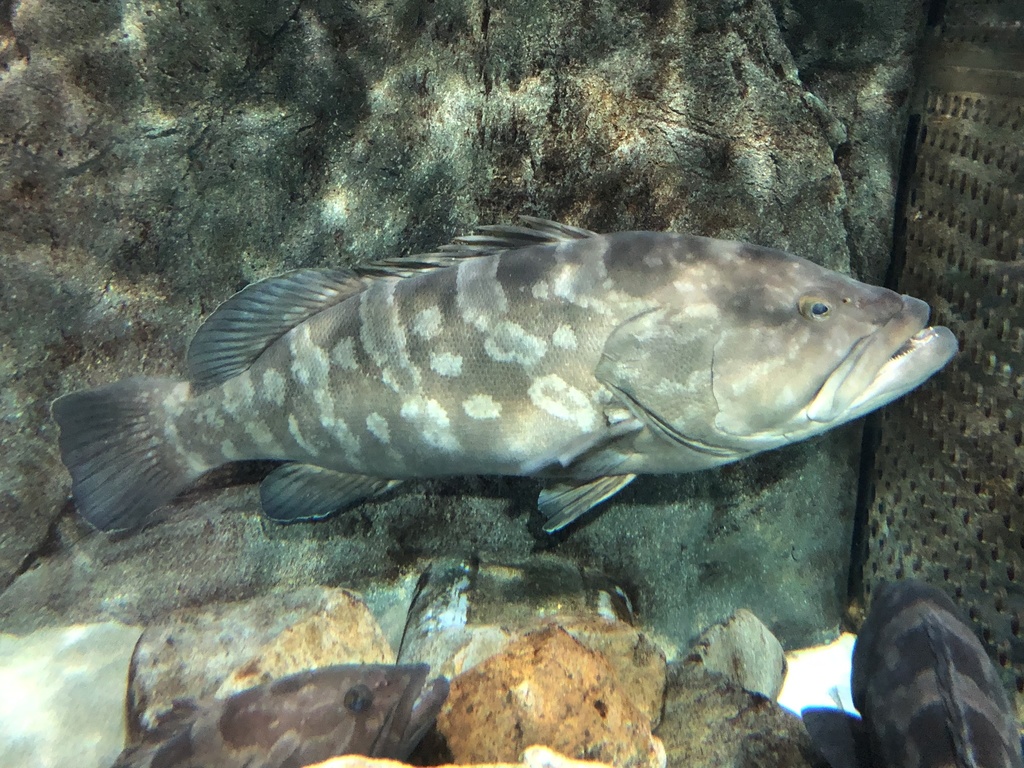 Kelp Grouper
Epinephelus bruneus
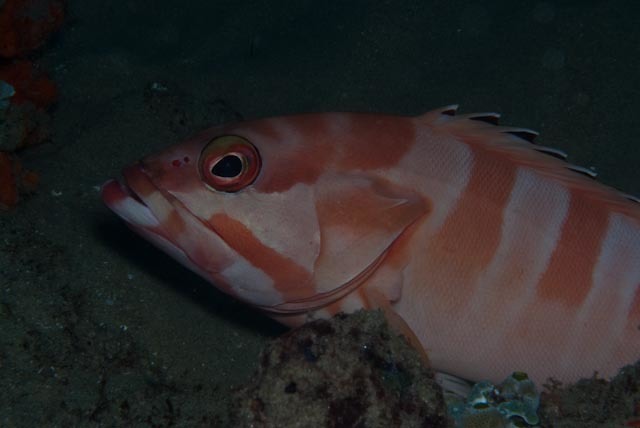 Blacktip grouper
Epinephelus fasciatus
 Dusky grouper
Epinephelus marginatus
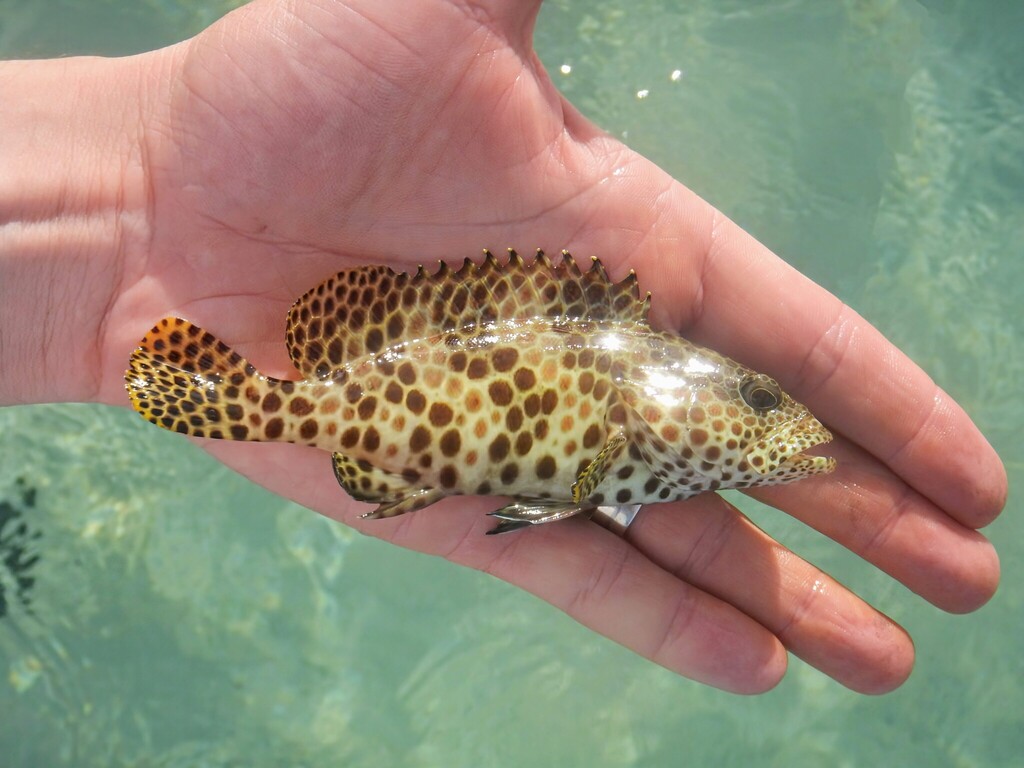 Honeycomb grouper
Epinephelus merra
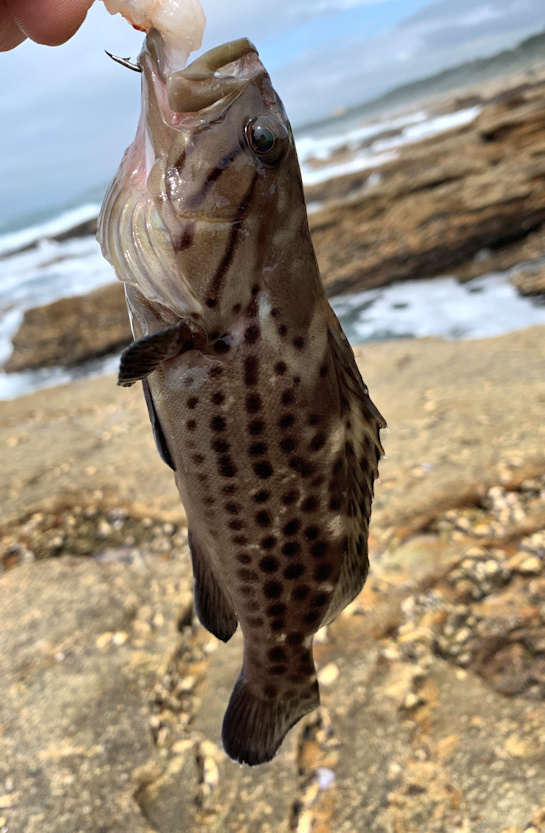 Catface grouper
Epinephelus andersoni
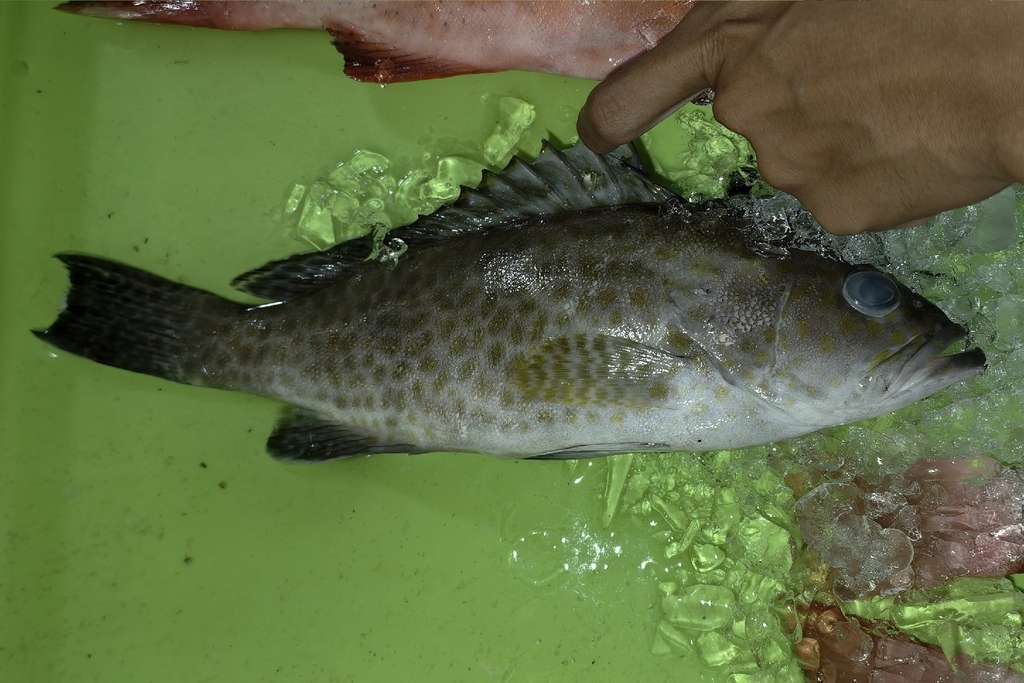 Areolate grouper
Epinephelus areolatus
Sources and credits
Names and taxonomy: WoRMS (CC BY 4.0) and the GBIF Backbone (CC BY 4.0). Photos: iNaturalist observers, each under the licence shown (CC0, CC BY or CC BY-SA).
- Depth, temperature, months and maps: records from OBIS and GBIF under CC0 or CC BY.
- Descriptions: Wikipedia, licensed CC BY-SA, each linked to its article.
- Conservation status as published by GBIF (IUCN Red List).
- 98 open-data records from 1959 to 2017.
- Species data updated November 2, 2026.
Log what you see on your next dive
The free DiveHive diver app keeps your logbook with every sighting and shows what lives at the site you dive next.