
Bobtail squid
Euprymna hyllebergi
- Usual depth384 m
- Water temperature29–30 °C
- Best monthsJuly, August, and December
- How commonRare
About this species
Euprymna hyllebergi, the Thai bobtail squid is a species of squid belonging to the family Sepiolidae and is native to the eastern Indian Ocean. It is commonly found in the Andaman Sea of Thailand and in the Gulf of Thailand. E. hyllebergi can grow up to 35mm in mantle length and can be found in depths as low as 74m. The Thai bobtail squid is covered in chromatophores, which are pigmented cells that can expand or contract and are used to camouflage the squid. The normal lifespan of the Thai bobtail squid is between 92 and 122 days for males and between 80 and 113 days for females.
Text from the Wikipedia article “Euprymna hyllebergi”, licensed CC BY-SA 4.0. Read the article
Where and when
Where it has been recorded
Worldwide
Loading the map
Best months
Worldwide (open data)
- January: 0 records
- February: 0 records
- March: 0 records
- April: 0 records
- May: 0 records
- June: 0 records
- July: 1 records
- August: 1 records
- September: 0 records
- October: 0 records
- November: 0 records
- December: 1 records
Depth and water temperature
Depth
Mostly recorded at 384 m · Deepest record: 384 m
Water temperature
Recorded in surface water of 29–30 °C
Names and classification
- English
- Bobtail squid
Names in 2 more languages
- Japanese
- アンダマンミミイカ
- Thai
- ปลาหมึกหูช้างไทย, หมึกหูช้าง
Similar species
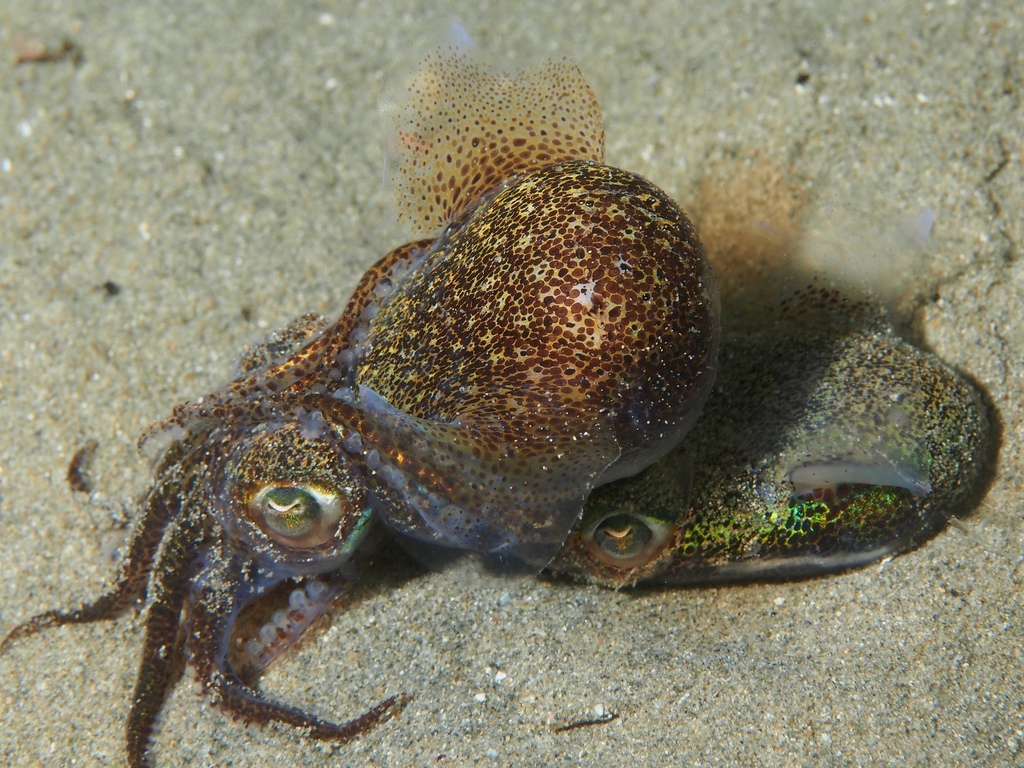 Southern bobtail squid
Euprymna tasmanica
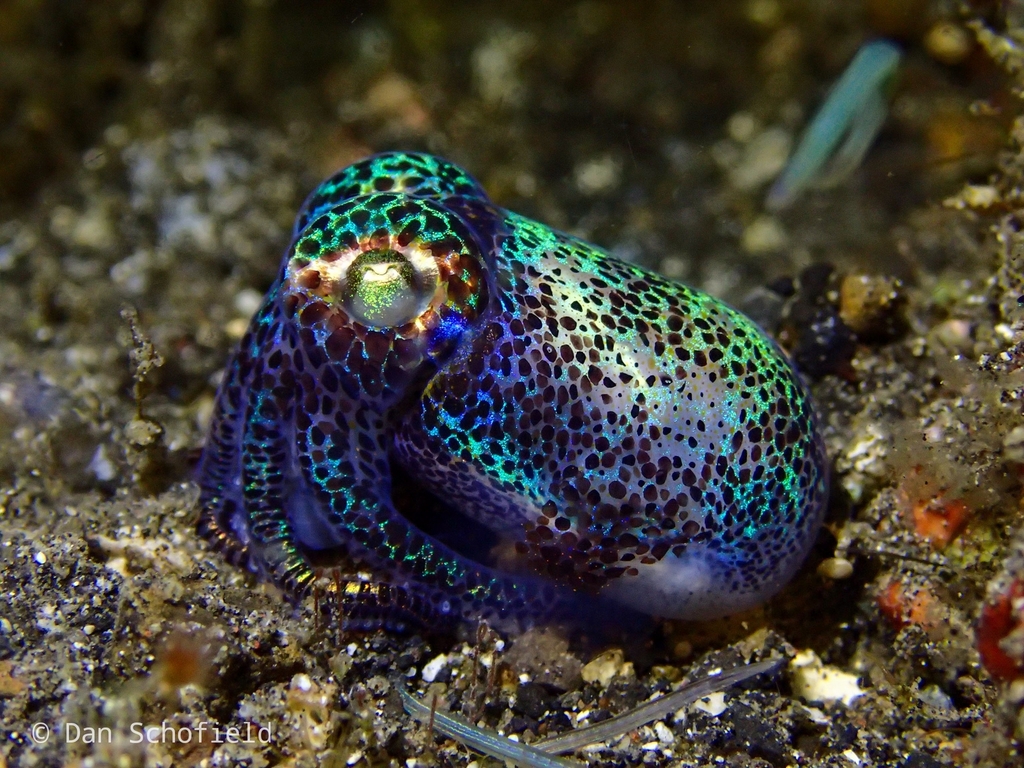 Double-ear bobtail
Euprymna berryi
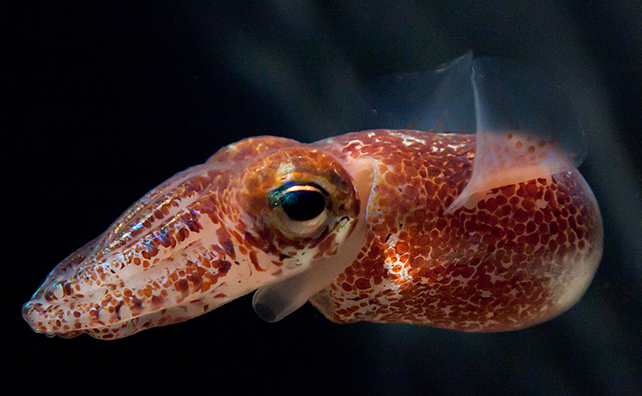 Hawaiian Bobtail
Euprymna scolopes
- Globito mimika
Euprymna morsei
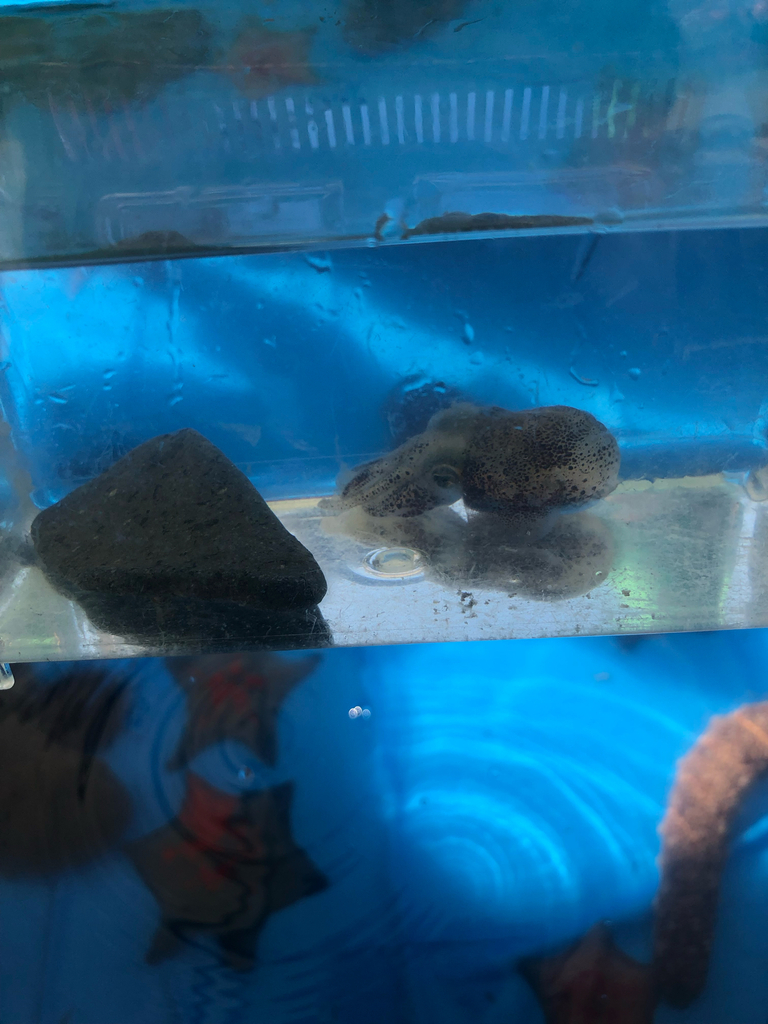 Butterfly Bobtail
Lusepiola birostrata
Sources and credits
Names and taxonomy: WoRMS (CC BY 4.0) and the GBIF Backbone (CC BY 4.0). Photos: iNaturalist observers, each under the licence shown (CC0, CC BY or CC BY-SA).
- Depth, temperature, months and maps: records from OBIS and GBIF under CC0 or CC BY.
- Descriptions: Wikipedia, licensed CC BY-SA, each linked to its article.
- Conservation status as published by GBIF (IUCN Red List).
- 11 open-data records from 1997 to 2011.
- Species data updated November 2, 2026.
Log what you see on your next dive
The free DiveHive diver app keeps your logbook with every sighting and shows what lives at the site you dive next.