
Longbarb dragonfish
Flagellostomias boureei
- Usual depth151–1,300 m
- Water temperature9–30 °C
- Best monthsJune
- How commonRare
About this species
Flagellostomias boureei, the Longbarb dragonfish, is a species of barbeled dragonfish found in the ocean depths worldwide. This species grows to a length of 32.2 centimetres (12.7 in) SL. This species is the only known species in its genus.
Text from the Wikipedia article “Flagellostomias”, licensed CC BY-SA 4.0. Read the article
Where and when
Where it has been recorded
Worldwide
Loading the map
Best months
Worldwide (open data)
- January: 1 records
- February: 9 records
- March: 3 records
- April: 5 records
- May: 10 records
- June: 31 records
- July: 15 records
- August: 6 records
- September: 7 records
- October: 7 records
- November: 7 records
- December: 5 records
Depth and water temperature
Depth
Mostly recorded at 151–1,300 m · Deepest record: 2,280.5 m
Water temperature
Recorded in surface water of 9–30 °C
Names and classification
- English
- Longbarb dragonfish, Scaleless dragonfish, Black Dragonfish, Longbarb Dragonfish
Names in 3 more languages
- Spanish
- dragón de barba larga
- French
- Idiacanthe Ruban
- Japanese
- Muchihoshieso, ムチホシエソ
Other scientific names: Aristostomias uncodentatus, Eustomias boureei, Flagellostomias bourei, Flagellostomias tyrannus
Similar species
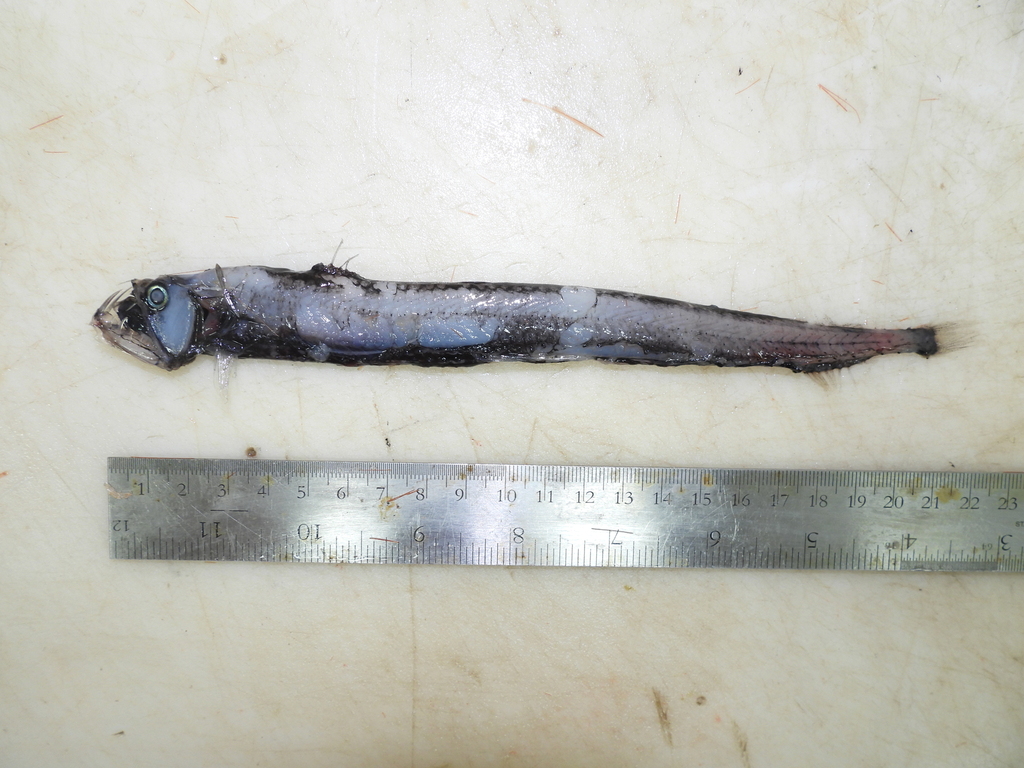 Manylight fangfish
Chauliodus sloani
- Pacific viperfish
Chauliodus macouni
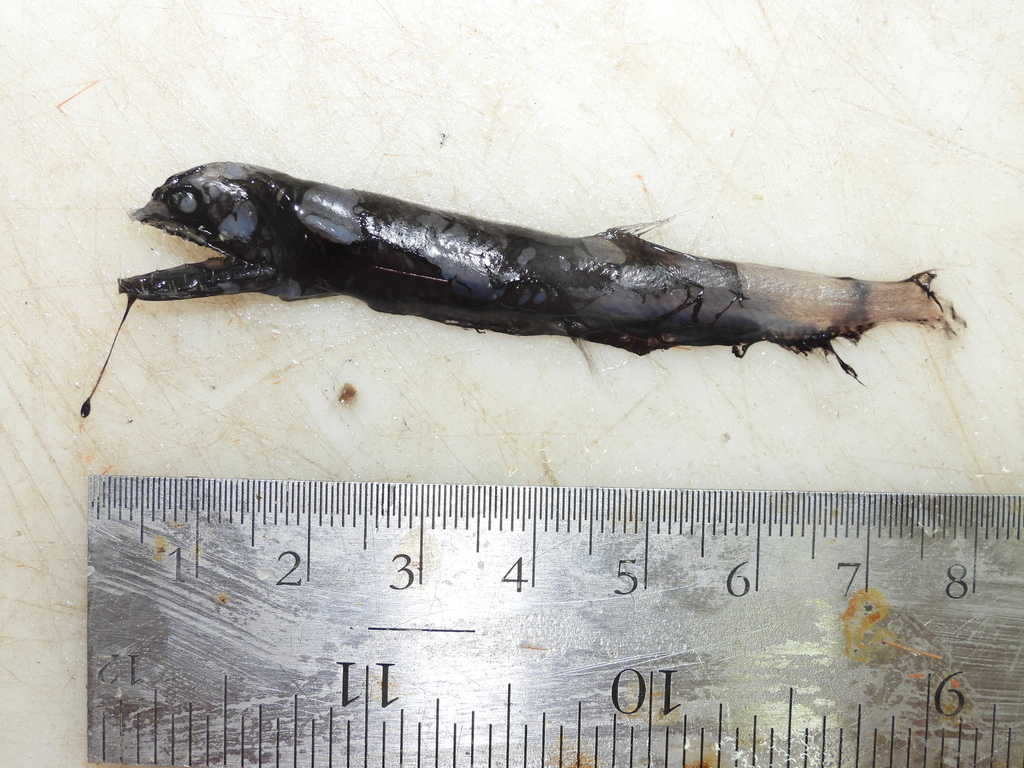 Straightline dragonfish
Borostomias antarcticus
 Pacific blackdragon
Idiacanthus antrostomus
- Scaleless dragonfish
Echiostoma barbatum
- Black dragonfish
Idiacanthus atlanticus
Sources and credits
Names and taxonomy: WoRMS (CC BY 4.0) and the GBIF Backbone (CC BY 4.0). Photos: iNaturalist observers, each under the licence shown (CC0, CC BY or CC BY-SA).
- Depth, temperature, months and maps: records from OBIS and GBIF under CC0 or CC BY.
- Descriptions: Wikipedia, licensed CC BY-SA, each linked to its article.
- Conservation status as published by GBIF (IUCN Red List).
- 292 open-data records from 1912 to 2021.
- Species data updated November 2, 2026.
Log what you see on your next dive
The free DiveHive diver app keeps your logbook with every sighting and shows what lives at the site you dive next.