

Hawaiian Garden Eel
Gorgasia hawaiiensis
- Usual depth14–18 m
- Water temperature26°C
- Best monthsAugust, October, and November
- How commonRare
Photo credit: (c) Robin White, some rights reserved (CC BY) · CC BY · iNaturalist
About this species
The Hawaiian garden eel is a species of eel in the family Congridae. It was described by John Ernest Randall and James Robert Chess in 1980. It is a marine, tropical eel which is known from the Hawaiian archipelago, in the eastern central Pacific Ocean. It is non-migratory, and is thought to be restricted to the region. It dwells at a depth range of 11 to 53 metres, and leads a benthic life, forming burrows in sand. Males can reach a maximum standard length of 59.8 centimetres (23.5 in).
Text from the Wikipedia article “Hawaiian garden eel”, licensed CC BY-SA 4.0. Read the article
Where and when
Where it has been recorded
Worldwide
Loading the map
Best months
Worldwide (open data)
- January: 1 records
- February: 0 records
- March: 0 records
- April: 1 records
- May: 3 records
- June: 1 records
- July: 2 records
- August: 5 records
- September: 3 records
- October: 6 records
- November: 5 records
- December: 1 records
Depth and water temperature
Depth
Mostly recorded at 14–18 m · Deepest record: 18.2 m
Water temperature
Recorded in surface water of 26°C
Photos
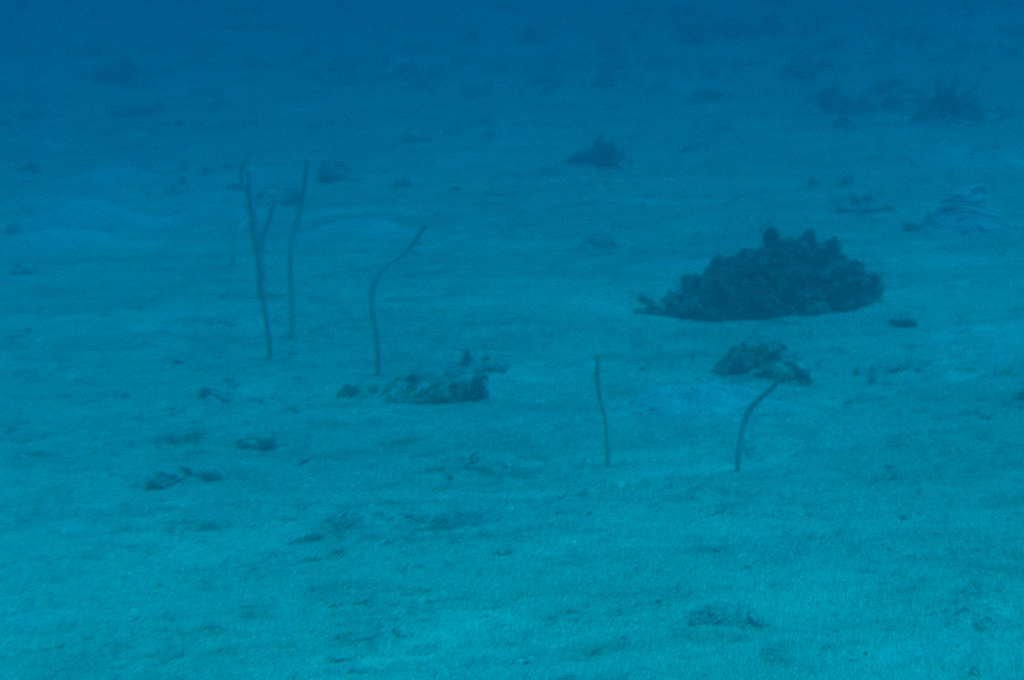
(c) cello caruso-turiello, some rights reserved (CC BY) · CC BY · iNaturalist
Names and classification
- English
- Hawaiian Garden Eel
Names in 1 more languages
- Spanish
- Anguila de Jardín Hawaiana
Similar species
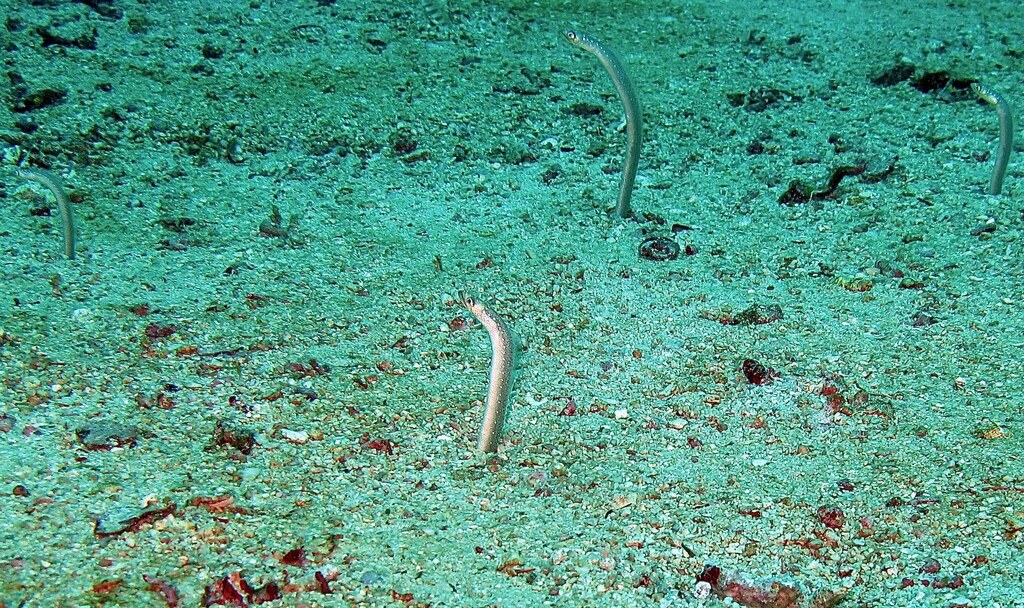 Barnes' Garden Eel
Gorgasia barnesi
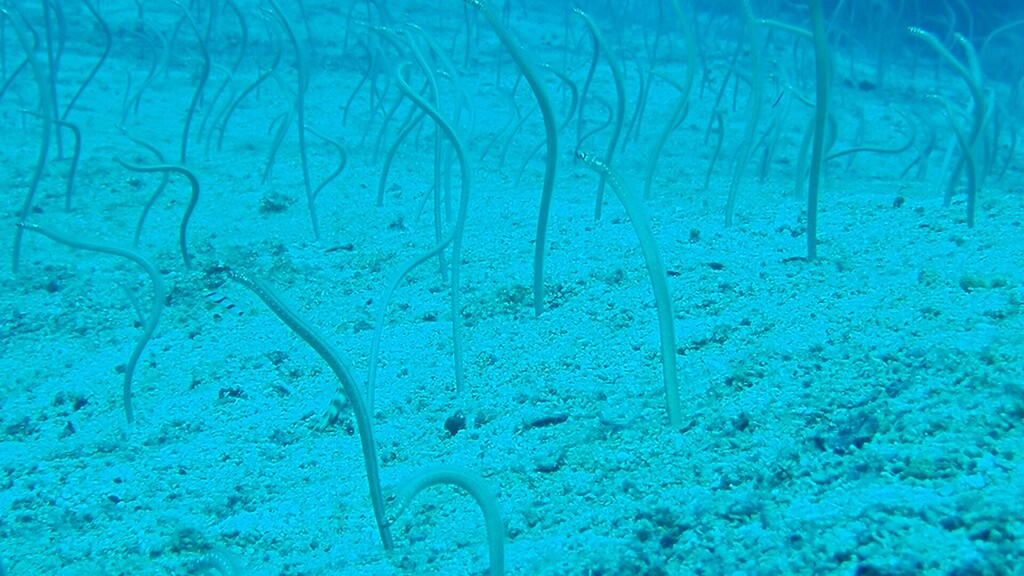 Indian Spaghetti Eel
Gorgasia maculata
- Galzin's Garden Eel
Gorgasia galzini
- Klausewitz' Garden Eel
Gorgasia klausewitzi
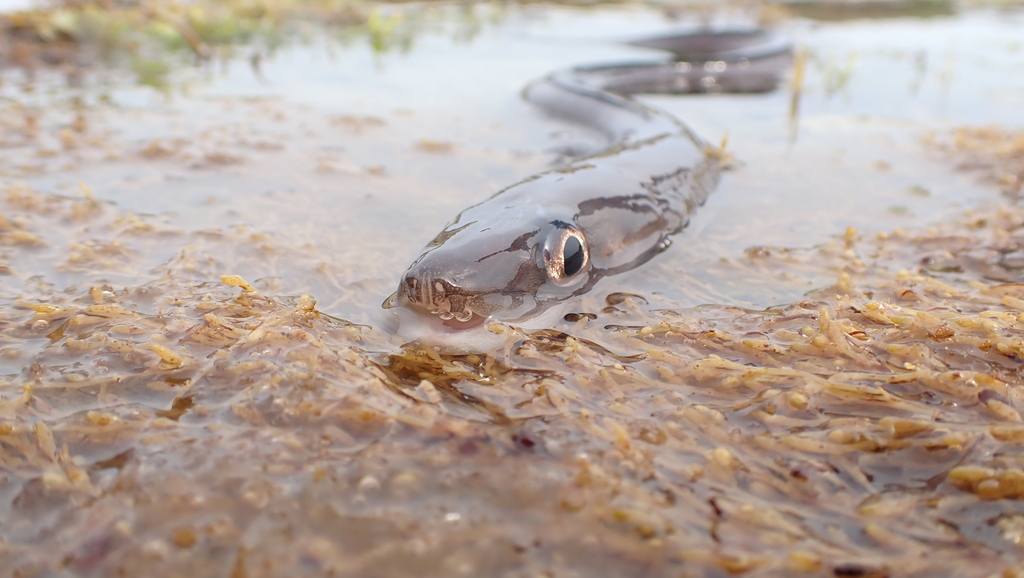 Conger
 conger
Sources and credits
Names and taxonomy: WoRMS (CC BY 4.0) and the GBIF Backbone (CC BY 4.0). Photos: iNaturalist observers, each under the licence shown (CC0, CC BY or CC BY-SA).
- Depth, temperature, months and maps: records from OBIS and GBIF under CC0 or CC BY.
- Descriptions: Wikipedia, licensed CC BY-SA, each linked to its article.
- Conservation status as published by GBIF (IUCN Red List).
- 14 open-data records from 1969 to 2010.
- Species data updated November 3, 2026.
Log what you see on your next dive
The free DiveHive diver app keeps your logbook with every sighting and shows what lives at the site you dive next.