
Thorny tinselfish
Grammicolepis brachiusculus
- Usual depth366–708 m
- Water temperature10–28 °C
- Best monthsJuly and September
- How commonRare
About this species
Grammicolepis is a monotypic genus of tinselfish, family Grammicolepididae. The only species is Grammicolepis brachiusculus, the thorny tinselfish or deepscale dory. It is found in deep oceanic waters at depths from 250 to 1,026 metres, but usually between 500 and 700 m. It is known from many areas off Australia and occasionally caught as by-catch. Records from northwest Europe include one specimen caught off Scotland in 2004 and one off County Kerry, Ireland in 2010.
Text from the Wikipedia article “Grammicolepis”, licensed CC BY-SA 4.0. Read the article
Where and when
Where it has been recorded
Worldwide
Loading the map
Best months
Worldwide (open data)
- January: 3 records
- February: 7 records
- March: 8 records
- April: 10 records
- May: 18 records
- June: 19 records
- July: 33 records
- August: 13 records
- September: 20 records
- October: 15 records
- November: 9 records
- December: 6 records
Depth and water temperature
Depth
Mostly recorded at 366–708 m · Deepest record: 1,000 m
Water temperature
Recorded in surface water of 10–28 °C
Names and classification
- English
- Thorny tinselfish, Deepscale dory, thorny tinselfish
Names in 4 more languages
- Spanish
- oropel, Palometa oropel, Pez oropel espinoso
- French
- Gramolette, palissade à épines plates
- Japanese
- Ohishimatodai, オオヒシマトウダイ
- Simplified Chinese
- 斑線菱鯛, 斑菱的鯛, 線鱗鯛
Other scientific names: Daramattus americanus, Daramattus armatus, Daramattus barnardi, Grammocolepis brachiosculus, Vesposus egregius, Xenolepidichthys americanus
Similar species
- Spotted tinselfish
Xenolepidichthys dalgleishi
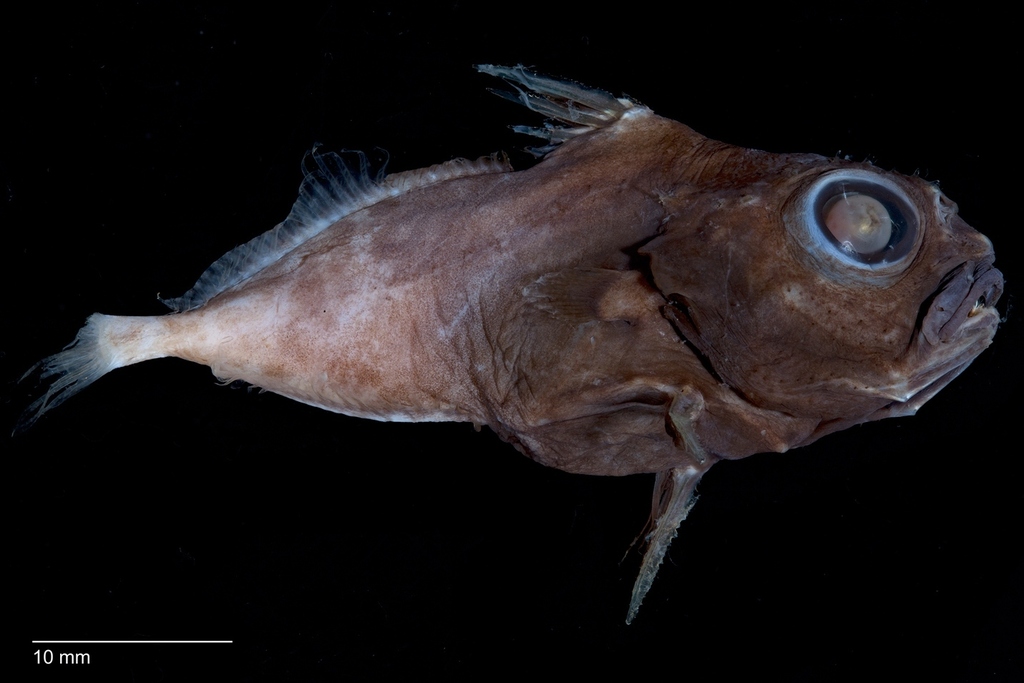 Dwarf Dory
Macrurocyttus acanthopodus
Sources and credits
Names and taxonomy: WoRMS (CC BY 4.0) and the GBIF Backbone (CC BY 4.0). Photos: iNaturalist observers, each under the licence shown (CC0, CC BY or CC BY-SA).
- Depth, temperature, months and maps: records from OBIS and GBIF under CC0 or CC BY.
- Descriptions: Wikipedia, licensed CC BY-SA, each linked to its article.
- Conservation status as published by GBIF (IUCN Red List).
- 246 open-data records from 1954 to 2019.
- Species data updated November 3, 2026.
Log what you see on your next dive
The free DiveHive diver app keeps your logbook with every sighting and shows what lives at the site you dive next.