
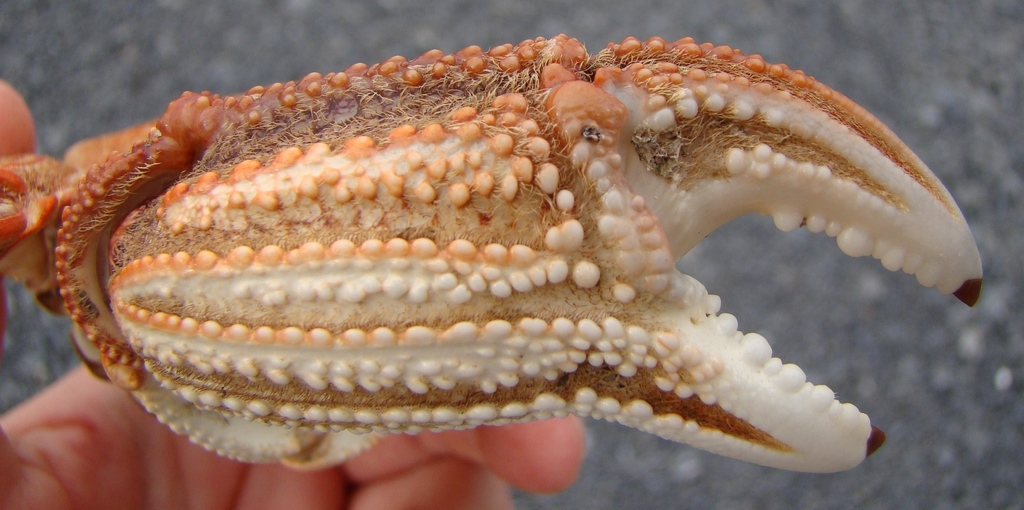
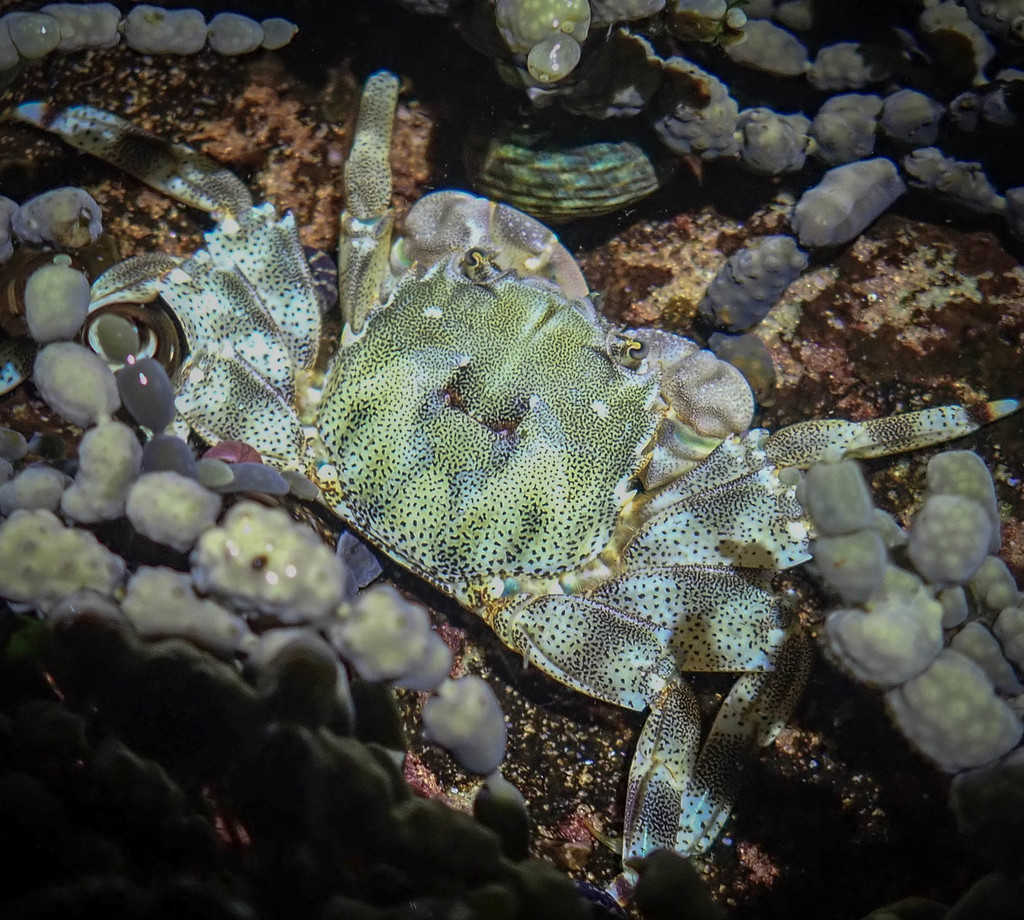
Cape Rock Crab
Guinusia chabrus
- Usual depth5–10 m
- Water temperature13–23 °C
- Best monthsJanuary, March, and April
- How commonOccasional
Photo credit: (c) Lisa Bennett, some rights reserved (CC BY), uploaded by Lisa Bennett · CC BY · iNaturalist
About this species
The red rock crab is a marine large-eyed crab of the family Plagusiidae. It is found in the southern Indian and southern Pacific Oceans, including South Africa, Australia, New Zealand, and Chile.
Text from the Wikipedia article “Guinusia chabrus”, licensed CC BY-SA 4.0. Read the article
Where and when
Where it has been recorded
Worldwide
Loading the map
Best months
Worldwide (open data)
- January: 636 records
- February: 432 records
- March: 577 records
- April: 643 records
- May: 500 records
- June: 451 records
- July: 230 records
- August: 272 records
- September: 411 records
- October: 476 records
- November: 432 records
- December: 473 records
Depth and water temperature
Depth
Mostly recorded at 5–10 m · Deepest record: 60.4 m
Water temperature
Recorded in surface water of 13–23 °C
Photos

(c) Roderic Page, some rights reserved (CC BY), uploaded by Roderic Page · CC BY · iNaturalist 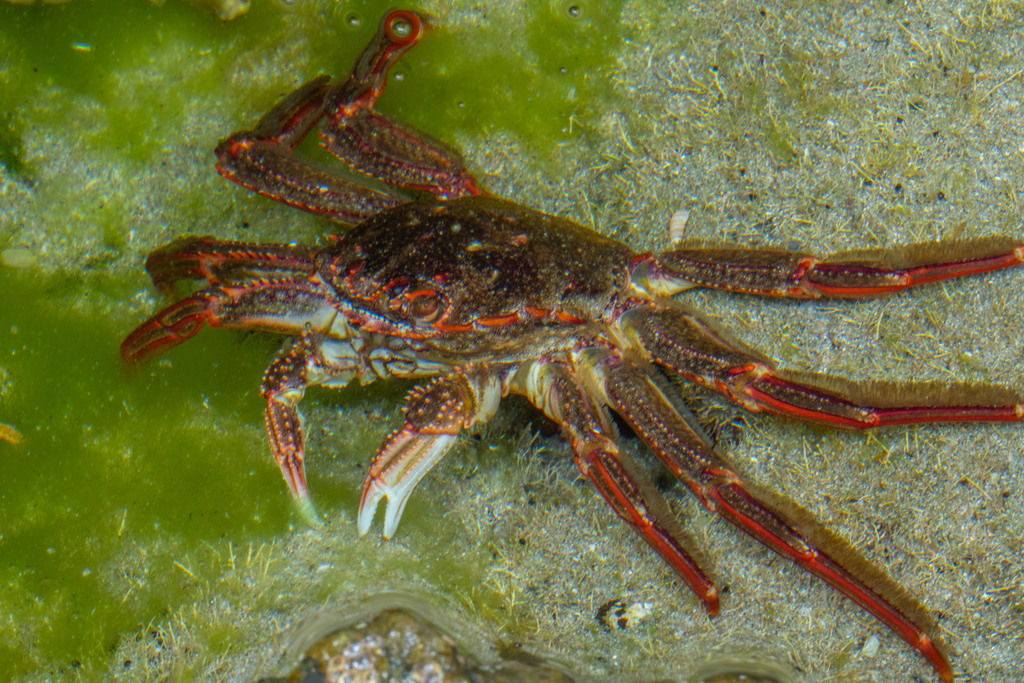
(c) Shaun Lee, some rights reserved (CC BY), uploaded by Shaun Lee · CC BY · iNaturalist 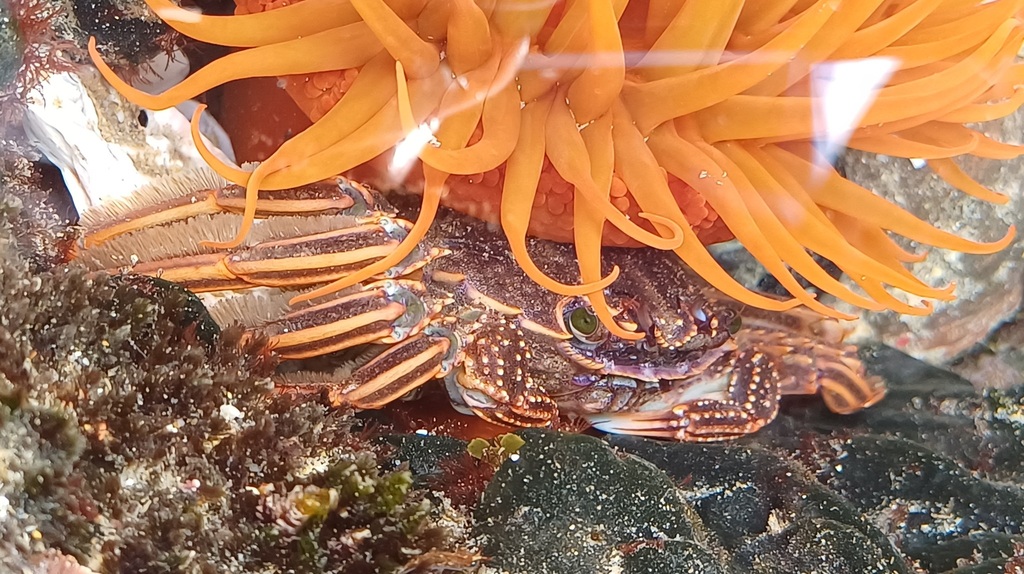
no rights reserved · CC0 1.0 · iNaturalist 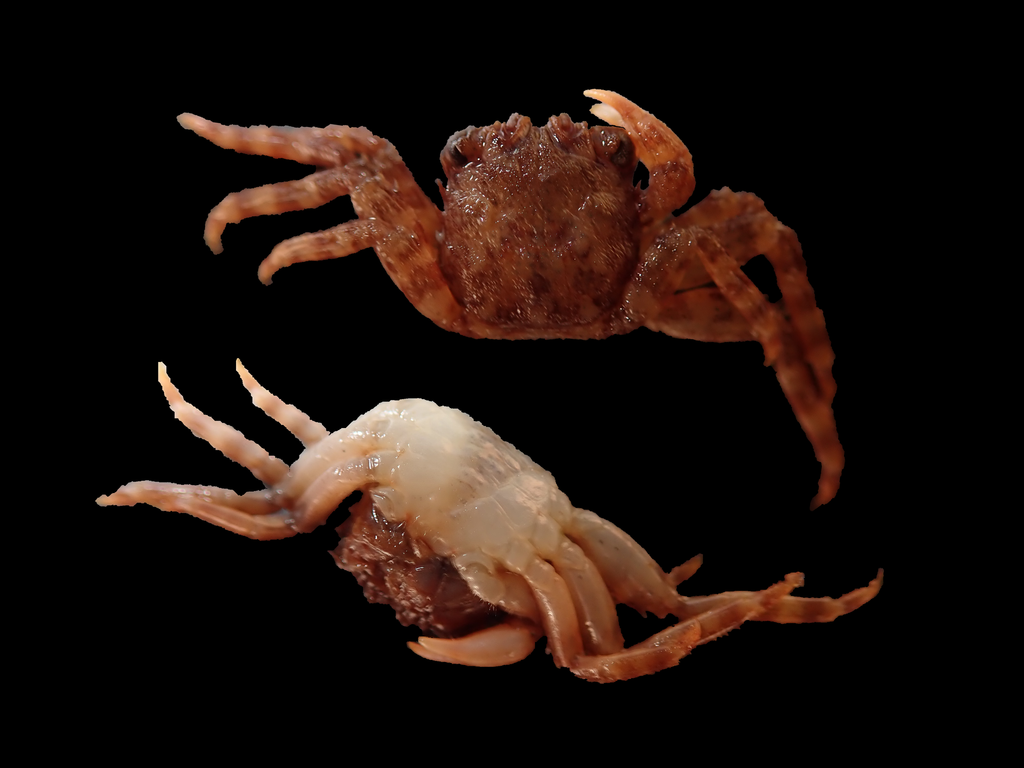
(c) Thomas Mesaglio, some rights reserved (CC BY) · CC BY · iNaturalist 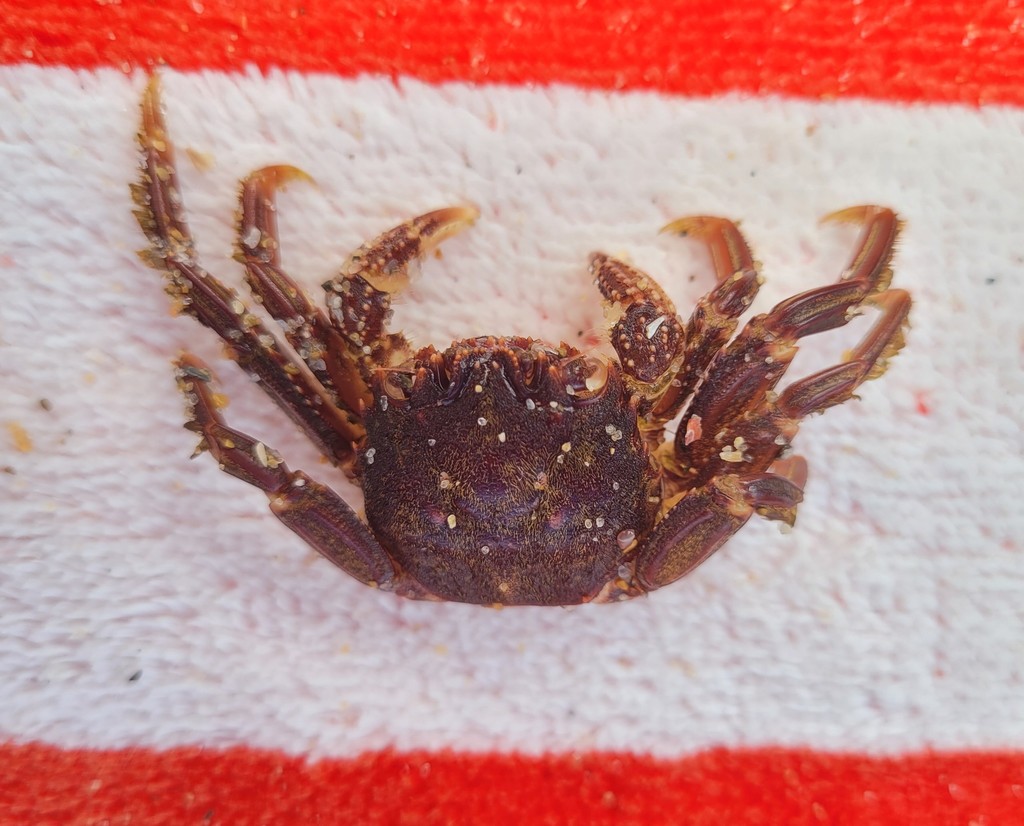
(c) Eamonn Culhane, some rights reserved (CC BY) · CC BY · iNaturalist 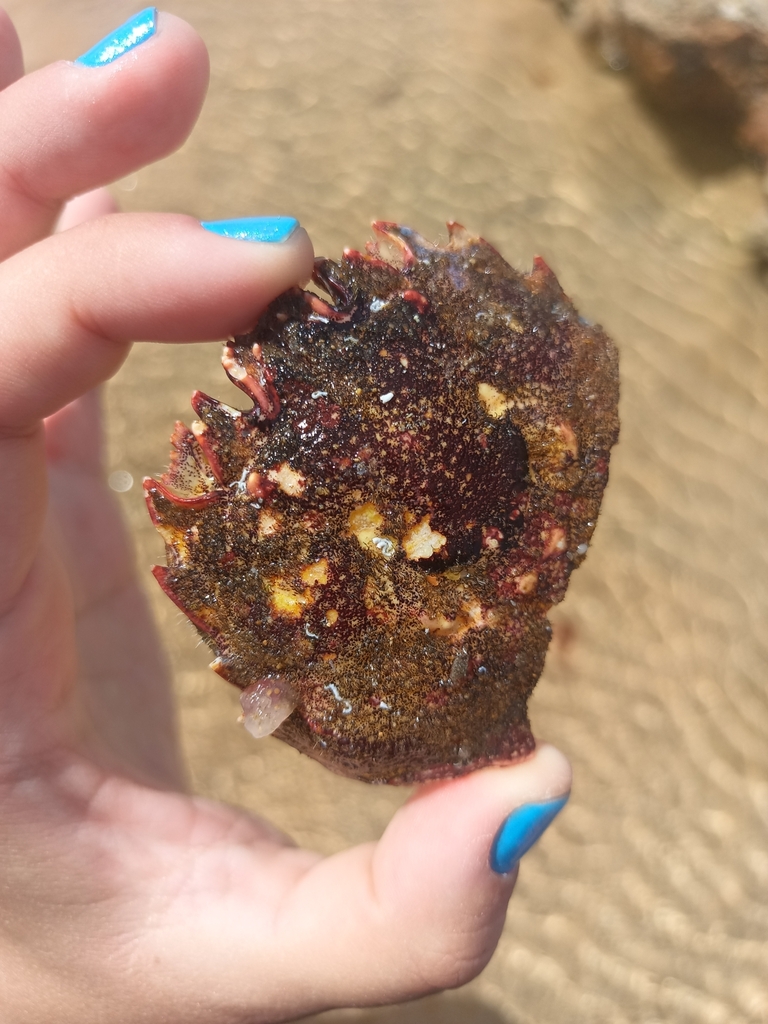
(c) Evelyn Z, some rights reserved (CC BY-SA) · CC BY-SA · iNaturalist 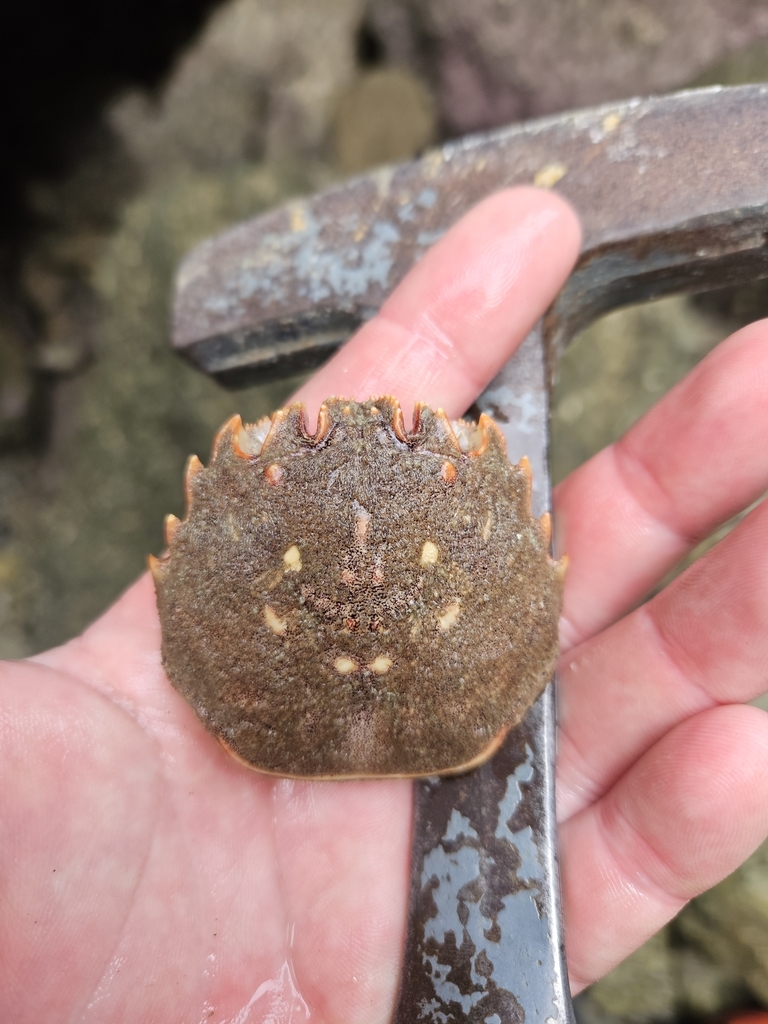
no rights reserved · CC0 1.0 · iNaturalist
Names and classification
- English
- Cape Rock Crab, Red Rock Crab
Other scientific names: Cancer chabrus, Grapsus (Plagusia) capensis, Marestia elegans, Marestia mawsoni, Plagusia chabrus, Plagusia gaimardi, Plagusia spinosa, Plagusia tomeniosa, Plagusia tomentosa, Plagusia tomentosus
Similar species
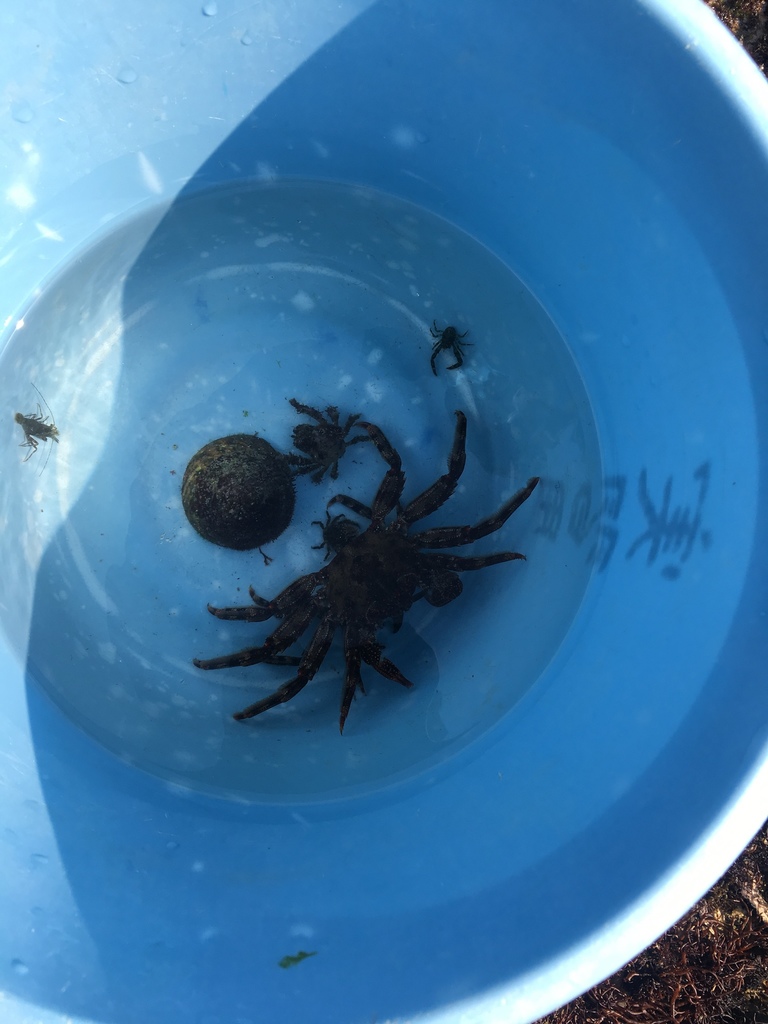 Cleft-fronted Bait Crab
Guinusia dentipes
 Shiny Bait Crab
Davusia glabra
Sources and credits
Names and taxonomy: WoRMS (CC BY 4.0) and the GBIF Backbone (CC BY 4.0). Photos: iNaturalist observers, each under the licence shown (CC0, CC BY or CC BY-SA).
- Depth, temperature, months and maps: records from OBIS and GBIF under CC0 or CC BY.
- Descriptions: Wikipedia, licensed CC BY-SA, each linked to its article.
- Conservation status as published by GBIF (IUCN Red List).
- 2,443 open-data records from 1903 to 2023.
- Species data updated November 3, 2026.
Log what you see on your next dive
The free DiveHive diver app keeps your logbook with every sighting and shows what lives at the site you dive next.