
Little Moray
Gymnothorax richardsonii
- Usual depth0–8 m
- Water temperature24–29 °C
- Best monthsApril
- How commonRare
About this species
Gymnothorax richardsonii is a moray eel found in coral reefs in the Pacific and Indian oceans. It was first named by Pieter Bleeker in 1852, and is commonly known as the Richardson's moray, little moray, spotted-lip moray, or the Y-lined moray. It is known as Bakasi in Cordova, Cebu, in the Philippines.
Text from the Wikipedia article “Gymnothorax richardsonii”, licensed CC BY-SA 4.0. Read the article
Where and when
Where it has been recorded
Worldwide
Loading the map
Best months
Worldwide (open data)
- January: 6 records
- February: 2 records
- March: 1 records
- April: 28 records
- May: 6 records
- June: 6 records
- July: 8 records
- August: 15 records
- September: 15 records
- October: 5 records
- November: 5 records
- December: 4 records
Depth and water temperature
Depth
Mostly recorded at 0–8 m · Deepest record: 18.7 m
Water temperature
Recorded in surface water of 24–29 °C
Names and classification
- English
- Little Moray, Richardson's Moray, spotted-lip moray, y-lined moray
Names in 3 more languages
- French
- Anguille Morel, Murène de Richardson
- Japanese
- Mobautsubo, モバウツボ
- Simplified Chinese
- 李查森氏裸胸鯙, 李氏裸胸鯙, 異紋裸胸鱔, 薯鰻, 虎鰻, 錢鰻
Other scientific names: Gymnothorax richardsoni, Gymnothorax richarsonii, Lycodontis richardsoni, Muraena richardsonii
Similar species
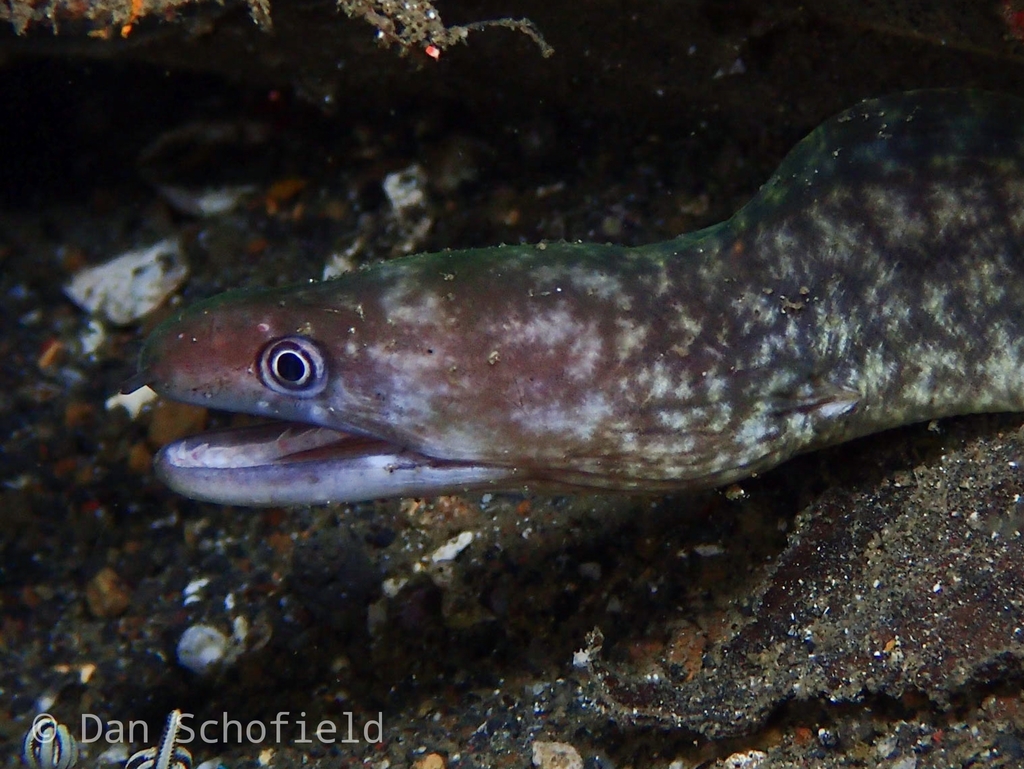 Lipspot moray
Gymnothorax chilospilus
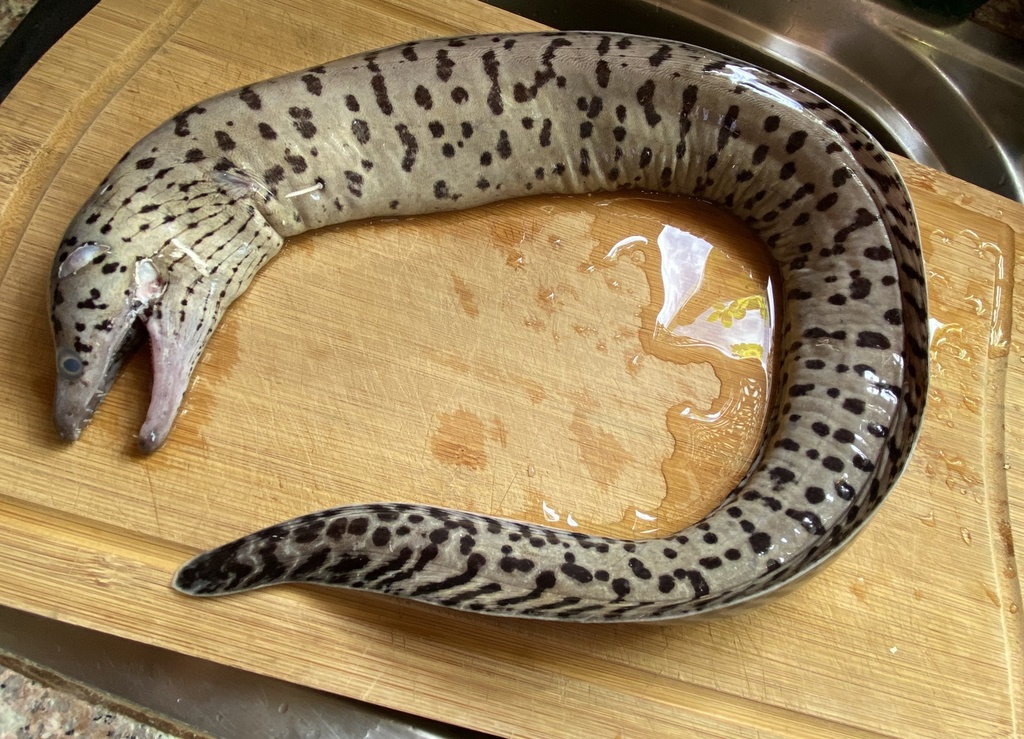 Fimbriated moray
Gymnothorax fimbriatus
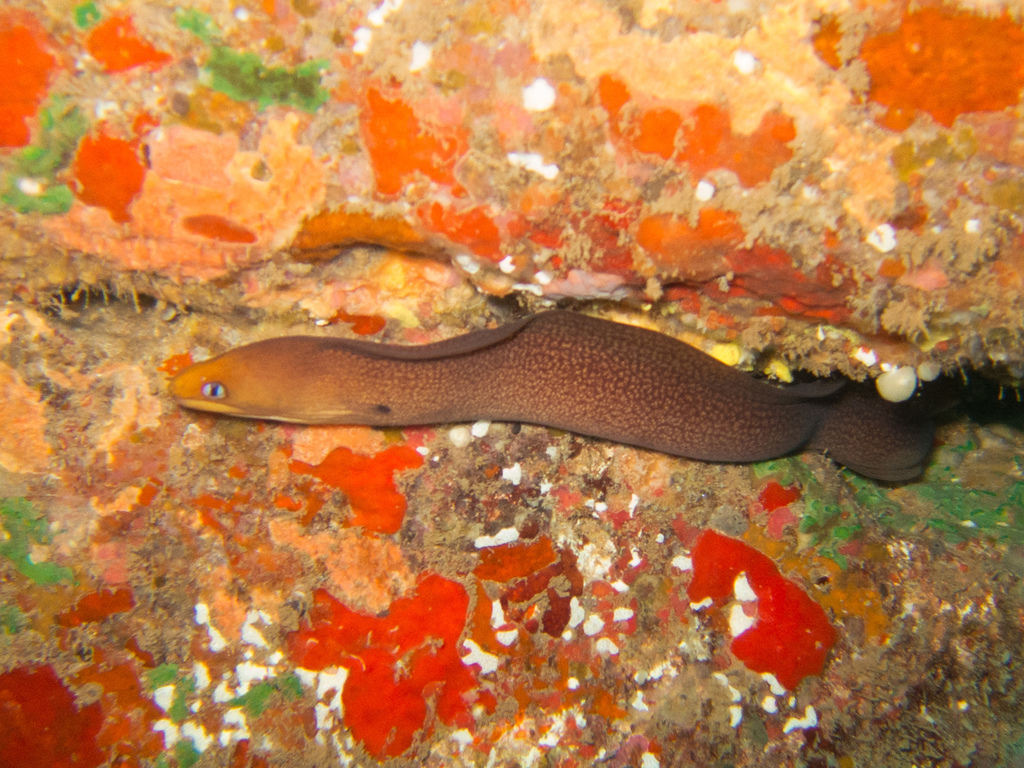 Blackspot Moray
Gymnothorax melatremus
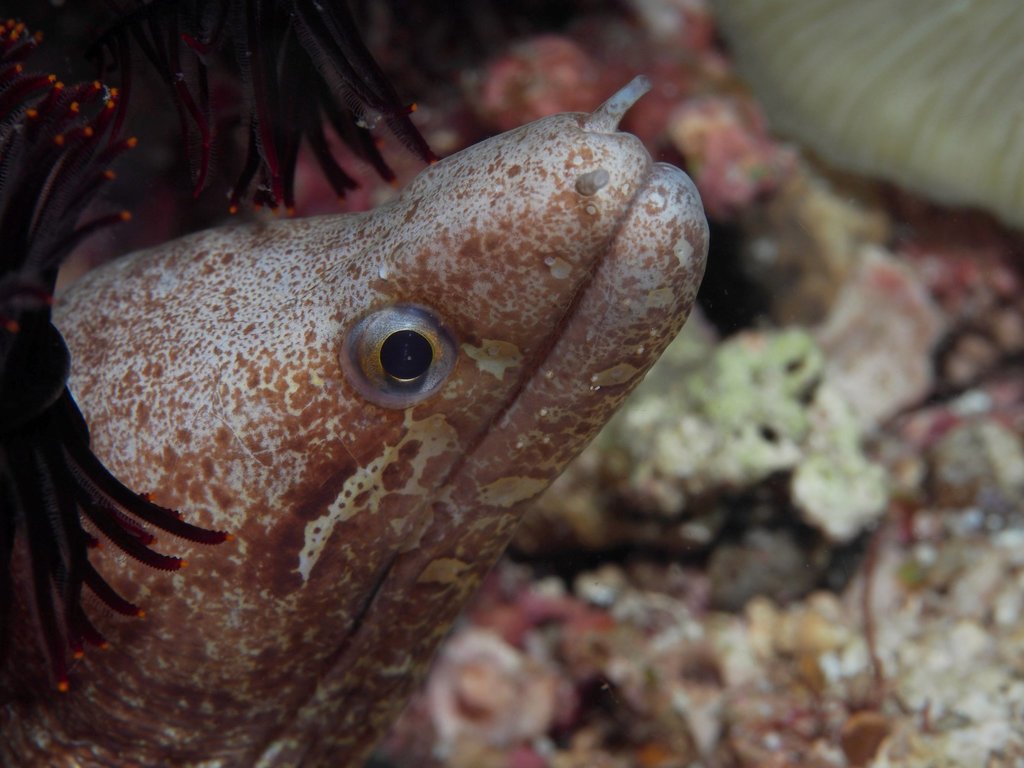 Barred-fin Moray
Gymnothorax zonipectis
- Vagrant moray
Gymnothorax buroensis
- Abbott's Moray
Gymnothorax eurostus
Sources and credits
Names and taxonomy: WoRMS (CC BY 4.0) and the GBIF Backbone (CC BY 4.0). Photos: iNaturalist observers, each under the licence shown (CC0, CC BY or CC BY-SA).
- Depth, temperature, months and maps: records from OBIS and GBIF under CC0 or CC BY.
- Descriptions: Wikipedia, licensed CC BY-SA, each linked to its article.
- Conservation status as published by GBIF (IUCN Red List).
- 214 open-data records from 1852 to 2023.
Log what you see on your next dive
The free DiveHive diver app keeps your logbook with every sighting and shows what lives at the site you dive next.