
DiscoverSpeciesSharks and rays
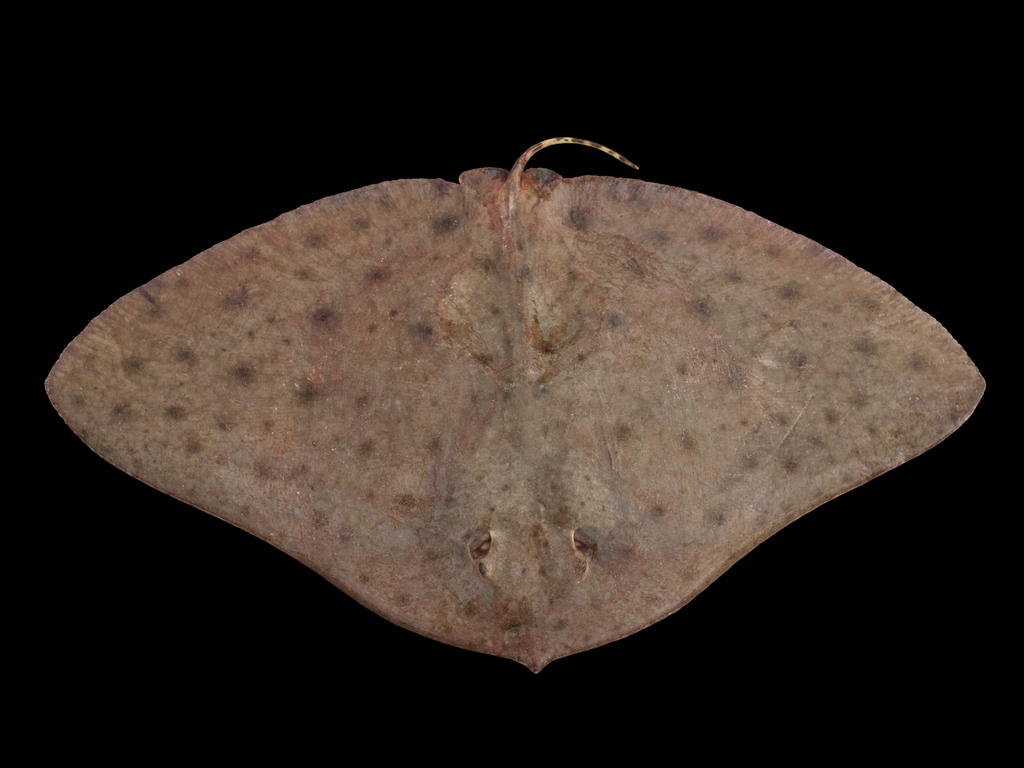
Smooth butterfly ray
Gymnura micrura
- Usual depth12–54 m
- Water temperature15–28 °C
- Best monthsSeptember and October
- How commonOccasional
Photo credit: (c) Tomas Willems & Hans Hillewaert, some rights reserved (CC BY-SA) · CC BY-SA · iNaturalist
About this species
The smooth butterfly ray is a species of cartilaginous fish in the family Gymnuridae. It is a member of the order Myliobatiformes, which contains 10 total families. Its natural habitats are shallow seas, subtidal aquatic beds, estuarine waters, and coastal saline lagoons. Its common name is derived from its compressed body, pectoral fins that are wider than their length, and overall diamond shape.
Text from the Wikipedia article “Smooth butterfly ray”, licensed CC BY-SA 4.0. Read the article
Where and when
Where it has been recorded
Worldwide
Loading the map
Best months
Worldwide (open data)
- January: 3 records
- February: 5 records
- March: 24 records
- April: 27 records
- May: 28 records
- June: 8 records
- July: 53 records
- August: 16 records
- September: 170 records
- October: 227 records
- November: 15 records
- December: 3 records
Depth and water temperature
Depth
Mostly recorded at 12–54 m · Deepest record: 92 m
Water temperature
Recorded in surface water of 15–28 °C
Names and classification
- English
- Smooth butterfly ray, smooth butterfly ray
Names in 3 more languages
- Spanish
- raya cola de rata, Raya guayanesa, Raya mariposa, Rayamariposa Menor
- French
- Raie-papillon glabre
- Japanese
- トゲナシツバクロエイ
Other scientific names: Gymnura micura, Pteroplatea micrura, Raja micrura
Similar species
- Australian Butterfly Ray
Gymnura australis
 Longtail Butterfly Ray
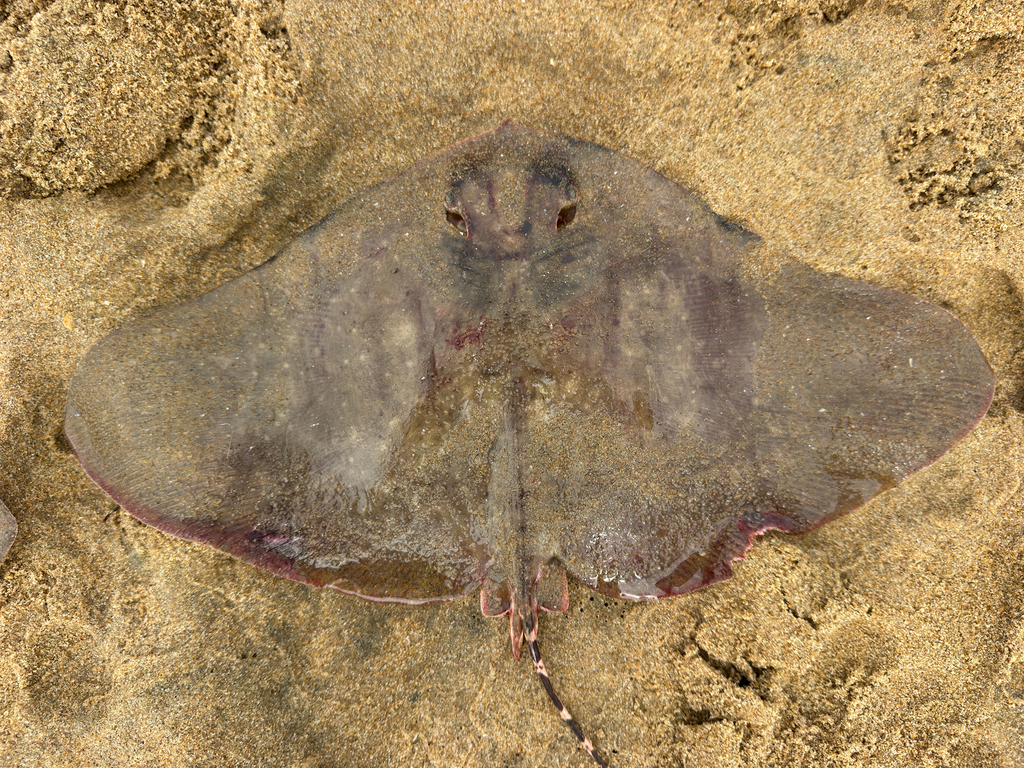
Gymnura poecilura
- Japanese butterflyray
Gymnura japonica
- Zonetail Butterfly Ray
Gymnura zonurus
Sources and credits
Names and taxonomy: WoRMS (CC BY 4.0) and the GBIF Backbone (CC BY 4.0). Photos: iNaturalist observers, each under the licence shown (CC0, CC BY or CC BY-SA).
- Depth, temperature, months and maps: records from OBIS and GBIF under CC0 or CC BY.
- Descriptions: Wikipedia, licensed CC BY-SA, each linked to its article.
- Conservation status as published by GBIF (IUCN Red List).
- 1,152 open-data records from 1801 to 2014.
- Species data updated November 3, 2026.
Log what you see on your next dive
The free DiveHive diver app keeps your logbook with every sighting and shows what lives at the site you dive next.