
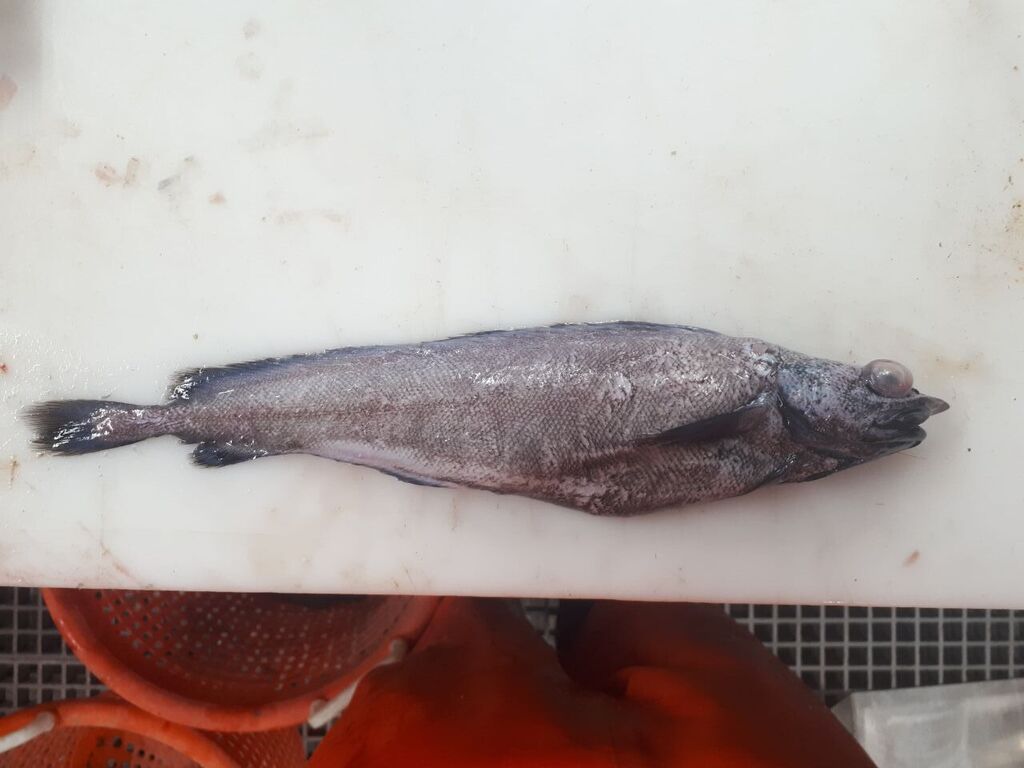
Dainty mora
Halargyreus johnsonii
- Usual depth708–1,159 m
- Water temperature-2–22 °C
- Best monthsSeptember
- How commonCommon
About this species
The slender codling or slender cod is a morid cod, the only species in the genus Halargyreus. It is found in all oceans, at depths from 450 to 3,000 m, and grows to 56 cm (22 in) in total length. First discovered by and named after James Yate Johnson.
Text from the Wikipedia article “Slender codling”, licensed CC BY-SA 4.0. Read the article
Where and when
Where it has been recorded
Worldwide
Loading the map
Best months
Worldwide (open data)
- January: 18 records
- February: 24 records
- March: 46 records
- April: 25 records
- May: 73 records
- June: 53 records
- July: 82 records
- August: 153 records
- September: 433 records
- October: 178 records
- November: 50 records
- December: 40 records
Depth and water temperature
Depth
Mostly recorded at 708–1,159 m · Deepest record: 3,050 m
Water temperature
Recorded in surface water of -2–22 °C
Names and classification
- English
- Dainty mora, Slender codling, dainty mora, slender codling
Names in 2 more languages
- French
- more délicat, Moro svelte
- Japanese
- Karasudara, カラスダラ
Other scientific names: Halargyreus affinis, Halargyreus brevipes, Halargyreus johnsoni
Similar species
 Blackcod
Antimora rostrata
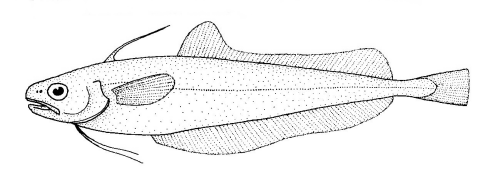 ahuru
Auchenoceros punctatus
- Finescale mora
Antimora microlepis
 Japanese codling
Physiculus japonicus
- Beardie
Eeyorius hutchinsi
Sources and credits
Names and taxonomy: WoRMS (CC BY 4.0) and the GBIF Backbone (CC BY 4.0). Photos: iNaturalist observers, each under the licence shown (CC0, CC BY or CC BY-SA).
- Depth, temperature, months and maps: records from OBIS and GBIF under CC0 or CC BY.
- Descriptions: Wikipedia, licensed CC BY-SA, each linked to its article.
- Conservation status as published by GBIF (IUCN Red List).
- 10,209 open-data records from 1886 to 2022.
- Species data updated November 3, 2026.
Log what you see on your next dive
The free DiveHive diver app keeps your logbook with every sighting and shows what lives at the site you dive next.