
Glittering Pipefish
Halicampus nitidus
- Usual depth2–13 m
- Water temperature25–30 °C
- Best monthsFebruary, March, and November
- How commonRare
About this species
The glittering pipefish is a species of marine coastal fish of the family Syngnathidae. It is found in the Western Pacific, from Viet Nam to Fiji and from the Ryukyu Islands to New Caledonia, where it inhabits corals, sand and reef flats to depths of 20 metres (66 ft). It can grow to lengths of 7.3 centimetres (2.9 in), and is expected to feed on small crustaceans, similar to other pipefishes. It is secretive and rarely observed. This species is ovoviviparous, with males carrying eggs and giving birth to live young.
Text from the Wikipedia article “Halicampus nitidus”, licensed CC BY-SA 4.0. Read the article
Where and when
Where it has been recorded
Worldwide
Loading the map
Best months
Worldwide (open data)
- January: 3 records
- February: 7 records
- March: 10 records
- April: 0 records
- May: 3 records
- June: 1 records
- July: 4 records
- August: 4 records
- September: 6 records
- October: 3 records
- November: 10 records
- December: 1 records
Depth and water temperature
Depth
Mostly recorded at 2–13 m · Deepest record: 19 m
Water temperature
Recorded in surface water of 25–30 °C
Names and classification
- English
- Glittering Pipefish
Names in 2 more languages
- Japanese
- Torafumiyakko, トラフウミヤッコ
- Simplified Chinese
- 横带海蠋鱼, 橫帶海蠋魚
Other scientific names: Syngnathus nitidus
Similar species
- Brock's pipefish
Halicampus brocki
- Gray's pipefish
Halicampus grayi
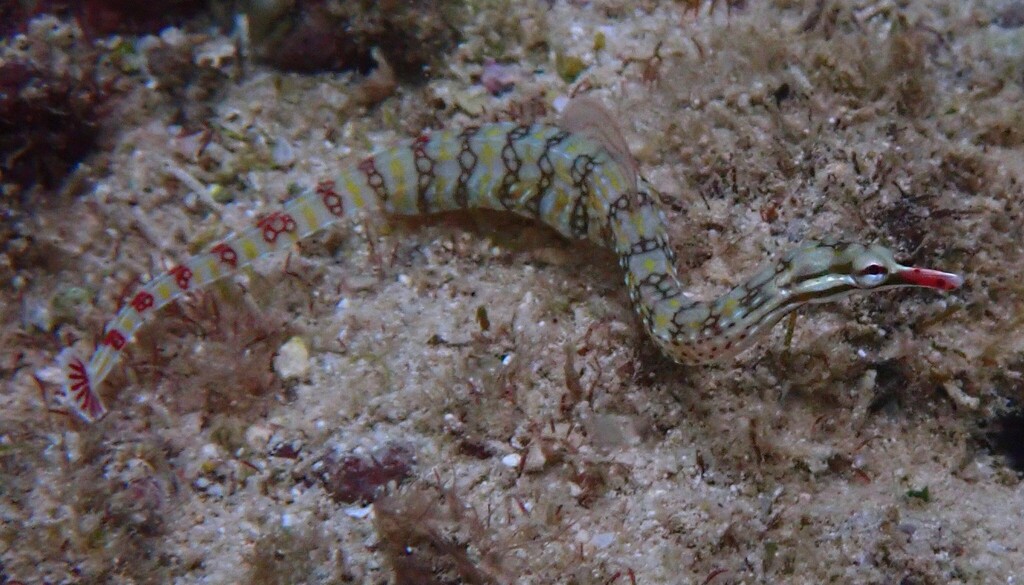 Banded Pipefish
Corythoichthys flavofasciatus
 Bloodspot Pipefish
Corythoichthys haematopterus
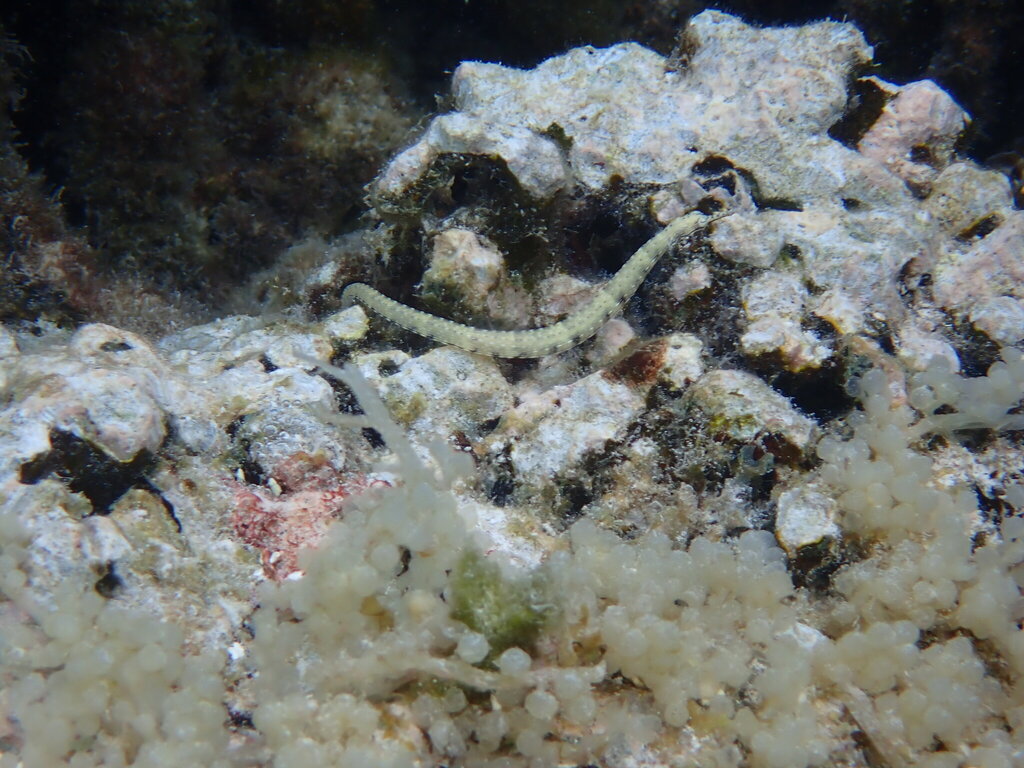 Banded pipefish
Corythoichthys intestinalis
 Bluestripe pipefish
Doryrhamphus excisus
Sources and credits
Names and taxonomy: WoRMS (CC BY 4.0) and the GBIF Backbone (CC BY 4.0). Photos: iNaturalist observers, each under the licence shown (CC0, CC BY or CC BY-SA).
- Depth, temperature, months and maps: records from OBIS and GBIF under CC0 or CC BY.
- Descriptions: Wikipedia, licensed CC BY-SA, each linked to its article.
- Conservation status as published by GBIF (IUCN Red List).
- 67 open-data records from 1956 to 2008.
Log what you see on your next dive
The free DiveHive diver app keeps your logbook with every sighting and shows what lives at the site you dive next.