
Heikegani
Heikeopsis japonica
- Usual depth10–25 m
- Water temperature18–25 °C
- Best monthsSeptember
- How commonRare
About this species
Heikegani is a species of crab native to Japan, with a shell that bears a pattern resembling a human face – an example of the phenomenon of pareidolia – which is interpreted to be the face of an angry samurai, hence the nickname samurai crab. The crabs are named after the once powerful Taira clan which dominated medieval Japan, commonly known as the Heike. It is believed that these crabs are reincarnations of the Heike warriors defeated at the naval Battle of Dan-no-ura as told in The Tale of the Heike. While the crabs are edible, they are not eaten by most Japanese.
Text from the Wikipedia article “Heikegani”, licensed CC BY-SA 4.0. Read the article
Where and when
Where it has been recorded
Worldwide
Loading the map
Best months
Worldwide (open data)
- January: 0 records
- February: 3 records
- March: 3 records
- April: 1 records
- May: 1 records
- June: 3 records
- July: 2 records
- August: 1 records
- September: 11 records
- October: 3 records
- November: 2 records
- December: 1 records
Depth and water temperature
Depth
Mostly recorded at 10–25 m · Deepest record: 25 m
Water temperature
Recorded in surface water of 18–25 °C
Names and classification
- English
- Heikegani, Samurai Crab
Names in 1 more languages
- Japanese
- アシナガヘイケガニ, ヘイケガニ
Other scientific names: Doripe japonica, Heikea japonica, Heikeopsis arachnoides, Neodorippe (Neodorippe) japonicum, Nobilum arachnoides
Similar species
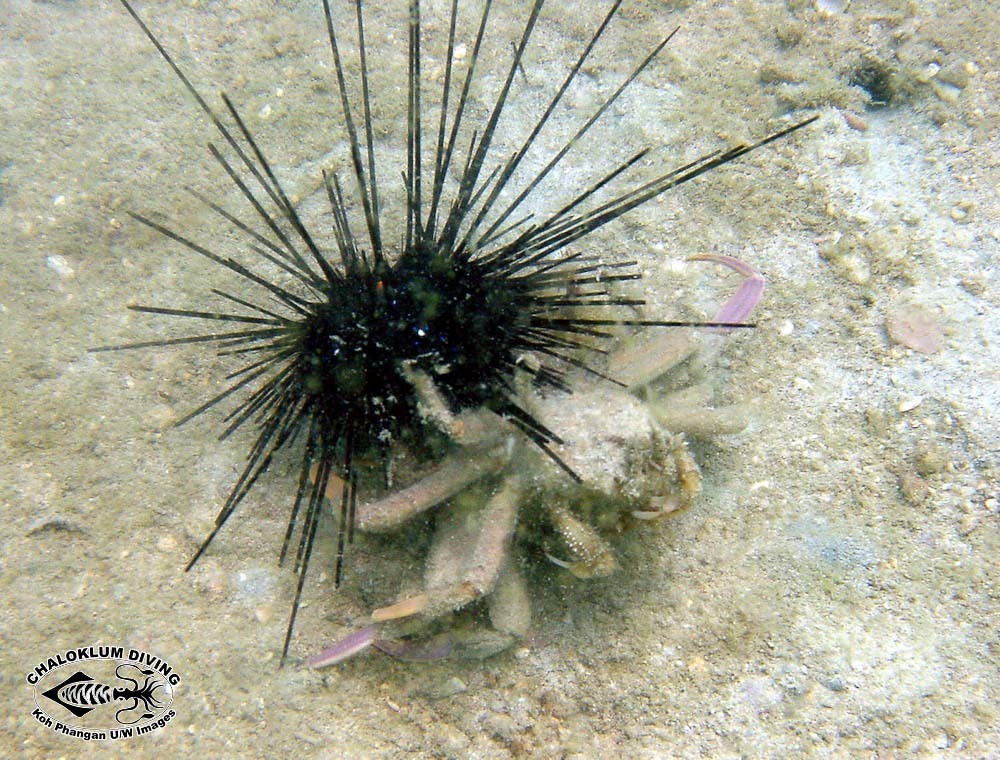 Carrier crab
Dorippe frascone
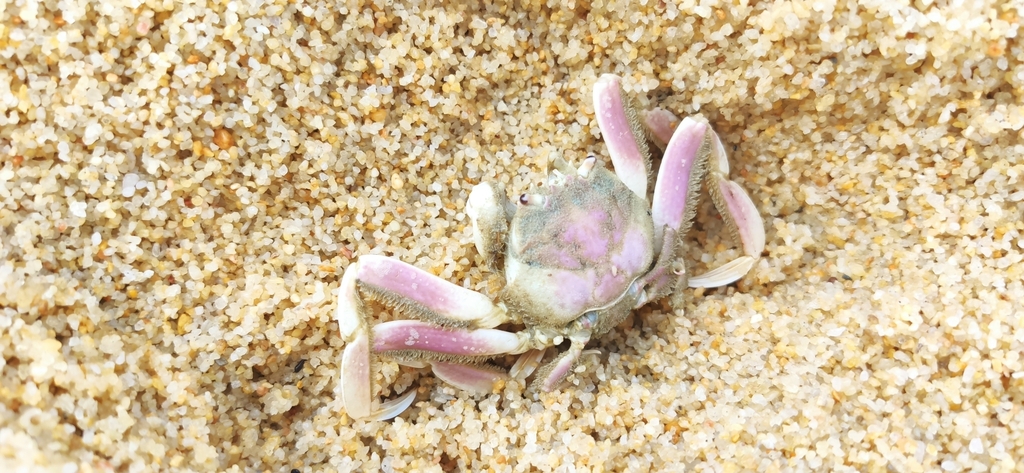
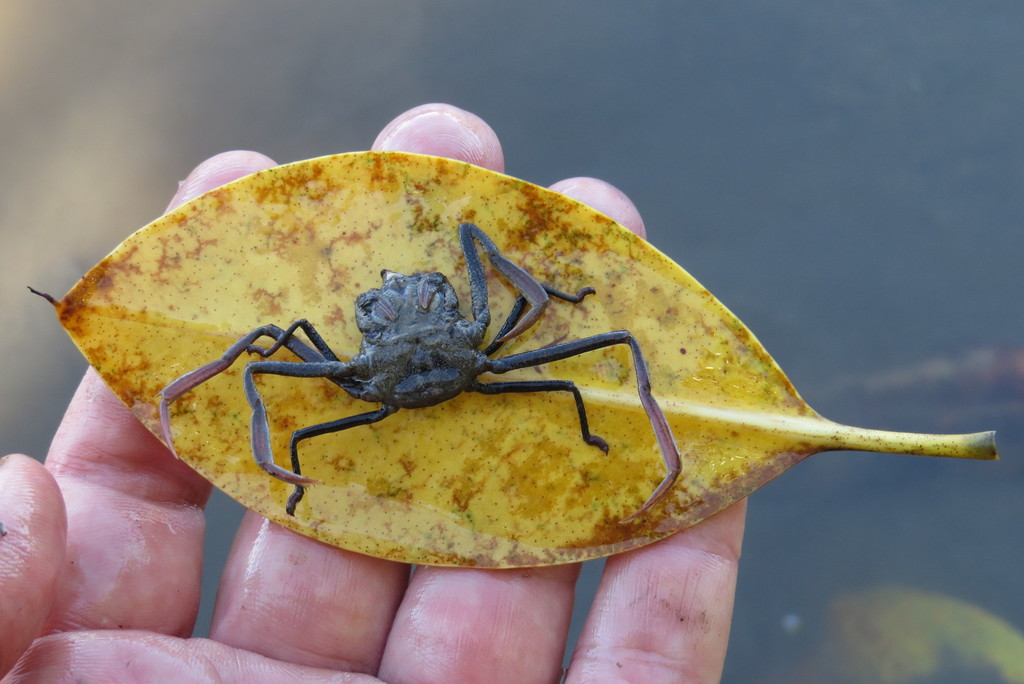 Leaf-porter crab
Neodorippe callida
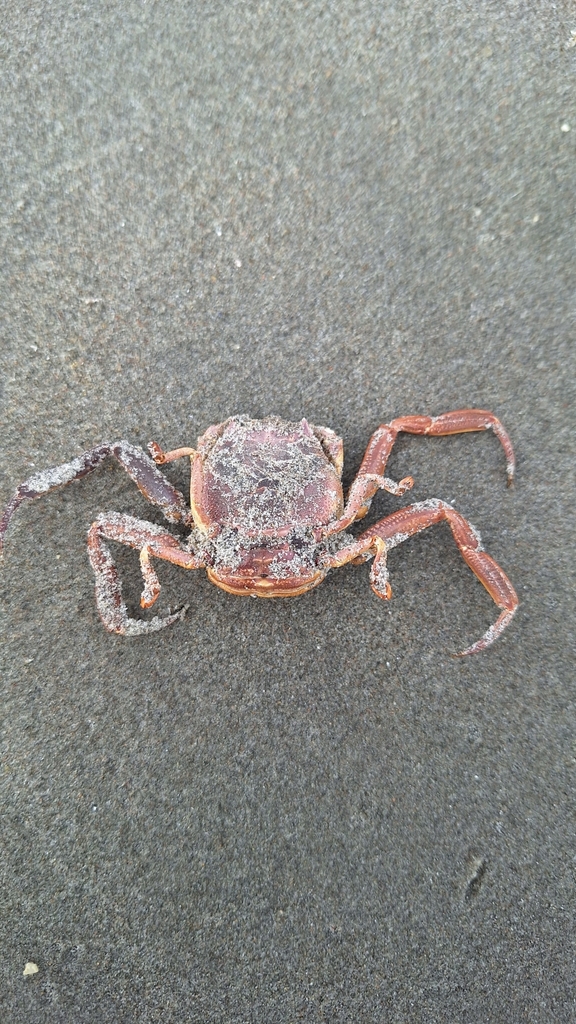 Granulated mask crab
Paradorippe granulata
Sources and credits
Names and taxonomy: WoRMS (CC BY 4.0) and the GBIF Backbone (CC BY 4.0). Photos: iNaturalist observers, each under the licence shown (CC0, CC BY or CC BY-SA).
- Depth, temperature, months and maps: records from OBIS and GBIF under CC0 or CC BY.
- Descriptions: Wikipedia, licensed CC BY-SA, each linked to its article.
- Conservation status as published by GBIF (IUCN Red List).
- 108 open-data records from 1974 to 2010.
- Species data updated November 3, 2026.
Log what you see on your next dive
The free DiveHive diver app keeps your logbook with every sighting and shows what lives at the site you dive next.