
DiscoverSpeciesSharks and rays
Sixgill shark
Hexanchus vitulus
- Usual depth140–418 m
- Water temperature23–29 °C
- Best monthsJanuary and October
- How commonRare
About this species
The Atlantic sixgill shark is one of the five extant species of the Hexanchidae family of cow sharks. They are found in the Atlantic Ocean at depths that are greater than 300 meters. Due to their habitat being difficult to access for humans, they are rarely encountered and hard to study. The Atlantic sixgill shark is very similar to other species of cow shark in terms of its morphology and growth rate in deep sea waters. It is believed that this is due to the abiotic and biotic factors in relation to the depths at which they are found. It was first described as its own species in 1969, but was later synonymized with the morphologically similar bigeye sixgill shark. However, a study published in 2018 resurrected the species on the basis of molecular data.
Text from the Wikipedia article “Atlantic sixgill shark”, licensed CC BY-SA 4.0. Read the article
Where and when
Where it has been recorded
Worldwide
Loading the map
Best months
Worldwide (open data)
- January: 2 records
- February: 0 records
- March: 0 records
- April: 0 records
- May: 0 records
- June: 0 records
- July: 0 records
- August: 0 records
- September: 0 records
- October: 2 records
- November: 1 records
- December: 1 records
Depth and water temperature
Depth
Mostly recorded at 140–418 m · Deepest record: 417.5 m
Water temperature
Recorded in surface water of 23–29 °C
Names and classification
- English
- Sixgill shark, Atlantic sixgill shark, Big-eyed Sixgill Shark, Bigeyed Sixgill Shark, bigeye sixgill shark, sixgill shark
Names in 2 more languages
- Spanish
- marrajo ojigrande
- French
- Griset
Similar species
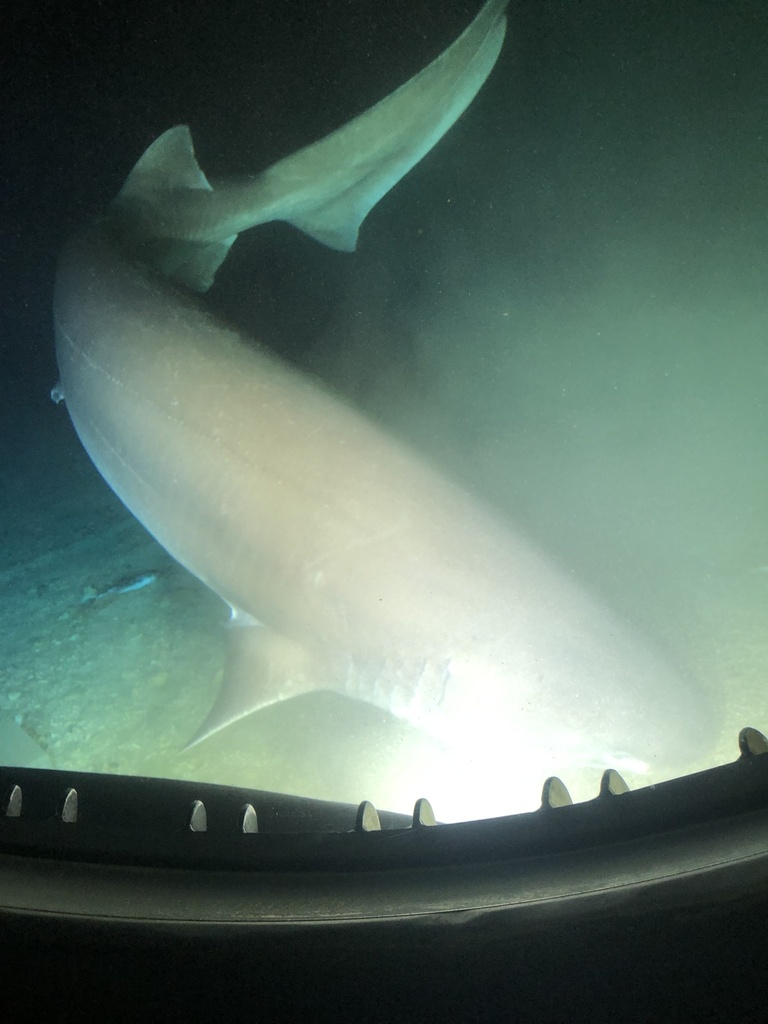 Bluntnose sixgill shark
Hexanchus griseus
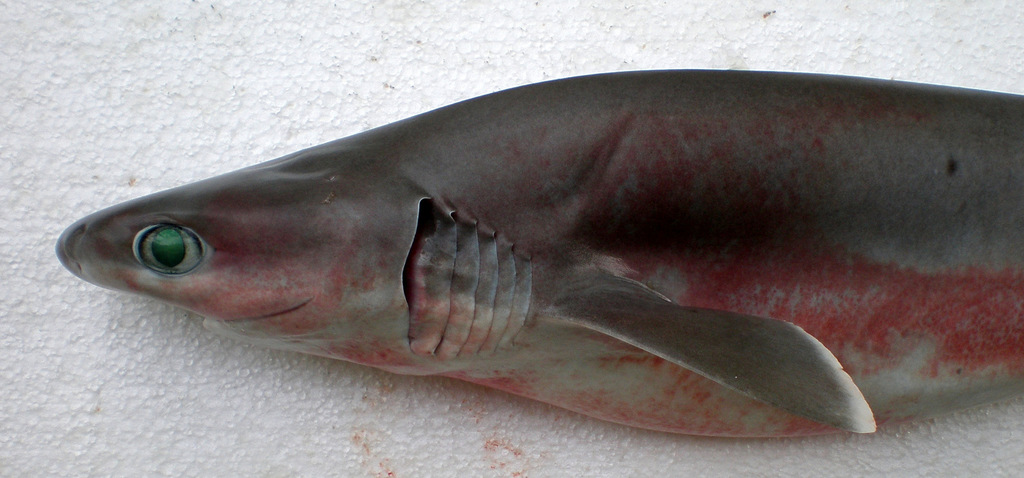 Bigeye sixgill shark
Hexanchus nakamurai
 Sharpnose sevengill shark
Heptranchias perlo
Sources and credits
Names and taxonomy: WoRMS (CC BY 4.0) and the GBIF Backbone (CC BY 4.0). Photos: iNaturalist observers, each under the licence shown (CC0, CC BY or CC BY-SA).
- Depth, temperature, months and maps: records from OBIS and GBIF under CC0 or CC BY.
- Descriptions: Wikipedia, licensed CC BY-SA, each linked to its article.
- Conservation status as published by GBIF (IUCN Red List).
- 11 open-data records from 1933 to 2010.
- Species data updated November 3, 2026.
Log what you see on your next dive
The free DiveHive diver app keeps your logbook with every sighting and shows what lives at the site you dive next.