
Blue-spotted pipefish
Hippichthys cyanospilos
- Usual depth0–20 m
- Water temperature22–30 °C
- Best monthsMay, September, and December
- How commonRare
About this species
Hippichthys cyanospilos, commonly known as the blue spotted pipefish or bluespeckled pipefish, is a marine fish belonging to the family Syngnathidae, native from the Indo-Pacific area.
Text from the Wikipedia article “Hippichthys cyanospilos”, licensed CC BY-SA 4.0. Read the article
Where and when
Where it has been recorded
Worldwide
Loading the map
Best months
Worldwide (open data)
- January: 2 records
- February: 6 records
- March: 4 records
- April: 2 records
- May: 8 records
- June: 8 records
- July: 8 records
- August: 6 records
- September: 9 records
- October: 5 records
- November: 5 records
- December: 9 records
Depth and water temperature
Depth
Mostly recorded at 0–20 m · Deepest record: 22 m
Water temperature
Recorded in surface water of 22–30 °C
Names and classification
- English
- Blue-spotted pipefish, bluespeckled pipefish, blue-spotted pipefish, Ward's Pipefish
Names in 2 more languages
- Japanese
- Hakuten-yoji, Hakuten-yôji, ハクテンヨウジ
- Simplified Chinese
- 海龍, 蓝海龙, 蓝点多环海龙, 蓝点海龙, 藍海龍, 藍點多環海龍, 藍點海龍
Other scientific names: Doryichthys spaniaspis, Hippichthys cyanospilus, Hippicthys cyanospilus, Parasyngnathus wardi, Syngnathus cyanospilos, Syngnathus cyanospilus, Syngnathus kuhlii, Syngnathus mossambicus, Syngnathus wardi
Similar species
- Bellybarred pipefish
Hippichthys spicifer
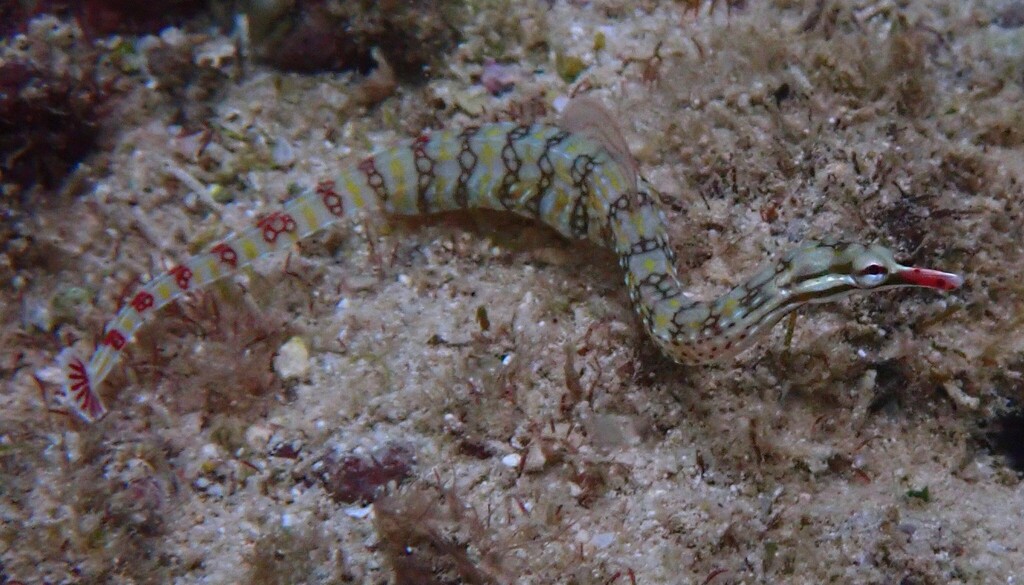 Banded Pipefish
Corythoichthys flavofasciatus
 Bloodspot Pipefish
Corythoichthys haematopterus
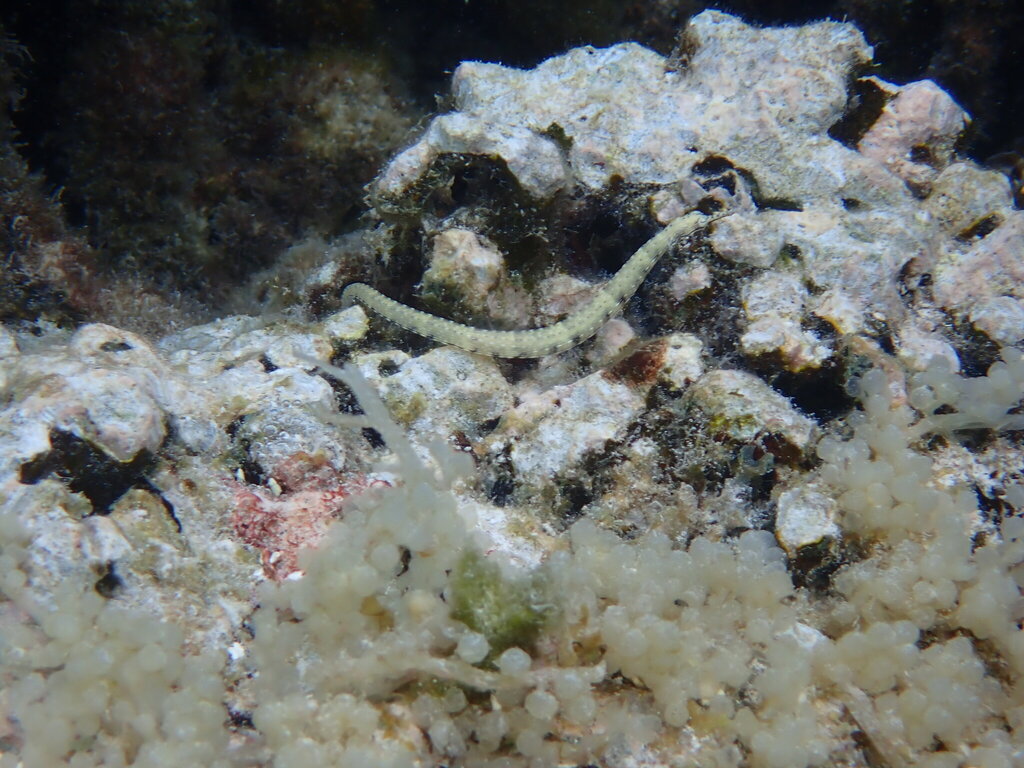 Banded pipefish
Corythoichthys intestinalis
 Bluestripe pipefish
Doryrhamphus excisus
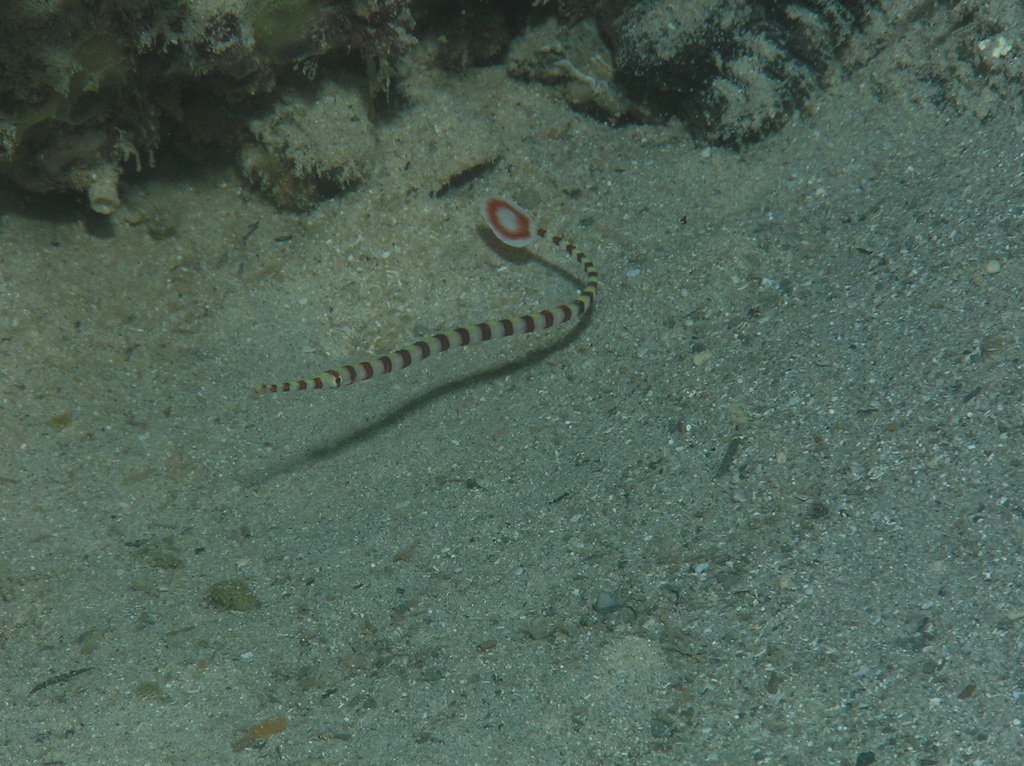 Banded Pipefish
Dunckerocampus dactyliophorus
Sources and credits
Names and taxonomy: WoRMS (CC BY 4.0) and the GBIF Backbone (CC BY 4.0). Photos: iNaturalist observers, each under the licence shown (CC0, CC BY or CC BY-SA).
- Depth, temperature, months and maps: records from OBIS and GBIF under CC0 or CC BY.
- Descriptions: Wikipedia, licensed CC BY-SA, each linked to its article.
- Conservation status as published by GBIF (IUCN Red List).
- 161 open-data records from 1854 to 2015.
Log what you see on your next dive
The free DiveHive diver app keeps your logbook with every sighting and shows what lives at the site you dive next.