
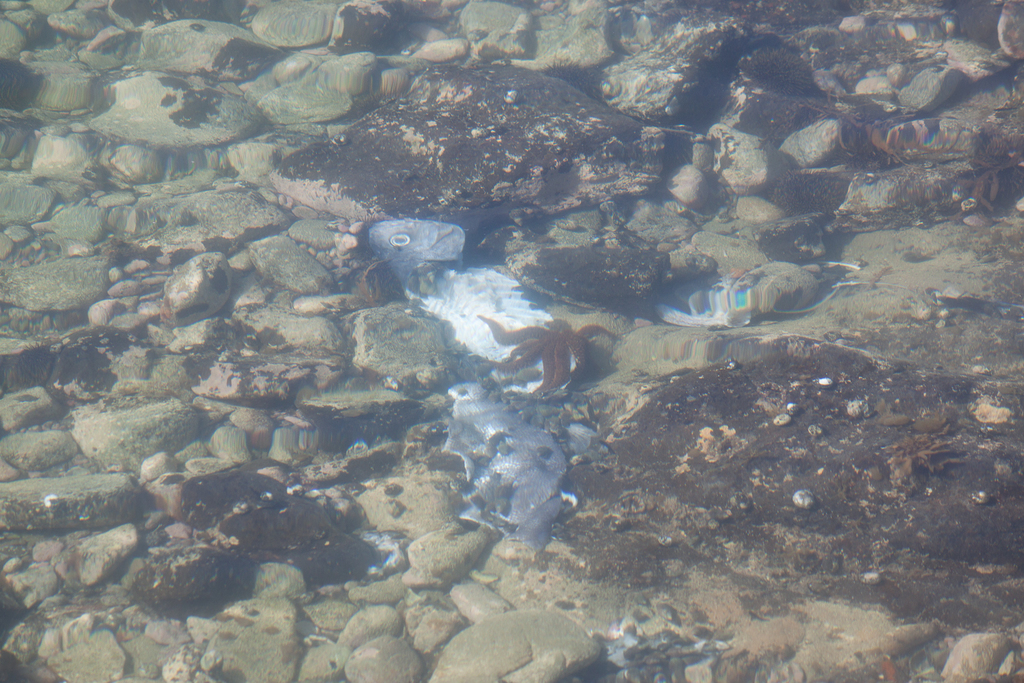
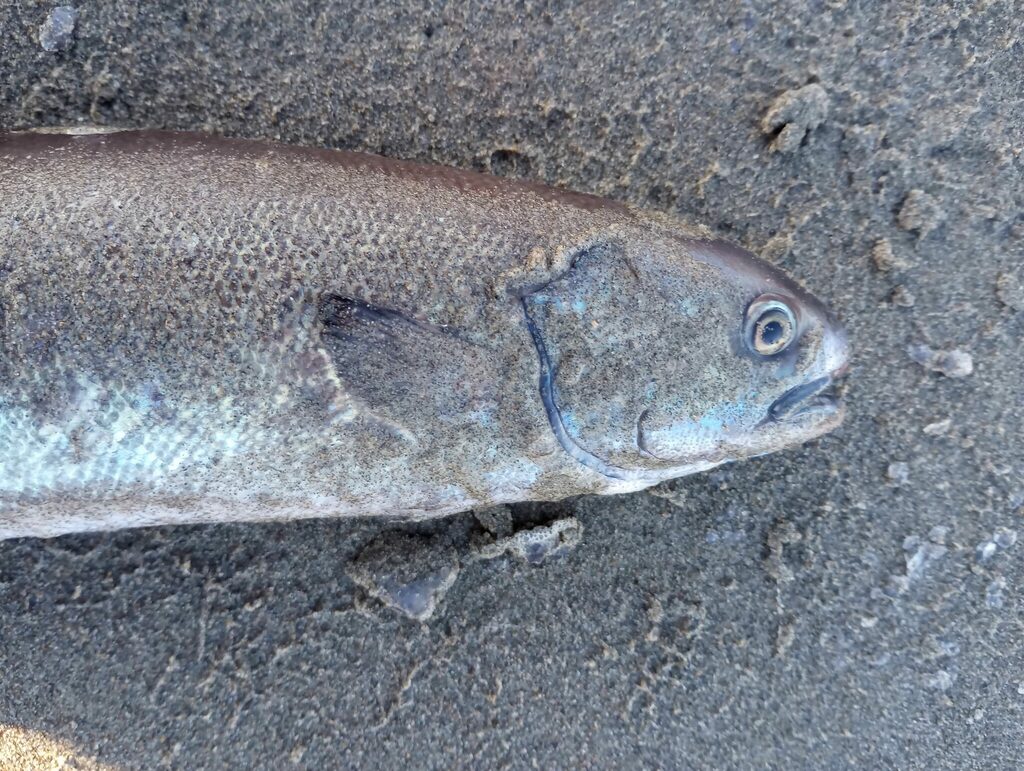
Antarctic butterfish
Hyperoglyphe antarctica
- Usual depth290–597 m
- Water temperature10–24 °C
- Best monthsJune, July, and December
- How commonOccasional
Photo credit: (c) Hilary Rose Dawson, some rights reserved (CC BY) · CC BY · iNaturalist
About this species
Hyperoglyphe antarctica, the Antarctic butterfish, bluenose warehou, deepsea trevally, blue eye trevalla, blue-eye cod, bluenose sea bass, or deep sea trevalla, is a medusafish of the family Centrolophidae found in all the southern oceans, at depths of between 40 and 1,500 m. Its length is up to about 140 cm, with a maximum published weight of 60 kg.
Text from the Wikipedia article “Hyperoglyphe antarctica”, licensed CC BY-SA 4.0. Read the article
Where and when
Where it has been recorded
Worldwide
Loading the map
Best months
Worldwide (open data)
- January: 6 records
- February: 13 records
- March: 18 records
- April: 8 records
- May: 16 records
- June: 28 records
- July: 30 records
- August: 28 records
- September: 28 records
- October: 20 records
- November: 8 records
- December: 29 records
Depth and water temperature
Depth
Mostly recorded at 290–597 m · Deepest record: 1,112.5 m
Water temperature
Recorded in surface water of 10–24 °C
Names and classification
- English
- Antarctic butterfish, Big Eye, Big-eye Trevalla, Blue-eye, Blue Eye, Blue-eye Cod, Blue-eye Trevalla, Blue-nose, Bluenose, Bluenose warehou, Bream Trevalla, Deep-sea Trevalla, Deep Sea Trevalla, Griffin's Silverfish, Sea Trevally, Stoney-eye, Trevalla
Names in 3 more languages
- French
- Rouffe antarctique
- Japanese
- ミナミメダイ
- Simplified Chinese
- 南極櫛鯧
Other scientific names: Diagramma porosa, Eurumelops johnstoni, Eurumetopos johnstonii, Hyperoglyphe porosa, Palinurichthys antarcticus, Palinurichthys porosus, Perca antarctica, Seriolella amplus
Similar species
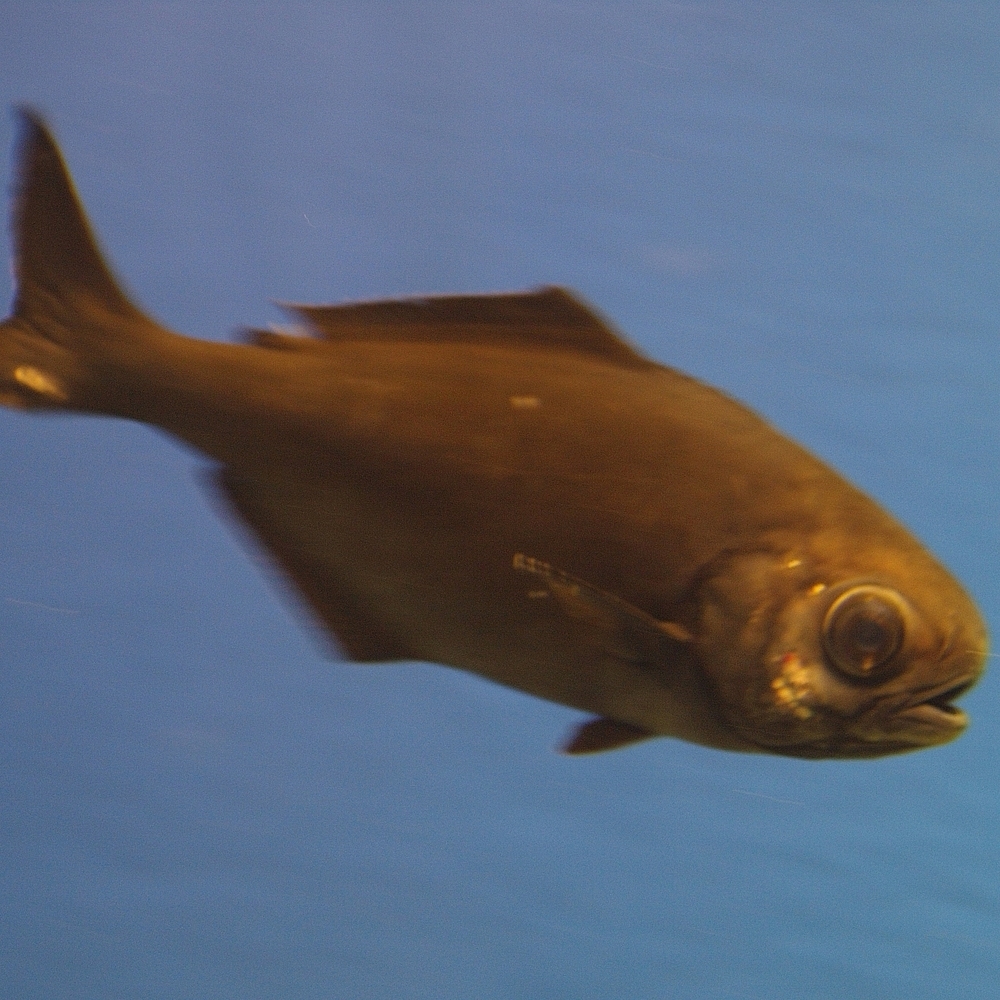 Japanese butterfish
Hyperoglyphe japonica
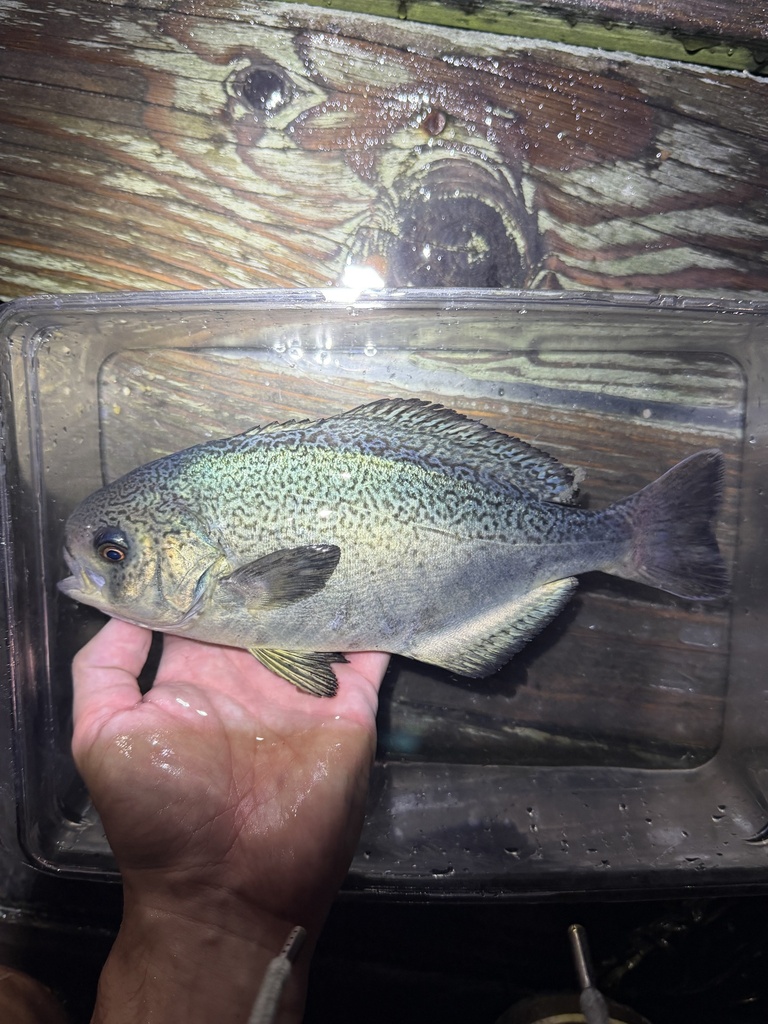 Barrelfish
Hyperoglyphe perciformis
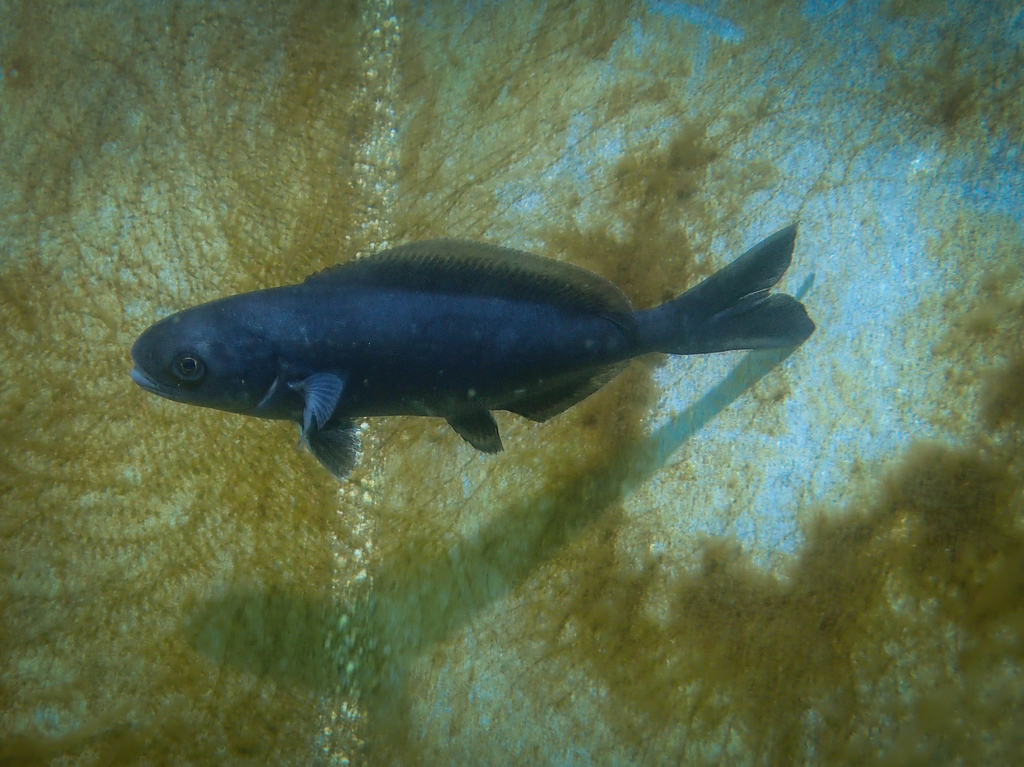 Black fish
Centrolophus niger
 Medusafish
Icichthys lockingtoni
- Southern driftfish
Icichthys australis
Sources and credits
Names and taxonomy: WoRMS (CC BY 4.0) and the GBIF Backbone (CC BY 4.0). Photos: iNaturalist observers, each under the licence shown (CC0, CC BY or CC BY-SA).
- Depth, temperature, months and maps: records from OBIS and GBIF under CC0 or CC BY.
- Descriptions: Wikipedia, licensed CC BY-SA, each linked to its article.
- Conservation status as published by GBIF (IUCN Red List).
- 1,382 open-data records from 1926 to 2018.
- Species data updated November 3, 2026.
Log what you see on your next dive
The free DiveHive diver app keeps your logbook with every sighting and shows what lives at the site you dive next.