
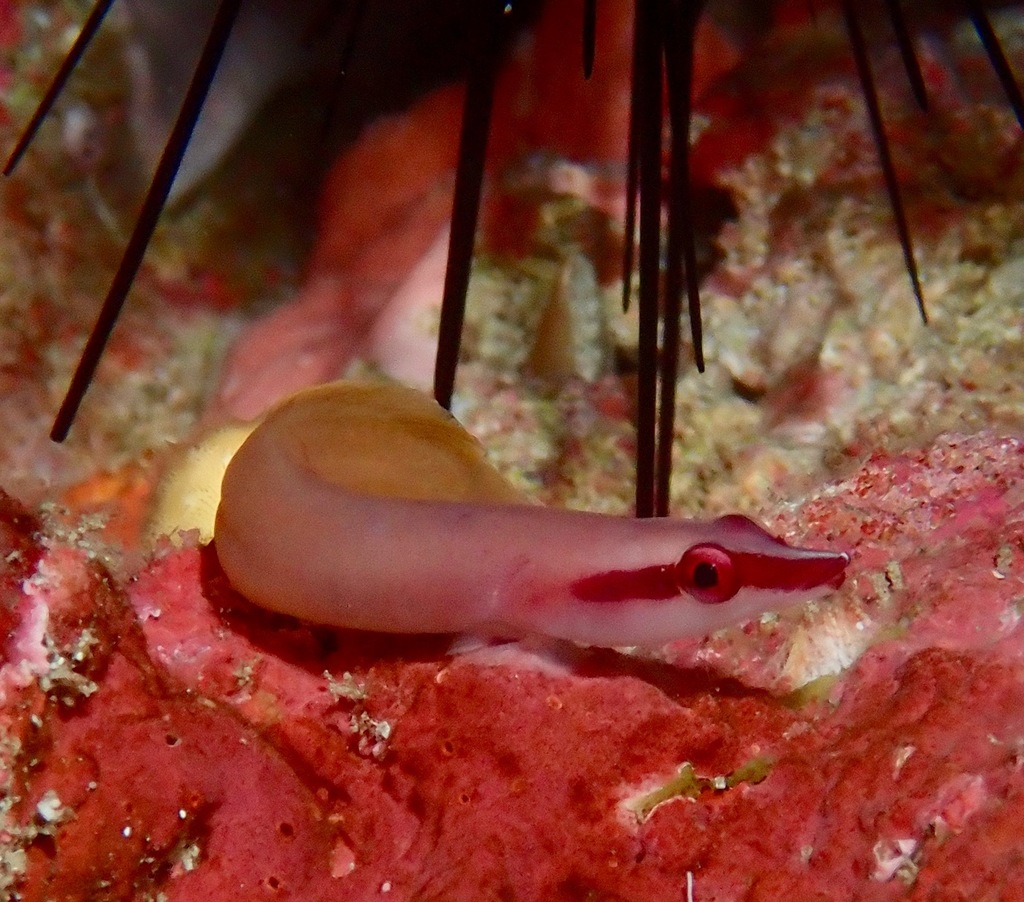
Bridled Cling-fish
Lepadichthys frenatus
- Usual depth1–9 m
- Water temperature20–29 °C
- Best monthsAugust, September, and December
- How commonRare
Photo credit: (c) jeyre, some rights reserved (CC BY) · CC BY · iNaturalist
About this species
Lepadichthys frenatus, the bridled clingfish, is a species of clingfish from the family Gobiesocidae. It is found on shallow reefs in the western Pacific Ocean.
Text from the Wikipedia article “Lepadichthys frenatus”, licensed CC BY-SA 4.0. Read the article
Where and when
Where it has been recorded
Worldwide
Loading the map
Best months
Worldwide (open data)
- January: 7 records
- February: 4 records
- March: 2 records
- April: 5 records
- May: 3 records
- June: 1 records
- July: 2 records
- August: 8 records
- September: 9 records
- October: 6 records
- November: 2 records
- December: 9 records
Depth and water temperature
Depth
Mostly recorded at 1–9 m · Deepest record: 15.5 m
Water temperature
Recorded in surface water of 20–29 °C
Names and classification
- English
- Bridled Cling-fish, Bridled Clingfish
Names in 3 more languages
- Spanish
- Clingo de máscara roja
- Japanese
- ミサキウバウオ
- Simplified Chinese
- 跳海仔, 連鰭喉盤魚, 黃連鰭喉盤魚
Other scientific names: Aspasma misakia, Lepidichthys frenatus
Similar species
- Pale clingfish
Lepadichthys caritus
- Eyestripe klingfish
Lepadichthys coccinotaenia
- Shark Bay Clingfish
Lepadichthys sandaracatus
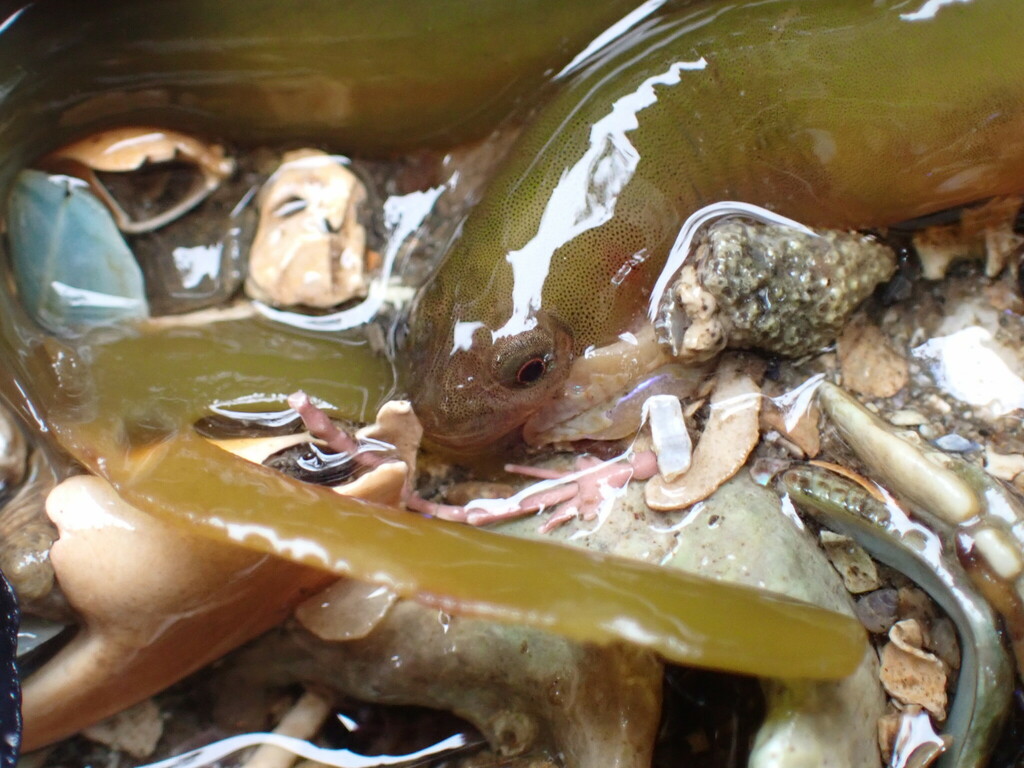 Common Shore-eel
Alabes dorsalis
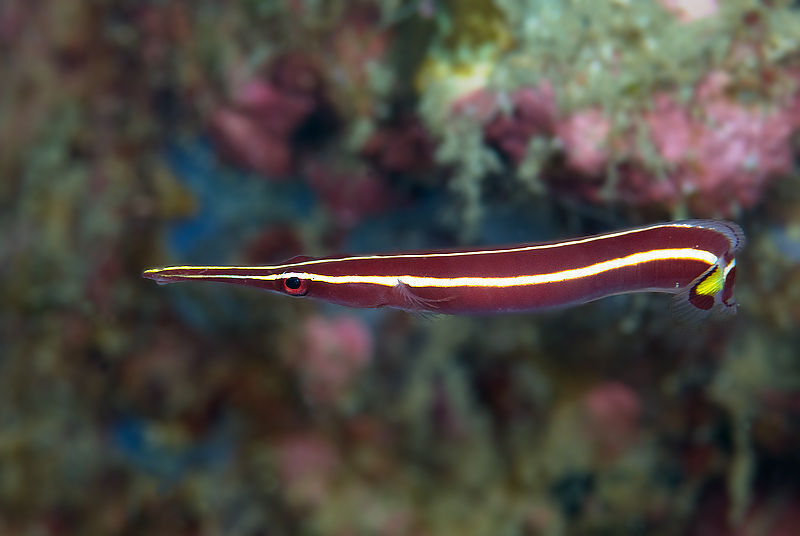 Long-snout Clingfish
Diademichthys lineatus
 Pygmy Shore Eel
Alabes parvula
Sources and credits
Names and taxonomy: WoRMS (CC BY 4.0) and the GBIF Backbone (CC BY 4.0). Photos: iNaturalist observers, each under the licence shown (CC0, CC BY or CC BY-SA).
- Depth, temperature, months and maps: records from OBIS and GBIF under CC0 or CC BY.
- Descriptions: Wikipedia, licensed CC BY-SA, each linked to its article.
- Conservation status as published by GBIF (IUCN Red List).
- 254 open-data records from 1964 to 2015.
- Species data updated November 4, 2026.
Log what you see on your next dive
The free DiveHive diver app keeps your logbook with every sighting and shows what lives at the site you dive next.