
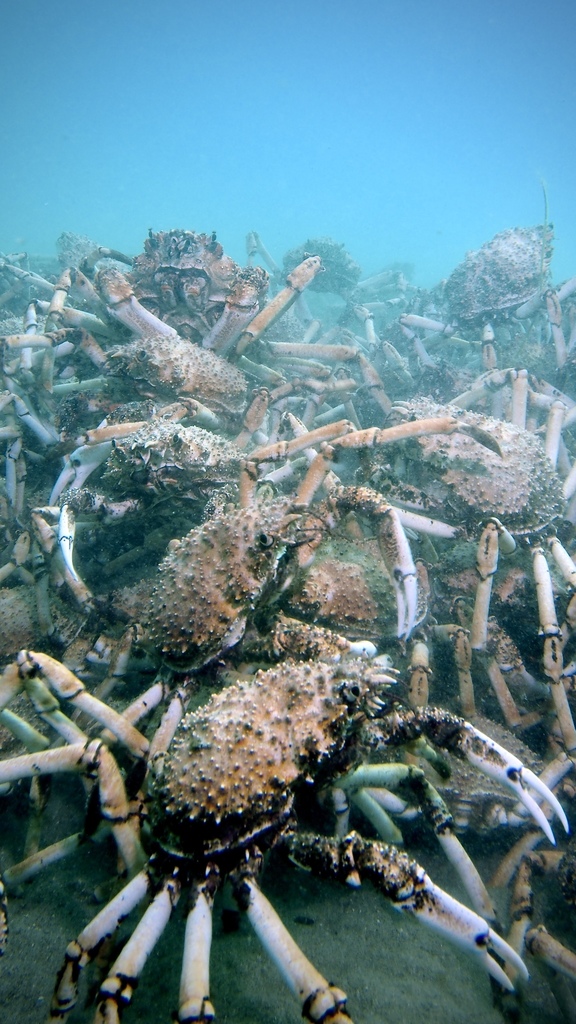
Great spider crab
Leptomithrax gaimardii
- Usual depth14–63 m
- Water temperature15–21 °C
- Best monthsJuly
- How commonOccasional
Photo credit: (c) Christopher Mark, some rights reserved (CC BY), uploaded by Christopher Mark · CC BY · iNaturalist
About this species
Leptomithrax gaimardii is a species of crab in the Majidae family, first described by Henri Milne-Edwards in 1834 as Paramithrax gaimardii, from a specimen found in New Zealand waters by Joseph Paul Gaimard who is honoured by the species epithet.
Text from the Wikipedia article “Leptomithrax gaimardii”, licensed CC BY-SA 4.0. Read the article
Where and when
Where it has been recorded
Worldwide
Loading the map
Best months
Worldwide (open data)
- January: 36 records
- February: 36 records
- March: 110 records
- April: 177 records
- May: 171 records
- June: 269 records
- July: 1,053 records
- August: 330 records
- September: 548 records
- October: 411 records
- November: 171 records
- December: 53 records
Depth and water temperature
Depth
Mostly recorded at 14–63 m · Deepest record: 63 m
Water temperature
Recorded in surface water of 15–21 °C
Photos
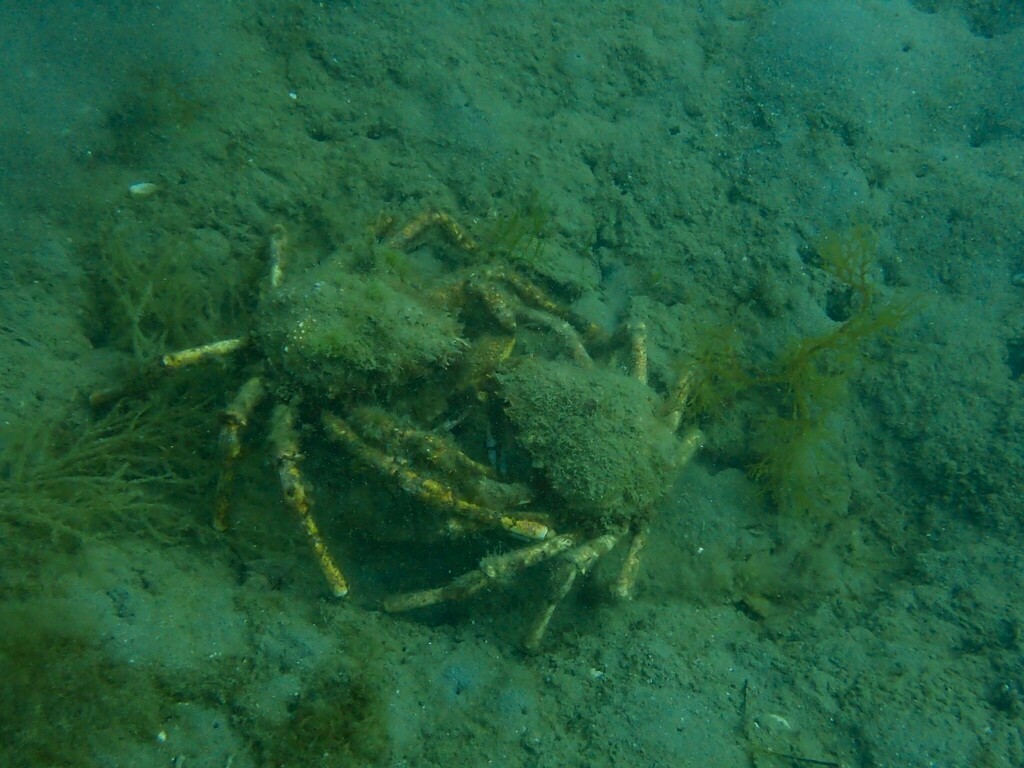
(c) ttsquid, some rights reserved (CC BY) · CC BY · iNaturalist 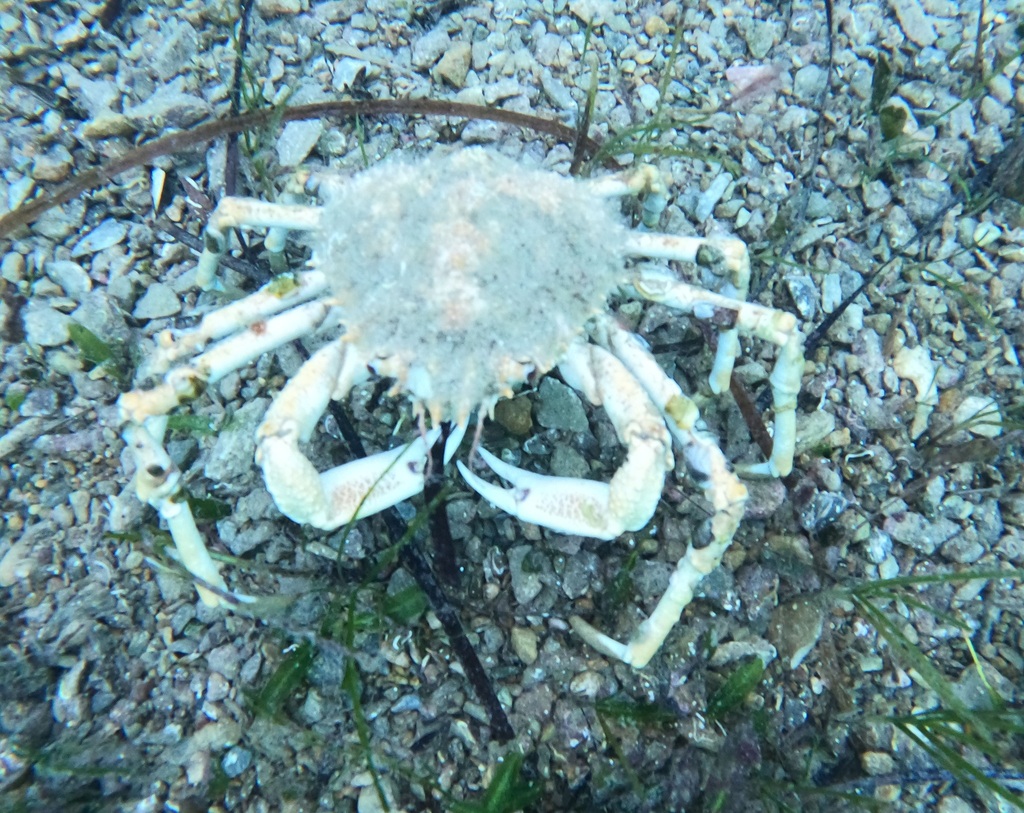
(c) Tim, some rights reserved (CC BY) · CC BY · iNaturalist 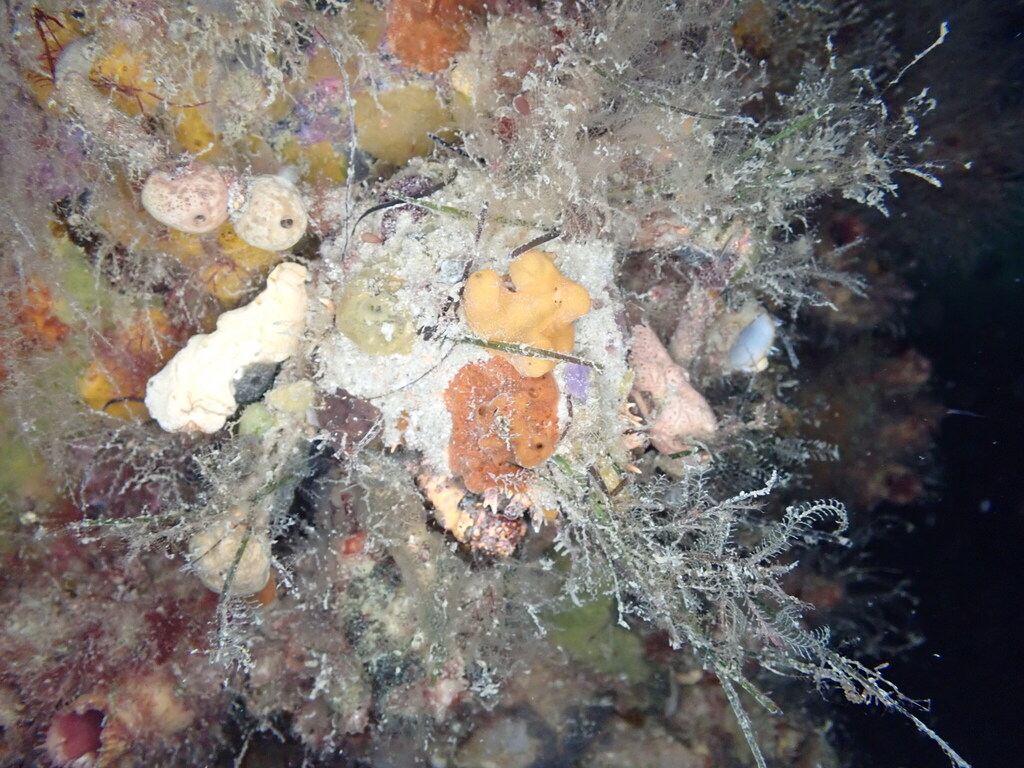
(c) Daniel Eisenhauer, some rights reserved (CC BY) · CC BY · iNaturalist 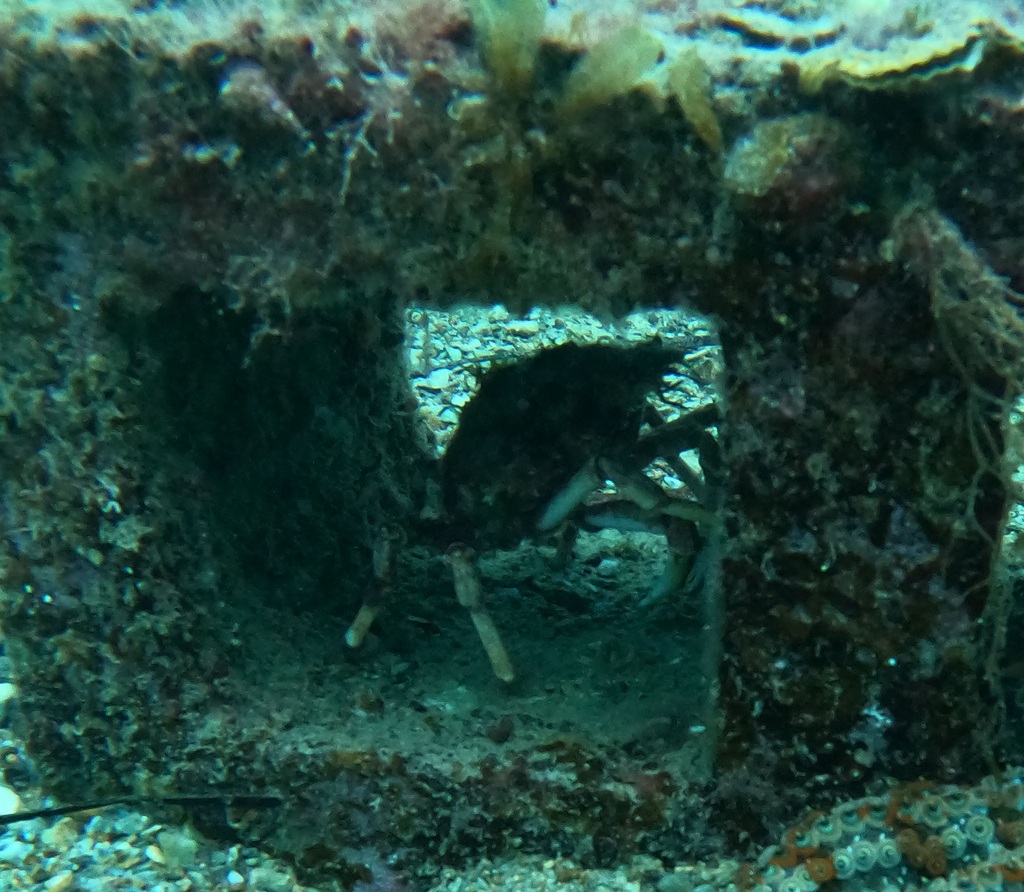
(c) Tim, some rights reserved (CC BY) · CC BY · iNaturalist 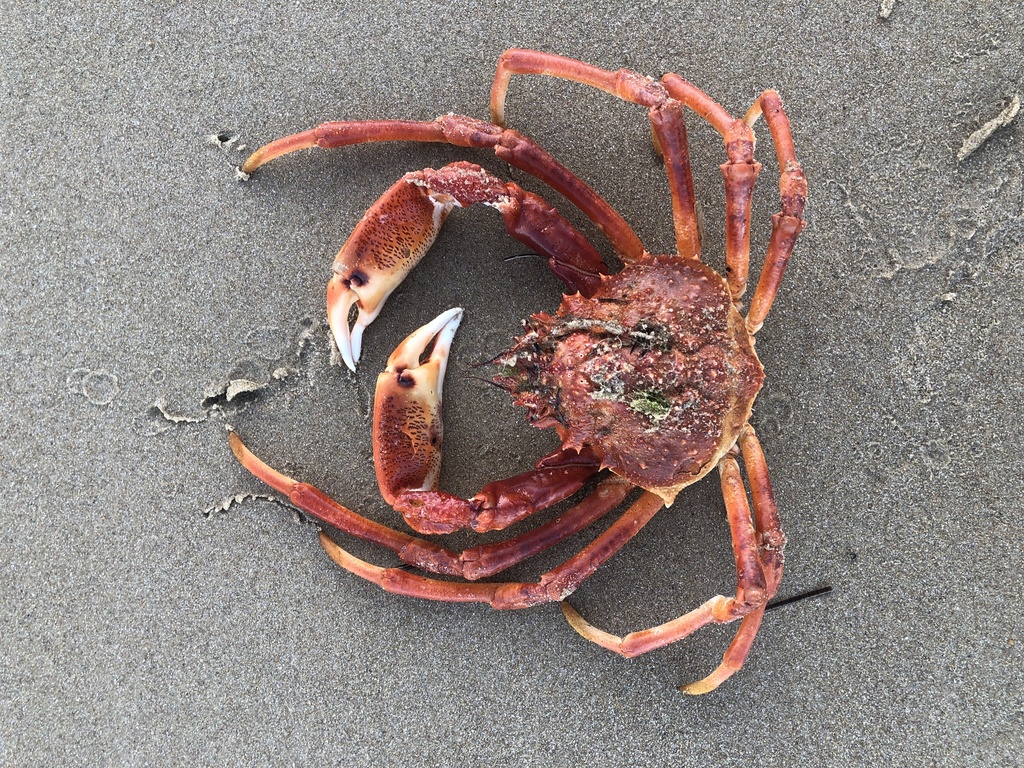
(c) Josh Nitschke, some rights reserved (CC BY) · CC BY · iNaturalist 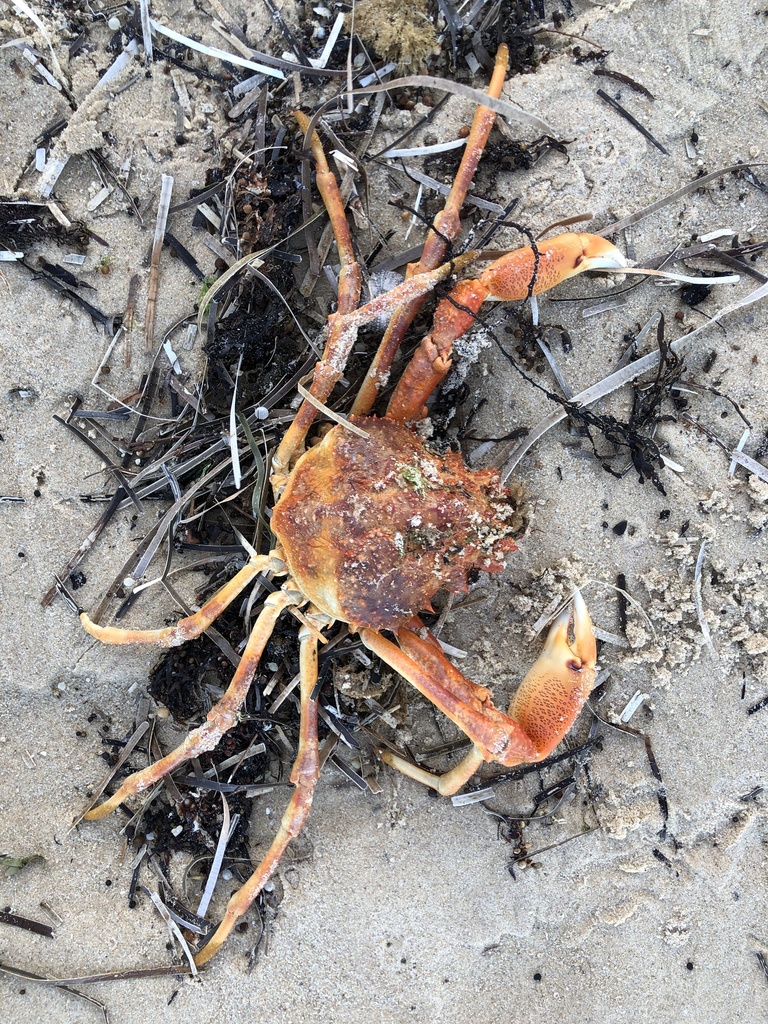
(c) Josh Nitschke, some rights reserved (CC BY) · CC BY · iNaturalist 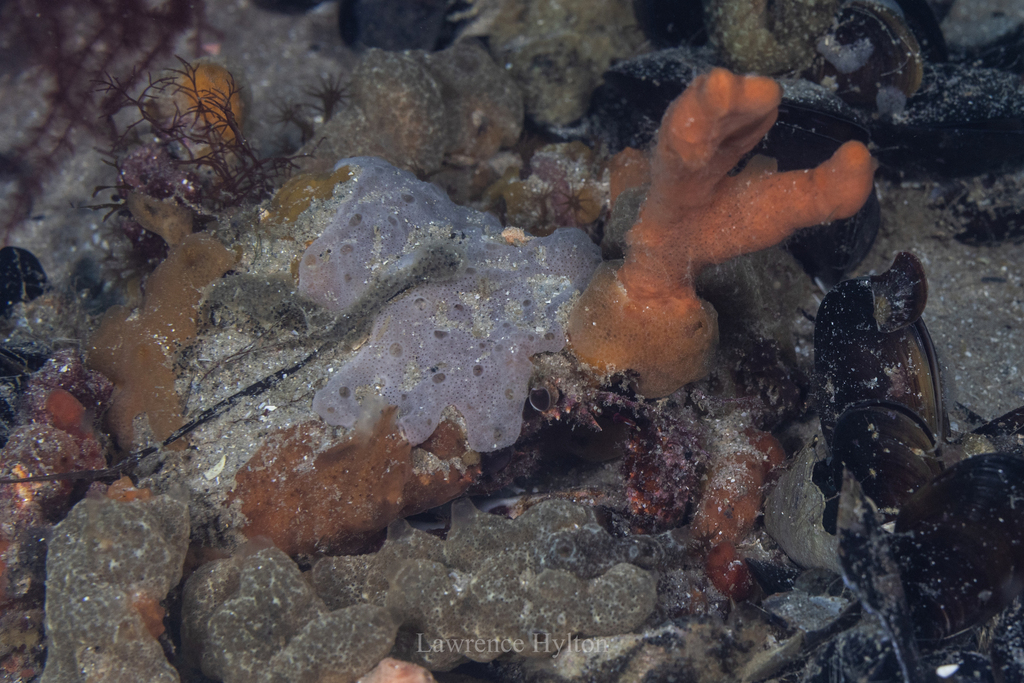
(c) Lawrence Hylton, some rights reserved (CC BY) · CC BY · iNaturalist
Names and classification
- English
- Great spider crab
Other scientific names: Leptomithrax spinulosus, Paramithrax (Leptomithrax) australiensis, Paramithrax gaimardii
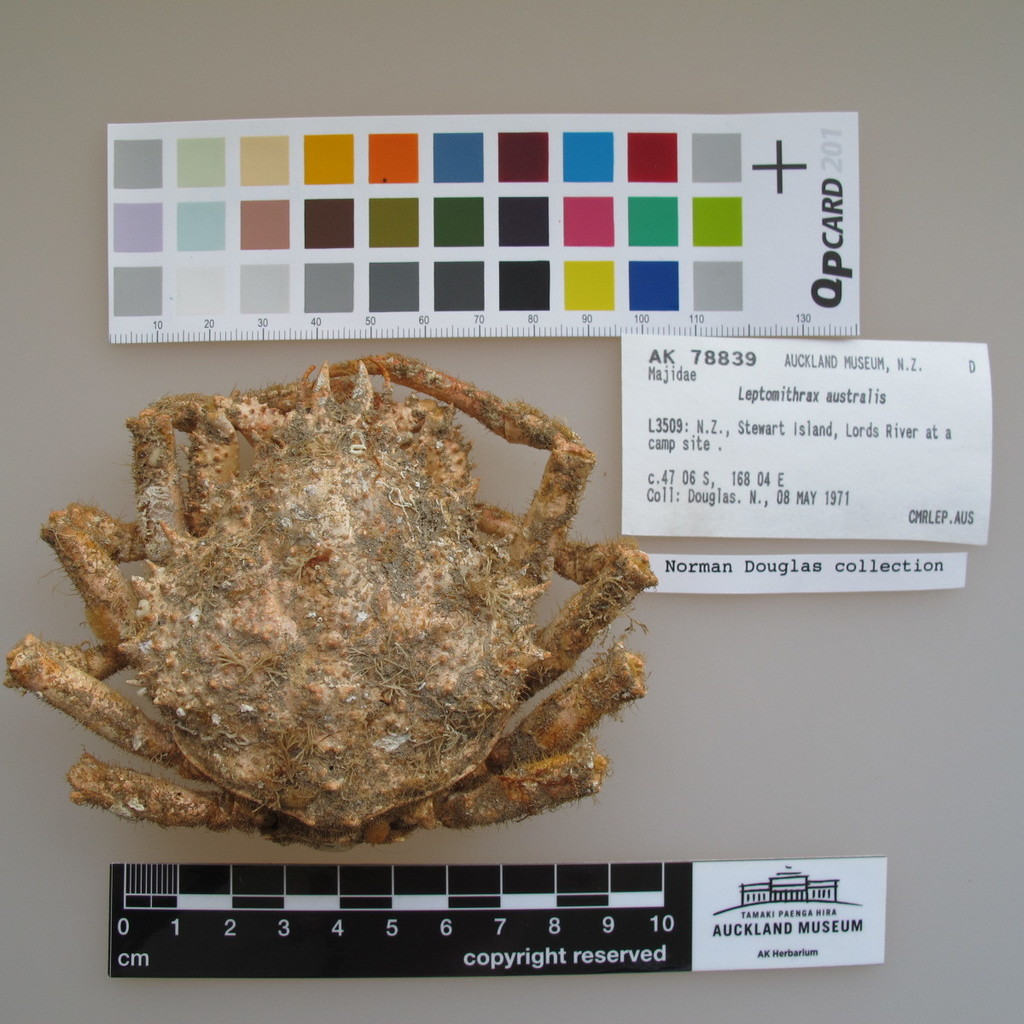
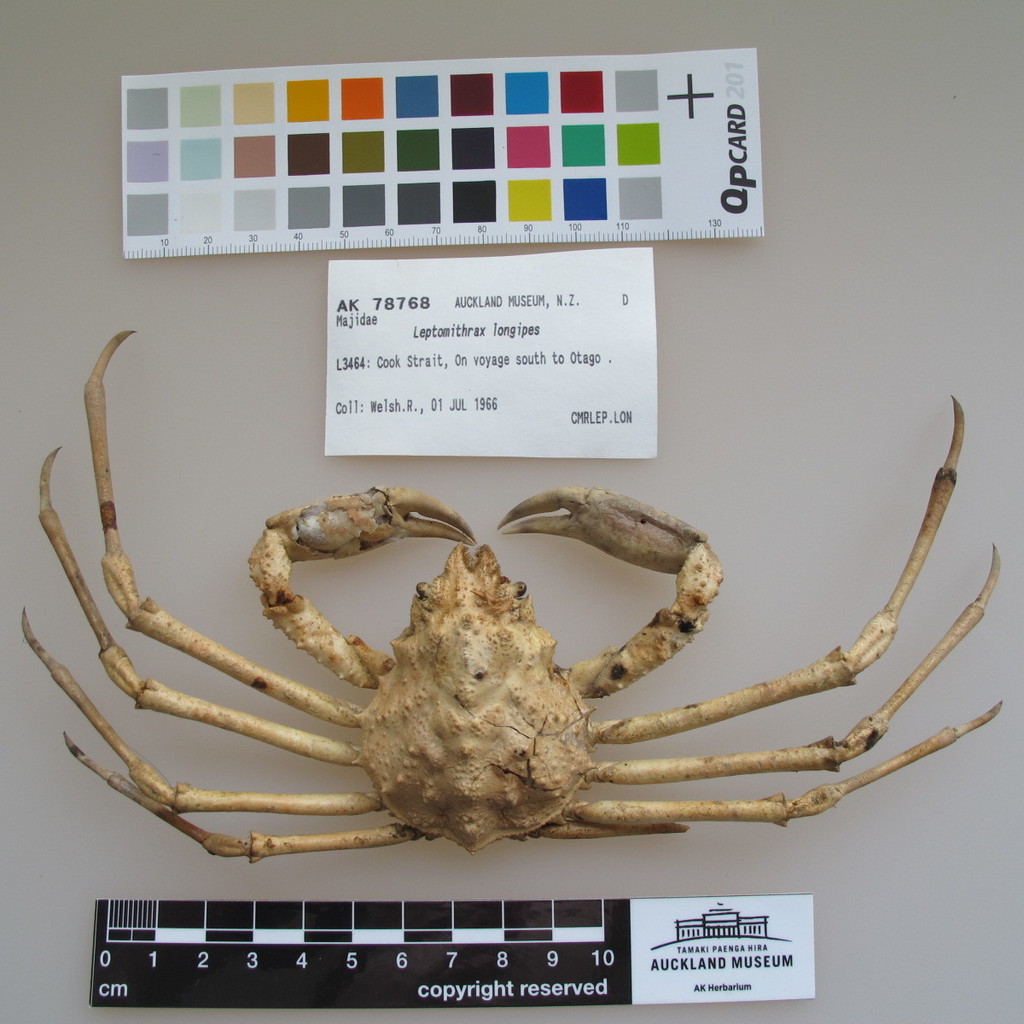
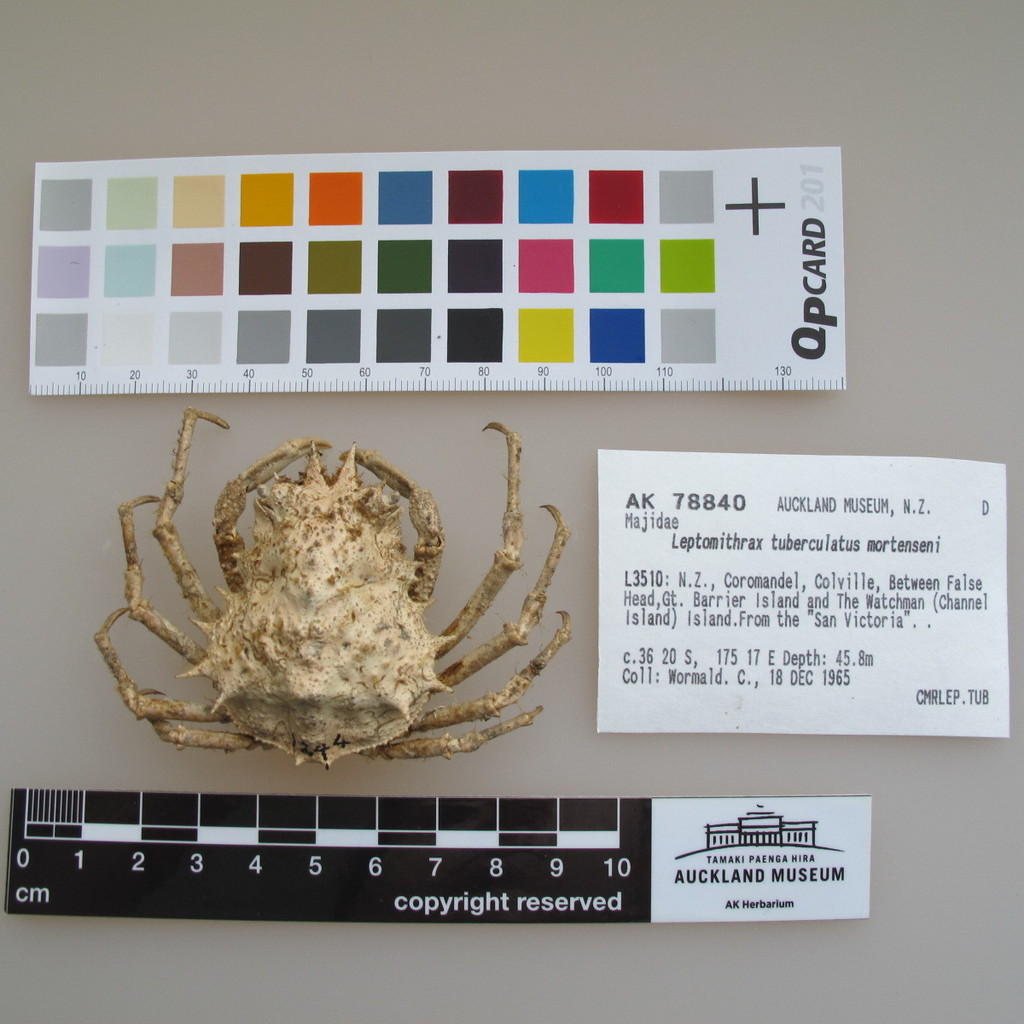
Similar species
Sources and credits
Names and taxonomy: WoRMS (CC BY 4.0) and the GBIF Backbone (CC BY 4.0). Photos: iNaturalist observers, each under the licence shown (CC0, CC BY or CC BY-SA).
- Depth, temperature, months and maps: records from OBIS and GBIF under CC0 or CC BY.
- Descriptions: Wikipedia, licensed CC BY-SA, each linked to its article.
- Conservation status as published by GBIF (IUCN Red List).
- 354 open-data records from 1896 to 2005.
- Species data updated November 4, 2026.
Log what you see on your next dive
The free DiveHive diver app keeps your logbook with every sighting and shows what lives at the site you dive next.