
Headlight Angler
Linophryne indica
- Usual depth464–2,000 m
- Water temperature16–29 °C
- Best monthsJanuary, March, and August
- How commonRare
About this species
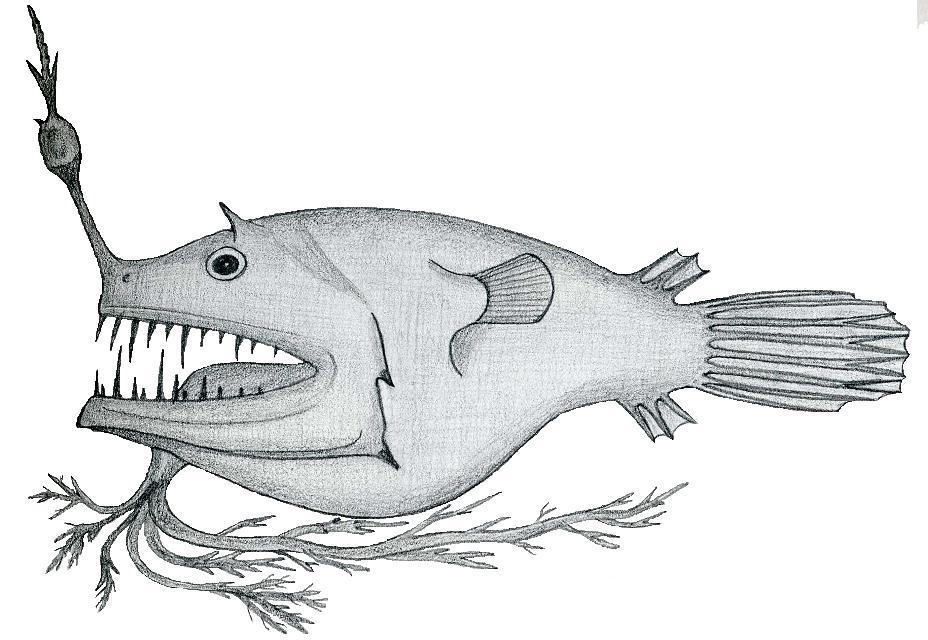
Linophryne indica, or headlight angler, is a leftvent anglerfish in the family Linophrynidae, found in the bathyal zone of the Pacific Ocean at depths below 1,000 m (3,300 ft). The female is significantly larger than the mature male. A fossil specimen of this species has been found in the Los Angeles Basin dating back to the Late Miocene, some eight million years ago.
Text from the Wikipedia article “Linophryne indica”, licensed CC BY-SA 4.0. Read the article
Where and when
Where it has been recorded
Worldwide
Loading the map
Best months
Worldwide (open data)
- January: 2 records
- February: 1 records
- March: 2 records
- April: 0 records
- May: 0 records
- June: 0 records
- July: 1 records
- August: 3 records
- September: 1 records
- October: 0 records
- November: 1 records
- December: 1 records
Depth and water temperature
Depth
Mostly recorded at 464–2,000 m · Deepest record: 2,000 m
Water temperature
Recorded in surface water of 16–29 °C
Names and classification
- English
- Headlight Angler, Headlight Angler Fish
Names in 2 more languages
- Japanese
- Indonianko, インドオニアンコウ
- Simplified Chinese
- 印度樹鬚魚, 印度鬚角鮟鱇, 印度鬚鮟鱇, 深海鮟鱇
Other scientific names: Linophryne corymbifera
Similar species
 deepsea angler
Linophryne arborifera
- Bearded Angler
Linophryne densiramus
- Ghostly seadevil
Haplophryne mollis
Sources and credits
Names and taxonomy: WoRMS (CC BY 4.0) and the GBIF Backbone (CC BY 4.0). Photos: iNaturalist observers, each under the licence shown (CC0, CC BY or CC BY-SA).
- Depth, temperature, months and maps: records from OBIS and GBIF under CC0 or CC BY.
- Descriptions: Wikipedia, licensed CC BY-SA, each linked to its article.
- Conservation status as published by GBIF (IUCN Red List).
- 62 open-data records from 1929 to 1996.
- Species data updated November 4, 2026.
Log what you see on your next dive
The free DiveHive diver app keeps your logbook with every sighting and shows what lives at the site you dive next.