
About this species
Loliolus beka, the beka squid, is a species of squid found in the family Loliginidae. Their distribution ranges from temperate to tropical waters, however they are commonly found across the East China Sea as a result of bycatch. They are a predominantly benthic species, preferring to live in shallow waters. Like many other cephalopods, L. beka are a relatively short-lived species. The squid are small in size, with an average mantle length between 30 and 40 mm. Their diet and behavioral characteristics are common with other members of Loliginidae. These squid are valuable to both commercial fishermen and scientific researchers.
Text from the Wikipedia article “Loliolus beka”, licensed CC BY-SA 4.0. Read the article
Where and when
Where it has been recorded
Worldwide
Loading the map
Best months
Worldwide (open data)
- January: 0 records
- February: 0 records
- March: 0 records
- April: 0 records
- May: 0 records
- June: 0 records
- July: 1 records
- August: 4 records
- September: 1 records
- October: 0 records
- November: 0 records
- December: 0 records
Depth and water temperature
Water temperature
Recorded in surface water of 16–23 °C
Names and classification
- English
- Beka Squid
Names in 2 more languages
- Japanese
- ベイカ
- Simplified Chinese
- Hŭo-Qiāng-Yóu
Other scientific names: Loligo (Nipponololigo) beka, Loligo beka, Loligo sumatrensis, Loliolus (Nipponololigo) beka
Similar species
- Steenstrup's Bay Squid
Loliolus affinis
- Little Indian Squid
Loliolus hardwickei
- Japanese Squid
Loliolus japonica
- Kobi Squid
Loliolus sumatrensis
- Little Squid
Loliolus uyii
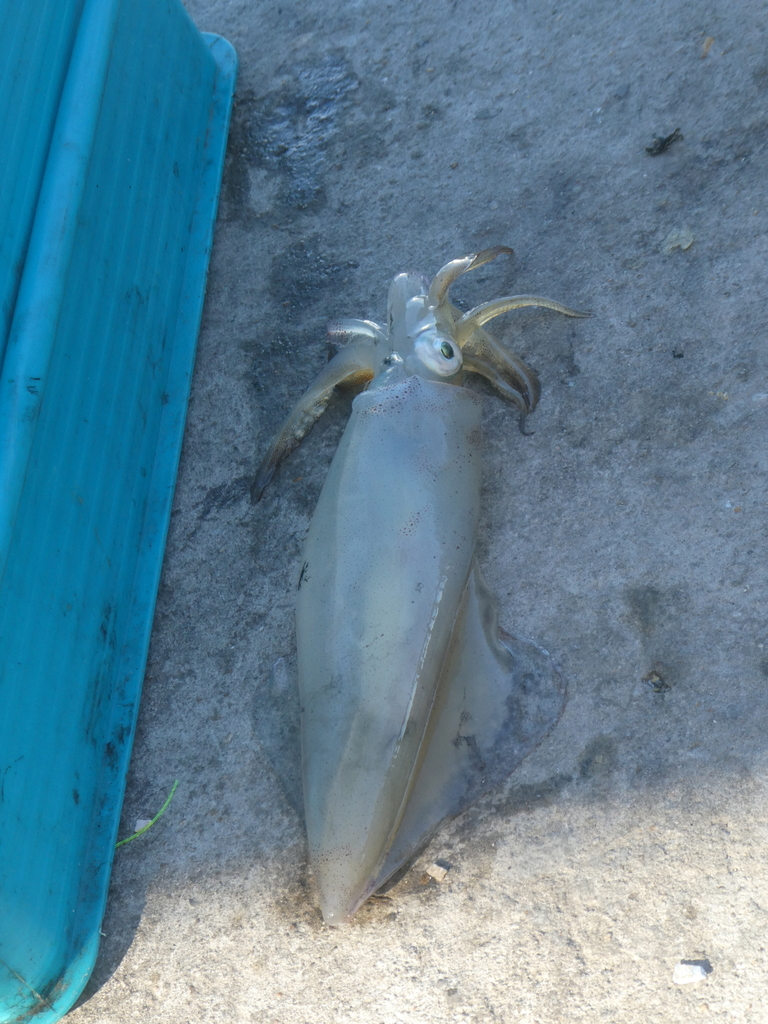 Cape Hope squid
Loligo reynaudii
Sources and credits
Names and taxonomy: WoRMS (CC BY 4.0) and the GBIF Backbone (CC BY 4.0). Photos: iNaturalist observers, each under the licence shown (CC0, CC BY or CC BY-SA).
- Depth, temperature, months and maps: records from OBIS and GBIF under CC0 or CC BY.
- Descriptions: Wikipedia, licensed CC BY-SA, each linked to its article.
- Conservation status as published by GBIF (IUCN Red List).
- 136 open-data records from 2007 to 2007.
- Species data updated November 4, 2026.
Log what you see on your next dive
The free DiveHive diver app keeps your logbook with every sighting and shows what lives at the site you dive next.