
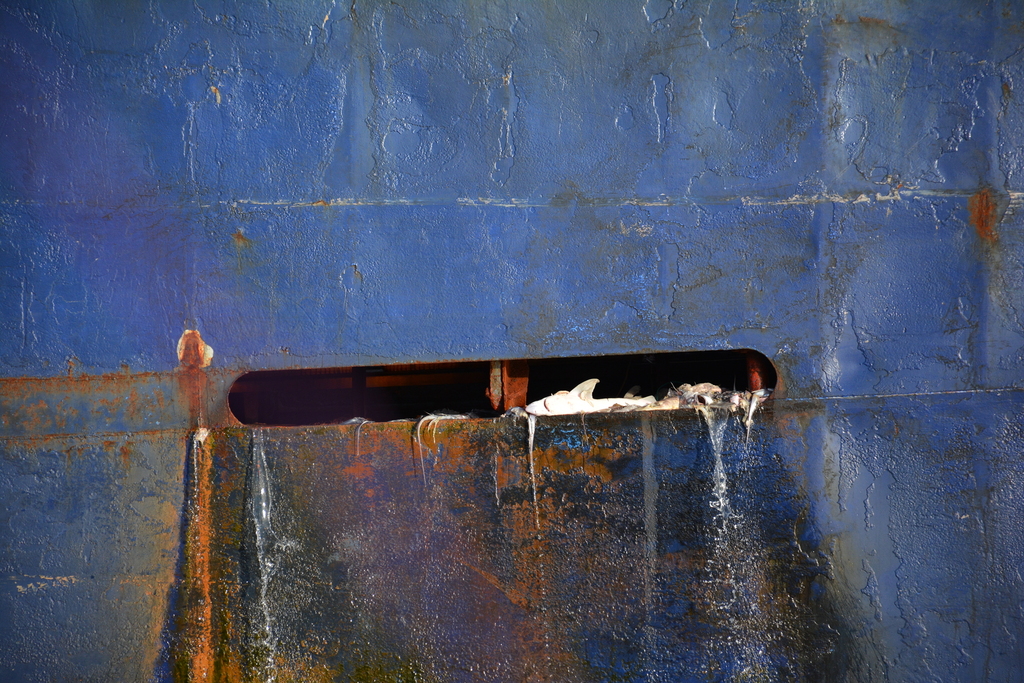
Blue grenadier
Macruronus novaezelandiae
- Usual depth283–927 m
- Water temperature8–21 °C
- Best monthsJuly, August, and October
- How commonCommon
Photo credit: (c) Kyle Van Houtan, some rights reserved (CC BY) · CC BY · iNaturalist
About this species
The blue grenadier is a gadiform fish of the family Macruronidae found around southern Australia and New Zealand, as well as off both the Atlantic and Pacific coasts of South America from Peru to Brazil at depths of between 10 and 1,000 m. It feeds in midwater on small squids, crustaceans, and fish. Its length is between 60 and 120 cm. It is a slender, silvery fish similar in appearance to the gemfish. The meat of the fish is white and almost always sold in fillets; culinarily it is considered a whitefish.
Text from the Wikipedia article “Blue grenadier”, licensed CC BY-SA 4.0. Read the article
Where and when
Where it has been recorded
Worldwide
Loading the map
Best months
Worldwide (open data)
- January: 6 records
- February: 18 records
- March: 17 records
- April: 25 records
- May: 18 records
- June: 48 records
- July: 130 records
- August: 107 records
- September: 59 records
- October: 93 records
- November: 32 records
- December: 30 records
Depth and water temperature
Depth
Mostly recorded at 283–927 m · Deepest record: 3,821.5 m
Water temperature
Recorded in surface water of 8–21 °C
Names and classification
- English
- Blue grenadier, Blue hake, New Zealand whiptail, Patagonian whiphake, Tailed hake, Whiptail, blue grenadier, Blue Grenidier, blue hake, Grenadier, New Zealand Whip-tail, tailed hake, whiptail
Names in 4 more languages
- German
- Langschwanzseehecht, Langschwanz-Seehecht
- Spanish
- argentino, huaica, huelca, huilca, merluza azul, merluza de cola, merluza de cola de rata, merluza hoki
- French
- grenadier bleu, grenadier patagonienne, merluche patagonienne
- Japanese
- dekora, hoki, デコラ, ホキ
Other scientific names: Coryphaenoides novaezelandiae, Coryphaenoides tasmaniae, Macruronus novaezealandiae
Sources and credits
Names and taxonomy: WoRMS (CC BY 4.0) and the GBIF Backbone (CC BY 4.0). Photos: iNaturalist observers, each under the licence shown (CC0, CC BY or CC BY-SA).
- Depth, temperature, months and maps: records from OBIS and GBIF under CC0 or CC BY.
- Descriptions: Wikipedia, licensed CC BY-SA, each linked to its article.
- Conservation status as published by GBIF (IUCN Red List).
- 22,787 open-data records from 1882 to 2018.
- Species data updated November 4, 2026.
Log what you see on your next dive
The free DiveHive diver app keeps your logbook with every sighting and shows what lives at the site you dive next.