
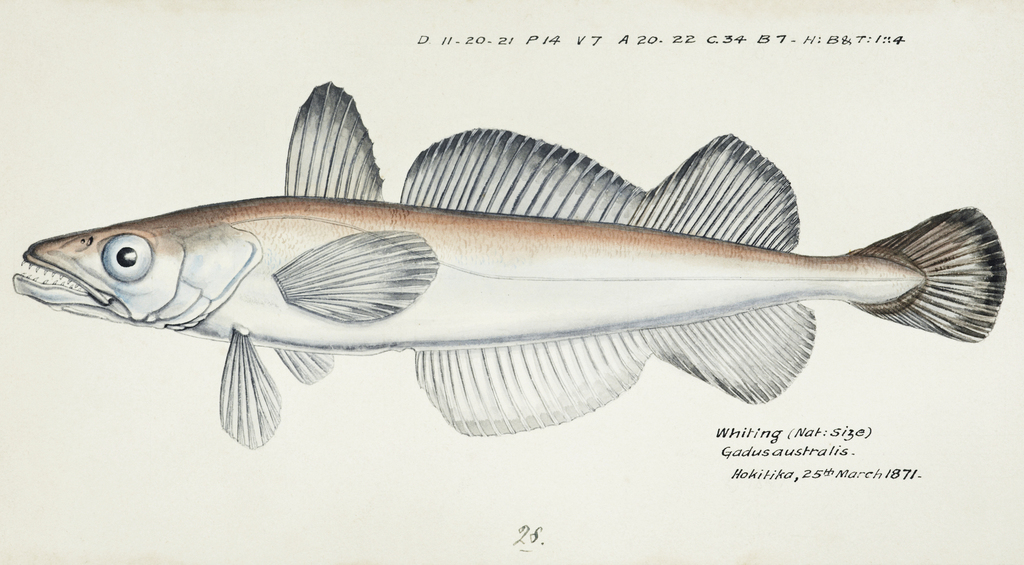
Chilean hake
Merluccius australis
- Usual depth186–802 m
- Water temperature5–20 °C
- Best monthsFebruary, August, and November
- How commonCommon
Photo credit: (c) Rawpixel Ltd, bazı hakları saklıdır (CC BY) · CC BY · iNaturalist
About this species
Merluccius australis, the southern hake, is a species of fish from the family Merlucciidae, the true hakes. It is found in the southern Pacific and Atlantic Oceans with two disjunct populations, one around southern South America and the other in the waters around New Zealand.
Text from the Wikipedia article “Merluccius australis”, licensed CC BY-SA 4.0. Read the article
Where and when
Where it has been recorded
Worldwide
Loading the map
Best months
Worldwide (open data)
- January: 319 records
- February: 3,286 records
- March: 1,909 records
- April: 2,322 records
- May: 1,139 records
- June: 108 records
- July: 266 records
- August: 2,999 records
- September: 1,480 records
- October: 1,861 records
- November: 3,879 records
- December: 448 records
Depth and water temperature
Depth
Mostly recorded at 186–802 m · Deepest record: 1,445.5 m
Water temperature
Recorded in surface water of 5–20 °C
Names and classification
- English
- Chilean hake, Hake, Patagonian hake, Southern hake, Whiting, Blue Whiting, Haddock, hake, southern hake, whiting
Names in 4 more languages
- German
- südlicher Seehecht
- Spanish
- maltona, merluza austral, merluza del sur, merluza española, merluzón
- French
- merlu austral
- Japanese
- hitachi, hitachi dara, Hitachidara, nyujiirando-heiku, ヒタチダラ
Other scientific names: Gadus australis, Merlangius australis, Merluccius polylepis
Similar species
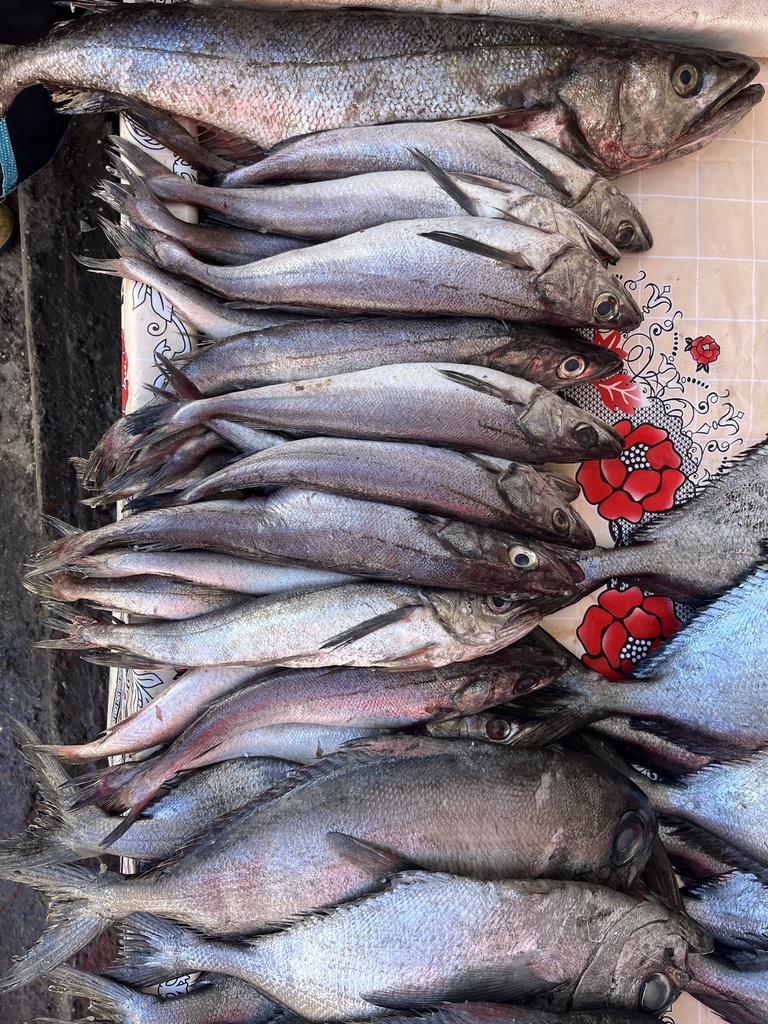 Chilean whiting
Merluccius gayi
 European hake
Merluccius merluccius
Sources and credits
Names and taxonomy: WoRMS (CC BY 4.0) and the GBIF Backbone (CC BY 4.0). Photos: iNaturalist observers, each under the licence shown (CC0, CC BY or CC BY-SA).
- Depth, temperature, months and maps: records from OBIS and GBIF under CC0 or CC BY.
- Descriptions: Wikipedia, licensed CC BY-SA, each linked to its article.
- Conservation status as published by GBIF (IUCN Red List).
- 28,996 open-data records from 1900 to 2023.
- Species data updated November 4, 2026.
Log what you see on your next dive
The free DiveHive diver app keeps your logbook with every sighting and shows what lives at the site you dive next.