
Blackspot Minigoby
Minysicya caudimaculata
- Water temperature27–29 °C
- Best monthsFebruary and September
- How commonRare
About this species
The Blackspot minigoby is a species of goby native to the eastern Indian Ocean and the western Pacific Ocean from Australia to Japan to the Tuamotus and French Polynesia where it can be found inhabiting reefs at depths of from 3 to 38 metres. Males of this species grow to a length of 1.3 centimetres (0.51 in) SL while females can reach a length of 1.5 centimetres (0.59 in) SL. This species is the only known member of its genus.
Text from the Wikipedia article “Blackspot minigoby”, licensed CC BY-SA 4.0. Read the article
Where and when
Where it has been recorded
Worldwide
Loading the map
Best months
Worldwide (open data)
- January: 3 records
- February: 6 records
- March: 0 records
- April: 0 records
- May: 0 records
- June: 0 records
- July: 0 records
- August: 0 records
- September: 4 records
- October: 0 records
- November: 1 records
- December: 0 records
Depth and water temperature
Water temperature
Recorded in surface water of 27–29 °C
Names and classification
- English
- Blackspot Minigoby
Names in 1 more languages
- Japanese
- Mitsuboshigarasuhaze, ミツボシガラスハゼ
Similar species
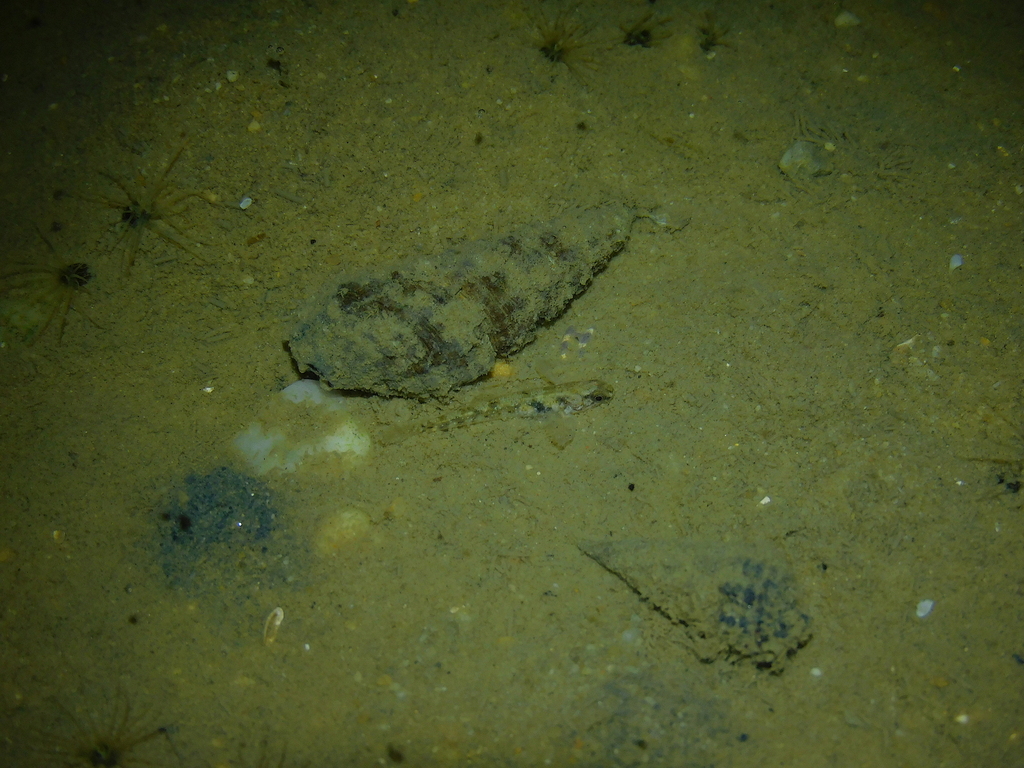 Long-finned Goby
Favonigobius lateralis
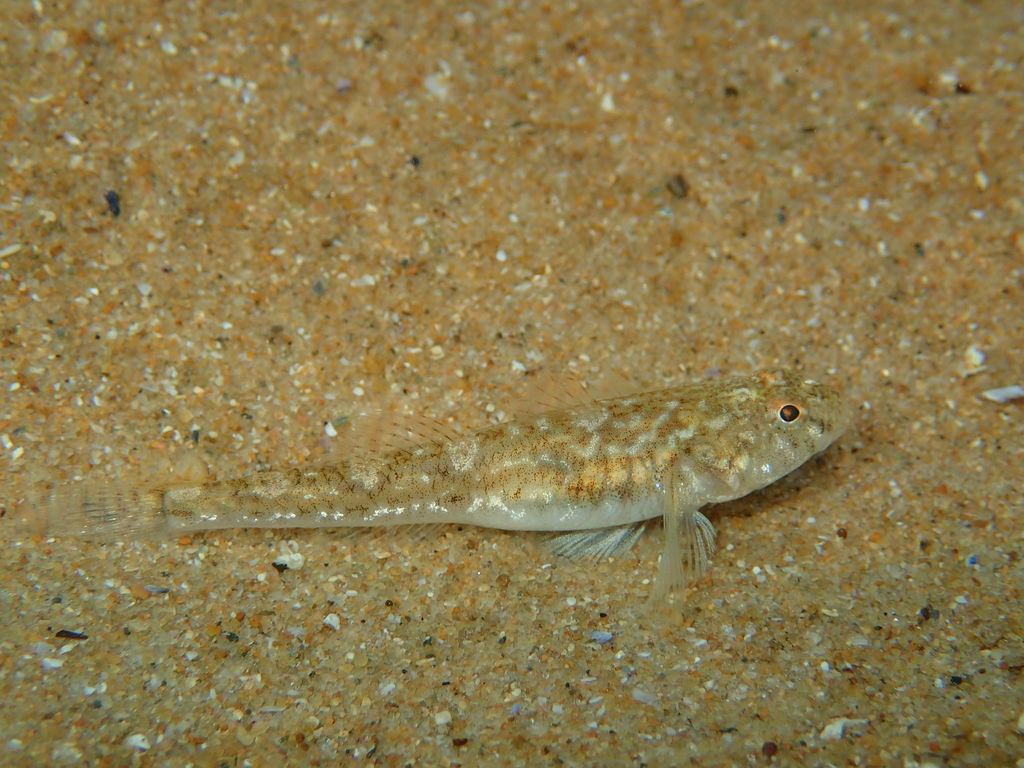 Common goby
Pomatoschistus microps
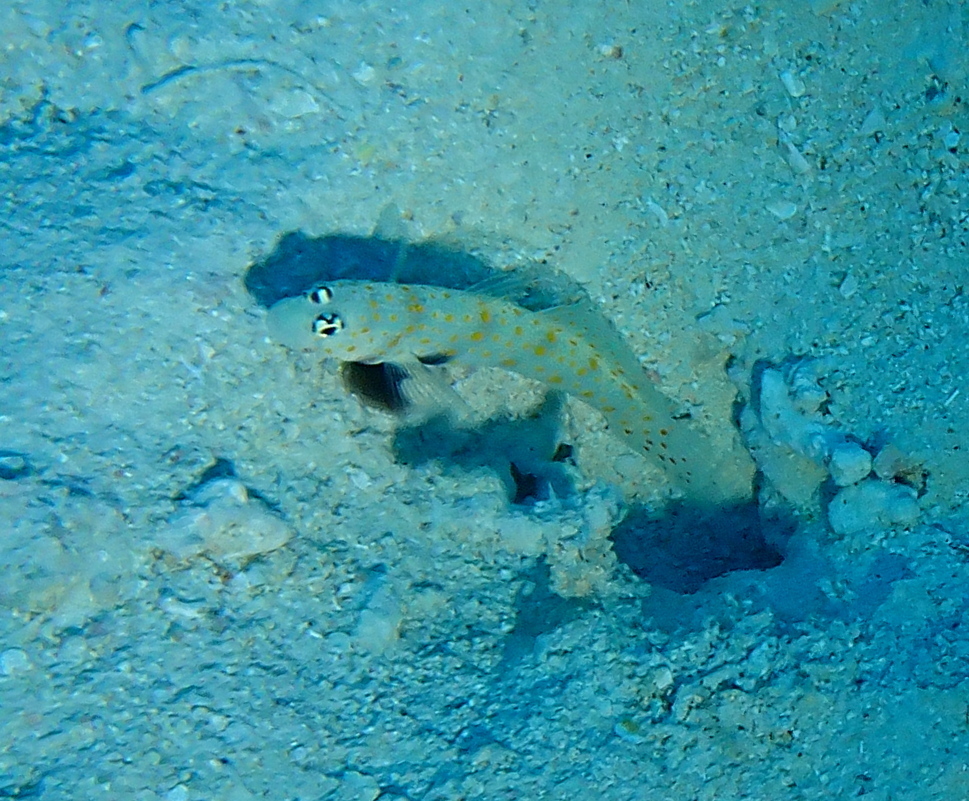 Black-chest Shrimp-goby
Amblyeleotris guttata
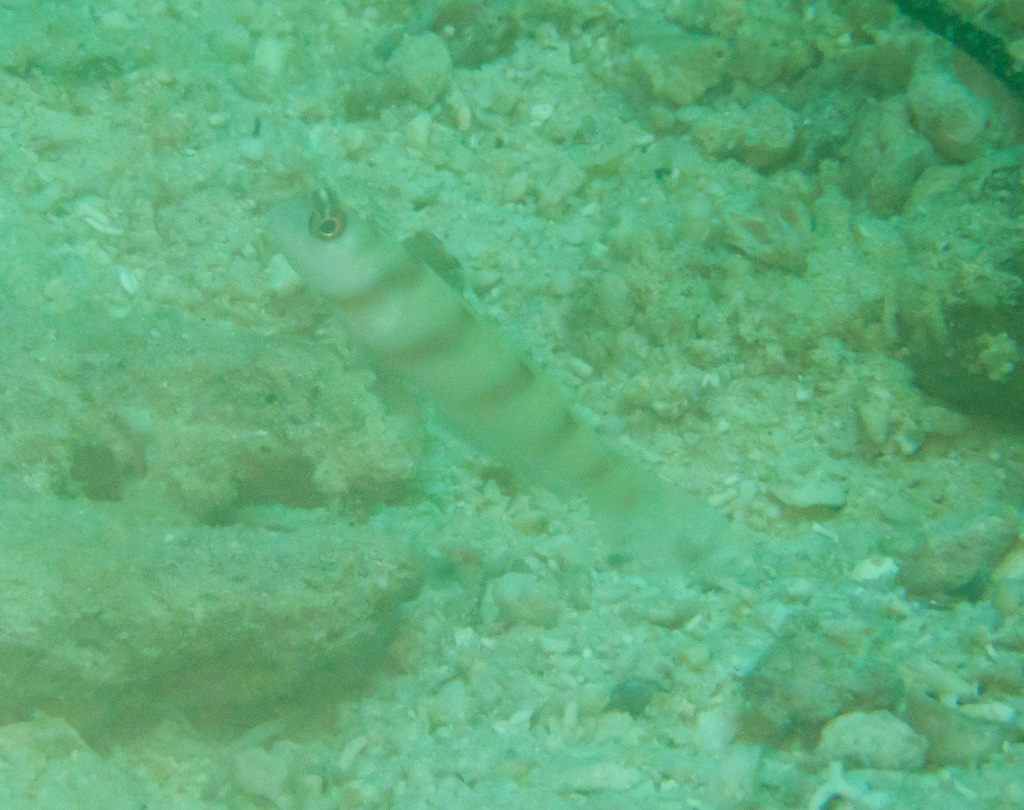 Steinitz' goby
Amblyeleotris steinitzi
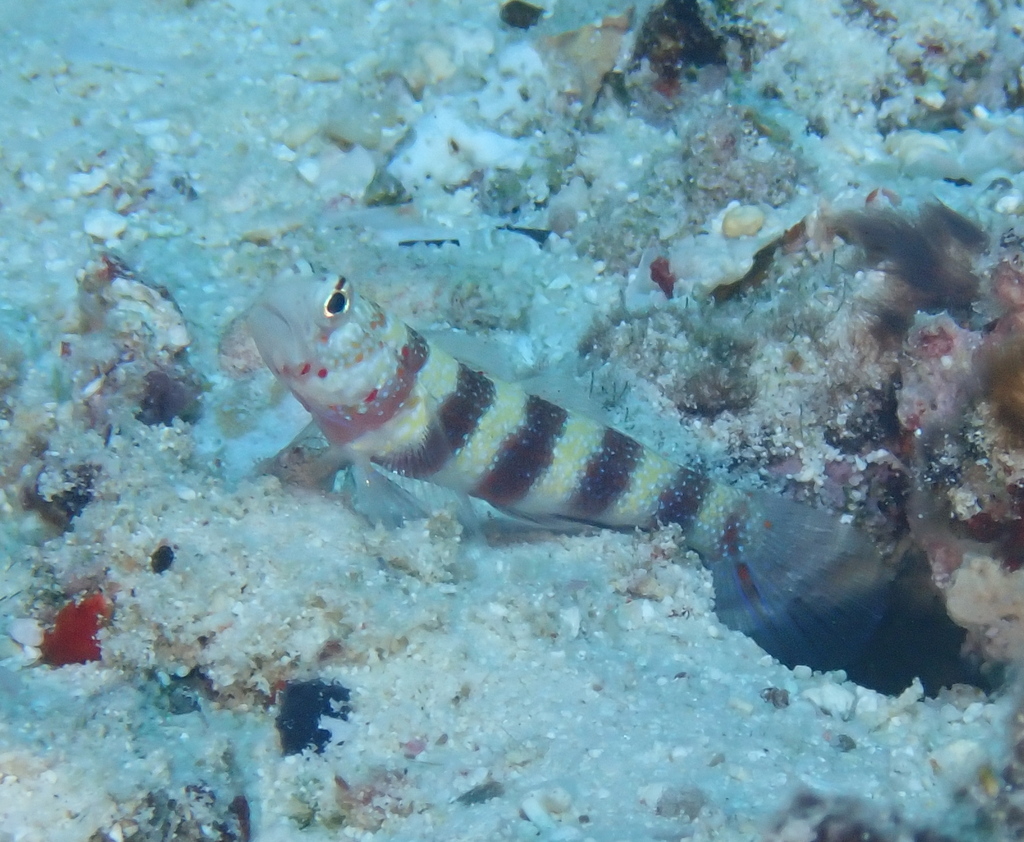 Barred Shrimpgoby
Amblyeleotris wheeleri
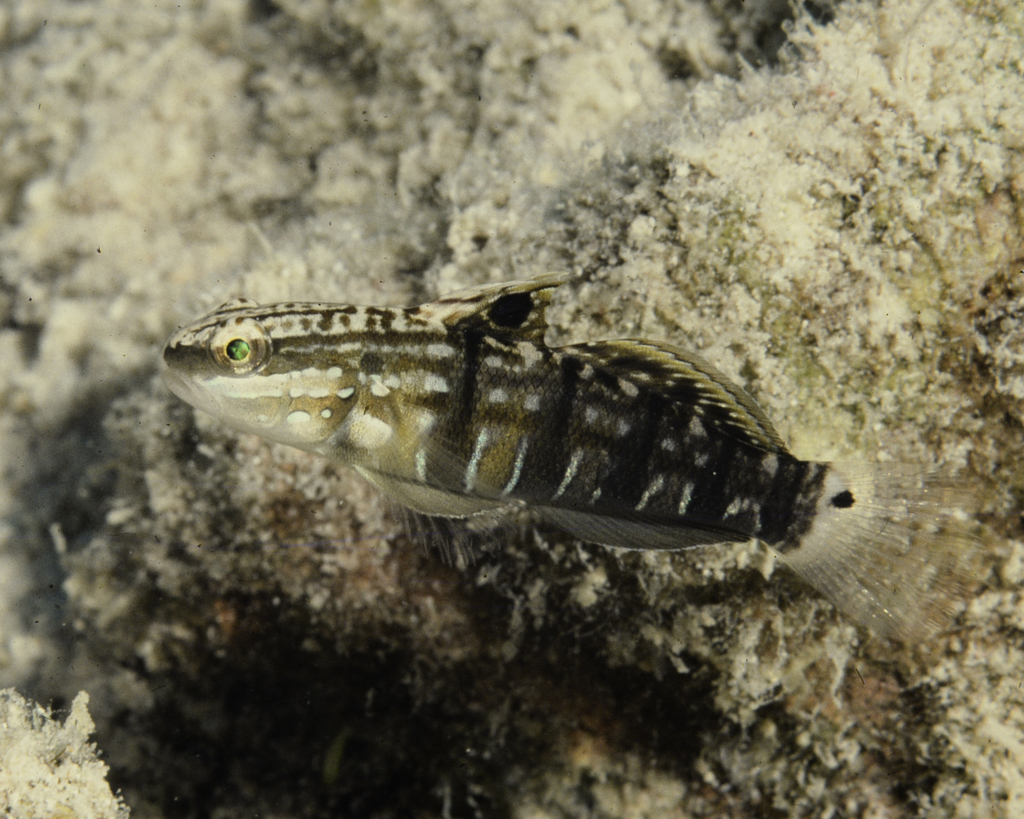 Banded Goby
Amblygobius phalaena
Sources and credits
Names and taxonomy: WoRMS (CC BY 4.0) and the GBIF Backbone (CC BY 4.0). Photos: iNaturalist observers, each under the licence shown (CC0, CC BY or CC BY-SA).
- Depth, temperature, months and maps: records from OBIS and GBIF under CC0 or CC BY.
- Descriptions: Wikipedia, licensed CC BY-SA, each linked to its article.
- Conservation status as published by GBIF (IUCN Red List).
- 14 open-data records from 1982 to 2002.
- Species data updated November 4, 2026.
Log what you see on your next dive
The free DiveHive diver app keeps your logbook with every sighting and shows what lives at the site you dive next.