
DiscoverSpeciesSharks and rays
Sicklefin devil ray
Mobula tarapacana
- Usual depth25 m
- Water temperature12–29 °C
- Best monthsAugust
- How commonRare
Where and when
Where it has been recorded
Worldwide
Loading the map
Best months
Worldwide (open data)
- January: 0 records
- February: 5 records
- March: 19 records
- April: 4 records
- May: 14 records
- June: 49 records
- July: 22 records
- August: 171 records
- September: 11 records
- October: 2 records
- November: 0 records
- December: 1 records
Depth and water temperature
Depth
Mostly recorded at 25 m · Deepest record: 25 m
Water temperature
Recorded in surface water of 12–29 °C
Names and classification
- English
- Sicklefin devil ray, Box Ray, Chilean Devil Ray, Devil Ray, Devil Ray, Chilean devil ray, Greater Guinean Devil Ray, Greater Guinean Mobula, sicklefin devil ray, Spiny Mobula
Names in 6 more languages
- German
- Sichelflossen-Teufelsrochen
- Spanish
- Diabolo Gigante De Guinea, Manta Cornuada, manta cornuda, Manta Raya, Raya Cornuda, Vaquetilla
- French
- Diable de mer chilien, Diable de mer chilien, Diable géant de Guinée, Mante chilienne, Diable Géant De Guinée, Mante Chilienne, Mobula, Raie diable faucille
- Japanese
- Taiwanitomakiei, タイワンイトマキエイ, ヒメイトマキエイ
- Thai
- ปลากระเบนปีศาจหางเคียว, ปลากระเบนราหูครีบแหลม
- Simplified Chinese
- 台灣蝠魟, 智利蝠魟, 臺灣蝠魟, 褐背蝠鱝, 飛魴仔, 鷹魴
Other scientific names: Cephaloptera tarapacana, Mobula coilloti, Mobula formosana, Mobula tarapanaca
Similar species
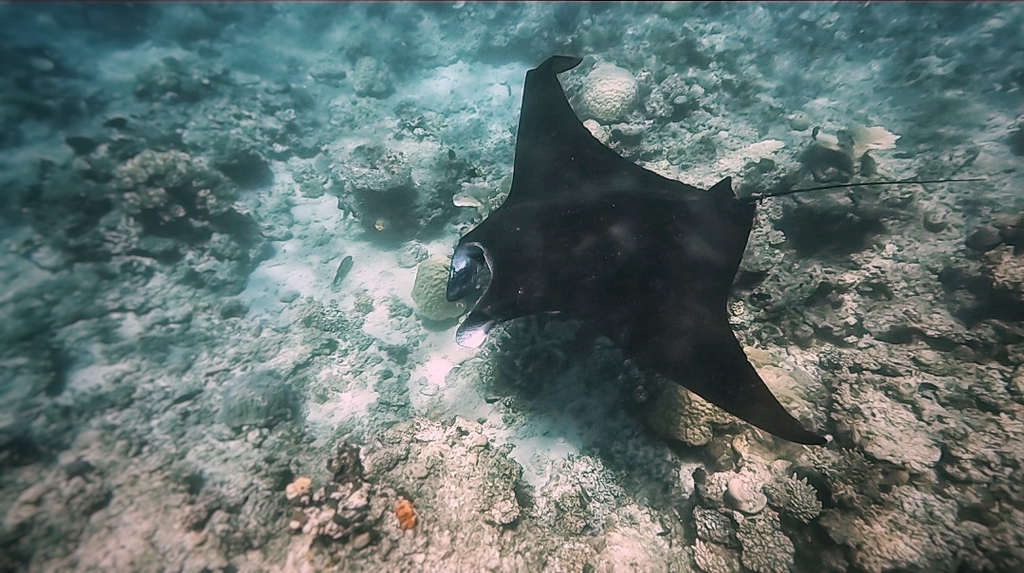 Reef manta ray
Mobula alfredi
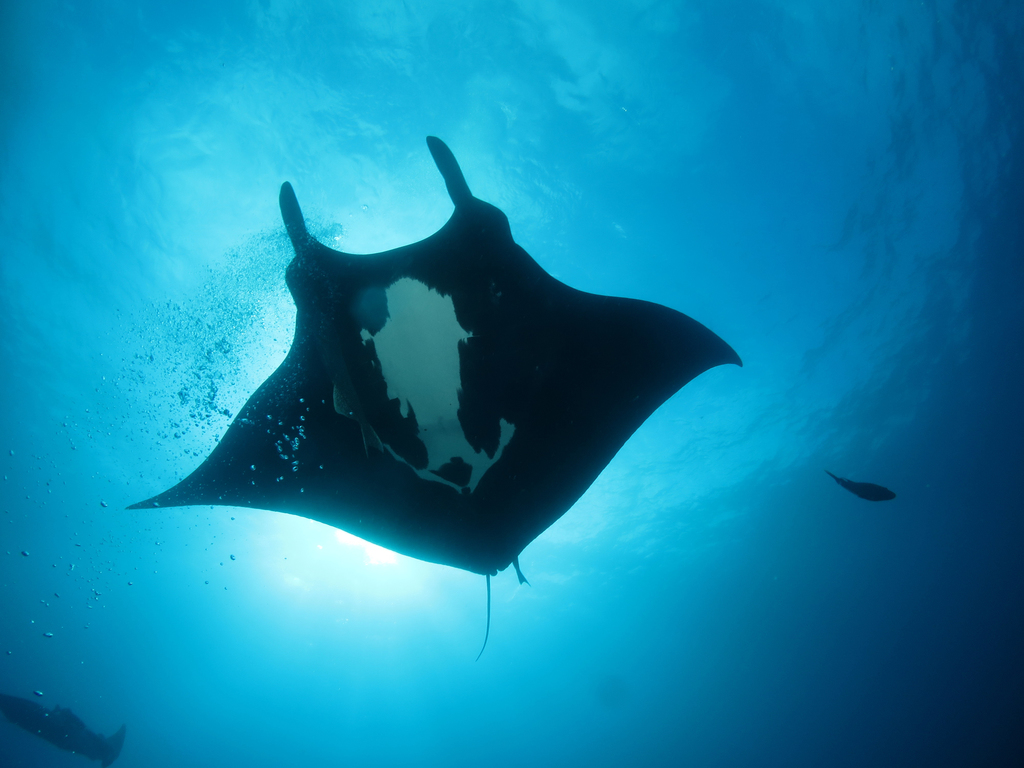 Atlantic manta
Mobula birostris
- Devil ray
Mobula mobular
- Smoothtail mobula
Mobula thurstoni
Sources and credits
Names and taxonomy: WoRMS (CC BY 4.0) and the GBIF Backbone (CC BY 4.0). Photos: iNaturalist observers, each under the licence shown (CC0, CC BY or CC BY-SA).
- Depth, temperature, months and maps: records from OBIS and GBIF under CC0 or CC BY.
- Conservation status as published by GBIF (IUCN Red List).
- 372 open-data records from 1959 to 2024.
Log what you see on your next dive
The free DiveHive diver app keeps your logbook with every sighting and shows what lives at the site you dive next.