
DiscoverSpeciesSharks and rays
Ornate Numbfish
Narcinops ornatus
- Usual depth47–80 m
- Water temperature26–29 °C
- Best monthsJune, November, and December
- How commonRare
About this species
The ornate numbfish is a species of electric ray within the family Narcinidae. It is endemic to northern Australia, inhabiting waters in the Timor and Arafura Seas near Cape Londonderry, The Kimberley, Western Australia, and the western side of Cape York. It is a benthic species, found on continental shelves at depths of 48 to 132 metres below sea level.
Text from the Wikipedia article “Ornate numbfish”, licensed CC BY-SA 4.0. Read the article
Where and when
Where it has been recorded
Worldwide
Loading the map
Best months
Worldwide (open data)
- January: 0 records
- February: 0 records
- March: 2 records
- April: 0 records
- May: 0 records
- June: 4 records
- July: 1 records
- August: 0 records
- September: 1 records
- October: 1 records
- November: 6 records
- December: 4 records
Depth and water temperature
Depth
Mostly recorded at 47–80 m · Deepest record: 80 m
Water temperature
Recorded in surface water of 26–29 °C
Names and classification
- English
- Ornate Numbfish
Other scientific names: Narcine ornata, Narcinops ornata
Similar species
- Electric Ray
Narcinops tasmaniensis
- Last's Numbfish
Narcinops lasti
- Eastern Numbfish
Narcinops nelsoni
- Banded Numbfish
Narcinops westraliensis
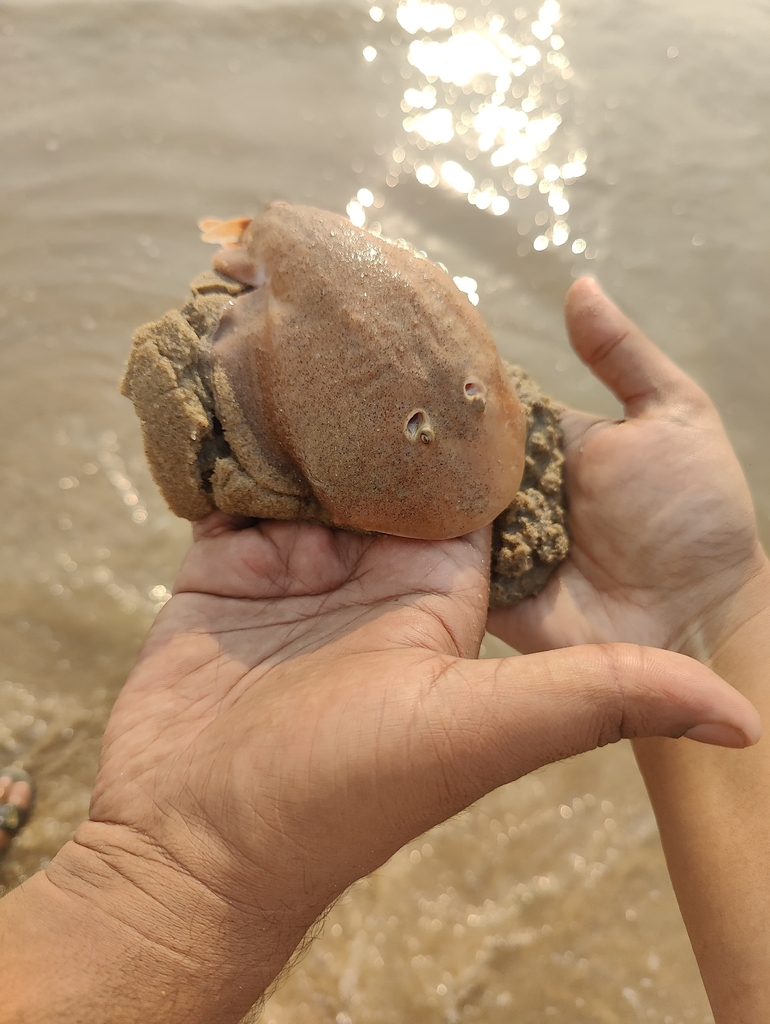 Brown Numbfish
Narcine timlei
- Dark Blindray
Benthobatis moresbyi
Sources and credits
Names and taxonomy: WoRMS (CC BY 4.0) and the GBIF Backbone (CC BY 4.0). Photos: iNaturalist observers, each under the licence shown (CC0, CC BY or CC BY-SA).
- Depth, temperature, months and maps: records from OBIS and GBIF under CC0 or CC BY.
- Descriptions: Wikipedia, licensed CC BY-SA, each linked to its article.
- Conservation status as published by GBIF (IUCN Red List).
- 29 open-data records from 1963 to 1993.
- Species data updated November 4, 2026.
Log what you see on your next dive
The free DiveHive diver app keeps your logbook with every sighting and shows what lives at the site you dive next.