
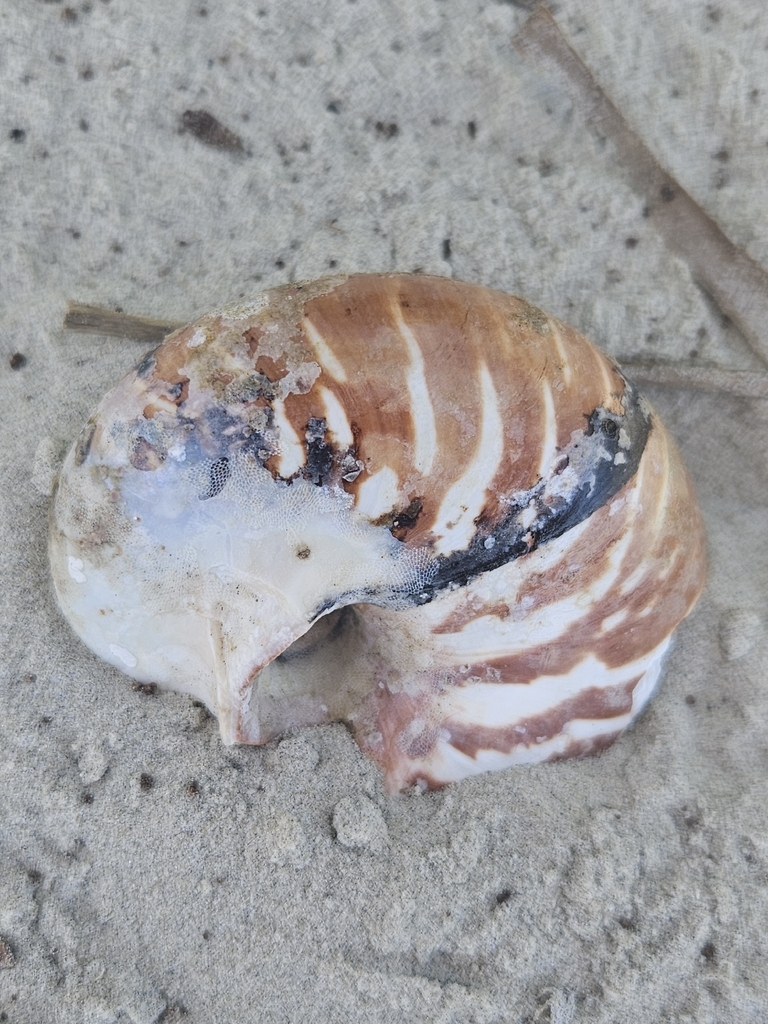
White-patch nautilus
Nautilus stenomphalus
- Usual depth75–400 m
- Water temperature23–27 °C
- Best monthsJanuary, March, and June
- How commonRare
Photo credit: no rights reserved · CC0 1.0 · iNaturalist
About this species
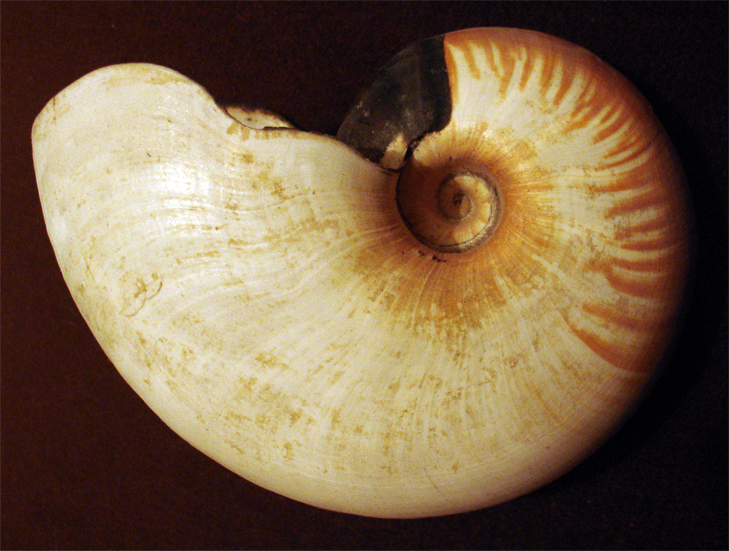
Nautilus stenomphalus, also known as the white-patch nautilus, is a species of nautilus native to the Great Barrier Reef. N. stenomphalus is very similar to N. pompilius and may in fact represent a subspecies. It is separated by the absence of a thickened callus and the presence of white patches in the umbilical and shoulder regions of the shell. The sheaths of this species have scalloped edges compared with the smooth sheaths of N. pompilius. N. stenomphalus also differs slightly in hood ornamentation. The shell is usually up to around 180 mm in diameter, although the largest specimen ever recorded measured 201 mm.
Text from the Wikipedia article “Nautilus stenomphalus”, licensed CC BY-SA 4.0. Read the article
Where and when
Where it has been recorded
Worldwide
Loading the map
Best months
Worldwide (open data)
- January: 4 records
- February: 3 records
- March: 4 records
- April: 2 records
- May: 2 records
- June: 4 records
- July: 2 records
- August: 2 records
- September: 1 records
- October: 3 records
- November: 0 records
- December: 2 records
Depth and water temperature
Depth
Mostly recorded at 75–400 m · Deepest record: 400 m
Water temperature
Recorded in surface water of 23–27 °C
Photos
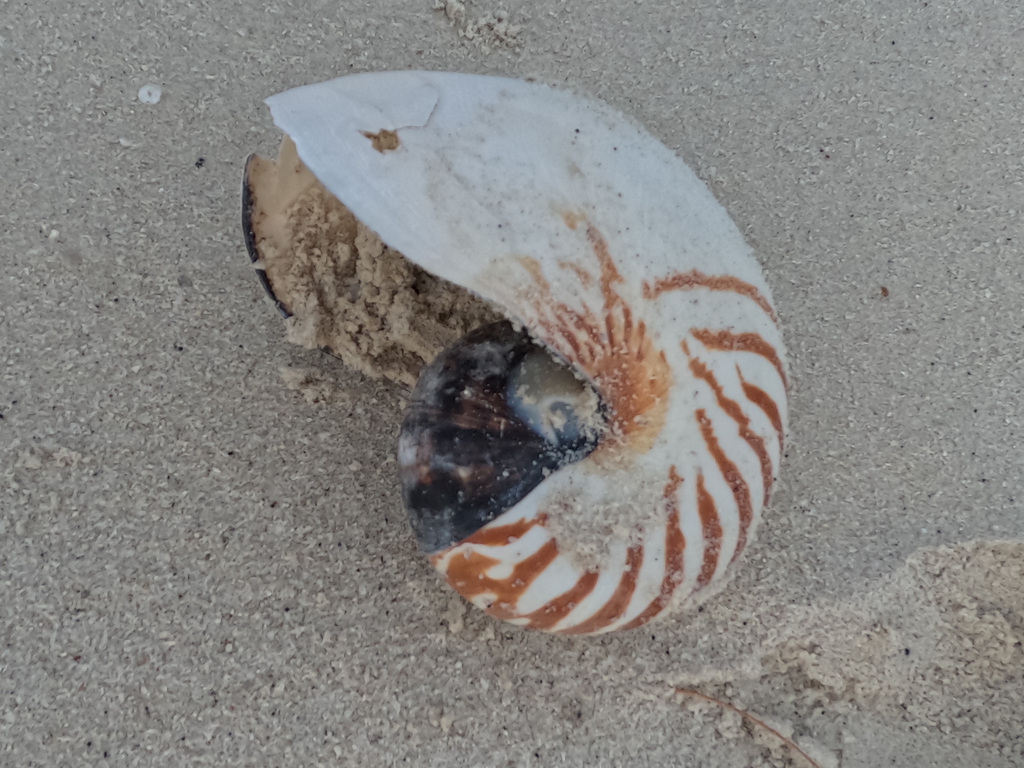
(c) Catherine Holland, some rights reserved (CC BY) · CC BY · iNaturalist
Names and classification
- English
- White-patch nautilus
Names in 3 more languages
- Spanish
- Nautilo de Parches Blancos
- Japanese
- コベソオウムガイ
- Thai
- หอยงวงช้างร่องสะดือขาว
Similar species
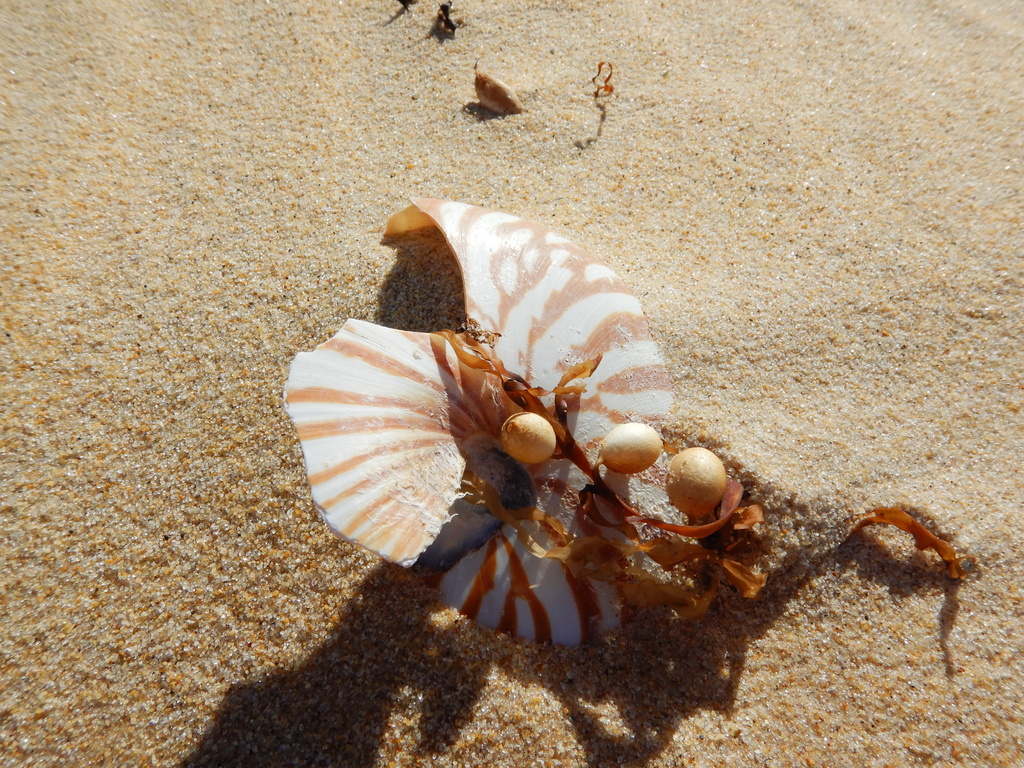 Chambered nautilus
Nautilus pompilius
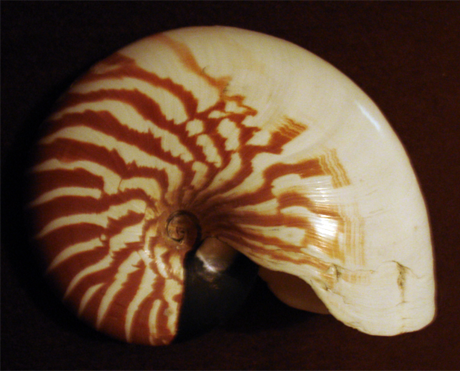 Bellybutton nautilus
Nautilus macromphalus
 Crusty nautilus
Allonautilus scrobiculatus
Sources and credits
Names and taxonomy: WoRMS (CC BY 4.0) and the GBIF Backbone (CC BY 4.0). Photos: iNaturalist observers, each under the licence shown (CC0, CC BY or CC BY-SA).
- Depth, temperature, months and maps: records from OBIS and GBIF under CC0 or CC BY.
- Descriptions: Wikipedia, licensed CC BY-SA, each linked to its article.
- Conservation status as published by GBIF (IUCN Red List).
- 18 open-data records from 1957 to 2009.
- Species data updated November 4, 2026.
Log what you see on your next dive
The free DiveHive diver app keeps your logbook with every sighting and shows what lives at the site you dive next.