

Regal damselfish
Neopomacentrus cyanomos
- Usual depth2–20 m
- Water temperature23–30 °C
- Best monthsJanuary, April, and May
- How commonOccasional
Photo credit: (c) Rickard Zerpe, some rights reserved (CC BY) · CC BY · iNaturalist
About this species
Neopomacentrus cyanomos, commonly known as the regal demoiselle, is a fish native to the Indo-Pacific region from the Persian Gulf, the Red Sea and the coastal waters of east Africa east to the Philippines, north to southern Japan, south to northern Australia and Melanesia. It has also been found as an invasive species in the Gulf of Mexico, off the Yucatan Peninsula, although how they arrived there is unknown.
Text from the Wikipedia article “Neopomacentrus cyanomos”, licensed CC BY-SA 4.0. Read the article
Where and when
Where it has been recorded
Worldwide
Loading the map
Best months
Worldwide (open data)
- January: 55 records
- February: 24 records
- March: 34 records
- April: 76 records
- May: 56 records
- June: 50 records
- July: 51 records
- August: 49 records
- September: 54 records
- October: 44 records
- November: 51 records
- December: 38 records
Depth and water temperature
Depth
Mostly recorded at 2–20 m · Deepest record: 55 m
Water temperature
Recorded in surface water of 23–30 °C
Photos
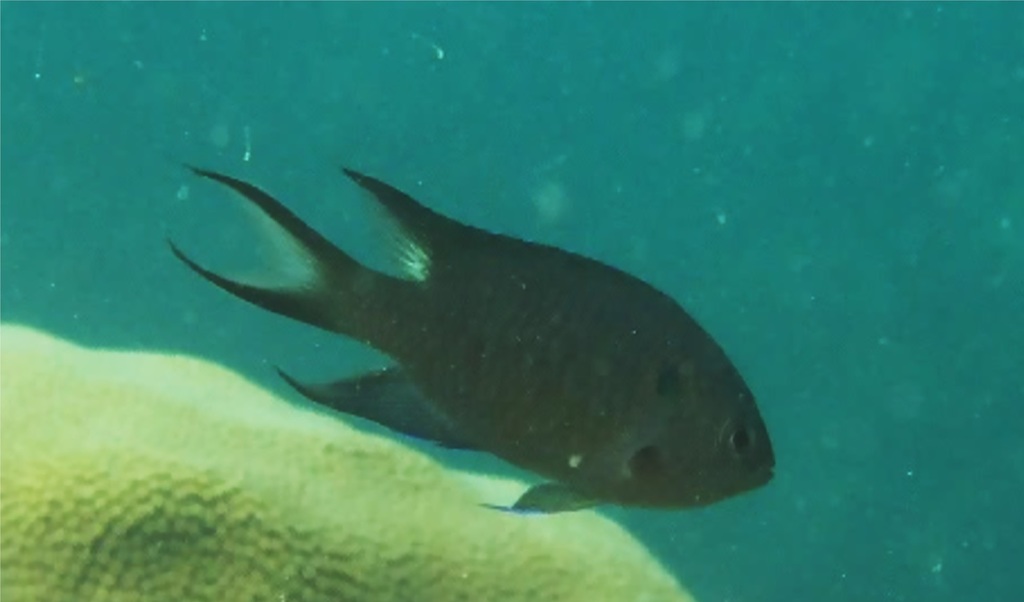
(c) Vicencio de la Cruz-Francisco, some rights reserved (CC BY) · CC BY · iNaturalist 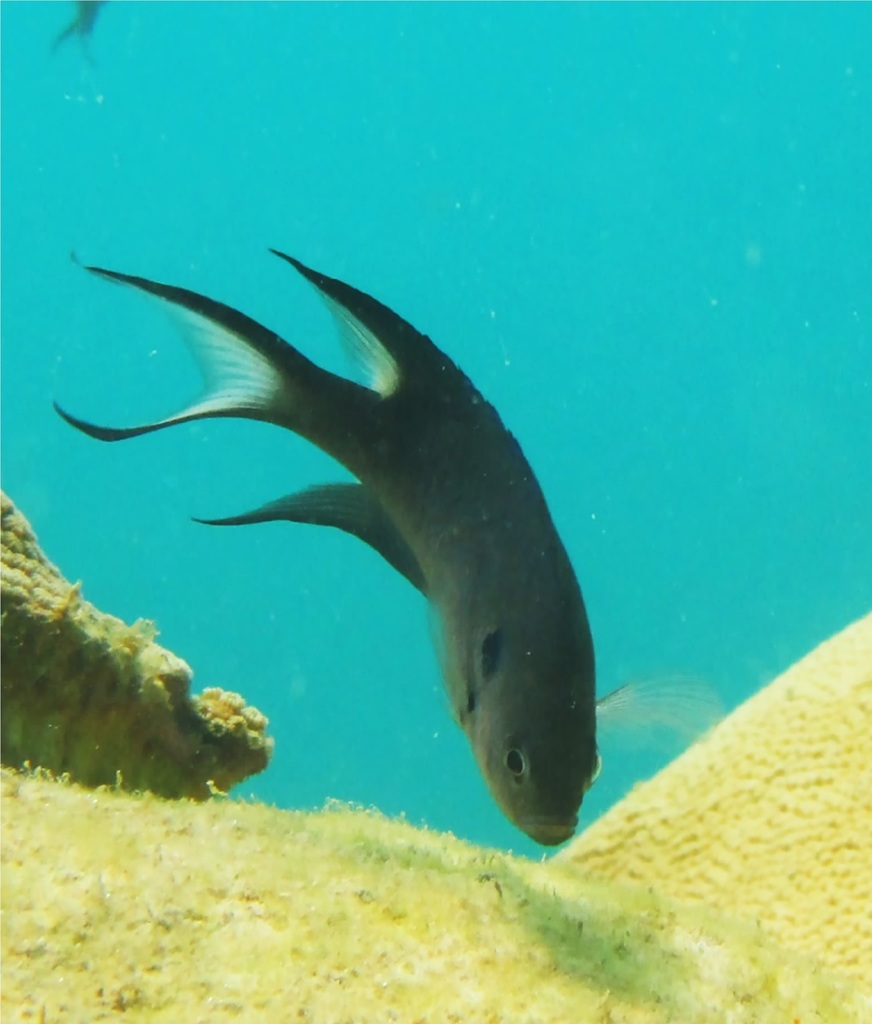
(c) Vicencio de la Cruz-Francisco, some rights reserved (CC BY) · CC BY · iNaturalist 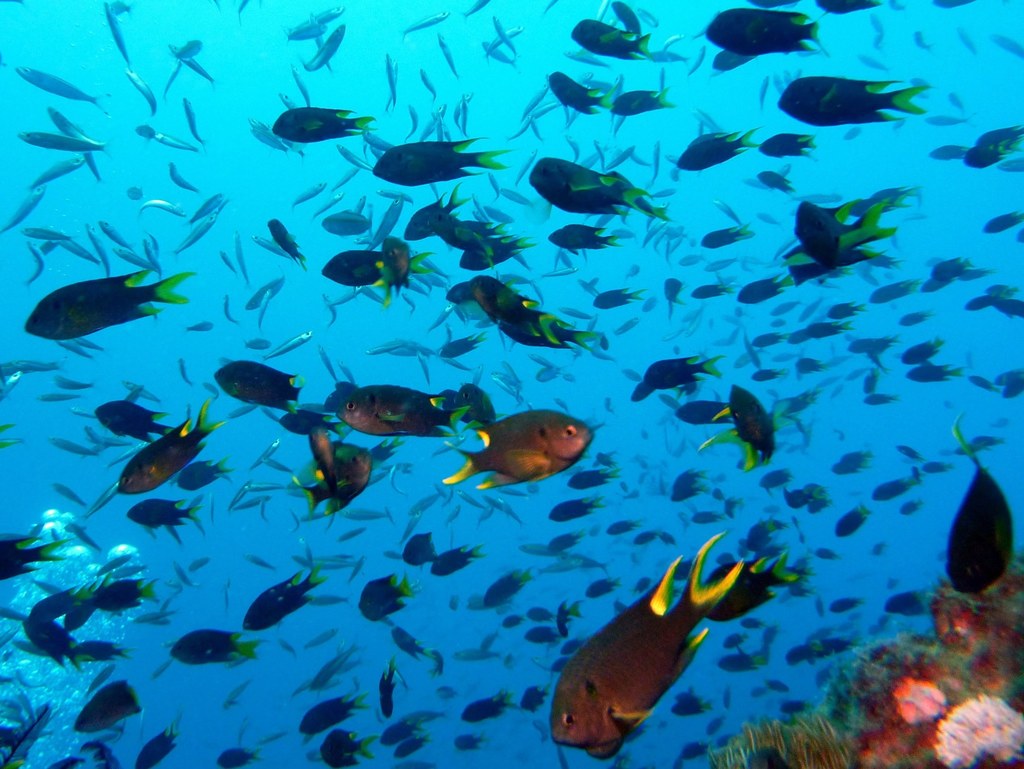
(c) Kai Squires, some rights reserved (CC BY) · CC BY · iNaturalist 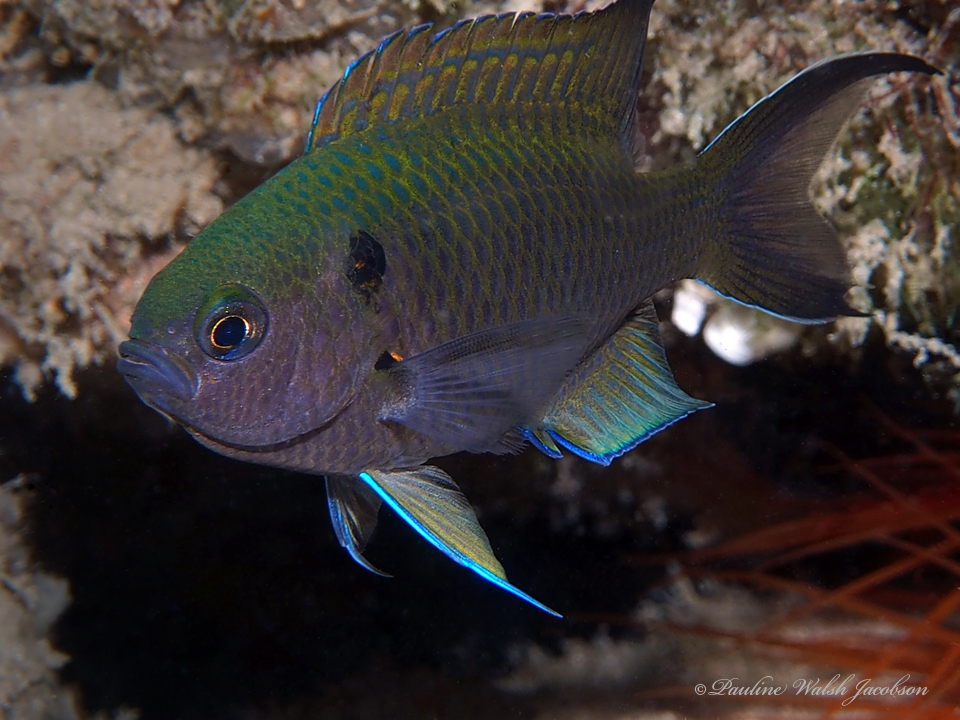
(c) Pauline Walsh Jacobson, some rights reserved (CC BY) · CC BY · iNaturalist 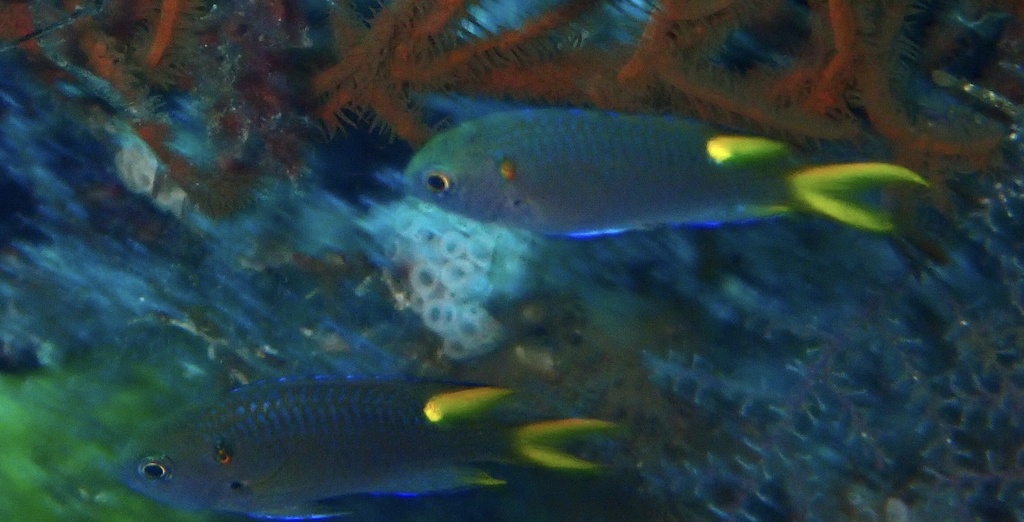
no rights reserved · CC0 1.0 · iNaturalist 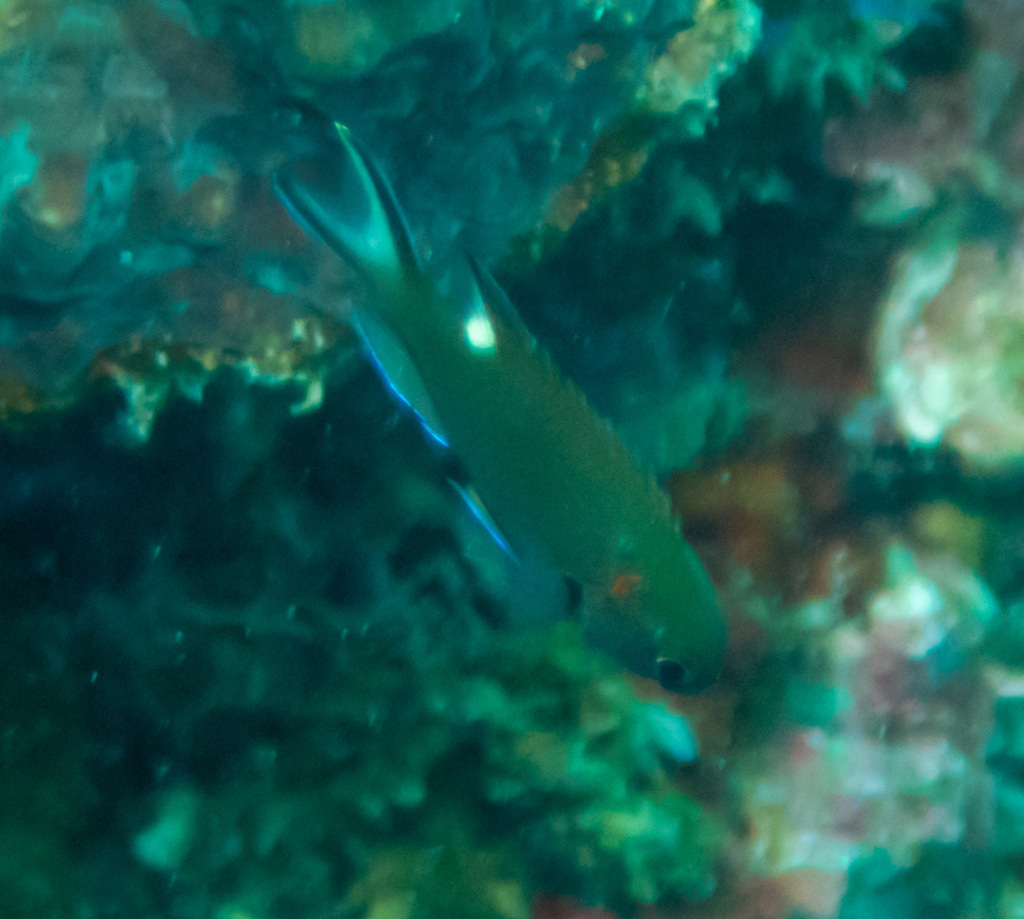
(c) portioid, some rights reserved (CC BY) · CC BY · iNaturalist
Names and classification
- English
- Regal damselfish, Regal demoiselle, Crescent Damsel, Regal Damsel, regal damselfish, Regal damsel fish, regal demoiselle, violet demoiselle
Names in 2 more languages
- Japanese
- Kuroribonsuzumedai, クロリボンスズメダイ
- Simplified Chinese
- 帝王雀, 藍黑新雀鯛
Other scientific names: Neopomacentrus cyanomus, Pomacentrus cyanomos, Pomacentrus leucosphyrus, Pomacentrus prateri
Similar species
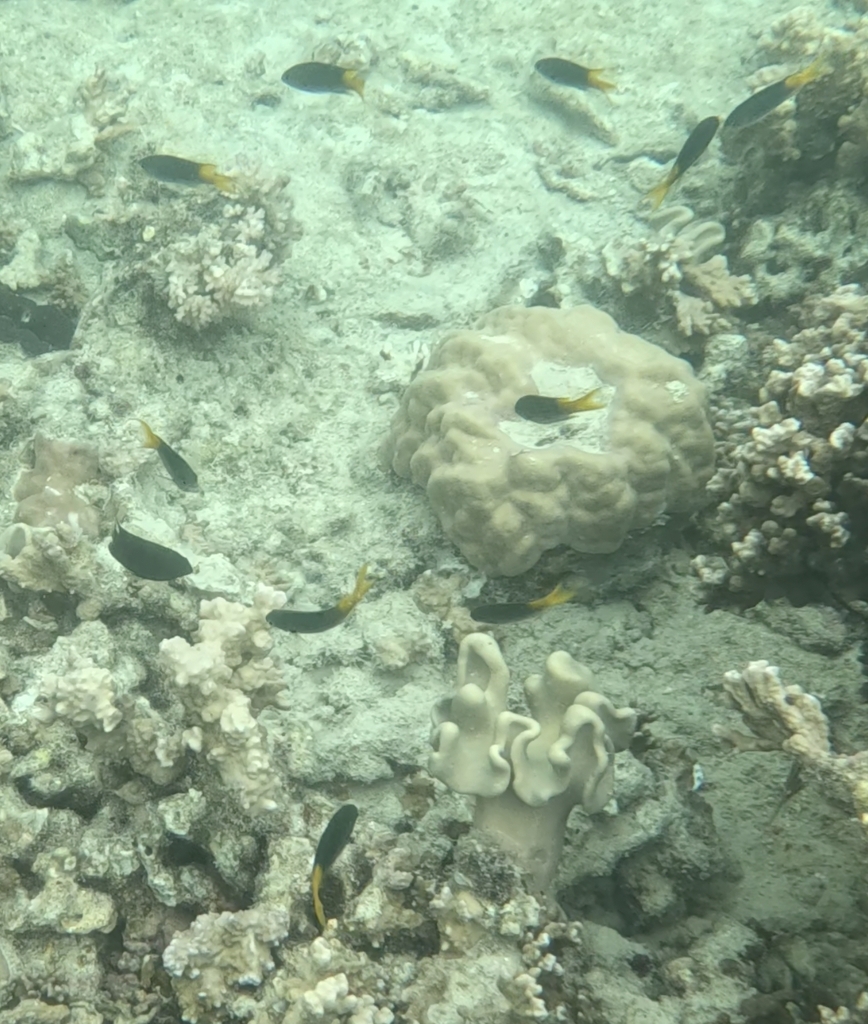 Yellowtail demoiselle
Neopomacentrus azysron
 Chinese Damsel
Neopomacentrus bankieri
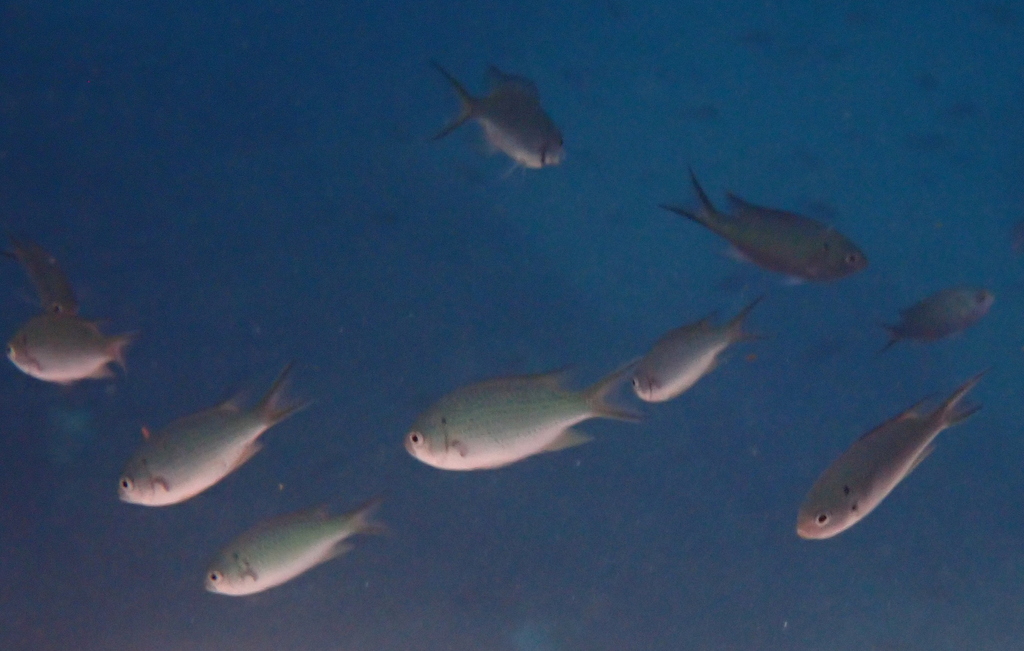 Green-shine Damsel
Neopomacentrus anabatoides
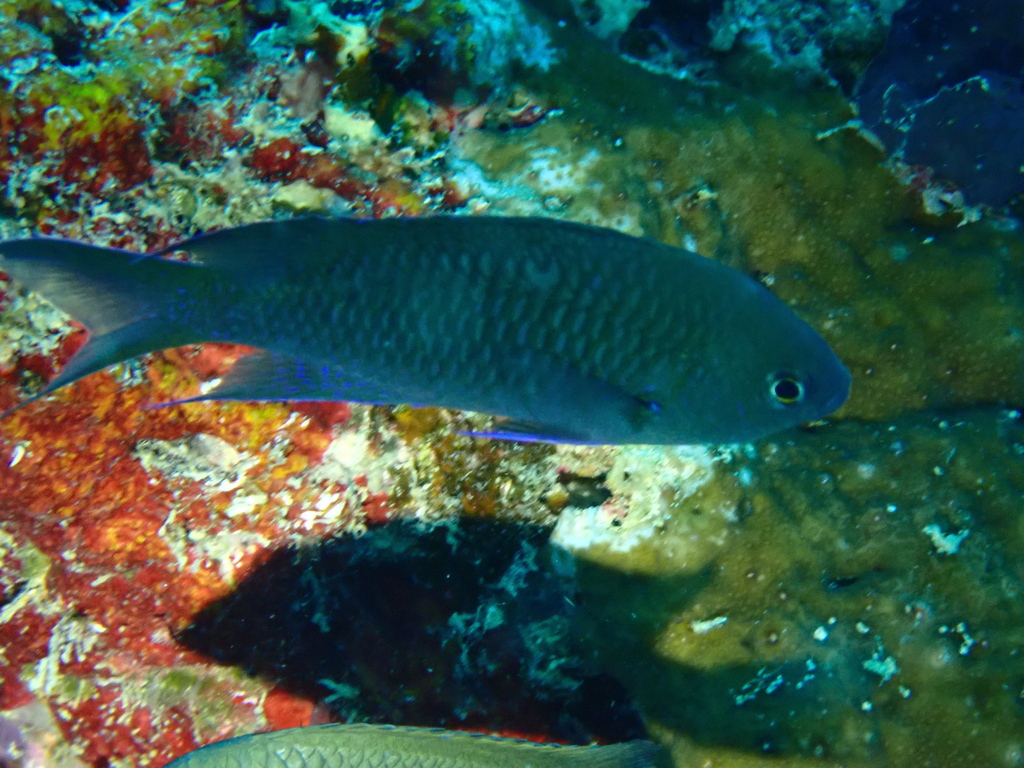 Metallic Demoiselle
Neopomacentrus metallicus
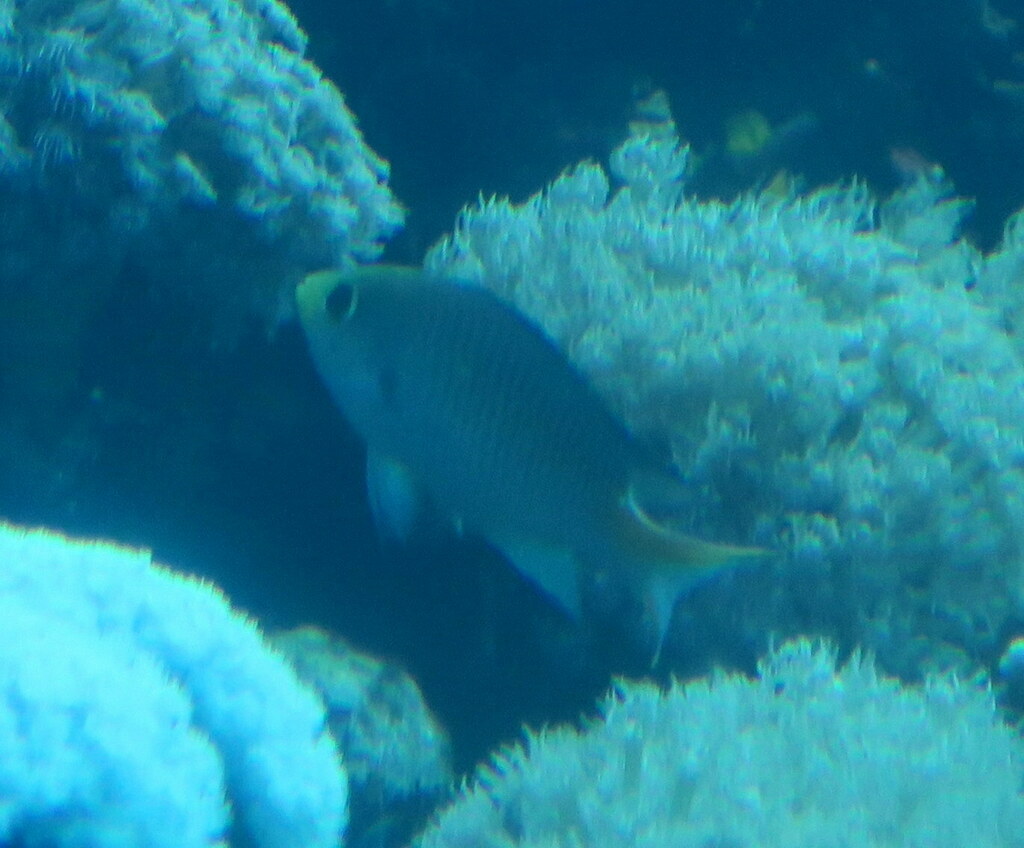 Miry's damselfish
Neopomacentrus miryae
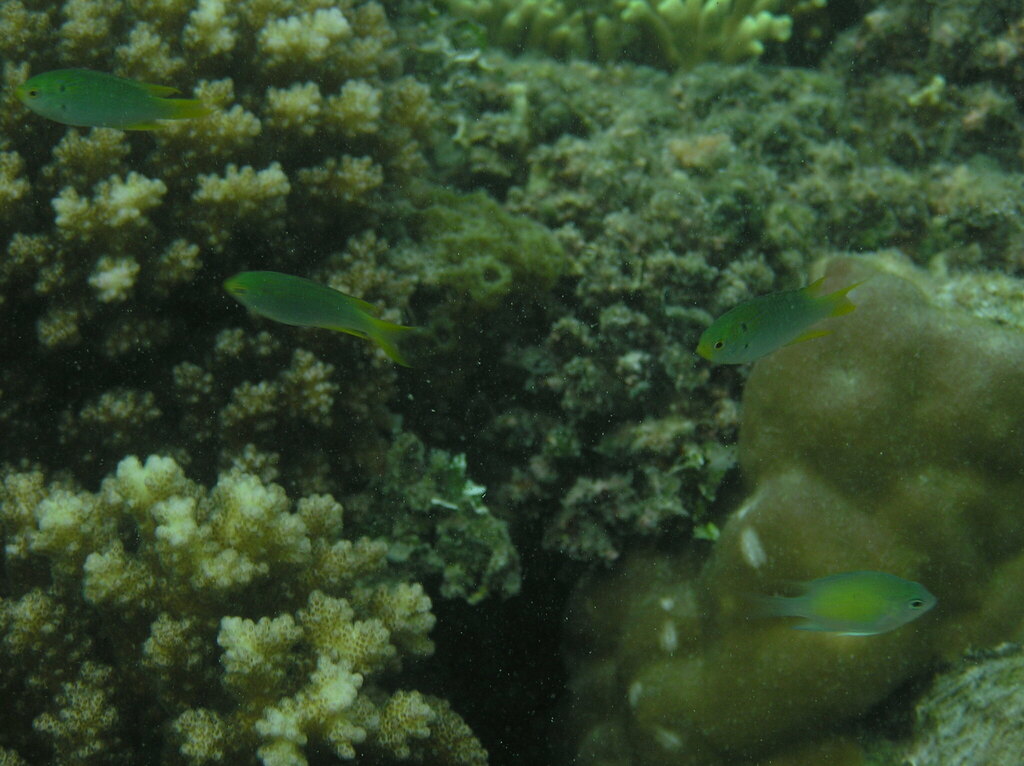 Coral Demoiselle
Neopomacentrus nemurus
Sources and credits
Names and taxonomy: WoRMS (CC BY 4.0) and the GBIF Backbone (CC BY 4.0). Photos: iNaturalist observers, each under the licence shown (CC0, CC BY or CC BY-SA).
- Depth, temperature, months and maps: records from OBIS and GBIF under CC0 or CC BY.
- Descriptions: Wikipedia, licensed CC BY-SA, each linked to its article.
- Conservation status as published by GBIF (IUCN Red List).
- 853 open-data records from 1856 to 2022.
- Species data updated November 5, 2026.
Log what you see on your next dive
The free DiveHive diver app keeps your logbook with every sighting and shows what lives at the site you dive next.