
DiscoverSpeciesOther invertebrates
Notophyllum foliosum
- Usual depth29–245 m
- Water temperature6–29 °C
- Best monthsAugust and September
- How commonOccasional
About this species
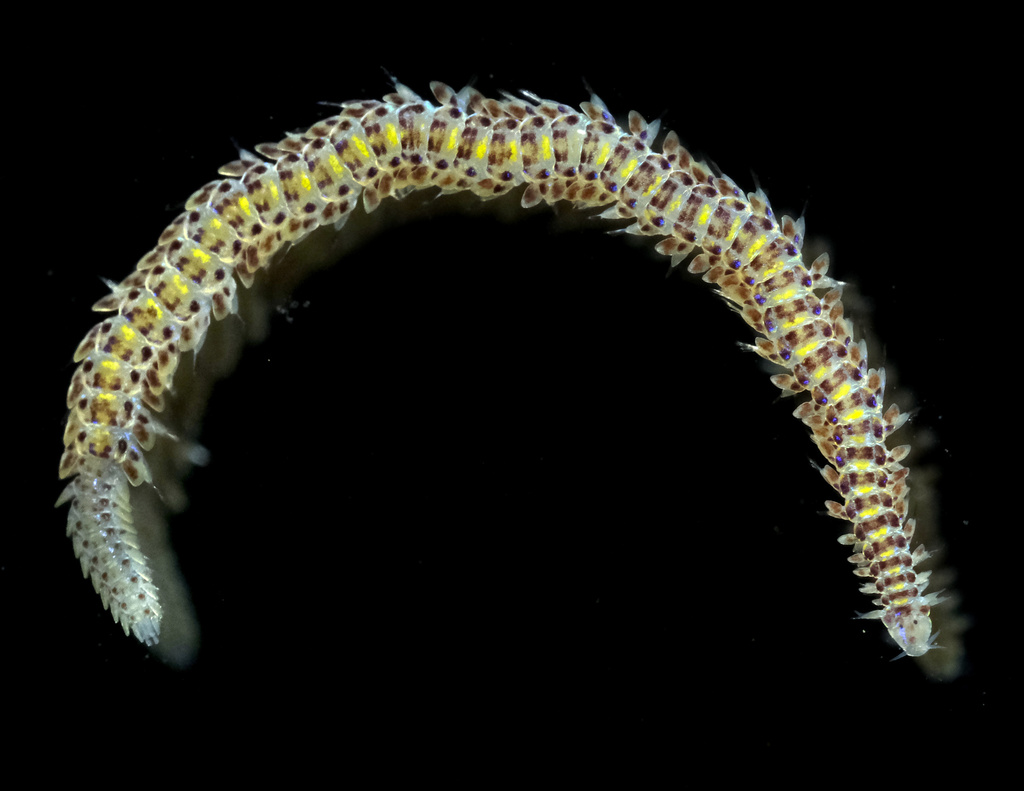
Notophyllum foliosum is a species of annelid in the family Phyllodocidae. Roughly 12 millimeters long, the annelid is bristly and covered in scale-like cirri. The species is found in shallow areas of the seafloor of the Mediterranean, Scandinavia, and Madeira. It was originally described as Phyllodoce foliosa in 1835 and was moved to the genus Notophyllum in 1923. The species was split in two in 2010, with the deeper-dwelling Notophyllum crypticum being designated its own species.
Text from the Wikipedia article “Notophyllum foliosum”, licensed CC BY-SA 4.0. Read the article
Where and when
Where it has been recorded
Worldwide
Loading the map
Best months
Worldwide (open data)
- January: 24 records
- February: 46 records
- March: 44 records
- April: 25 records
- May: 117 records
- June: 53 records
- July: 75 records
- August: 201 records
- September: 121 records
- October: 38 records
- November: 50 records
- December: 21 records
Depth and water temperature
Depth
Mostly recorded at 29–245 m · Deepest record: 1,279 m
Water temperature
Recorded in surface water of 6–29 °C
Names and classification
Other scientific names: Eulalia obtecta, Notophyllum alatum, Notophyllum longum, Notophyllum polynoide, Notophyllum viride, Phyllodoce foliosa, Trachelophyllum luetkeni
Similar species
- Paddleworm
Eteone longa
- Polychaete
Eumida sanguinea
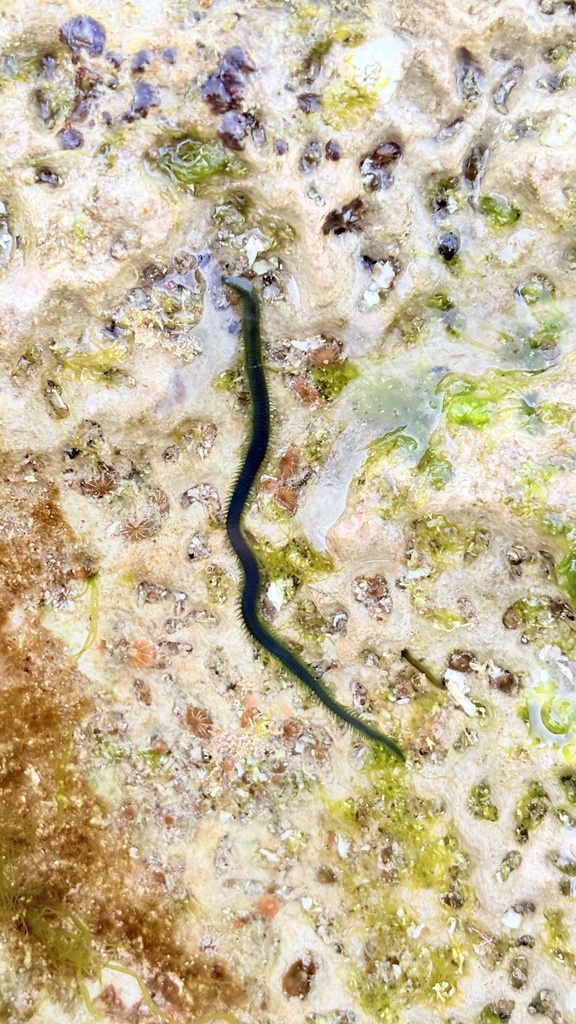 Green paddle worm
Eulalia viridis
Sources and credits
Names and taxonomy: WoRMS (CC BY 4.0) and the GBIF Backbone (CC BY 4.0). Photos: iNaturalist observers, each under the licence shown (CC0, CC BY or CC BY-SA).
- Depth, temperature, months and maps: records from OBIS and GBIF under CC0 or CC BY.
- Descriptions: Wikipedia, licensed CC BY-SA, each linked to its article.
- Conservation status as published by GBIF (IUCN Red List).
- 1,128 open-data records from 1883 to 2021.
- Species data updated November 5, 2026.
Log what you see on your next dive
The free DiveHive diver app keeps your logbook with every sighting and shows what lives at the site you dive next.