
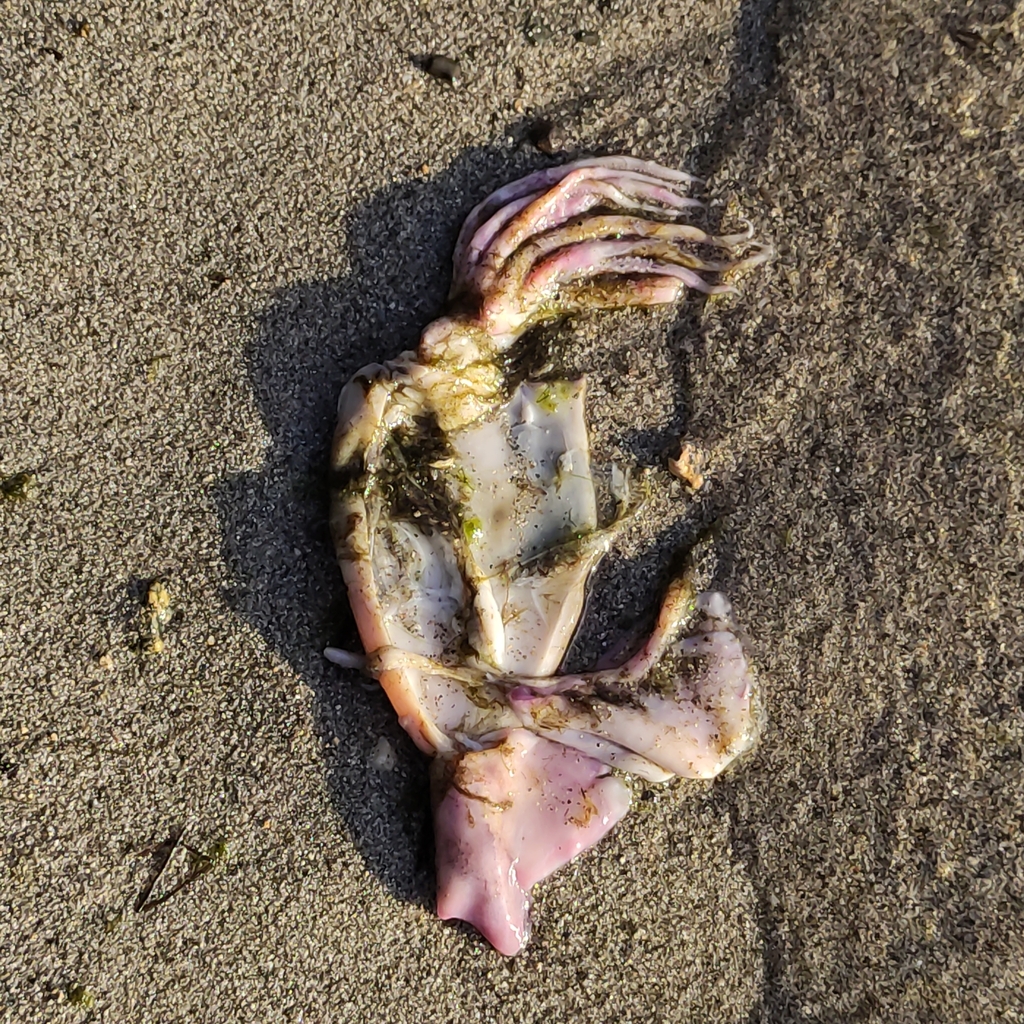
New Zealand arrow squid
Nototodarus sloanii
- Usual depth59–520 m
- Water temperature8–23 °C
- Best monthsAugust
- How commonCommon
Photo credit: (c) Jenny Saito, some rights reserved (CC BY) · CC BY · iNaturalist
About this species
Nototodarus sloanii is a species of squid commonly known as the New Zealand arrow squid or Wellington flying squid. It is also known by its Māori name of wheketere. It is a favoured prey species of a number of marine mammals and seabirds. It is an important food source for the New Zealand fur seal and two endangered species: the New Zealand sea lion and the yellow-eyed penguin. Nototodarus sloanii is sought by trawler fishermen for human consumption; New Zealand sea lions are frequently caught in trawl nets and drowned when feeding on N. sloanii.
Text from the Wikipedia article “Nototodarus sloanii”, licensed CC BY-SA 4.0. Read the article
Where and when
Where it has been recorded
Worldwide
Loading the map
Best months
Worldwide (open data)
- January: 1 records
- February: 3 records
- March: 6 records
- April: 5 records
- May: 1 records
- June: 2 records
- July: 1 records
- August: 22 records
- September: 0 records
- October: 2 records
- November: 1 records
- December: 0 records
Depth and water temperature
Depth
Mostly recorded at 59–520 m · Deepest record: 1,308 m
Water temperature
Recorded in surface water of 8–23 °C
Photos
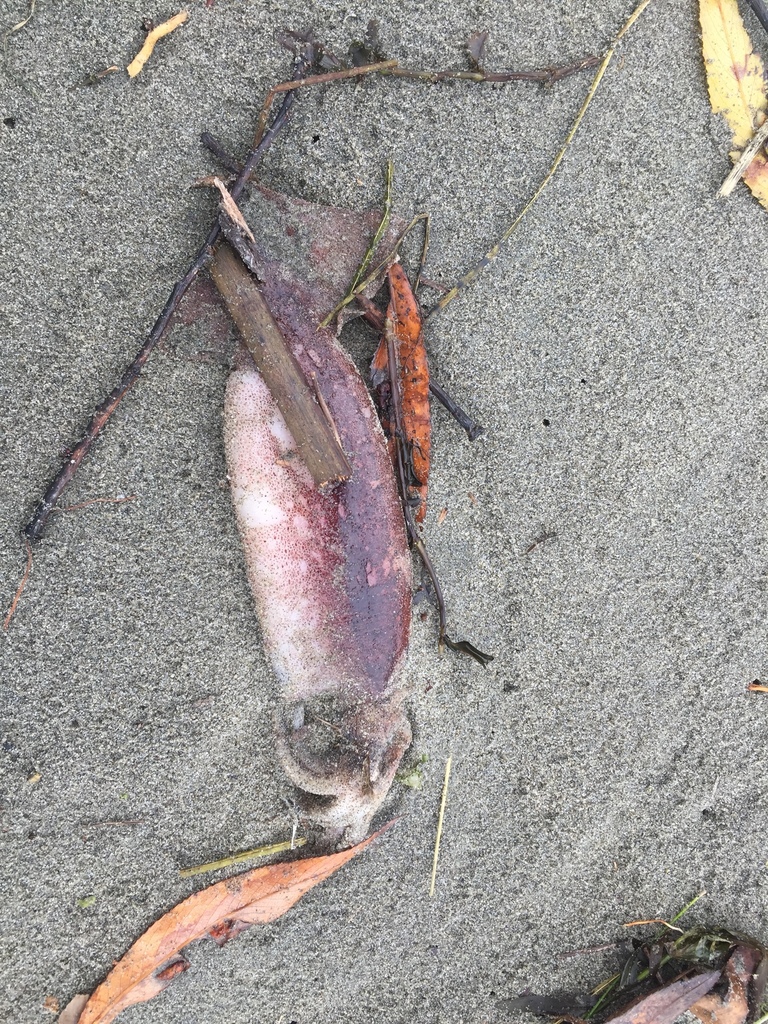
no rights reserved · CC0 1.0 · iNaturalist
Names and classification
- English
- New Zealand arrow squid, Wellington flying squid, Wheketere
Names in 3 more languages
- German
- Wellington-Flugkalmar
- French
- encornet minami
- Japanese
- ニュージーランドスルメイカ
Other scientific names: Ommastrephes sloanii
Similar species
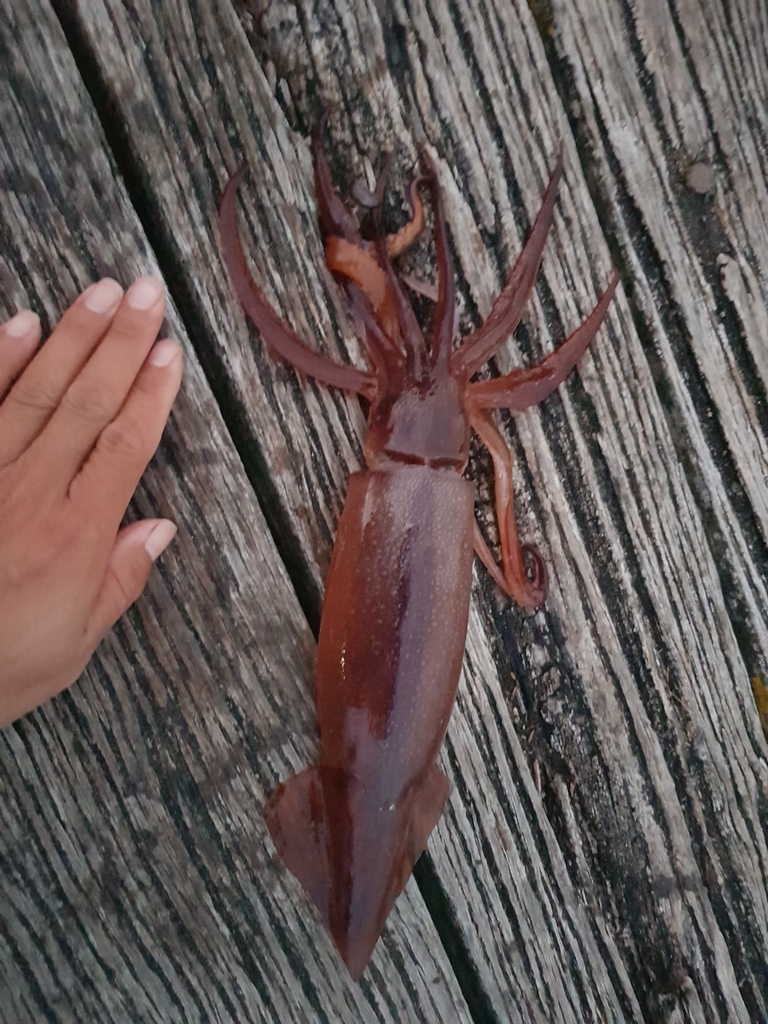 Gould's flying squid
Nototodarus gouldi
- Hawaiian flying squid
Nototodarus hawaiiensis
 Akaika
Ommastrephes bartramii
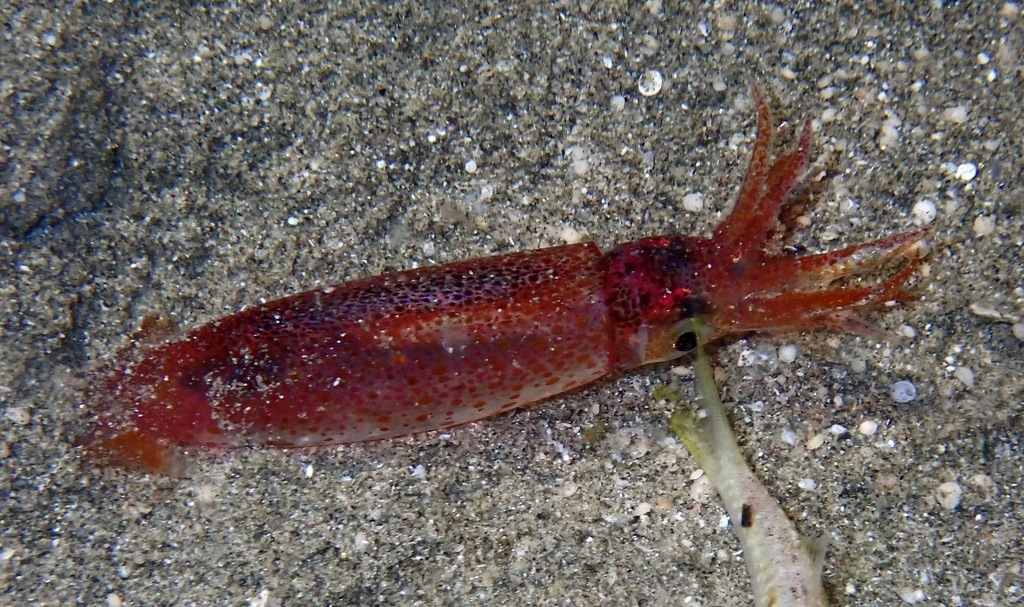 Purpleback flying squid
Sthenoteuthis oualaniensis
- Luminous flying squid
Eucleoteuthis luminosa
- Glass squid
Hyaloteuthis pelagica
Sources and credits
Names and taxonomy: WoRMS (CC BY 4.0) and the GBIF Backbone (CC BY 4.0). Photos: iNaturalist observers, each under the licence shown (CC0, CC BY or CC BY-SA).
- Depth, temperature, months and maps: records from OBIS and GBIF under CC0 or CC BY.
- Descriptions: Wikipedia, licensed CC BY-SA, each linked to its article.
- Conservation status as published by GBIF (IUCN Red List).
- 13,066 open-data records from 1917 to 2022.
- Species data updated November 5, 2026.
Log what you see on your next dive
The free DiveHive diver app keeps your logbook with every sighting and shows what lives at the site you dive next.