
About this species
Novaculops woodi, the Hawaiian sandy or Wood's wrasse, is a species of marine ray-finned fish from the family Labridae, the wrasses. This wrasse is endemic to the Hawaiian Islands in the Pacific Ocean where it is found in areas of sandy rubble as depths of less than 48 metres (157 ft). Novaculops woodi was originally described as Xyrichtys woodi in 1901 by the American physiologist and histologist Oliver Peebles Jenkins (1850-1935) with the type locality given as Honolulu. peebles gave this species the specific name woodi in honour of the Stanford University professor of hygiene Thomas Denison Wood.
Text from the Wikipedia article “Novaculops woodi”, licensed CC BY-SA 4.0. Read the article
Where and when
Where it has been recorded
Worldwide
Loading the map
Best months
Worldwide (open data)
- January: 0 records
- February: 0 records
- March: 0 records
- April: 0 records
- May: 0 records
- June: 1 records
- July: 0 records
- August: 0 records
- September: 0 records
- October: 3 records
- November: 0 records
- December: 0 records
Depth and water temperature
Water temperature
Recorded in surface water of 25°C
Names and classification
- English
- Hawaiian Sandy
Names in 1 more languages
- Japanese
- テンスモドキ
Other scientific names: Novaculichthys entargyreus, Novaculichthys tattoo, Novaculichthys woodi, Xyrichtys woodi
Similar species
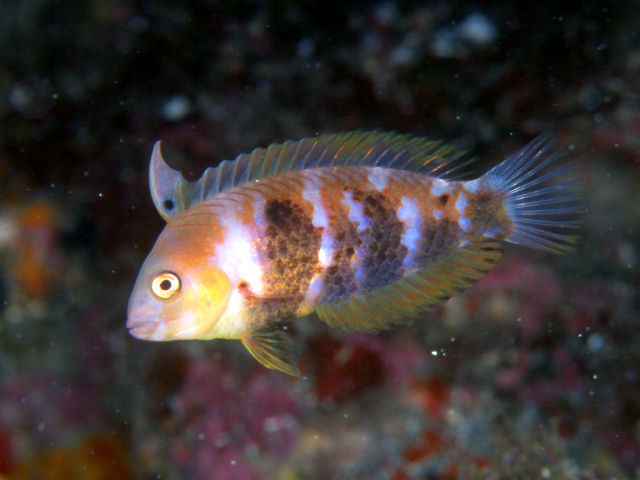 Oriental Sandy
Novaculops sciistius
- St. Brandon's Sandy
Novaculops alvheimi
- Halstead's Sandy
Novaculops halsteadi
 Blue Groper
Achoerodus gouldii
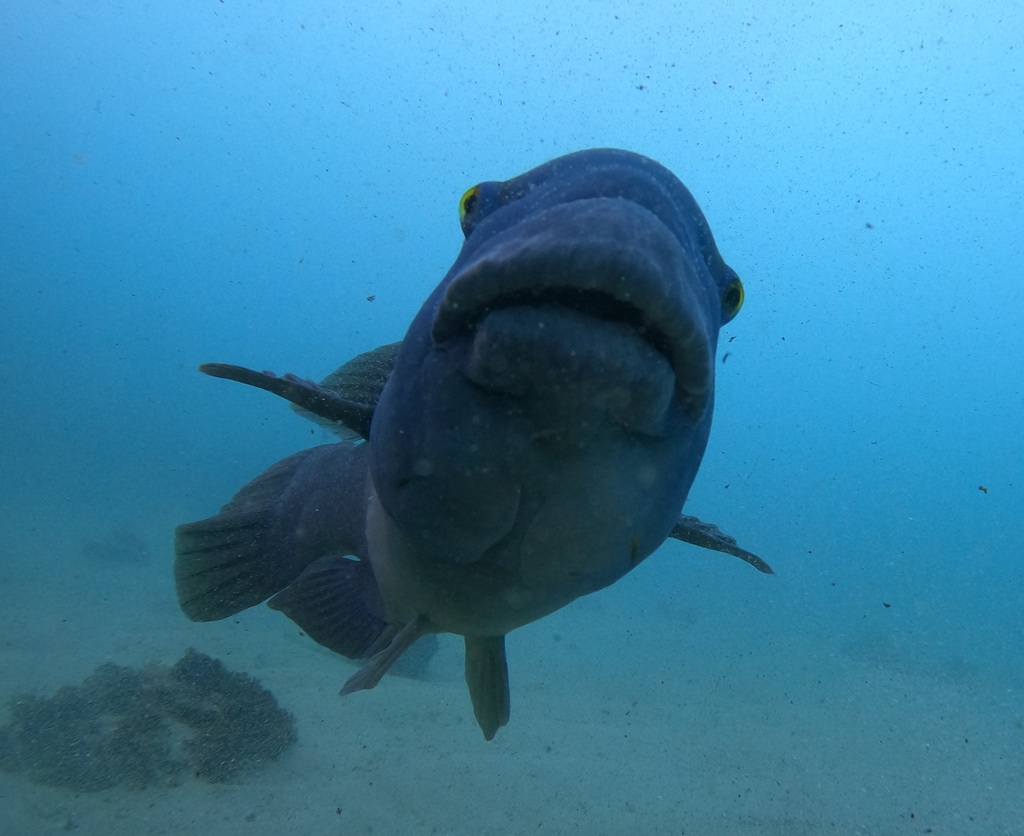 Blue Groper
Achoerodus viridis
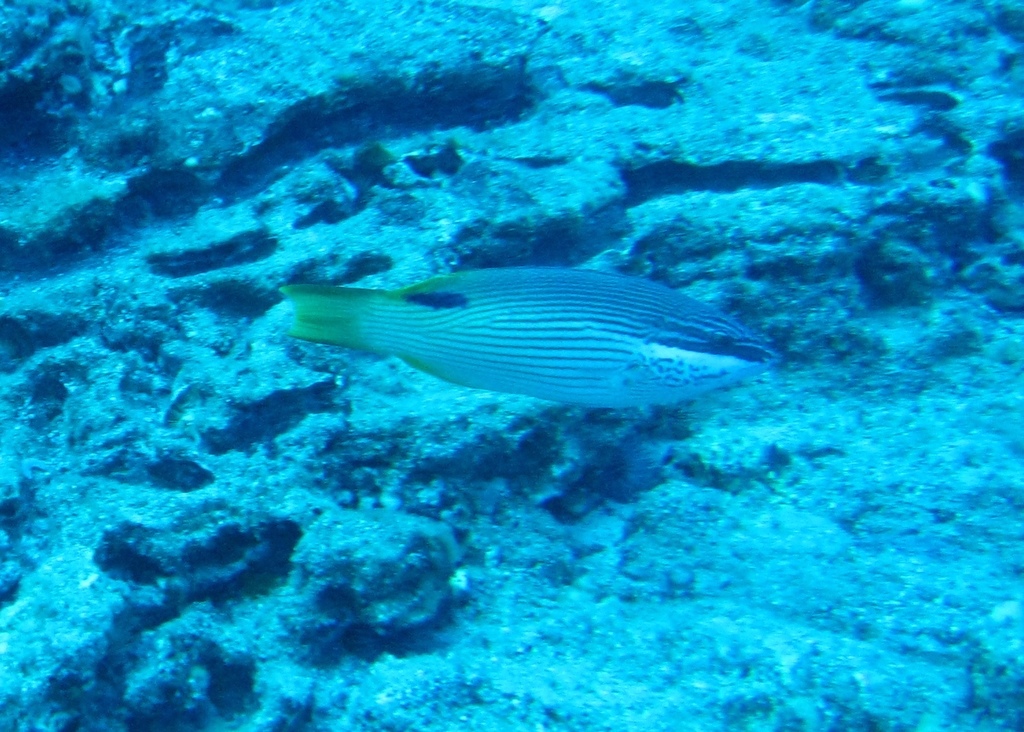 Hawaiian Hogfish
Bodianus albotaeniatus
Sources and credits
Names and taxonomy: WoRMS (CC BY 4.0) and the GBIF Backbone (CC BY 4.0). Photos: iNaturalist observers, each under the licence shown (CC0, CC BY or CC BY-SA).
- Depth, temperature, months and maps: records from OBIS and GBIF under CC0 or CC BY.
- Descriptions: Wikipedia, licensed CC BY-SA, each linked to its article.
- Conservation status as published by GBIF (IUCN Red List).
- Species data updated November 5, 2026.
Log what you see on your next dive
The free DiveHive diver app keeps your logbook with every sighting and shows what lives at the site you dive next.