
Onychoteuthis meridiopacifica
- Usual depth550–2,004 m
- Water temperature20–28 °C
- Best monthsNovember
- How commonRare
About this species
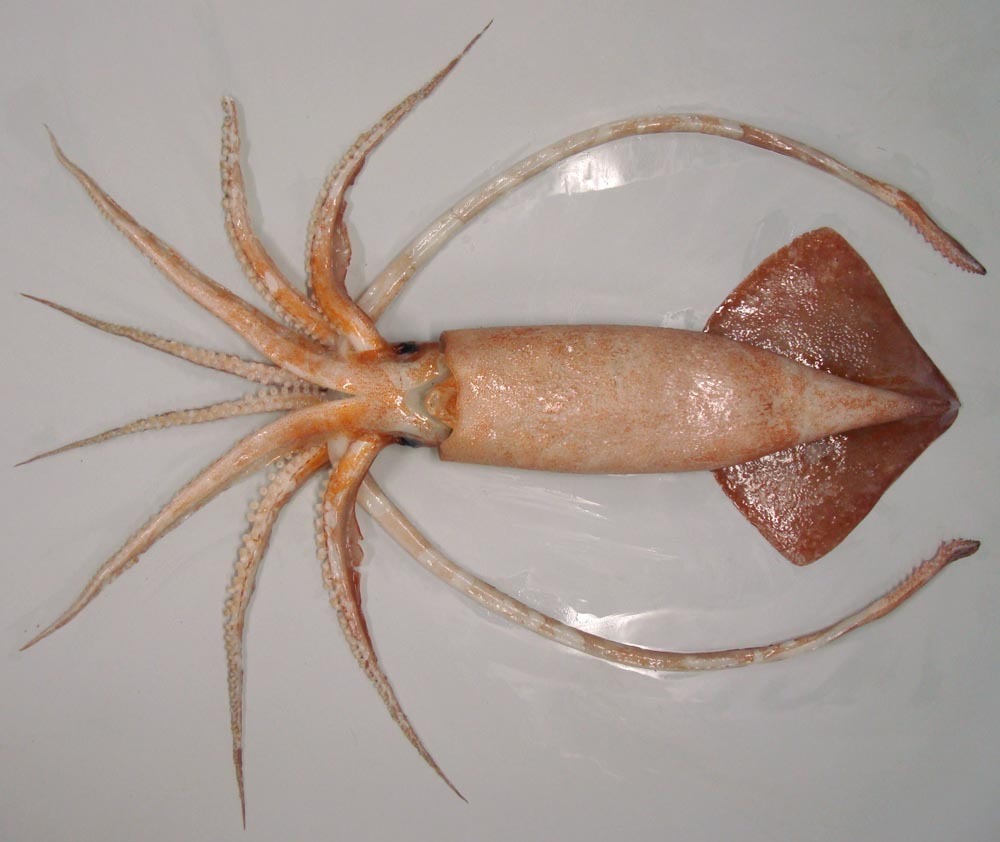
Onychoteuthis meridiopacifica is a species of squid in the family Onychoteuthidae. Males become mature at 40 mm, and the species is believed to reach a maximum mantle length of 90 mm, the smallest species in the genus Onychoteuthis. The tentacular club reaches a length of 20-25% of the mantle length, and contains 16-19 club hooks. Arms reach 27-44% of the mantle length, and each contain 50-60 suckers. 8-12 nuchal folds are present on each side of the head. Its short, broad fins and the possession of a small number marginal suckers on the tentacular clubs of adults are distinguishing characteristics of this species. It is found off eastern Australia and probably extends into seas off Indonesia as well as east to Tonga and Vanuatu.
Text from the Wikipedia article “Onychoteuthis meridiopacifica”, licensed CC BY-SA 4.0. Read the article
Where and when
Where it has been recorded
Worldwide
Loading the map
Best months
Worldwide (open data)
- January: 0 records
- February: 0 records
- March: 0 records
- April: 0 records
- May: 0 records
- June: 0 records
- July: 0 records
- August: 0 records
- September: 0 records
- October: 1 records
- November: 2 records
- December: 0 records
Depth and water temperature
Depth
Mostly recorded at 550–2,004 m · Deepest record: 2,003.5 m
Water temperature
Recorded in surface water of 20–28 °C
Names and classification
Names in 1 more languages
- Japanese
- コガタツメイカ
Similar species
- Clawed calamary squid
Onychoteuthis banksii
 Greater clubhook squid
Moroteuthopsis ingens
- Rugose Clubhook Squid
Onykia robsoni
- African Hooked-squid
Notonykia africanae
Sources and credits
Names and taxonomy: WoRMS (CC BY 4.0) and the GBIF Backbone (CC BY 4.0). Photos: iNaturalist observers, each under the licence shown (CC0, CC BY or CC BY-SA).
- Depth, temperature, months and maps: records from OBIS and GBIF under CC0 or CC BY.
- Descriptions: Wikipedia, licensed CC BY-SA, each linked to its article.
- Conservation status as published by GBIF (IUCN Red List).
- 13 open-data records from 1996 to 2016.
- Species data updated November 5, 2026.
Log what you see on your next dive
The free DiveHive diver app keeps your logbook with every sighting and shows what lives at the site you dive next.