
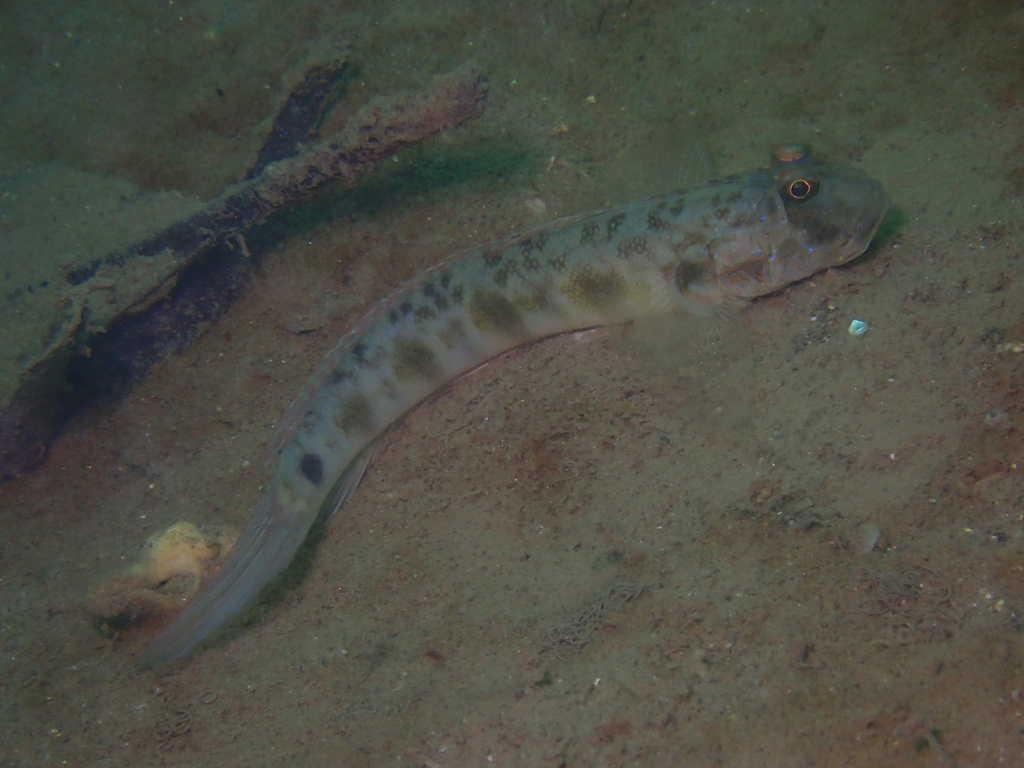
Frogface goby
Oxyurichthys papuensis
- Usual depth1–26 m
- Water temperature23–29 °C
- Best monthsJuly, September, and November
- How commonRare
Photo credit: (c) Ewout Knoester, some rights reserved (CC BY-SA) · CC BY-SA · iNaturalist
About this species
Oxyurichthys papuensis, commonly known as the frogface goby, is a species of goby found in the Indo-West Pacific, the Red Sea south to Natal, South Africa and east to the tropical western Pacific. This species reaches a length of 20 cm (7.9 in).
Text from the Wikipedia article “Oxyurichthys papuensis”, licensed CC BY-SA 4.0. Read the article
Where and when
Where it has been recorded
Worldwide
Loading the map
Best months
Worldwide (open data)
- January: 3 records
- February: 0 records
- March: 1 records
- April: 0 records
- May: 3 records
- June: 1 records
- July: 4 records
- August: 2 records
- September: 5 records
- October: 2 records
- November: 5 records
- December: 2 records
Depth and water temperature
Depth
Mostly recorded at 1–26 m · Deepest record: 69.5 m
Water temperature
Recorded in surface water of 23–29 °C
Names and classification
- English
- Frogface goby, Big Mud-goby, frogface goby, Frogface Goby, Papuan Goby, spangled arrowfin goby
Names in 4 more languages
- German
- Papua-grundel
- French
- Gobie à tête de grenouille
- Japanese
- Onisaruhaze, オニサルハゼ
- Simplified Chinese
- 巴布亞溝鰕虎, 巴布亞溝鰕虎魚, 眼角鴿鯊
Other scientific names: Gobius belosso, Gobius papuensis
Similar species
- Orange-spot Mudgoby
Oxyurichthys auchenolepis
- Horned Tentacle Goby
Oxyurichthys cornutus
- finescale arrowfin goby
Oxyurichthys microlepis
- Eyebrow goby
Oxyurichthys ophthalmonema
- redspot arrowfin goby
Oxyurichthys tentacularis
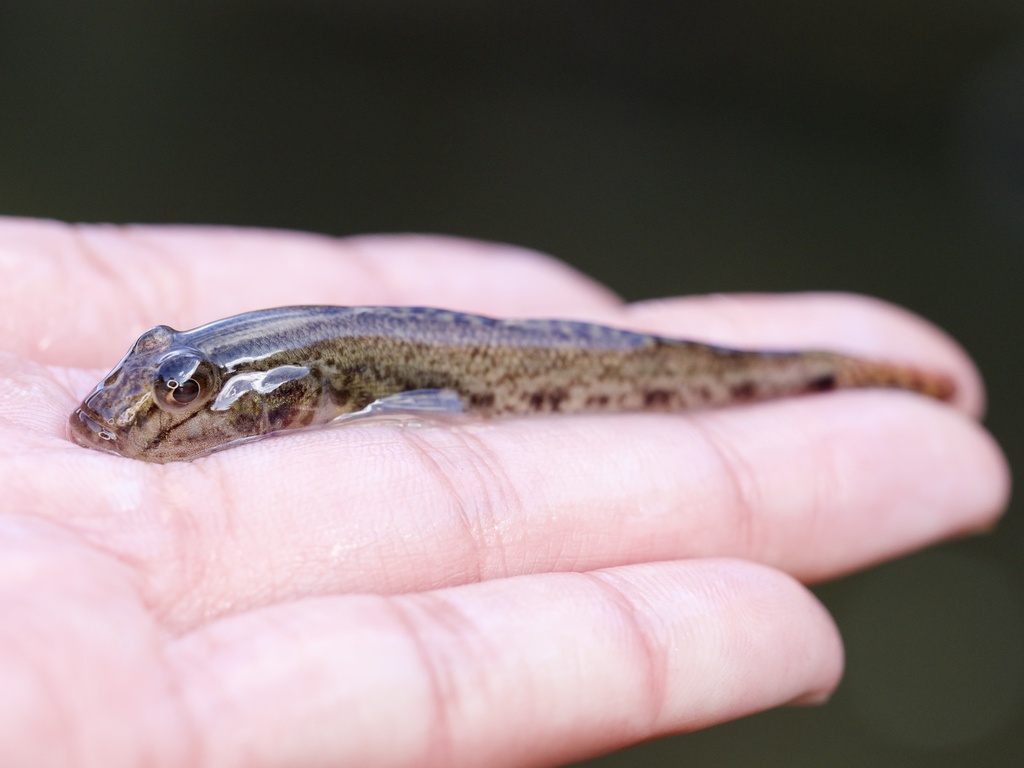 Yellowfin goby
Acanthogobius flavimanus
Sources and credits
Names and taxonomy: WoRMS (CC BY 4.0) and the GBIF Backbone (CC BY 4.0). Photos: iNaturalist observers, each under the licence shown (CC0, CC BY or CC BY-SA).
- Depth, temperature, months and maps: records from OBIS and GBIF under CC0 or CC BY.
- Descriptions: Wikipedia, licensed CC BY-SA, each linked to its article.
- Conservation status as published by GBIF (IUCN Red List).
- 68 open-data records from 1945 to 2013.
- Species data updated October 30, 2026.
Log what you see on your next dive
The free DiveHive diver app keeps your logbook with every sighting and shows what lives at the site you dive next.