
Pinnoctopus macropus
- Usual depth3–187 m
- Water temperature7–29 °C
- Best monthsMay, June, and July
- How commonOccasional
About this species
Pinnoctopus macropus, also known as the Atlantic white-spotted octopus, white-spotted octopus, grass octopus or grass scuttle, is a species of octopus found in shallow areas of the Mediterranean Sea, the warmer parts of the eastern and western Atlantic Ocean, the Caribbean Sea, and the Indo-Pacific region. This octopus feeds on small organisms which lurk among the branches of corals.
Text from the Wikipedia article “Pinnoctopus macropus”, licensed CC BY-SA 4.0. Read the article
Where and when
Where it has been recorded
Worldwide
Loading the map
Best months
Worldwide (open data)
- January: 1 records
- February: 0 records
- March: 1 records
- April: 1 records
- May: 14 records
- June: 14 records
- July: 15 records
- August: 6 records
- September: 8 records
- October: 5 records
- November: 0 records
- December: 0 records
Depth and water temperature
Depth
Mostly recorded at 3–187 m · Deepest record: 400 m
Water temperature
Recorded in surface water of 7–29 °C
Names and classification
Other scientific names: Callistoctopus macropus, Octopus alderii, Octopus didynamus, Octopus frayedus, Octopus granosus, Octopus macropodus, Octopus macropus, Polypus macropus
Similar species
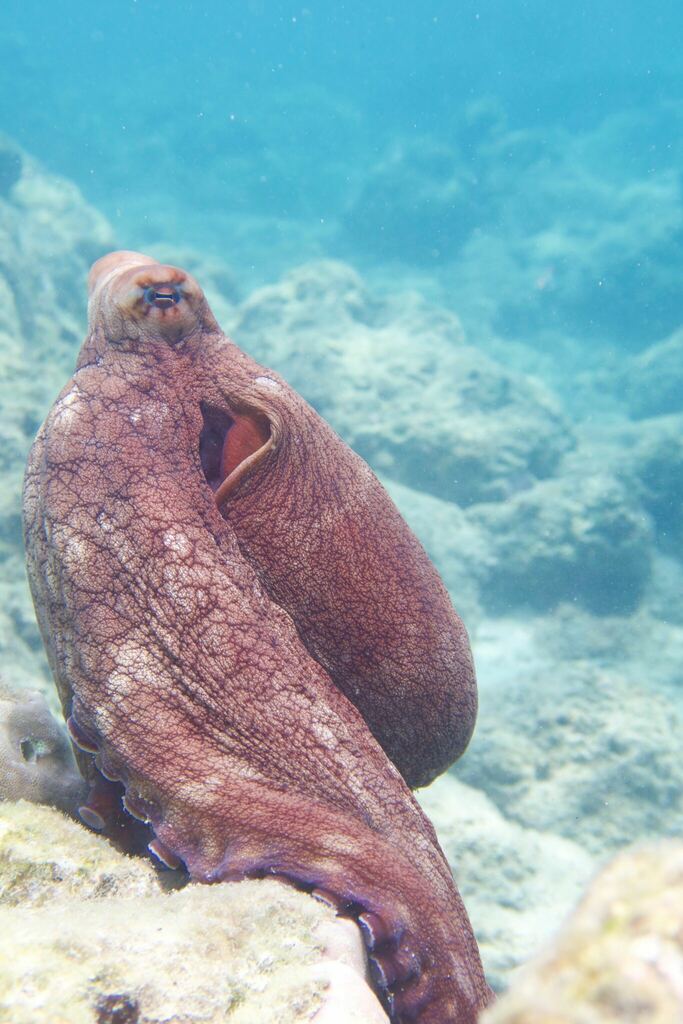 Big blue octopus
Octopus cyanea
- Coconut Octopus
Amphioctopus marginatus
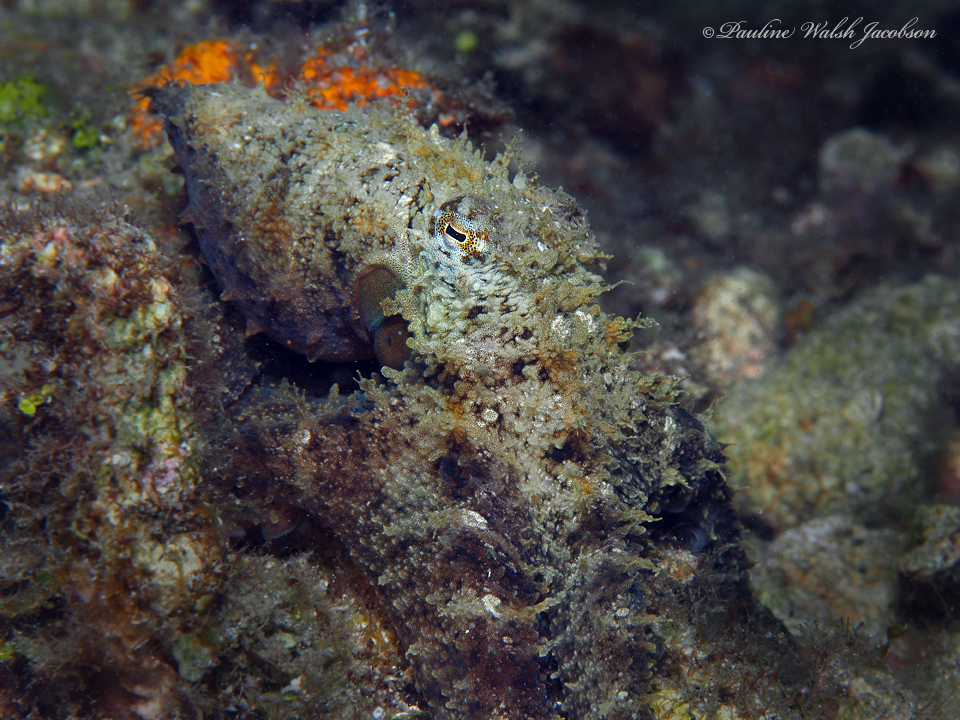 Algae Octopus
Abdopus aculeatus
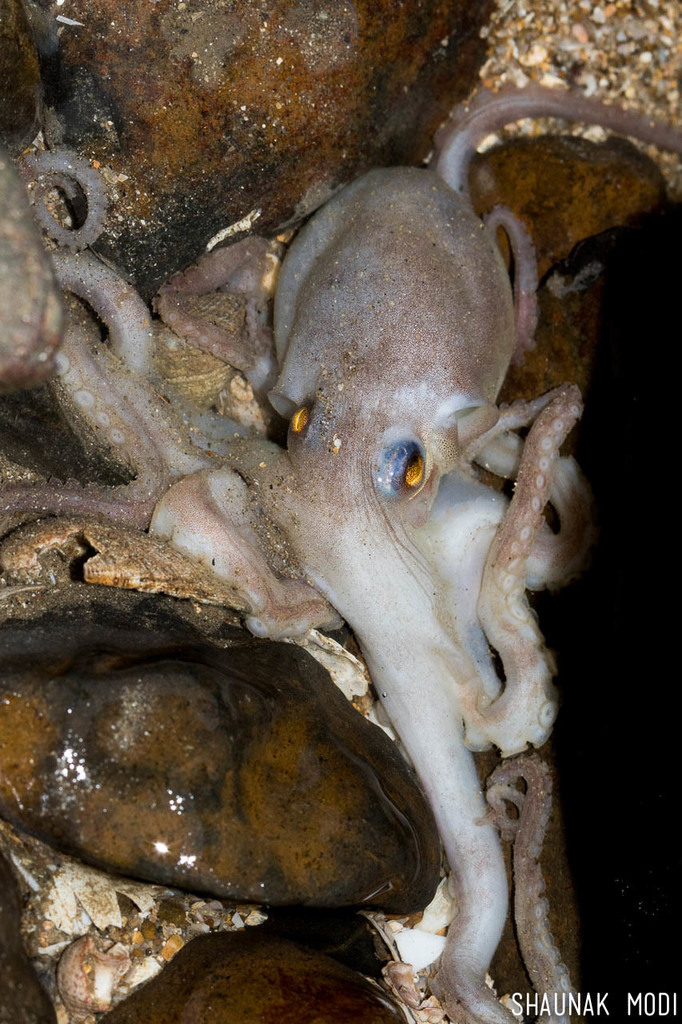 Old woman octopus
Cistopus indicus
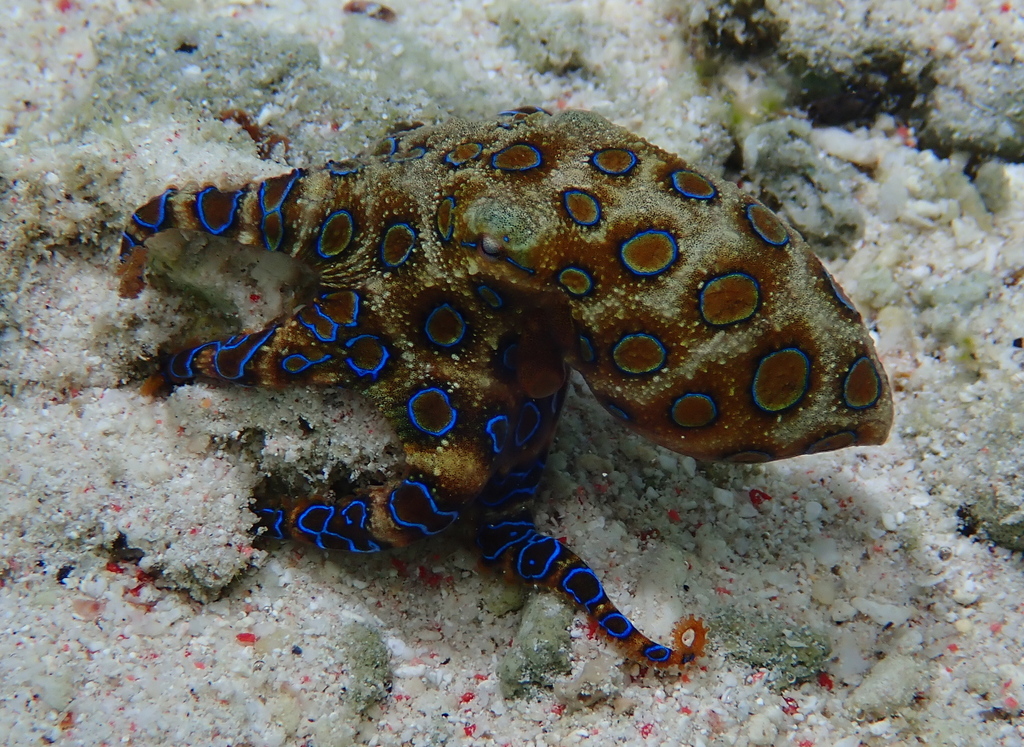 Greater blue-ringed octopus
Hapalochlaena lunulata
Sources and credits
Names and taxonomy: WoRMS (CC BY 4.0) and the GBIF Backbone (CC BY 4.0). Photos: iNaturalist observers, each under the licence shown (CC0, CC BY or CC BY-SA).
- Depth, temperature, months and maps: records from OBIS and GBIF under CC0 or CC BY.
- Descriptions: Wikipedia, licensed CC BY-SA, each linked to its article.
- 80 open-data records from 1826 to 2006.
Log what you see on your next dive
The free DiveHive diver app keeps your logbook with every sighting and shows what lives at the site you dive next.