
Blood clam
Tegillarca granosa
- Usual depth0–287 m
- Water temperature14–30 °C
- Best monthsAugust, October, and December
- How commonOccasional
About this species
Tegillarca granosa is a species of ark clam commonly known as the blood cockle or blood clam due to the red haemoglobin liquid inside the soft tissues. It is found throughout the Indo-Pacific region from the eastern coast of South Africa northwards and eastwards to Southeast Asia, Australia, Polynesia, and up to northern Japan. It lives mainly in the intertidal zone at one to two metres water depth, burrowed down into sand or mud. Adult size is about 5 to 6 cm long and 4 to 5 cm wide.
Text from the Wikipedia article “Tegillarca granosa”, licensed CC BY-SA 4.0. Read the article
Where and when
Where it has been recorded
Worldwide
Loading the map
Best months
Worldwide (open data)
- January: 2 records
- February: 4 records
- March: 6 records
- April: 12 records
- May: 10 records
- June: 7 records
- July: 7 records
- August: 22 records
- September: 11 records
- October: 28 records
- November: 7 records
- December: 18 records
Depth and water temperature
Depth
Mostly recorded at 0–287 m · Deepest record: 287 m
Water temperature
Recorded in surface water of 14–30 °C
Names and classification
- English
- Blood clam, Blood cockle, Granular ark, blood clam, blood cockle, granular ark, Granular Mud Ark
Names in 4 more languages
- German
- Genarbte Arche, Genarbte Archenmuschel, Westpazifische Archenmuschel
- Japanese
- ハイガイ
- Korean
- 꼬막
- Simplified Chinese
- 血蚶
Other scientific names: Anadara (Tegillarca) granosa, Anadara bisenensis, Anadara granosa, Anadara thackwayi, Anomalocardia pulchella, Arca (Anadara) granosa, Arca aculeata, Arca corbicula, Arca corbula, Arca granosa, Arca nodulosa, Arca obessa
Similar species
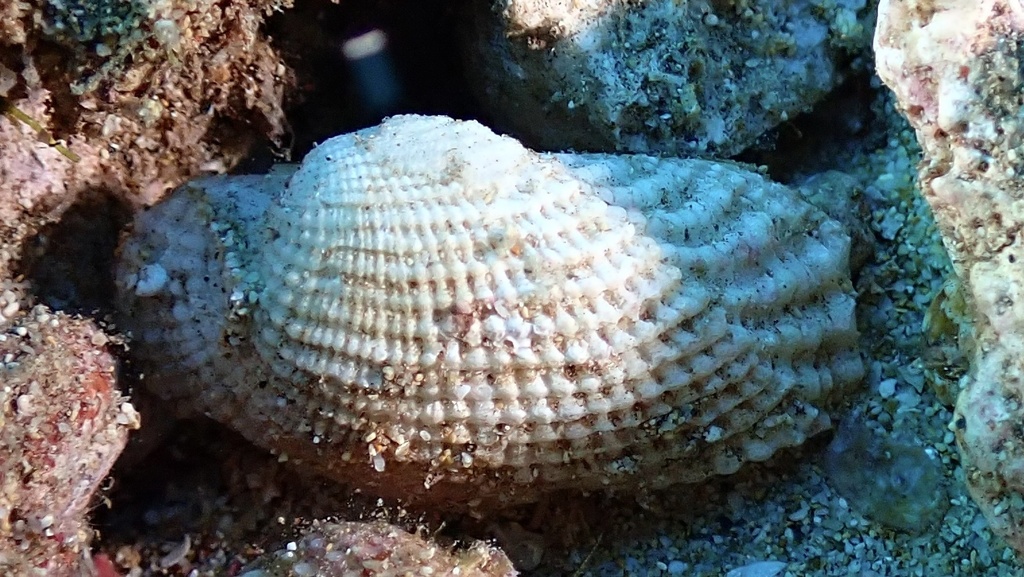 Divaricated Ark
Acar plicata
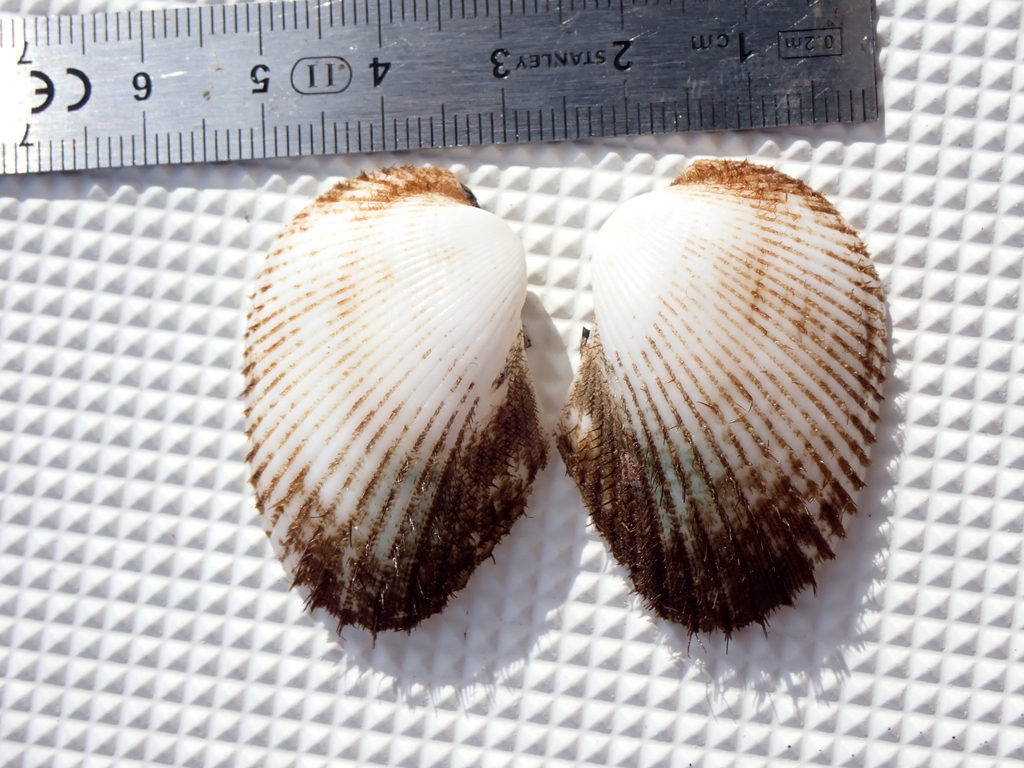 Antique ark
Anadara antiquata
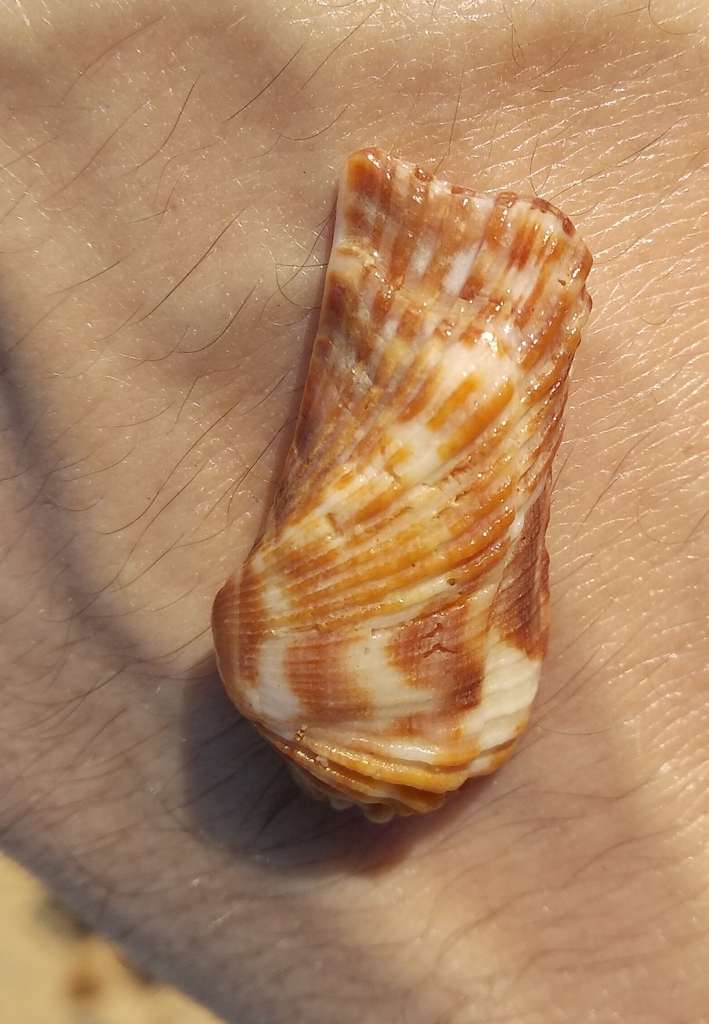 Indo-Pacific Ark
Arca navicularis
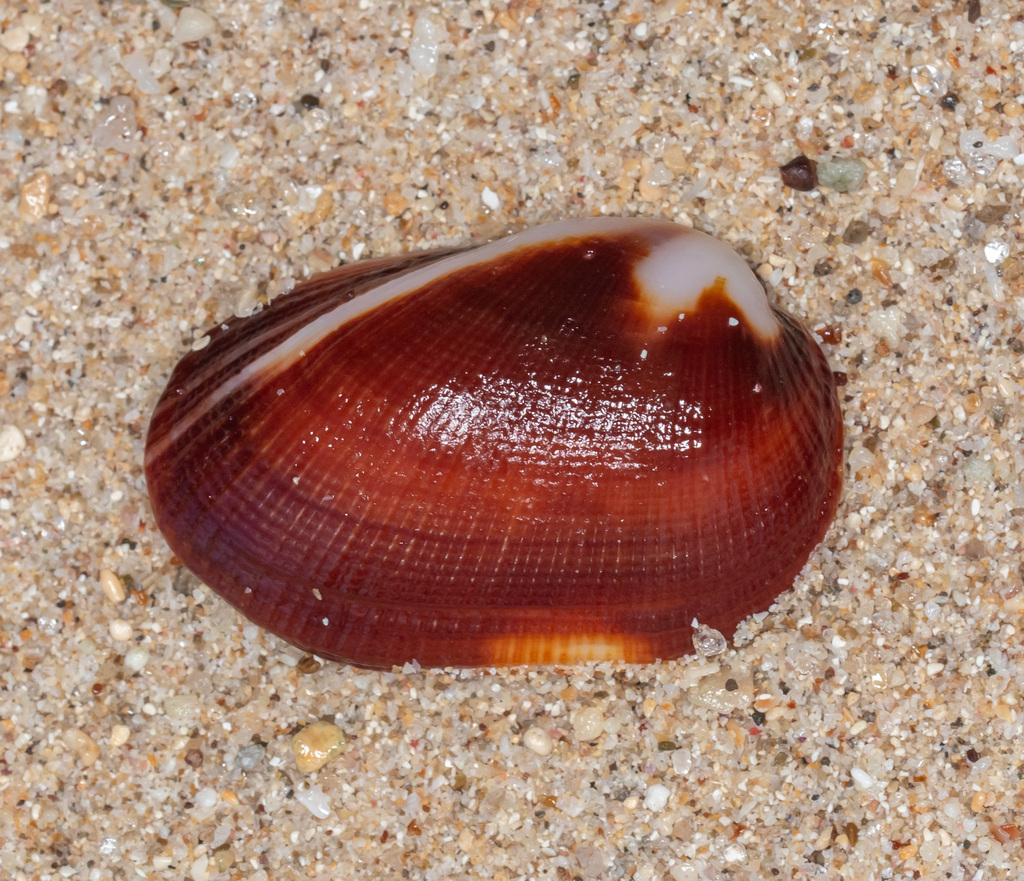 Burnt-almond ark
Barbatia amygdalumtostum
- Kagoshima Blood Cockle
Anadara kagoshimensis
- Sydney Cockle
Anadara trapezia
Sources and credits
Names and taxonomy: WoRMS (CC BY 4.0) and the GBIF Backbone (CC BY 4.0). Photos: iNaturalist observers, each under the licence shown (CC0, CC BY or CC BY-SA).
- Depth, temperature, months and maps: records from OBIS and GBIF under CC0 or CC BY.
- Descriptions: Wikipedia, licensed CC BY-SA, each linked to its article.
- Conservation status as published by GBIF (IUCN Red List).
- 622 open-data records from 1758 to 2024.
Log what you see on your next dive
The free DiveHive diver app keeps your logbook with every sighting and shows what lives at the site you dive next.