
DiscoverSpeciesOther invertebrates
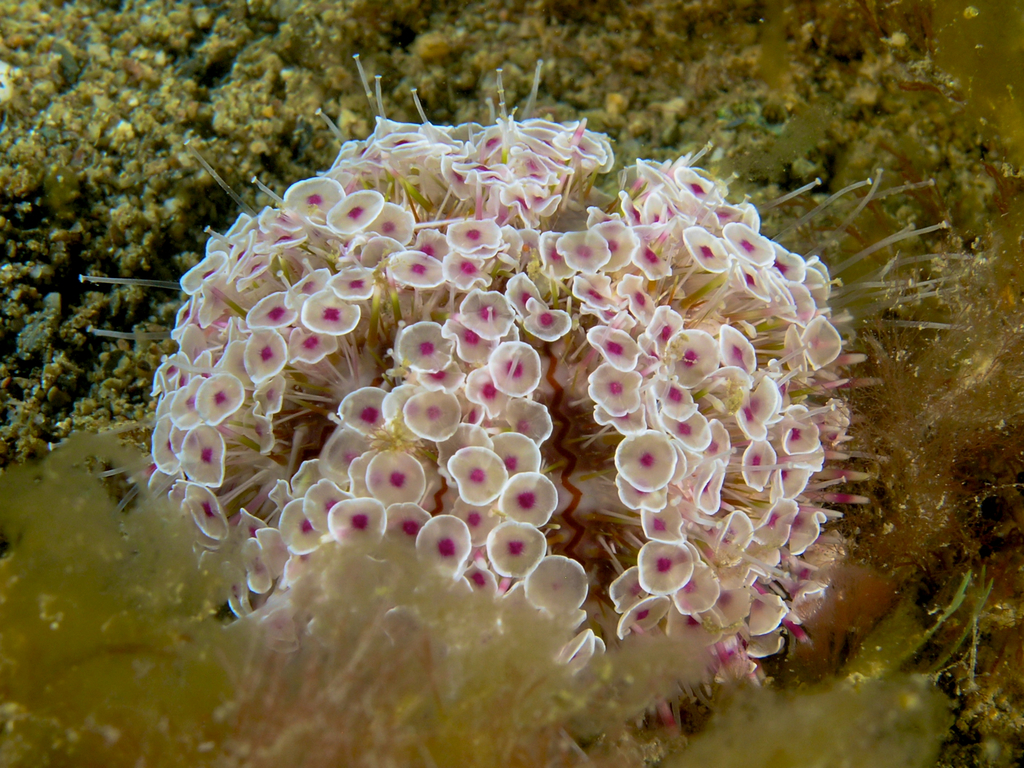
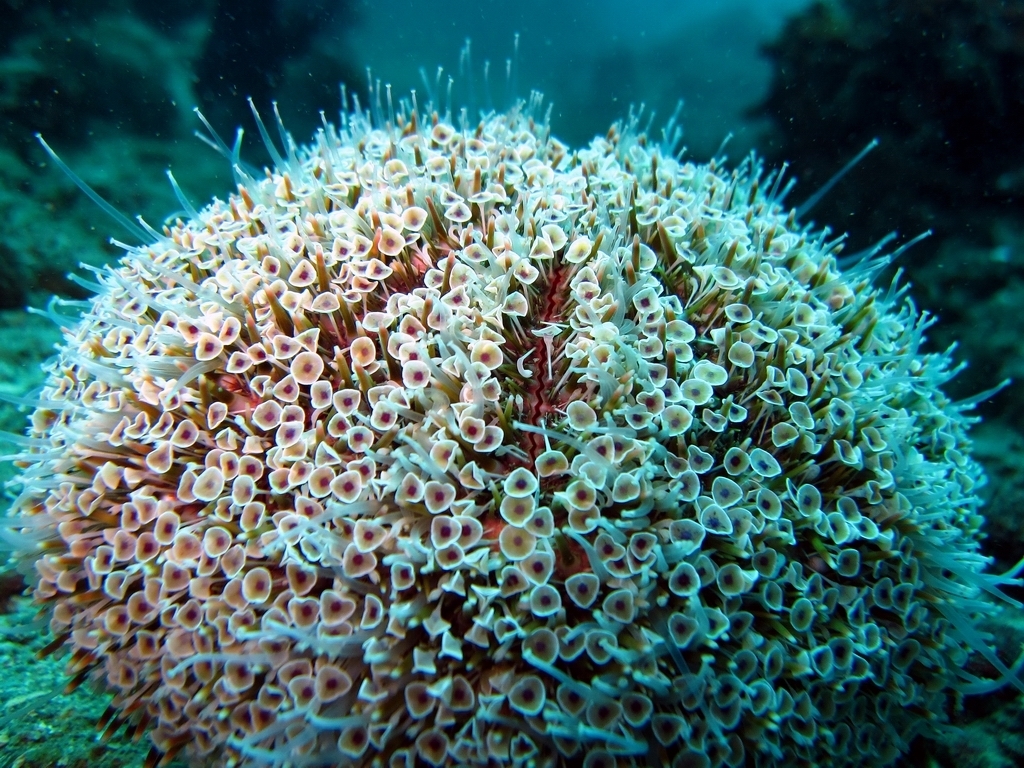
Toxopneustes pileolus
- Usual depth2–50 m
- Water temperature16–29 °C
- Best monthsApril, May, and July
- How commonOccasional
Photo credit: (c) Nhobgood, some rights reserved (CC BY-SA) · CC BY-SA · iNaturalist
About this species
Toxopneustes pileolus, commonly known as the flower urchin, is a widespread and commonly encountered species of sea urchin from the Indo-West Pacific. It is considered highly dangerous, as it is capable of delivering extremely painful and medically significant stings when touched. It inhabits coral reefs, seagrass beds, and rocky or sandy environments at depths of up to 90 m (295 ft). It feeds on algae, bryozoans, and organic detritus.
Text from the Wikipedia article “Toxopneustes pileolus”, licensed CC BY-SA 4.0. Read the article
Where and when
Where it has been recorded
Worldwide
Loading the map
Best months
Worldwide (open data)
- January: 54 records
- February: 67 records
- March: 62 records
- April: 81 records
- May: 80 records
- June: 39 records
- July: 71 records
- August: 58 records
- September: 65 records
- October: 50 records
- November: 64 records
- December: 49 records
Depth and water temperature
Depth
Mostly recorded at 2–50 m · Deepest record: 100 m
Water temperature
Recorded in surface water of 16–29 °C
Photos
(c) "Vincent C. Chen is a Taiwanese recreational diver and free diver who dedicate to underwater photography and the marine lives protection. He is also one of the contributors to EZDive magazine since 2008.", some rights reserved (CC BY-SA) · CC BY-SA · iNaturalist 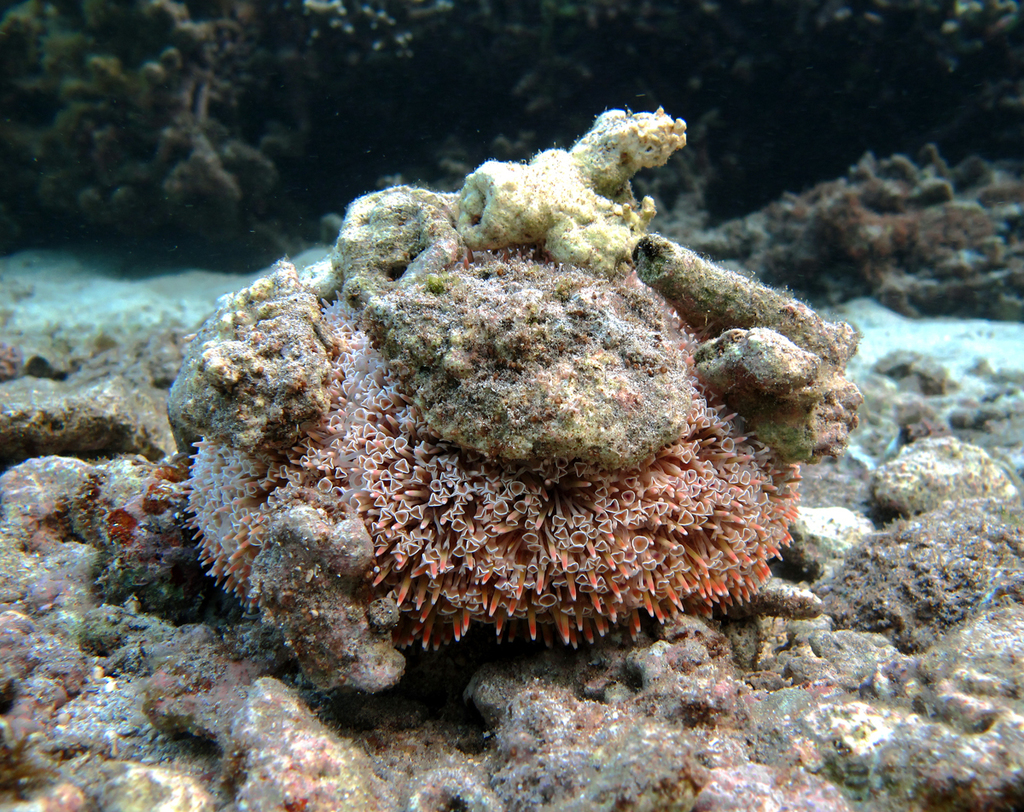
(c) Philippe Bourjon, some rights reserved (CC BY-SA) · CC BY-SA · iNaturalist 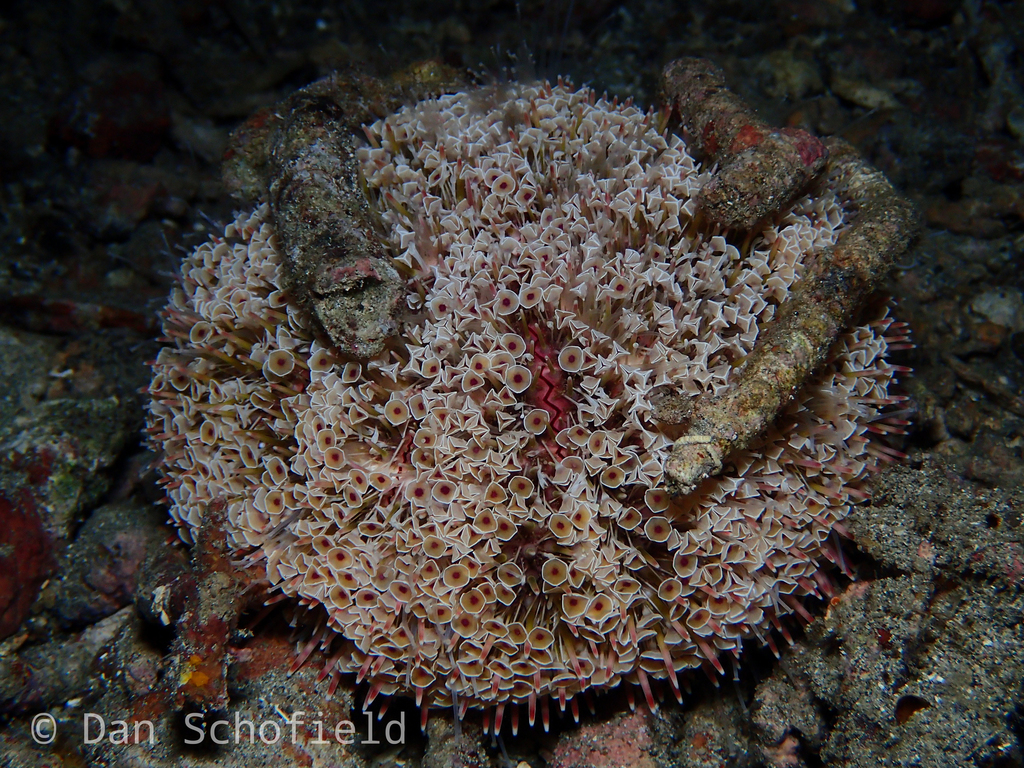
(c) Dan Schofield, some rights reserved (CC BY) · CC BY · iNaturalist 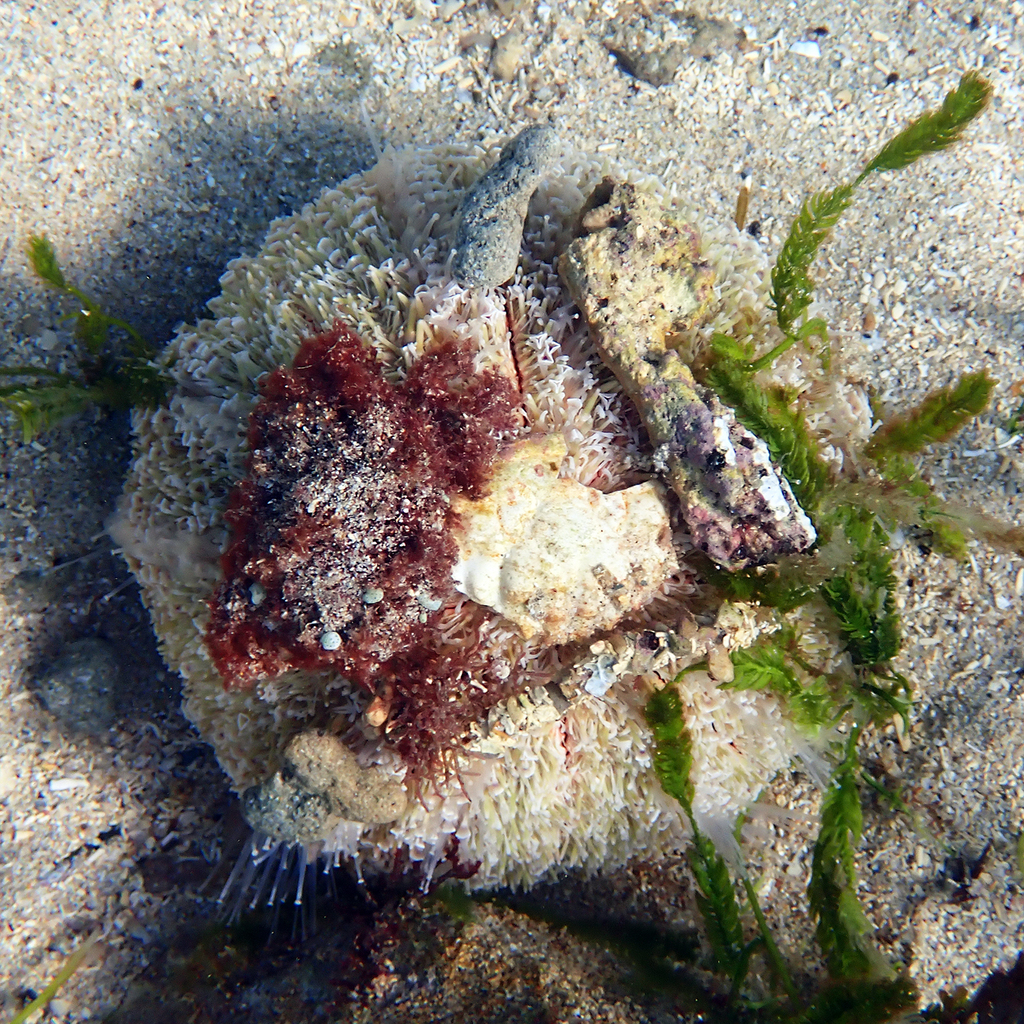
(c) Susan Prior, some rights reserved (CC BY) · CC BY · iNaturalist 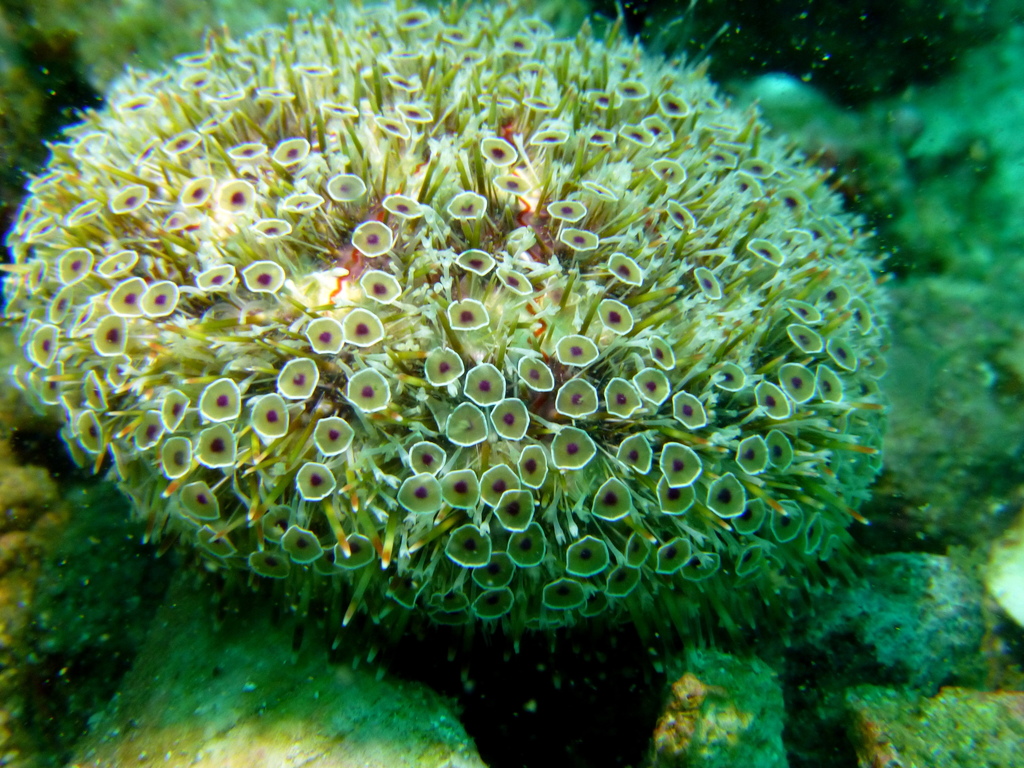
(c) Kai Squires, some rights reserved (CC BY) · CC BY · iNaturalist 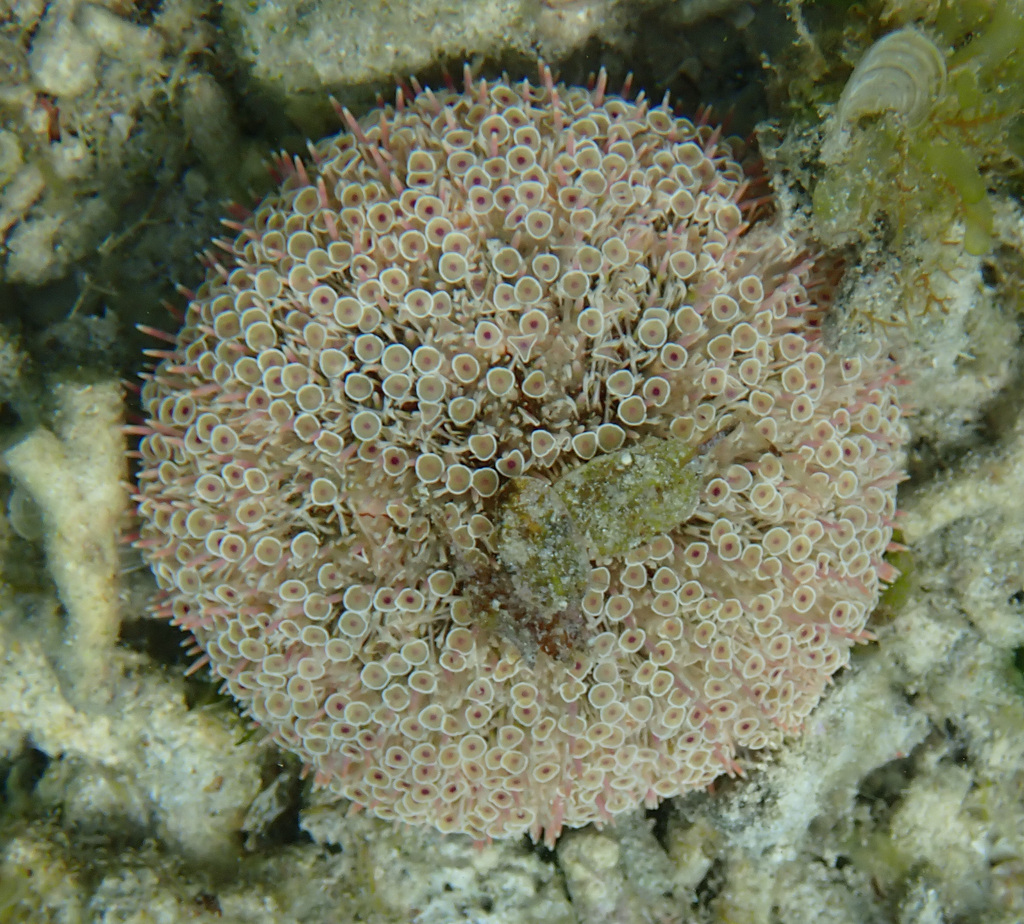
(c) portioid, some rights reserved (CC BY) · CC BY · iNaturalist 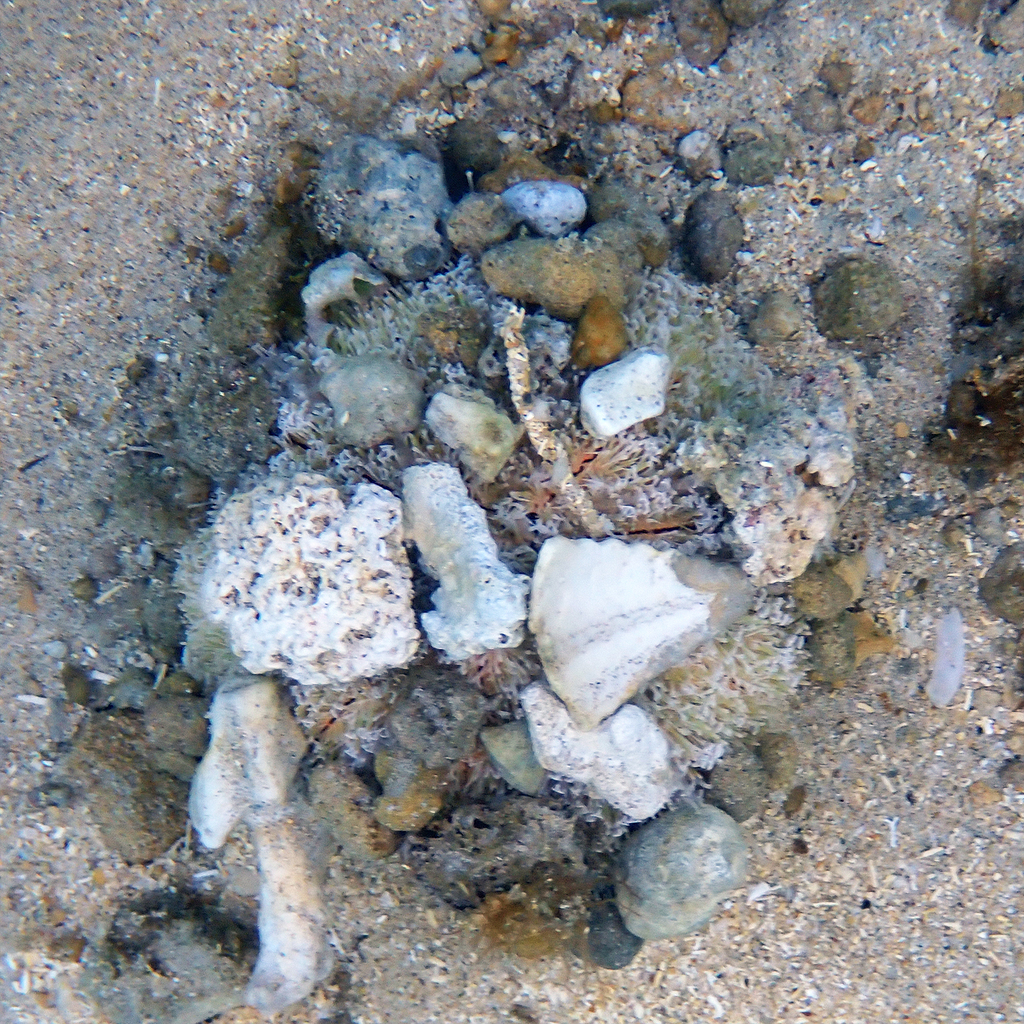
(c) Susan Prior, some rights reserved (CC BY) · CC BY · iNaturalist
Names and classification
Names in 1 more languages
- Japanese
- Dokugaze, ラッパウニ
Other scientific names: Boletia heteropora, Boletia pileolus, Boletia polyzonalis, Echinus pileolus, Echinus polyzonalis, Toxopneustes (Boletia) pileolus, Toxopneustes chloracanthus
Similar species
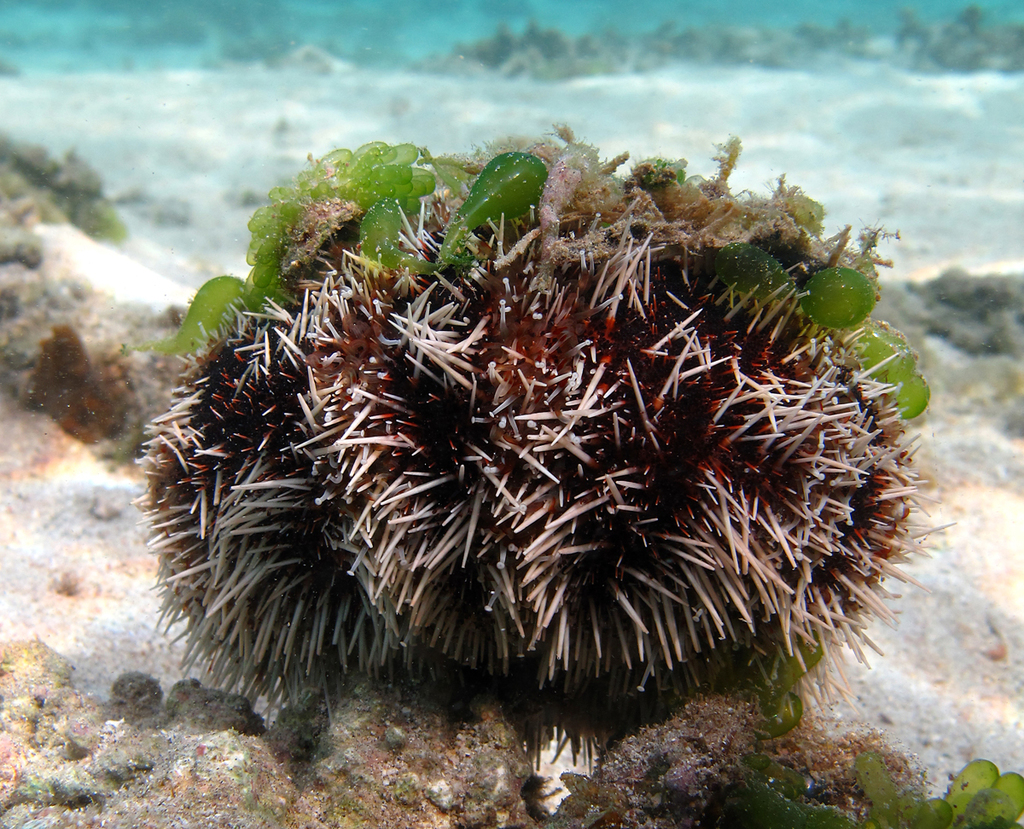 Bischofsmützenseeigel
Tripneustes gratilla
 Warty Sand Urchin
Nudechinus verruculatus
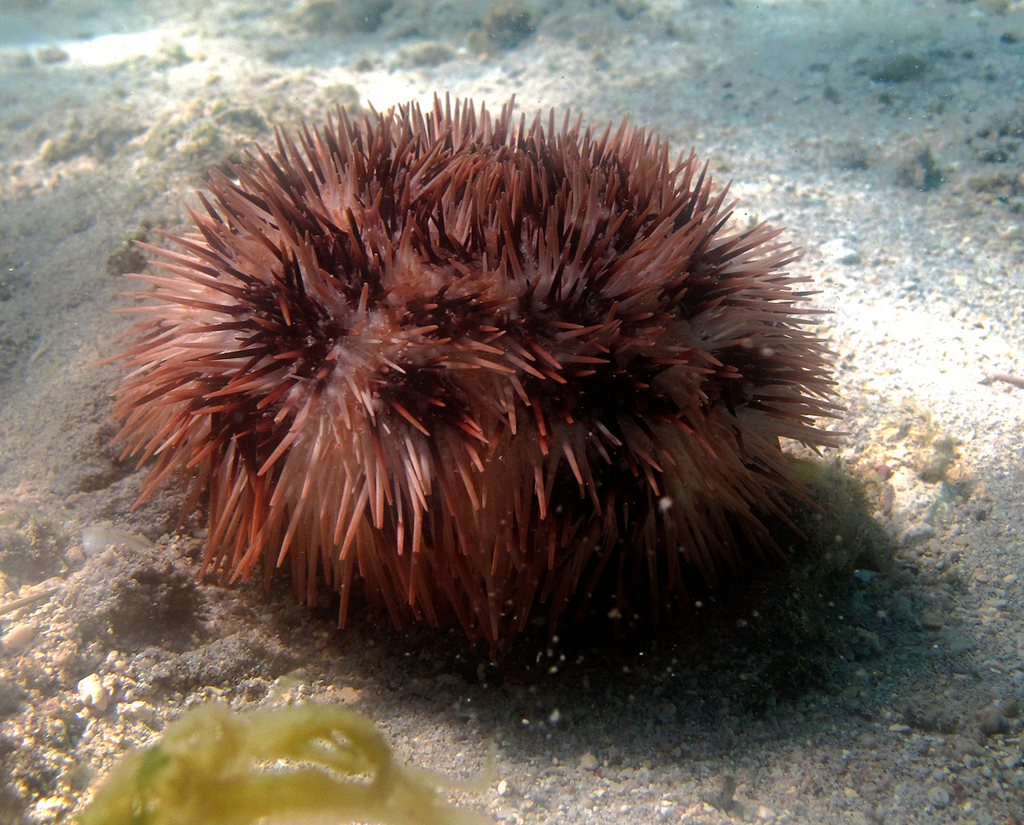 Stained Collector Urchin
Pseudoboletia maculata
Sources and credits
Names and taxonomy: WoRMS (CC BY 4.0) and the GBIF Backbone (CC BY 4.0). Photos: iNaturalist observers, each under the licence shown (CC0, CC BY or CC BY-SA).
- Depth, temperature, months and maps: records from OBIS and GBIF under CC0 or CC BY.
- Descriptions: Wikipedia, licensed CC BY-SA, each linked to its article.
- Conservation status as published by GBIF (IUCN Red List).
- 231 open-data records from 1816 to 2023.
- Species data updated October 26, 2026.
Log what you see on your next dive
The free DiveHive diver app keeps your logbook with every sighting and shows what lives at the site you dive next.