
Whitetongue jack
Uraspis uraspis
- Usual depth5–138 m
- Water temperature19–30 °C
- Best monthsJune
- How commonRare
About this species
Uraspis uraspis is a species of jack in the family Carangidae. It is found in the Indo-Pacific.
Text from the Wikipedia article “Uraspis uraspis”, licensed CC BY-SA 4.0. Read the article
Where and when
Where it has been recorded
Worldwide
Loading the map
Best months
Worldwide (open data)
- January: 4 records
- February: 5 records
- March: 12 records
- April: 14 records
- May: 5 records
- June: 41 records
- July: 2 records
- August: 11 records
- September: 6 records
- October: 14 records
- November: 12 records
- December: 17 records
Depth and water temperature
Depth
Mostly recorded at 5–138 m · Deepest record: 200 m
Water temperature
Recorded in surface water of 19–30 °C
Names and classification
- English
- Whitetongue jack, Basset-hull's Trevally, Basset-hulls Trevally, sixband brown jack, White-mouthed Trevally, whitemouth jack, Whitemouth jack, Whitetongue jack, Whitemouth Trevally, White-tongued Jack, whitetongue jack
Names in 6 more languages
- Spanish
- Jurel Paia
- Filipino
- Talakitok
- French
- Carangue paia
- Japanese
- Indokiaji, インドオキアジ
- Thai
- ปลาจุ้ยจินบั้ง
- Simplified Chinese
- 白口尾甲鰺
Other scientific names: Caranx guptae, Caranx uraspis, Leucoglossa herklotsi, Uraspis carangoides, Uraspis pectoralis
Similar species
- Whitemouth jack
Uraspis helvola
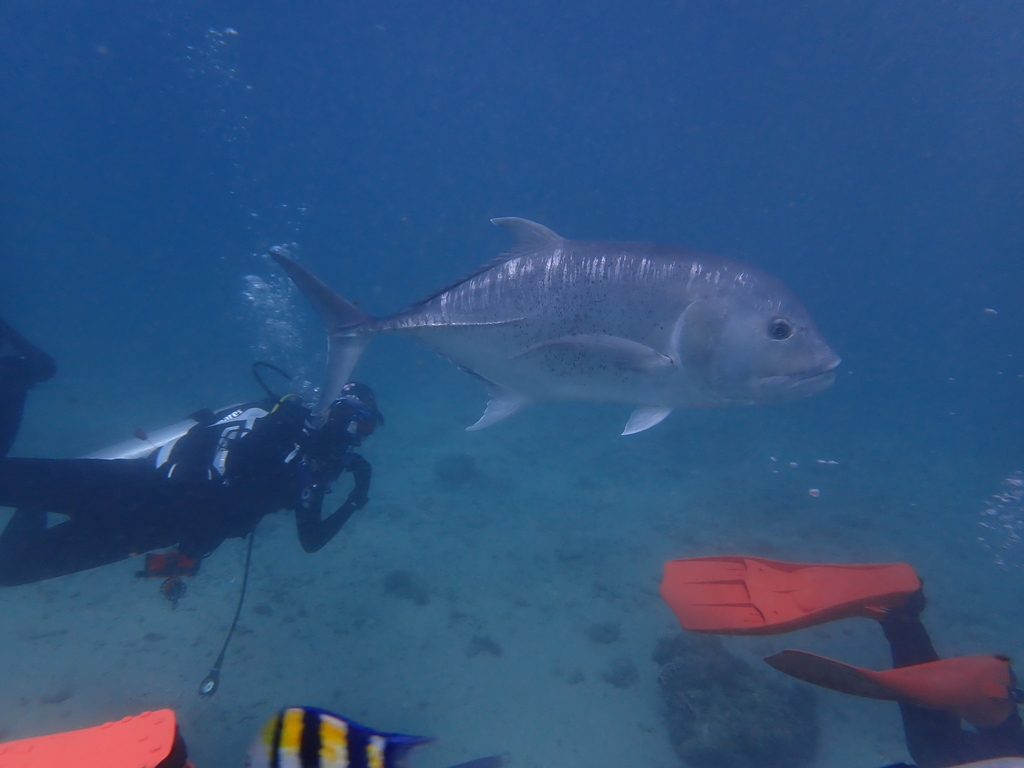 Giant trevally
Caranx ignobilis
 Bluefin trevally
Caranx melampygus
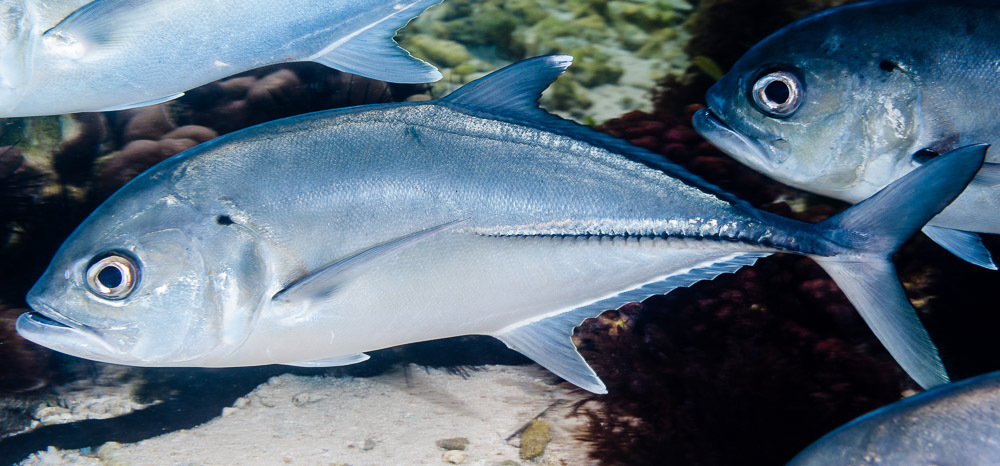 Bigeye trevally
Caranx sexfasciatus
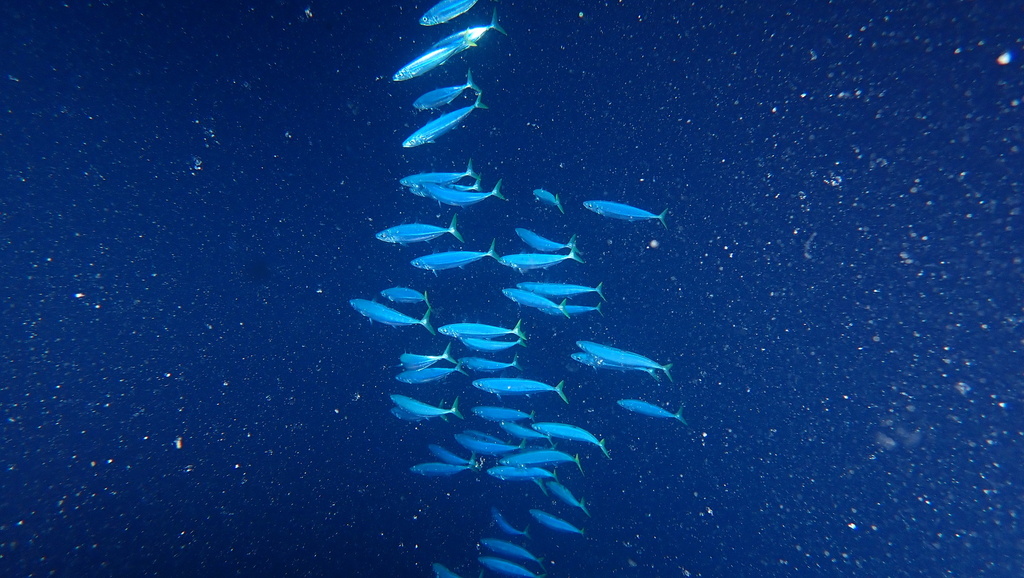 Mackerel scad
Decapterus macarellus
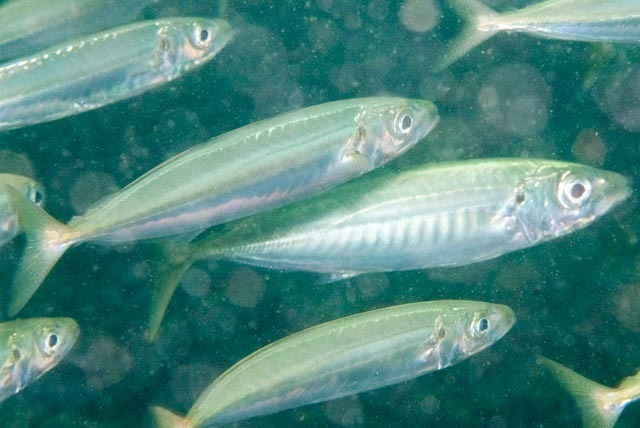 Indian scad
Decapterus russelli
Sources and credits
Names and taxonomy: WoRMS (CC BY 4.0) and the GBIF Backbone (CC BY 4.0). Photos: iNaturalist observers, each under the licence shown (CC0, CC BY or CC BY-SA).
- Depth, temperature, months and maps: records from OBIS and GBIF under CC0 or CC BY.
- Descriptions: Wikipedia, licensed CC BY-SA, each linked to its article.
- Conservation status as published by GBIF (IUCN Red List).
- 301 open-data records from 1962 to 2019.
Log what you see on your next dive
The free DiveHive diver app keeps your logbook with every sighting and shows what lives at the site you dive next.