
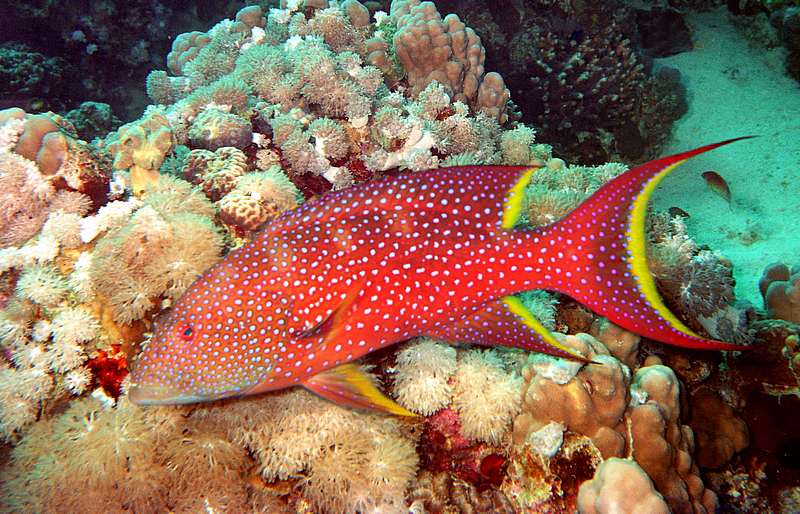
Lunartail grouper
Variola louti
- Usual depth7–24 m
- Water temperature20–30 °C
- Best monthsMarch, April, and November
- How commonCommon
Photo credit: (c) Jacek Madejski, some rights reserved (CC BY-SA) · CC BY-SA · iNaturalist
About this species
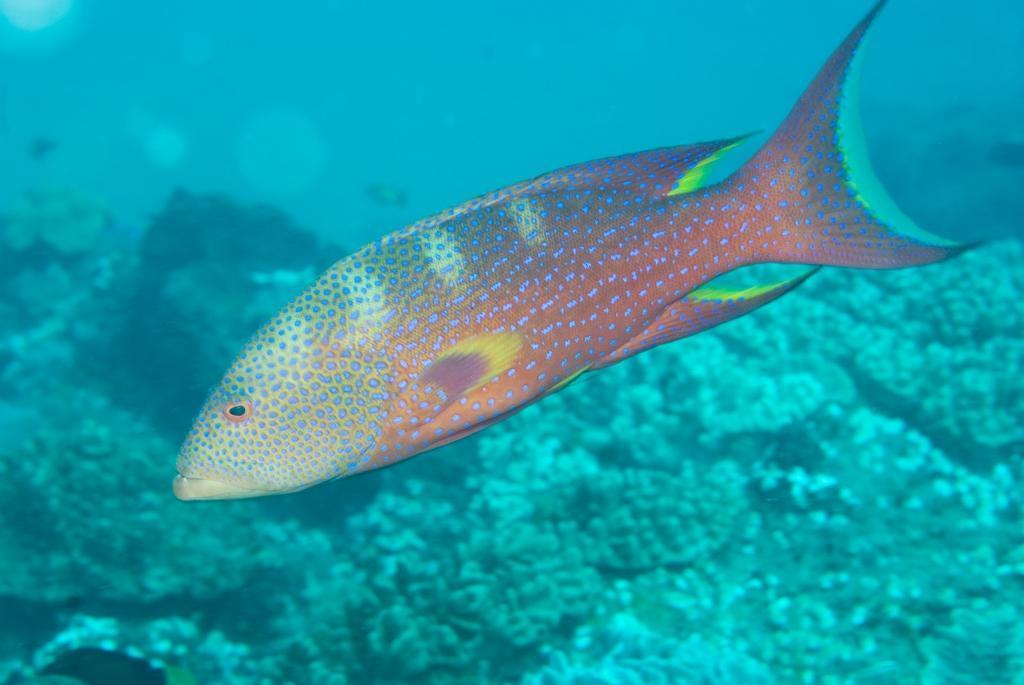
The yellow-edged lyretail also known as the yellowedge coronation trout, fairy cod, lunar tail rock cod, lunartailed cod, lyre-tail cod or moontail seabass,, is a species of marine ray-finned fish, a grouper from the subfamily Epinephelinae which is part of the family Serranidae, which also includes the anthias and sea basses. It is found in the Indo-Pacific region and is more common than the congeneric white-edged lyretail.
Text from the Wikipedia article “Yellow-edged lyretail”, licensed CC BY-SA 4.0. Read the article
Where and when
Where it has been recorded
Worldwide
Loading the map
Best months
Worldwide (open data)
- January: 225 records
- February: 583 records
- March: 746 records
- April: 658 records
- May: 513 records
- June: 397 records
- July: 344 records
- August: 328 records
- September: 457 records
- October: 457 records
- November: 640 records
- December: 361 records
Depth and water temperature
Depth
Mostly recorded at 7–24 m · Deepest record: 142 m
Water temperature
Recorded in surface water of 20–30 °C
Photos
(c) Georgina Jones, some rights reserved (CC BY-SA) · CC BY-SA · iNaturalist 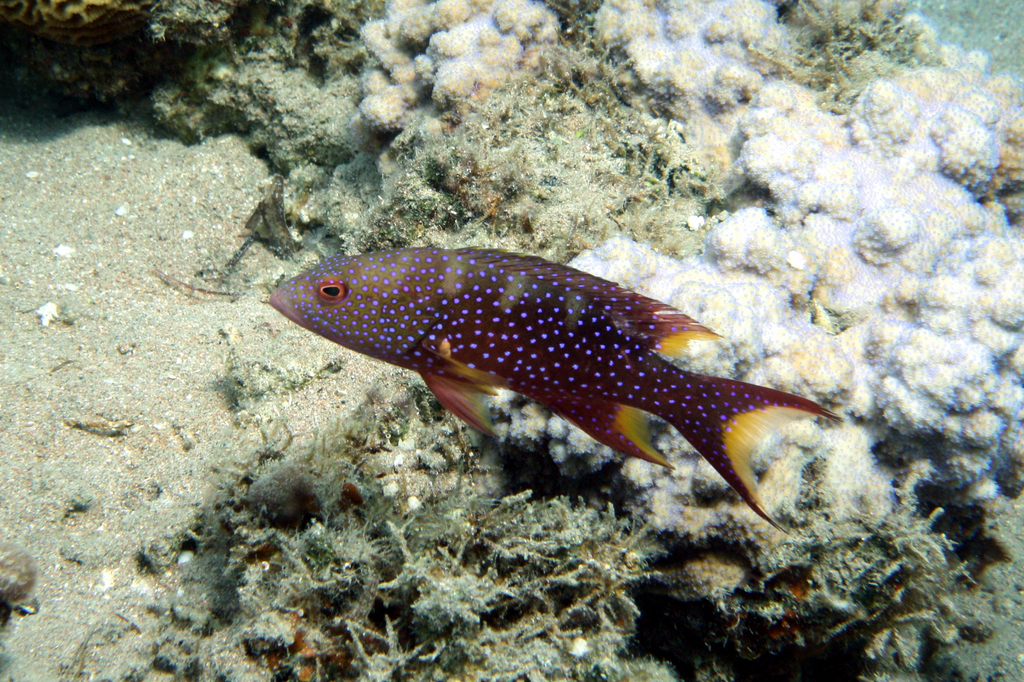
(c) Chris Chucholl, some rights reserved (CC BY) · CC BY · iNaturalist 
(c) Rose Zappa, some rights reserved (CC BY) · CC BY · iNaturalist 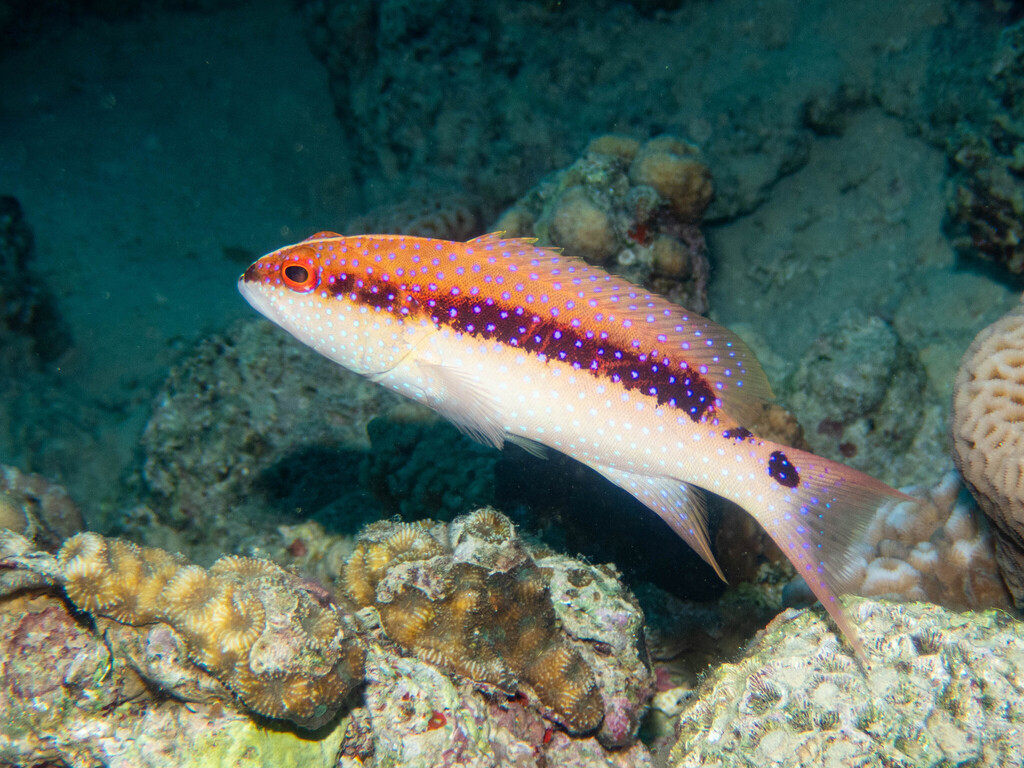
(c) Libby Keatley, some rights reserved (CC BY) · CC BY · iNaturalist 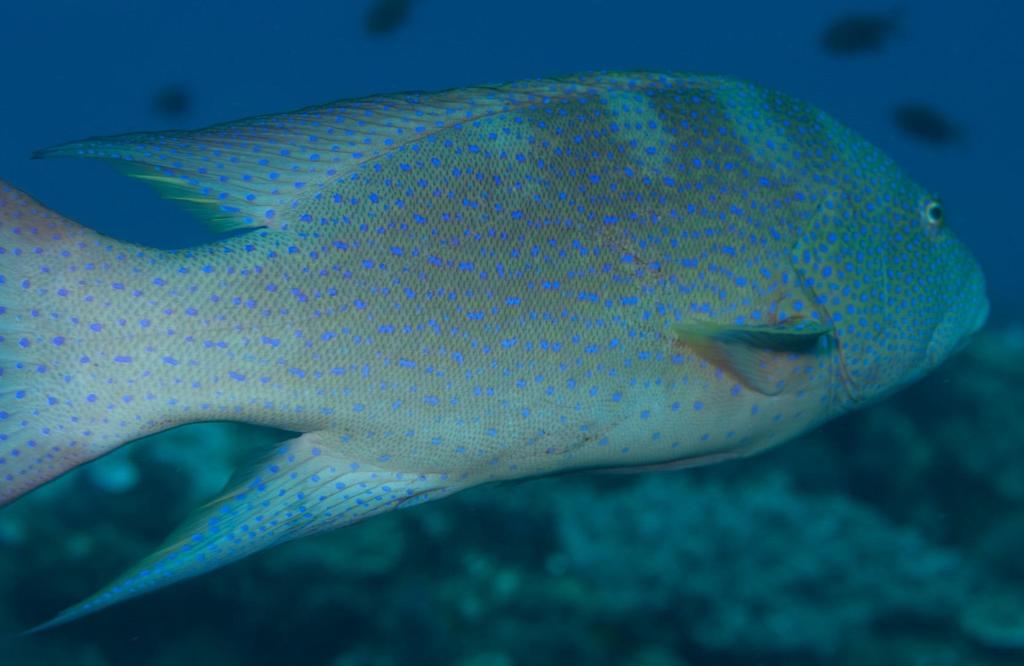
(c) Georgina Jones, some rights reserved (CC BY-SA) · CC BY-SA · iNaturalist 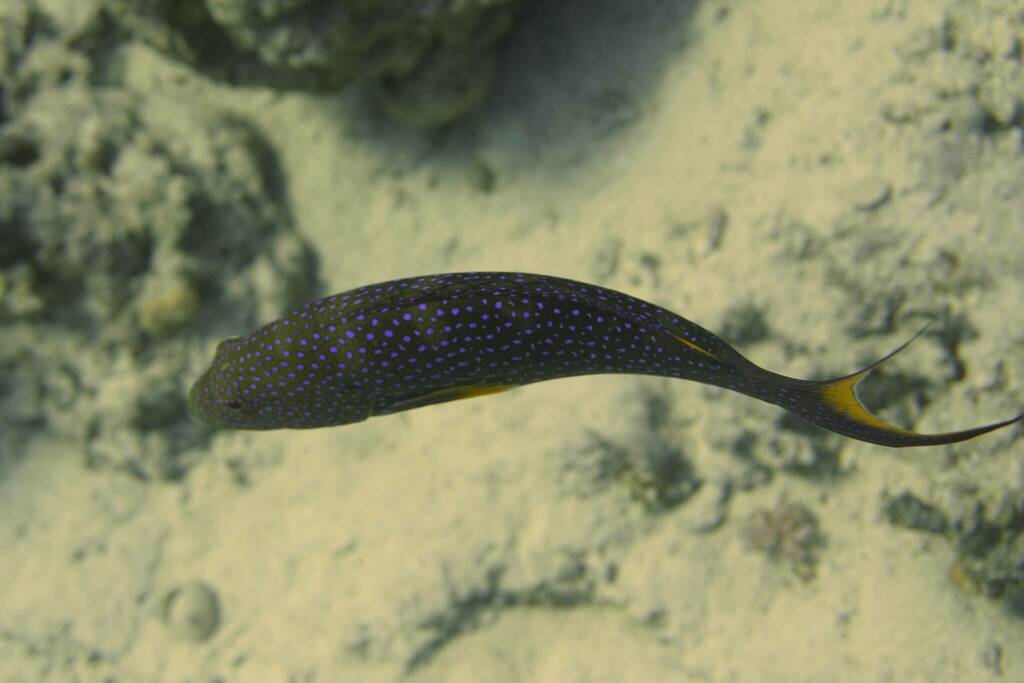
(c) Ben Costamagna, some rights reserved (CC BY) · CC BY · iNaturalist 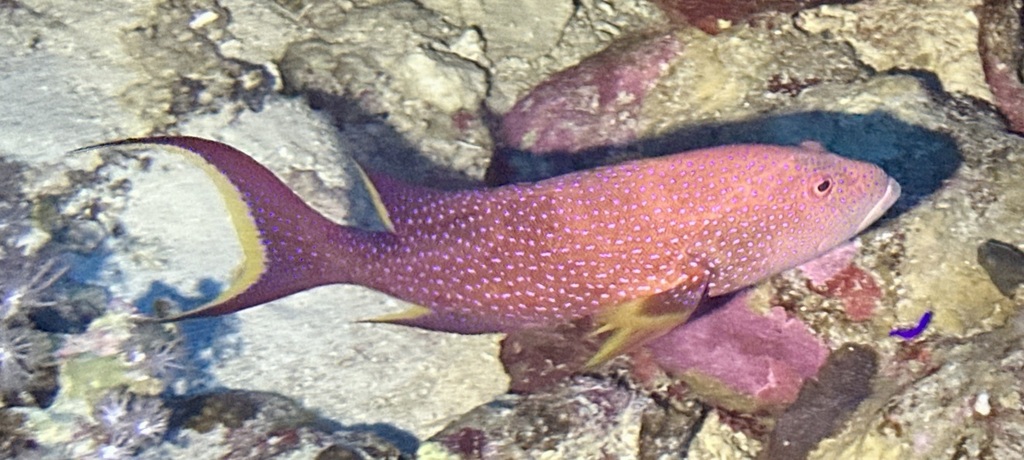
(c) Rui Ribeiro, some rights reserved (CC BY) · CC BY · iNaturalist
Names and classification
- English
- Lunartail grouper, Yellow-edged lyretail, Chameleon Grouper, Moontail seabass, Yellow-edged lyretail, Common Lyretail-cod, Common Lyre-tail Cod, Coronation Grouper, coronation trout, Fairy Cod, Lunar-tail Cod, Lunar-tailed Cod, Lunartailed Cod, Lunar-tailed Coral-trout, Lunar-tailed Grouper, lunartailed rockcod, Lunar-tailed Rock-cod, lunartail grouper, Lunar Tail Rock Cod, Lyre-tail Cod, Lyre Tail Coral Trout, Lyretail Grouper, moontail seabass, Yellowedge Coronation Trout, yellow-edged lyretail, Yellowedged Lyretail
Names in 6 more languages
- German
- Mondsichel-Juwelenbarsch
- Spanish
- Mero Luna Creciente
- French
- Criossant Queue Jaune, Croissant queue jaune, Croissant queue jaune, Druide, Grand queue, Rouge grand queue, Vera, Druide, Grand Queue, Loche Cameleon, Loche caméléon, Loche croissant queue jaune, Loche saumonée, Saumonée hirondelle, Mérou croissant de lune, Mérou croissant queue jaune, Rouge Grand Queue, Saumonee Hirondelle, Vielle Peinte Des Coraux, Vroissant
- Japanese
- Barahata, バラハタ
- Thai
- ปลากะรังหางวงเดือนธรรมดา
- Simplified Chinese
- 侧牙鲈, 側牙鱸, 星鱠, 朱鱠, 石斑
Other scientific names: Epinephelus louti, Labrus punctulatus, Perca louti, Serranus cernipedis, Serranus flavimarginatus, Serranus longipinna, Serranus louti, Serranus luti, Serranus melanotaenia, Serranus phaenistomus, Serranus punctulatus, Serranus roseus, Variola longipinna, Variola melanotaenia, Variola punctulatus
Similar species
 White-edged lyretail
Variola albimarginata
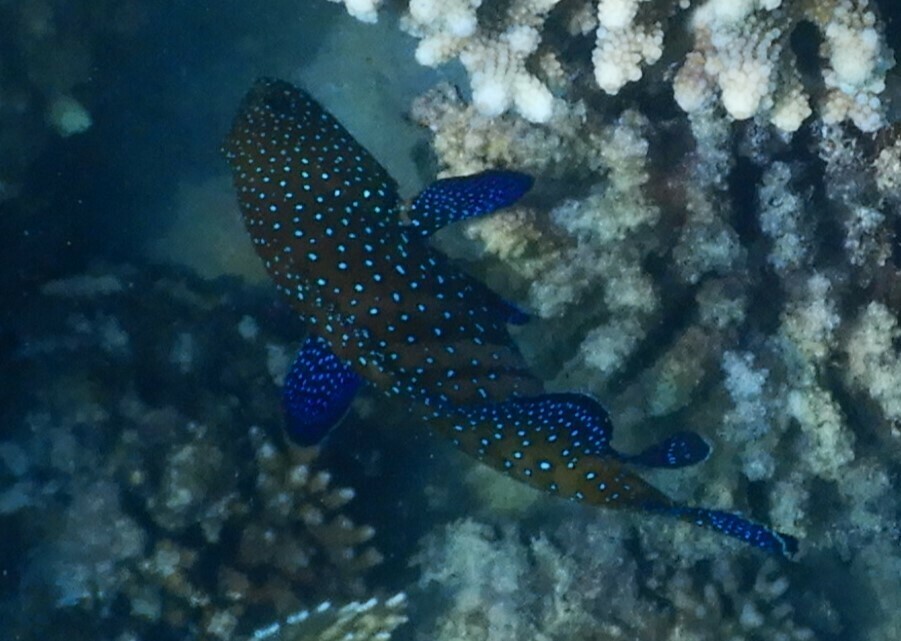 Peacock grouper
Cephalopholis argus
 Coral grouper
Cephalopholis miniata
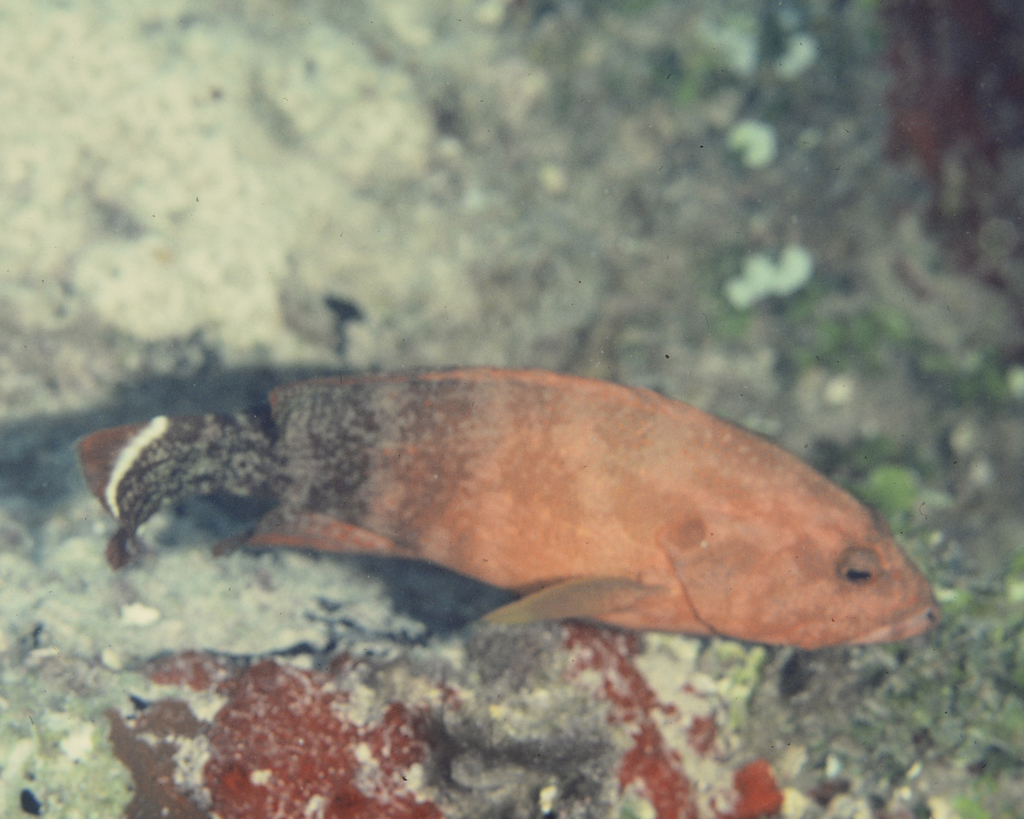 Darkfin hind
Cephalopholis urodeta
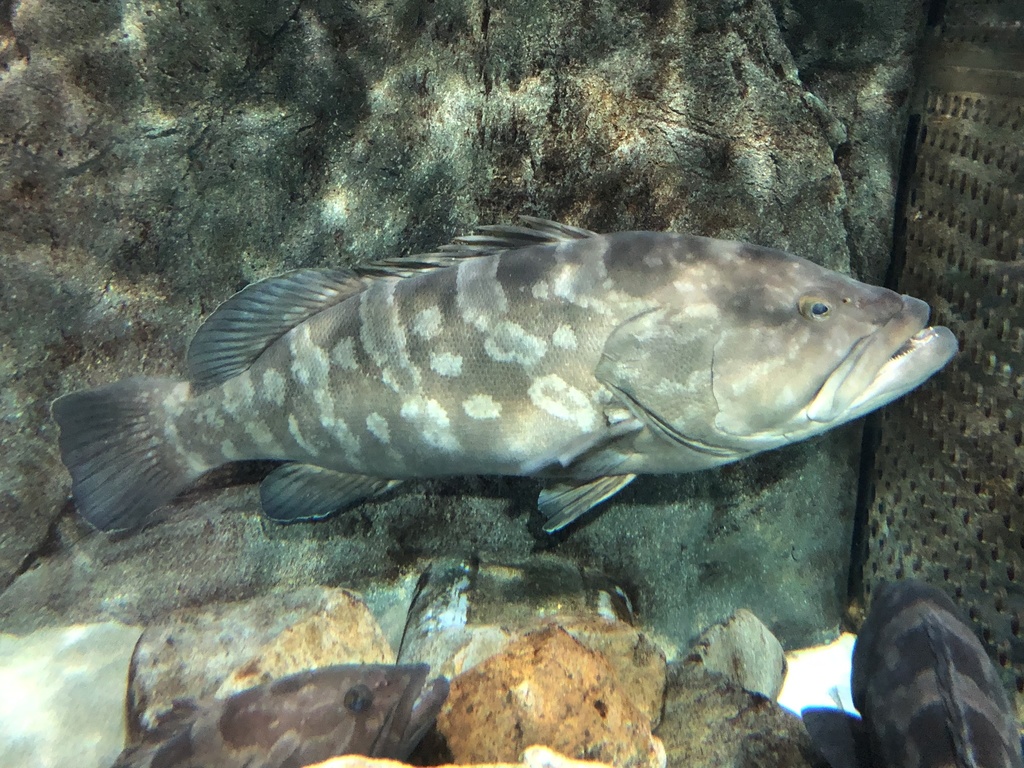 Kelp Grouper
Epinephelus bruneus
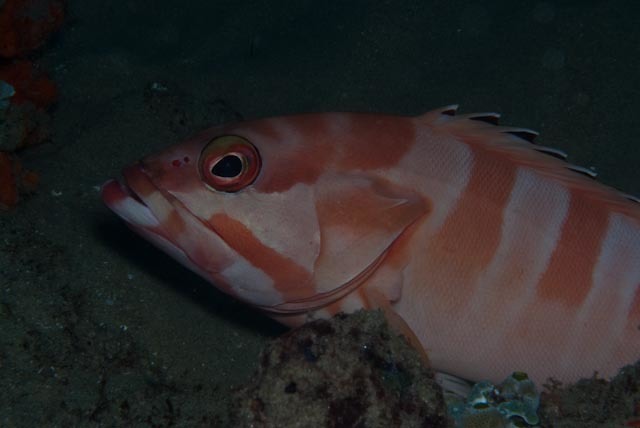 Blacktip grouper
Epinephelus fasciatus
Sources and credits
Names and taxonomy: WoRMS (CC BY 4.0) and the GBIF Backbone (CC BY 4.0). Photos: iNaturalist observers, each under the licence shown (CC0, CC BY or CC BY-SA).
- Depth, temperature, months and maps: records from OBIS and GBIF under CC0 or CC BY.
- Descriptions: Wikipedia, licensed CC BY-SA, each linked to its article.
- Conservation status as published by GBIF (IUCN Red List).
- 5,248 open-data records from 1775 to 2023.
- Species data updated October 31, 2026.
Log what you see on your next dive
The free DiveHive diver app keeps your logbook with every sighting and shows what lives at the site you dive next.