
sailfin surgeonfish
Zebrasoma velifer
- Usual depth3–21 m
- Water temperature24–30 °C
- Best monthsAugust, September, and October
- How commonCommon
About this species
The sailfin tang, the Pacific sailfin tang, purple sailfinned tang or sailfin surgeonfish, is a marine ray-finned fish belonging to the family Acanthuridae which includes the surgeonfishes, unicornfishes and tangs. This fish is found in the Pacific Ocean and is popular in the aquarium hobby.
Text from the Wikipedia article “Sailfin tang”, licensed CC BY-SA 4.0. Read the article
Where and when
Where it has been recorded
Worldwide
Loading the map
Best months
Worldwide (open data)
- January: 68 records
- February: 150 records
- March: 295 records
- April: 173 records
- May: 131 records
- June: 132 records
- July: 319 records
- August: 476 records
- September: 660 records
- October: 497 records
- November: 90 records
- December: 18 records
Depth and water temperature
Depth
Mostly recorded at 3–21 m · Deepest record: 56 m
Water temperature
Recorded in surface water of 24–30 °C
Names and classification
- English
- sailfin surgeonfish, Sailfin Surgeonfish, Sailfin tang, Sailfin tang
Names in 2 more languages
- French
- Chirurgien à voile
- Japanese
- Hirenagahagi, ヒレナガハギ
Other scientific names: Acanthurus velifer, Zebrasoma veliferum, Zebrasoma verifellum
Similar species
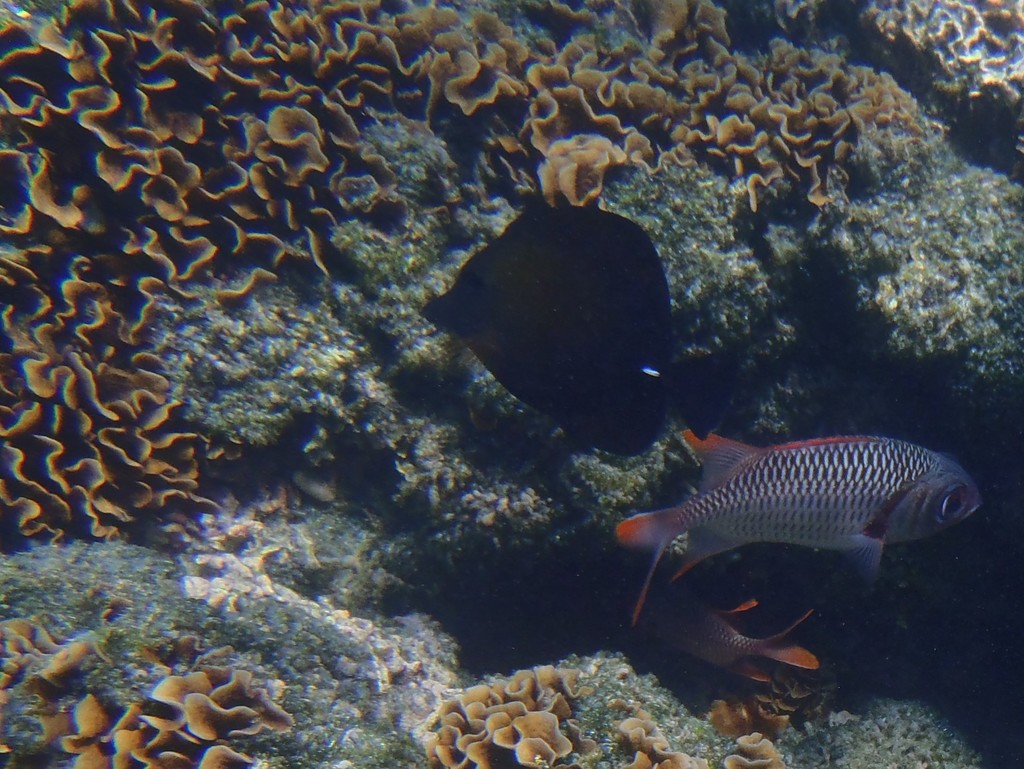 Twotone tang
Zebrasoma scopas
- Yellow tang
Zebrasoma flavescens
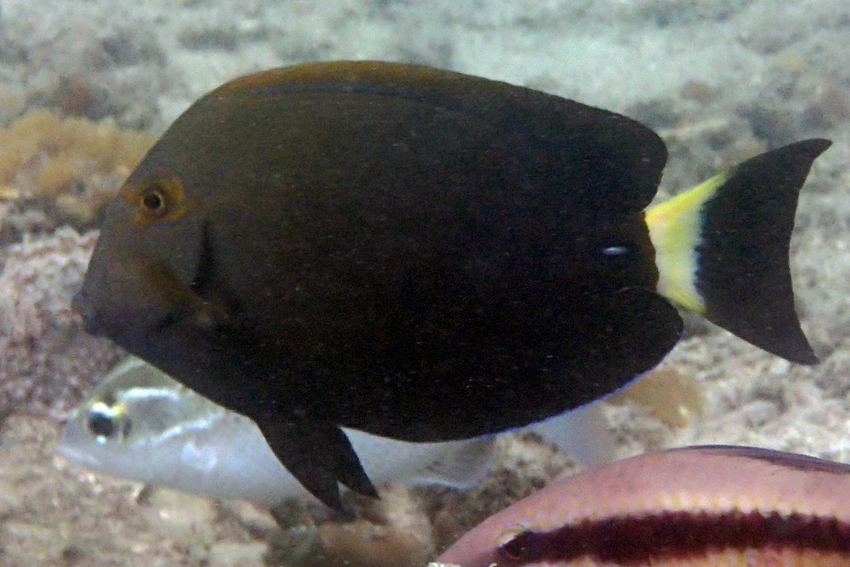 Eyestripe surgeonfish
Acanthurus dussumieri
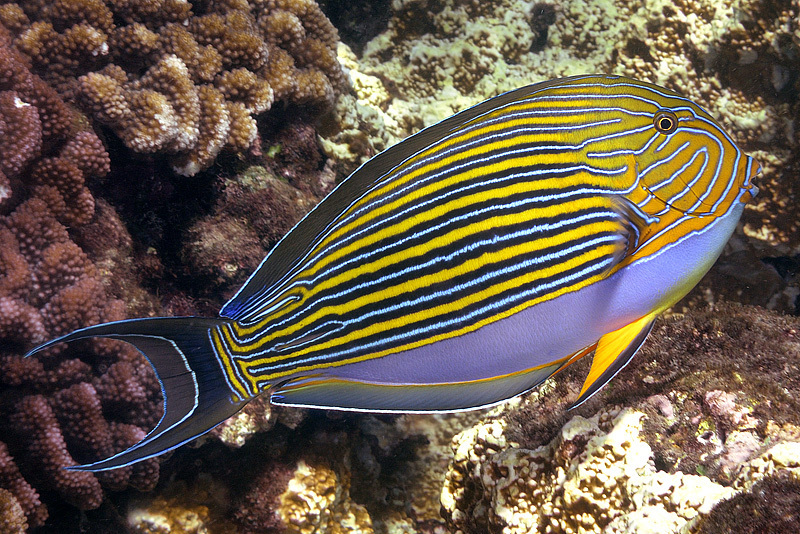 Lined surgeonfish
Acanthurus lineatus
 Backsurgeonfish
Acanthurus nigricans
 Brown surgeonfish
Acanthurus nigrofuscus
Sources and credits
Names and taxonomy: WoRMS (CC BY 4.0) and the GBIF Backbone (CC BY 4.0). Photos: iNaturalist observers, each under the licence shown (CC0, CC BY or CC BY-SA).
- Depth, temperature, months and maps: records from OBIS and GBIF under CC0 or CC BY.
- Descriptions: Wikipedia, licensed CC BY-SA, each linked to its article.
- Conservation status as published by GBIF (IUCN Red List).
- 3,130 open-data records from 1795 to 2023.
Log what you see on your next dive
The free DiveHive diver app keeps your logbook with every sighting and shows what lives at the site you dive next.