
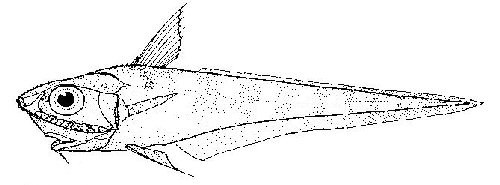
Cook's rattail
Coelorinchus cookianus
- Usual depth480–925 m
- Water temperature9–21 °C
- Best monthsMay and June
- How commonRare
Photo credit: (c) anonymous, some rights reserved (CC BY-SA) · CC BY-SA · iNaturalist
About this species
Cook's rattail is a species of rattail endemic to New Zealand. It is only found in the northern and central regions at depths of 400-800 m, with some specimens also collected on the Chatham Rise. The species is benthopelagic, living and feeding between the ocean floor and midwater levels.
Text from the Wikipedia article “Cook's rattail”, licensed CC BY-SA 4.0. Read the article
Where and when
Where it has been recorded
Worldwide
Loading the map
Best months
Worldwide (open data)
- January: 1 records
- February: 0 records
- March: 1 records
- April: 1 records
- May: 8 records
- June: 6 records
- July: 0 records
- August: 1 records
- September: 0 records
- October: 2 records
- November: 1 records
- December: 0 records
Depth and water temperature
Depth
Mostly recorded at 480–925 m · Deepest record: 1,093.5 m
Water temperature
Recorded in surface water of 9–21 °C
Names and classification
- English
- Cook's rattail
Other scientific names: Caelorinchus cookianus, Coelorhynchus cookianus
Similar species
- Bollons' rattail
Coelorinchus bollonsi
- Banded Whip-tail
Coelorinchus fasciatus
- Innotable Whiptail
Coelorinchus innotabilis
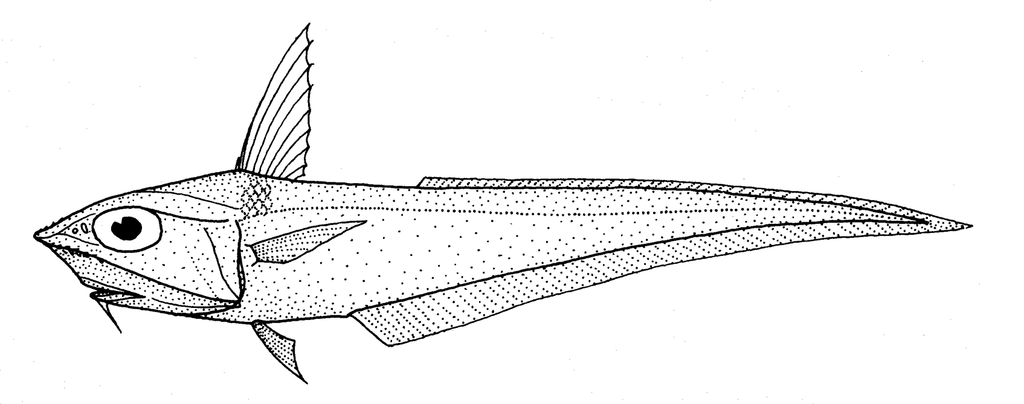 Gargoyle Fish
Coelorinchus mirus
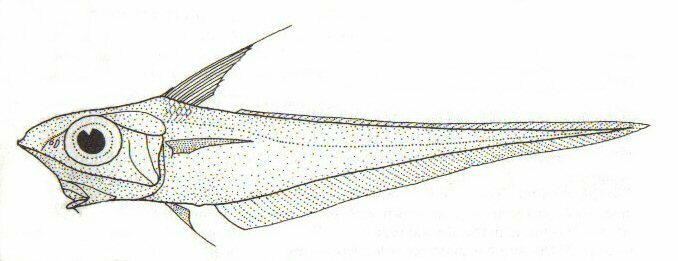 Hawknose grenadier
Coelorinchus oliverianus
- Spottyface Whiptail
Coelorinchus acanthiger
Sources and credits
Names and taxonomy: WoRMS (CC BY 4.0) and the GBIF Backbone (CC BY 4.0). Photos: iNaturalist observers, each under the licence shown (CC0, CC BY or CC BY-SA).
- Depth, temperature, months and maps: records from OBIS and GBIF under CC0 or CC BY.
- Descriptions: Wikipedia, licensed CC BY-SA, each linked to its article.
- Conservation status as published by GBIF (IUCN Red List).
- 129 open-data records from 1981 to 2018.
- Species data updated November 1, 2026.
Log what you see on your next dive
The free DiveHive diver app keeps your logbook with every sighting and shows what lives at the site you dive next.