
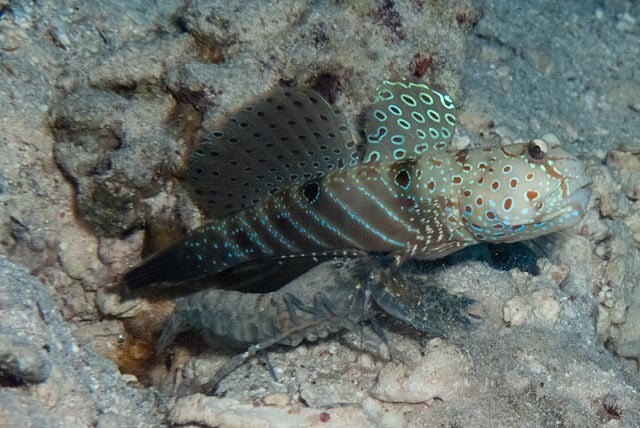
Blue-and-red-spotted goby
Cryptocentrus caeruleopunctatus
- Usual depth10 m
- Water temperature29–30 °C
- Best monthsFebruary
- How commonRare
Photo credit: (c) Georgina Jones, some rights reserved (CC BY-SA), uploaded by Georgina Jones · CC BY-SA · iNaturalist
About this species
Cryptocentrus caeruleopunctatus, commonly known as the harlequin prawn-goby, is a species of goby. It recently entered the Mediterranean Sea, with large populations observed along the coast of Israel. Before its recording in the Mediterranean this species was restricted to the Red Sea, where it occurs on open sand bottoms of clear water reefs, living in association with alpheid shrimps.
Text from the Wikipedia article “Cryptocentrus caeruleopunctatus”, licensed CC BY-SA 4.0. Read the article
Where and when
Where it has been recorded
Worldwide
Loading the map
Best months
Worldwide (open data)
- January: 2 records
- February: 44 records
- March: 8 records
- April: 11 records
- May: 10 records
- June: 13 records
- July: 13 records
- August: 17 records
- September: 11 records
- October: 13 records
- November: 9 records
- December: 7 records
Depth and water temperature
Depth
Mostly recorded at 10 m · Deepest record: 10 m
Water temperature
Recorded in surface water of 29–30 °C
Photos
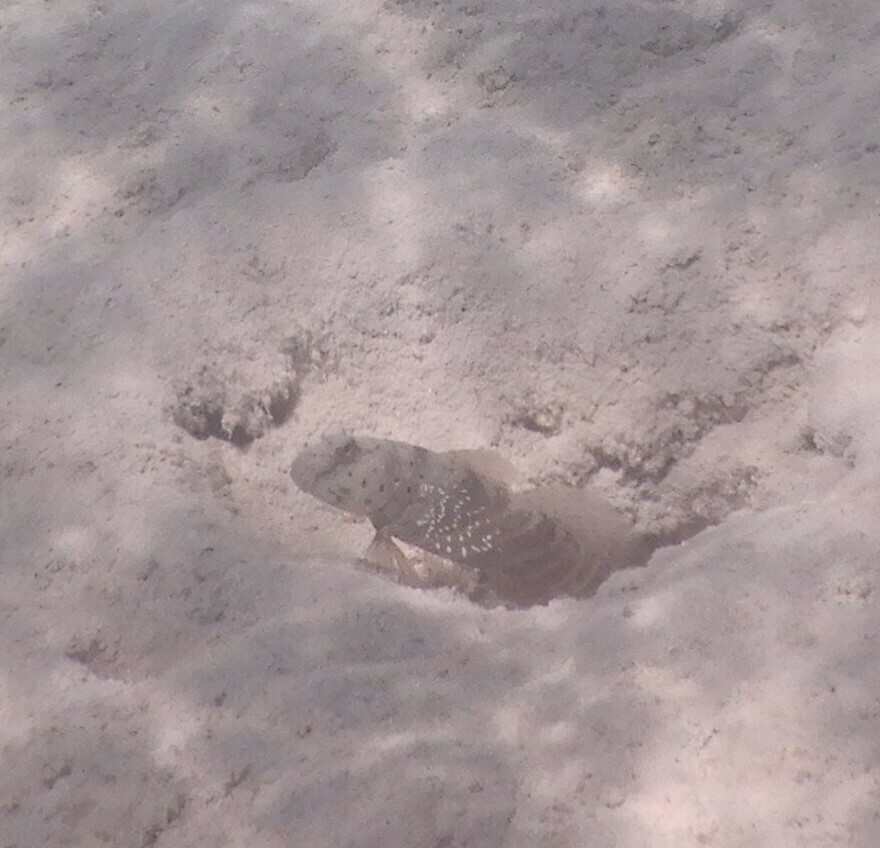
no rights reserved · CC0 1.0 · iNaturalist 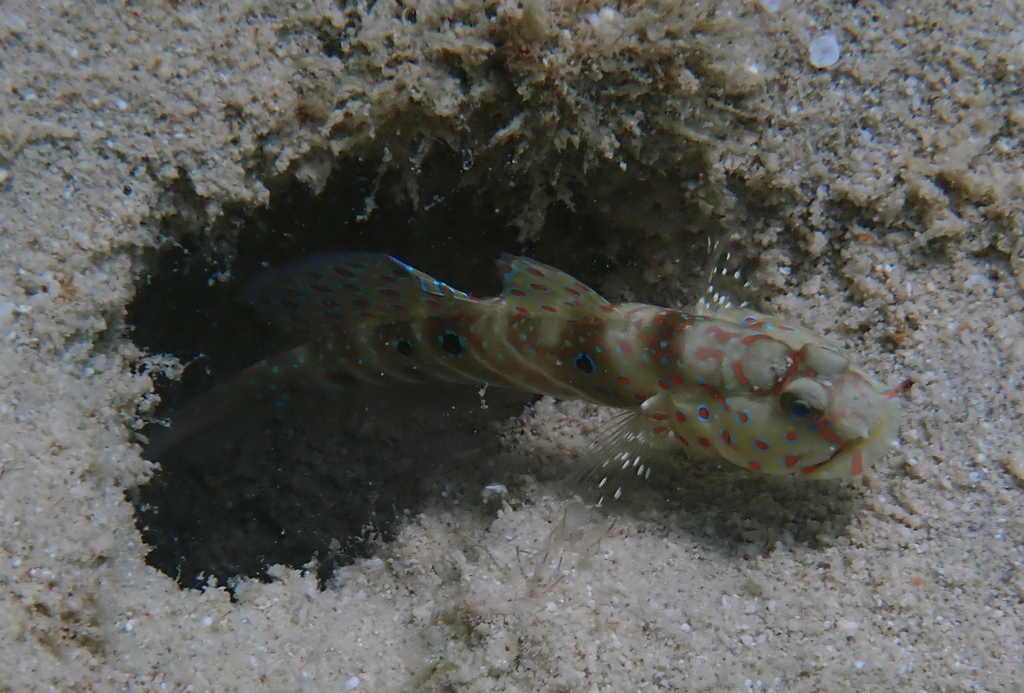
(c) Jan Ebr & Ivana Ebrová, some rights reserved (CC BY) · CC BY · iNaturalist 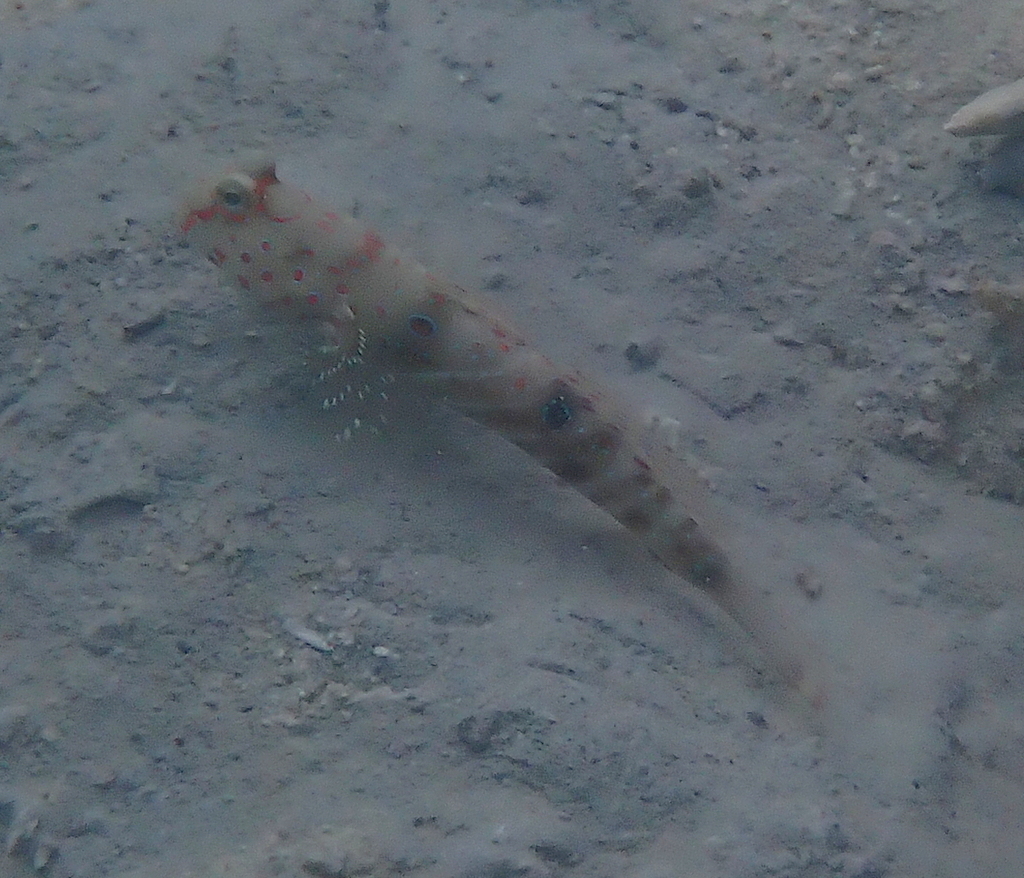
(c) Jan Ebr & Ivana Ebrová, some rights reserved (CC BY) · CC BY · iNaturalist 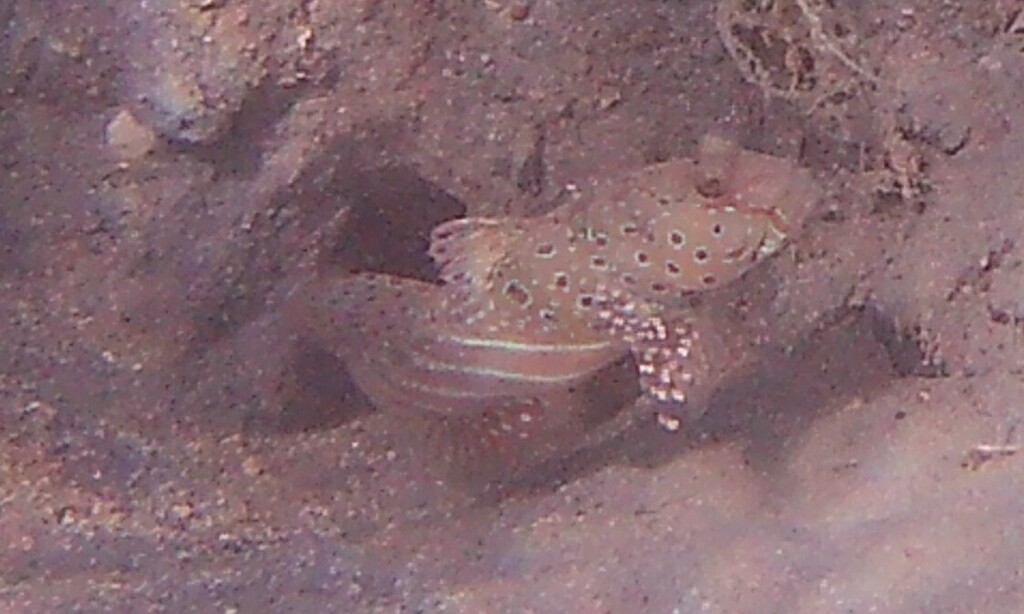
no rights reserved · CC0 1.0 · iNaturalist 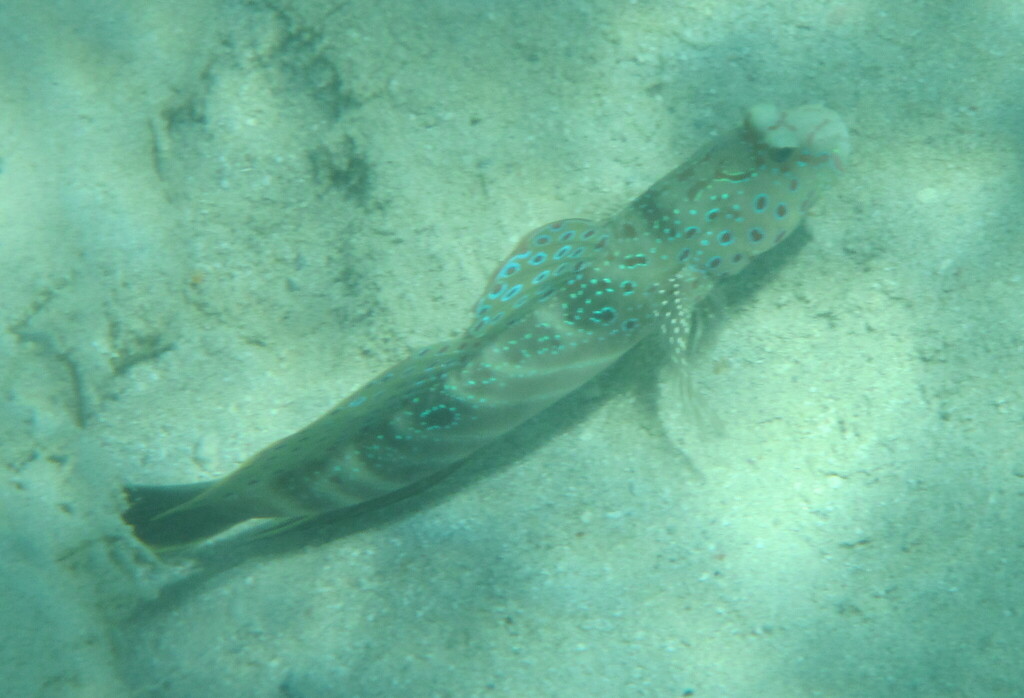
(c) Jono, some rights reserved (CC BY) · CC BY · iNaturalist 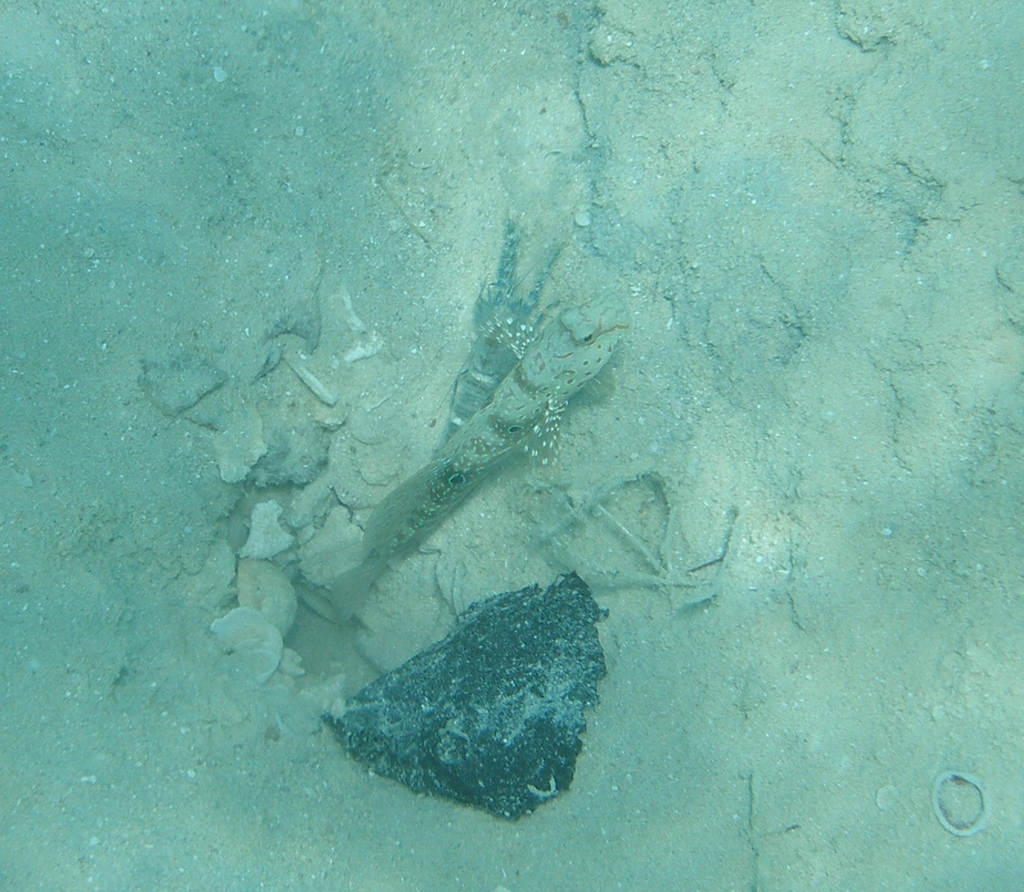
(c) Анна Митрошенкова, some rights reserved (CC BY) · CC BY · iNaturalist 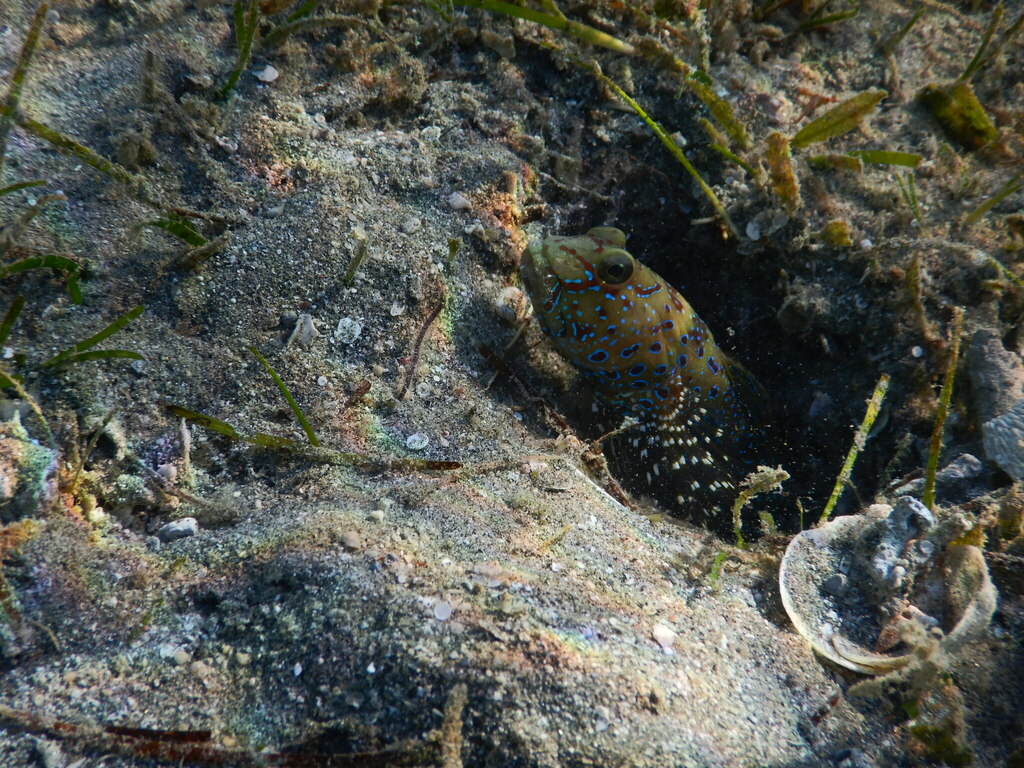
no rights reserved · CC0 1.0 · iNaturalist
Names and classification
- English
- Blue-and-red-spotted goby, blue-and-red-spotted goby, Harlequin Prawn-goby
Other scientific names: Gobius caeruleopunctatus, Gobius pavoninus
Similar species
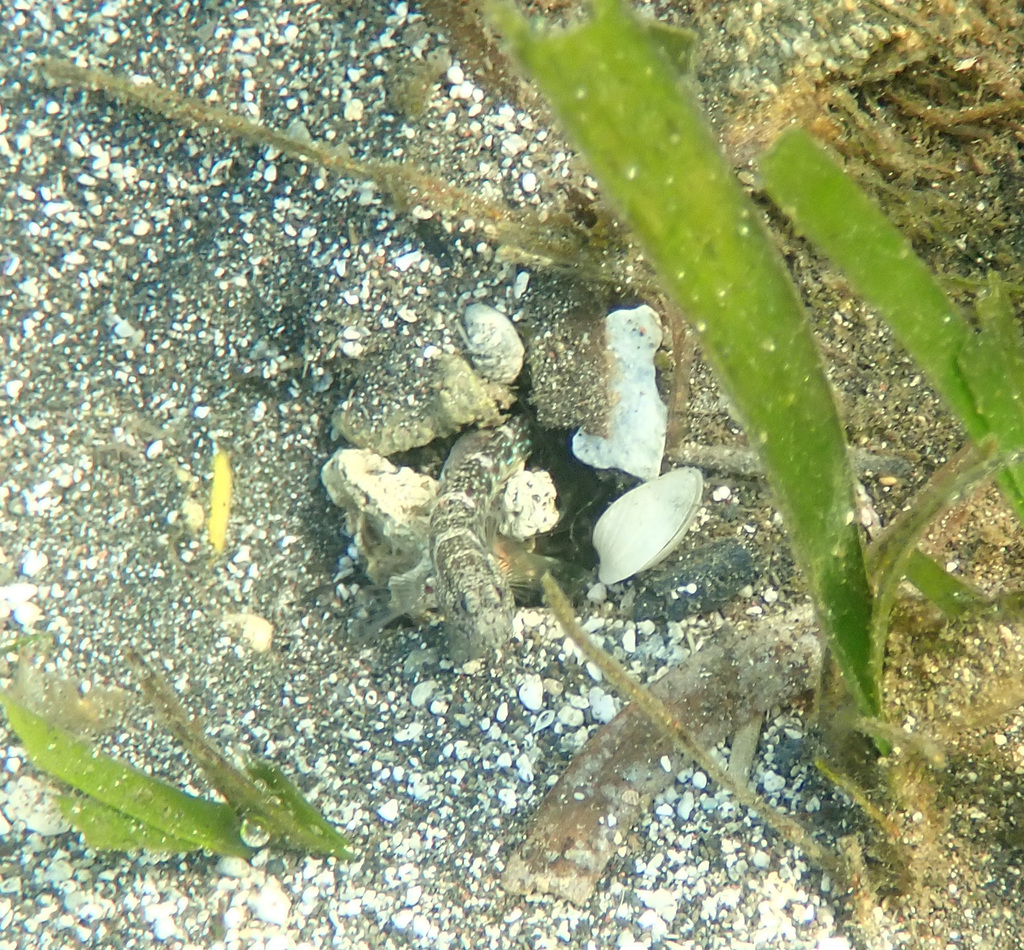 Blue-speckled Prawn-goby
Cryptocentrus caeruleomaculatus
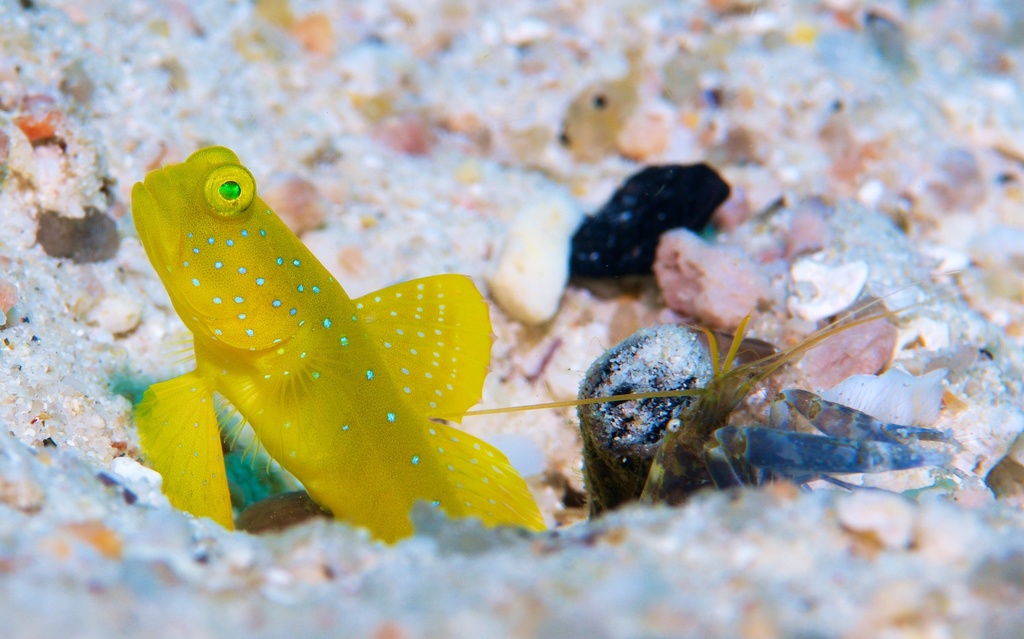 Banded Prawn Goby
Cryptocentrus cinctus
 Barred Prawn-goby
Cryptocentrus fasciatus
 Black-nape Shrimp-goby
Cryptocentrus inexplicatus
 Leptocephalus Prawn-goby
Cryptocentrus leptocephalus
 Saddled Prawn-goby
Cryptocentrus leucostictus
Sources and credits
Names and taxonomy: WoRMS (CC BY 4.0) and the GBIF Backbone (CC BY 4.0). Photos: iNaturalist observers, each under the licence shown (CC0, CC BY or CC BY-SA).
- Depth, temperature, months and maps: records from OBIS and GBIF under CC0 or CC BY.
- Descriptions: Wikipedia, licensed CC BY-SA, each linked to its article.
- Conservation status as published by GBIF (IUCN Red List).
- 59 open-data records from 2011 to 2013.
- Species data updated November 1, 2026.
Log what you see on your next dive
The free DiveHive diver app keeps your logbook with every sighting and shows what lives at the site you dive next.