
smallscaled flatfish
Cynoglossus abbreviatus
- Usual depth5–85 m
- Water temperature14–29 °C
- Best monthsMarch and May
- How commonRare
About this species
Cynoglossus abbreviatus, commonly known as the three-lined tongue sole, is a species of tonguefish. It is indigenous to the coast of the South China Sea, commonly found in shallow muddy or sandy waters along the coast of China, Taiwan, Korea and Japan.
Text from the Wikipedia article “Cynoglossus abbreviatus”, licensed CC BY-SA 4.0. Read the article
Where and when
Where it has been recorded
Worldwide
Loading the map
Best months
Worldwide (open data)
- January: 0 records
- February: 0 records
- March: 2 records
- April: 0 records
- May: 2 records
- June: 0 records
- July: 1 records
- August: 1 records
- September: 1 records
- October: 1 records
- November: 1 records
- December: 0 records
Depth and water temperature
Depth
Mostly recorded at 5–85 m · Deepest record: 85 m
Water temperature
Recorded in surface water of 14–29 °C
Names and classification
- English
- smallscaled flatfish, Three-lined Tongue Sole, tonguesole
Names in 3 more languages
- Japanese
- Korai-aka-shita-birame, Koraiakashitabirame, Kourai-aka-shita-birame, コウライアカシタビラメ
- Korean
- Yong- seo-dae
- Simplified Chinese
- 扁魚, 比目魚, 牛舌, 皇帝魚, 短吻三線舌鰨, 短舌鰨, 龍舌
Other scientific names: Areliscus abbreviatus, Plagusia abbreviata, Trulla abbreviata
Similar species
- Zanzibar tonguesole
Cynoglossus zanzibarensis
- Spotfin Tongue Sole
Cynoglossus maculipinnis
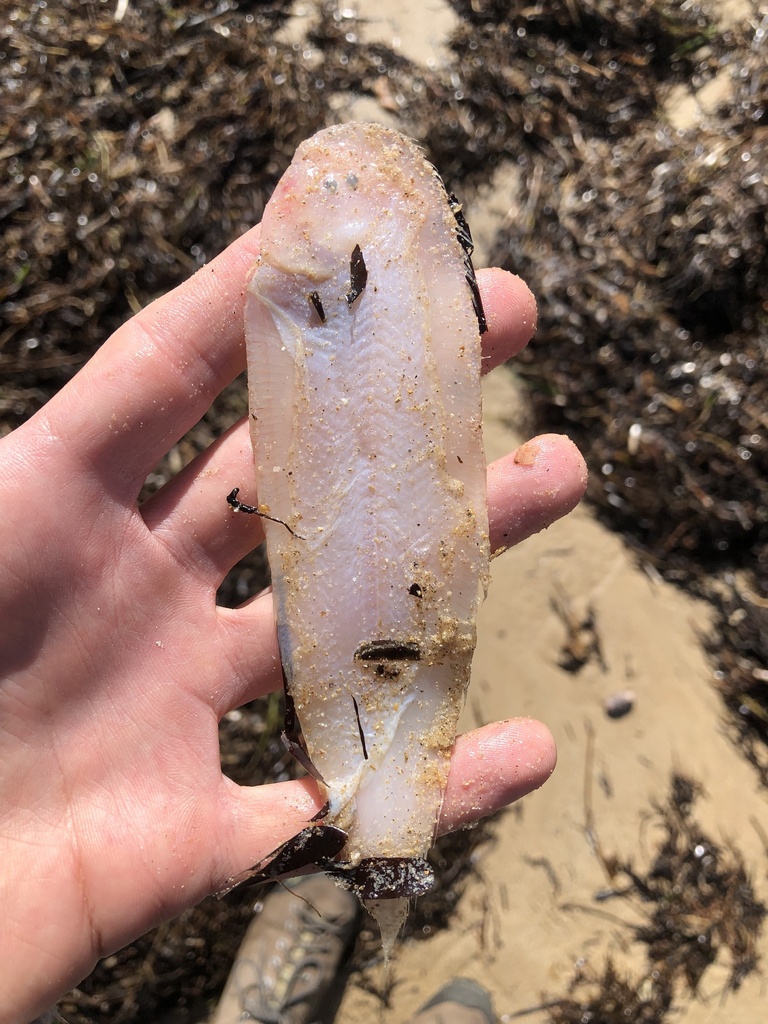 Broadhurst's Tongue-sole
Cynoglossus broadhursti
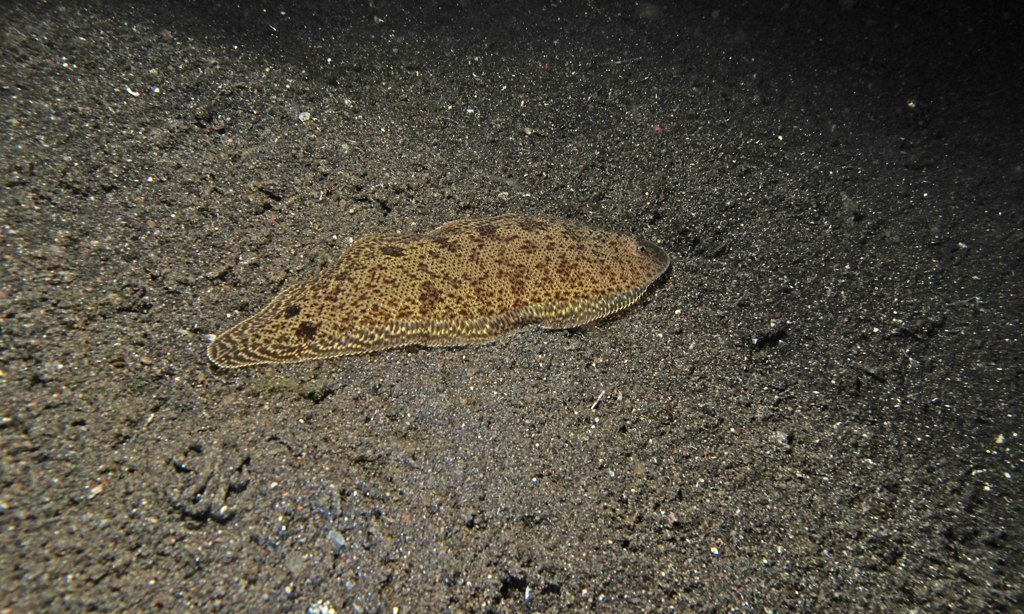 McCulloch's Tongue-sole
Cynoglossus maccullochi
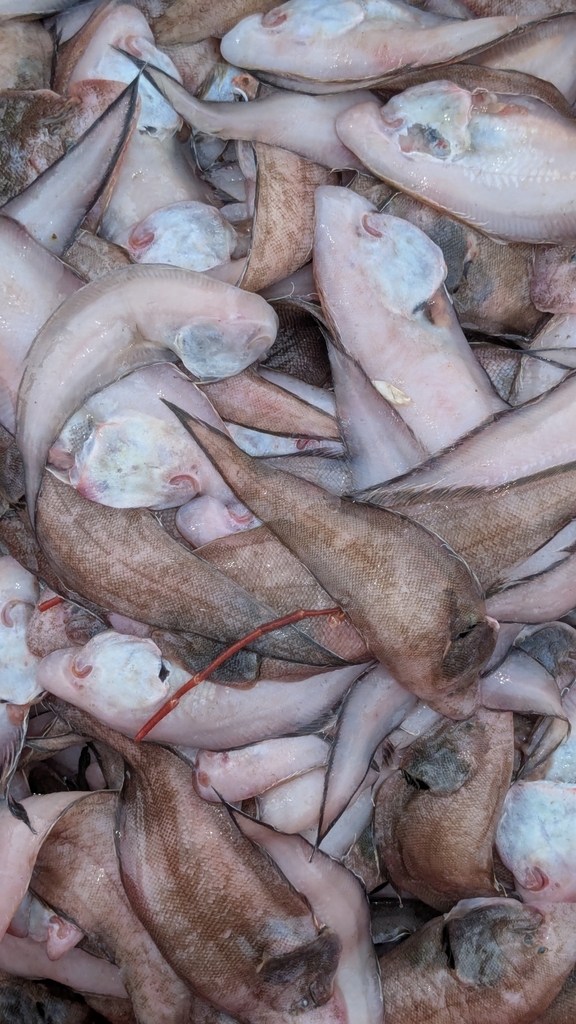 Malabar Sole
Cynoglossus macrostomus
 Speckled Tonguesole
Cynoglossus puncticeps
Sources and credits
Names and taxonomy: WoRMS (CC BY 4.0) and the GBIF Backbone (CC BY 4.0). Photos: iNaturalist observers, each under the licence shown (CC0, CC BY or CC BY-SA).
- Depth, temperature, months and maps: records from OBIS and GBIF under CC0 or CC BY.
- Descriptions: Wikipedia, licensed CC BY-SA, each linked to its article.
- Conservation status as published by GBIF (IUCN Red List).
- 38 open-data records from 1929 to 2009.
- Species data updated November 2, 2026.
Log what you see on your next dive
The free DiveHive diver app keeps your logbook with every sighting and shows what lives at the site you dive next.