
brown tonguesole
Cynoglossus arel
- Usual depth8–41 m
- Water temperature24–30 °C
- Best monthsApril, September, and November
- How commonRare
About this species
Cynoglossus arel, commonly known as the largescale tonguesole, is a species of tonguefish. The eyed side of the fish is uniform brown, with a dark patch on the gill cover, and its blind side is white. They are harmless to humans and predominantly feed on bottom-living invertebrates.
Text from the Wikipedia article “Cynoglossus arel”, licensed CC BY-SA 4.0. Read the article
Where and when
Where it has been recorded
Worldwide
Loading the map
Best months
Worldwide (open data)
- January: 1 records
- February: 0 records
- March: 3 records
- April: 6 records
- May: 5 records
- June: 3 records
- July: 2 records
- August: 2 records
- September: 10 records
- October: 1 records
- November: 8 records
- December: 5 records
Depth and water temperature
Depth
Mostly recorded at 8–41 m · Deepest record: 635 m
Water temperature
Recorded in surface water of 24–30 °C
Names and classification
- English
- brown tonguesole, Largescale Tonguesole
Names in 5 more languages
- Spanish
- Lengua Escamuda
- French
- Langue à Grandes Écailles
- Japanese
- Tenjikuinunoshita, テンジクイヌノシタ
- Thai
- ปลายอดม่วงเกล็ดใหญ่
- Simplified Chinese
- 印度舌鰨, 大鱗舌鰨, 扁魚, 比目魚, 牛舌, 皇帝魚, 舌鰨, 龍舌
Other scientific names: Arelia kaupi, Cynoglossus macrolepidus, Pleuronectes arel
Similar species
- Zanzibar tonguesole
Cynoglossus zanzibarensis
- Spotfin Tongue Sole
Cynoglossus maculipinnis
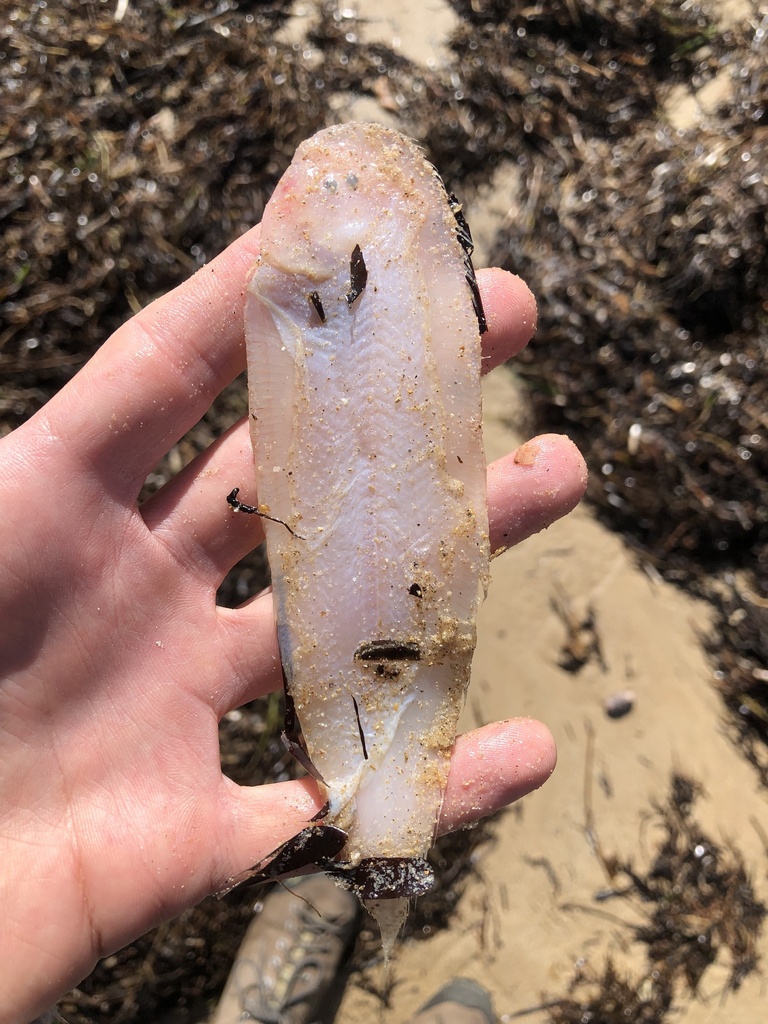 Broadhurst's Tongue-sole
Cynoglossus broadhursti
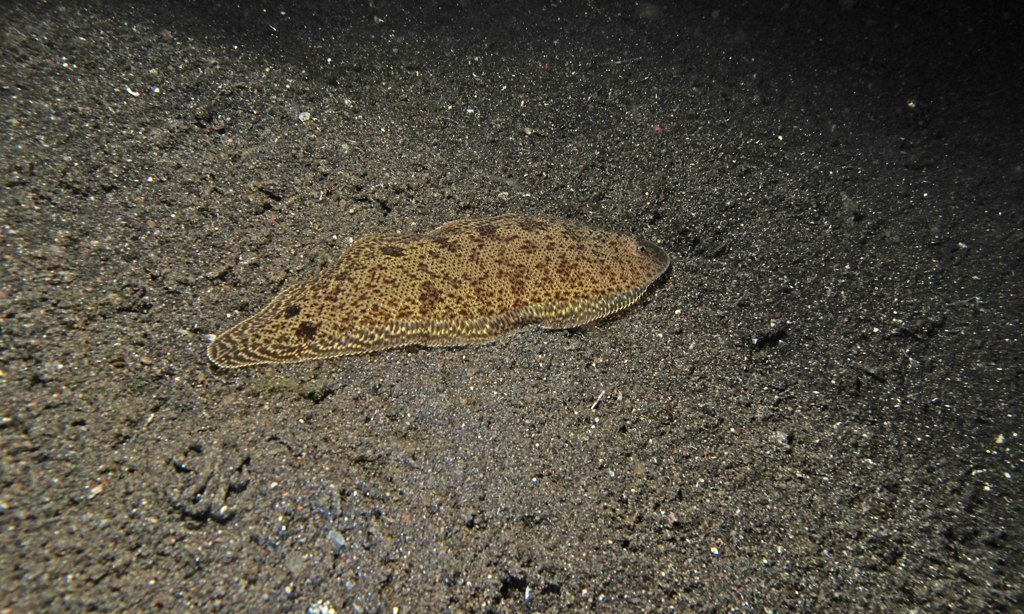 McCulloch's Tongue-sole
Cynoglossus maccullochi
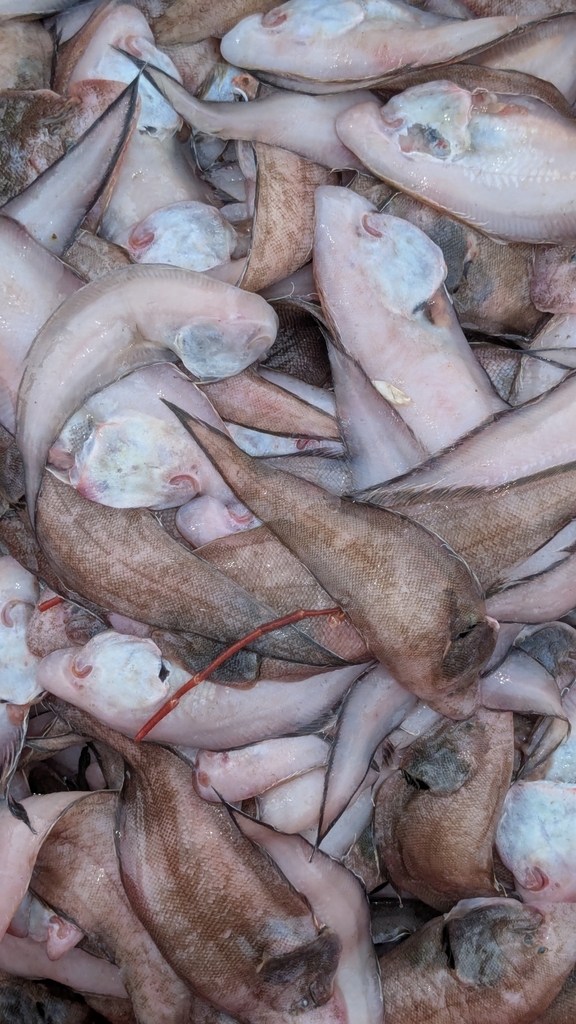 Malabar Sole
Cynoglossus macrostomus
 Speckled Tonguesole
Cynoglossus puncticeps
Sources and credits
Names and taxonomy: WoRMS (CC BY 4.0) and the GBIF Backbone (CC BY 4.0). Photos: iNaturalist observers, each under the licence shown (CC0, CC BY or CC BY-SA).
- Depth, temperature, months and maps: records from OBIS and GBIF under CC0 or CC BY.
- Descriptions: Wikipedia, licensed CC BY-SA, each linked to its article.
- Conservation status as published by GBIF (IUCN Red List).
- 183 open-data records from 1801 to 2018.
- Species data updated November 2, 2026.
Log what you see on your next dive
The free DiveHive diver app keeps your logbook with every sighting and shows what lives at the site you dive next.