
Roughscale tonguesole
Cynoglossus lida
- Usual depth5–35 m
- Water temperature16–30 °C
- Best monthsJanuary, August, and October
- How commonRare
About this species
Cynoglossus is a genus of fish in the family Cynoglossidae. Most species are indigenous to the Indo-Pacific region, but there are also a few in warmer parts of the East Atlantic. They are commonly found in shallow waters on a muddy or sandy bottom, including estuaries and a few species are restricted to fresh water. One species Cynoglossus sinusarabici has invaded the Mediterranean Sea through the Suez Canal from the Red Sea, a process known as Lessepsian or Erythrean migration.
Text from the Wikipedia article “Cynoglossus”, licensed CC BY-SA 4.0. Read the article
Where and when
Where it has been recorded
Worldwide
Loading the map
Best months
Worldwide (open data)
- January: 4 records
- February: 3 records
- March: 2 records
- April: 1 records
- May: 2 records
- June: 0 records
- July: 2 records
- August: 5 records
- September: 3 records
- October: 6 records
- November: 0 records
- December: 0 records
Depth and water temperature
Depth
Mostly recorded at 5–35 m · Deepest record: 36 m
Water temperature
Recorded in surface water of 16–30 °C
Names and classification
- English
- Roughscale tonguesole, roughscale tonguesole, shoulderspot tonguesole
Names in 2 more languages
- Thai
- ปลายอดม่วงเกล็ดหยาบ
- Simplified Chinese
- 利達舌鰨, 南洋舌鰨, 扁魚, 比目魚, 牛舌, 皇帝魚, 龍舌
Other scientific names: Arelia lida, Arelia polytaenia, Cynoglossus intermedius, Cynoglossus os, Cynoglossus polytaenia, Plagusia lida, Plagusia polytaenia
Similar species
- Zanzibar tonguesole
Cynoglossus zanzibarensis
- Spotfin Tongue Sole
Cynoglossus maculipinnis
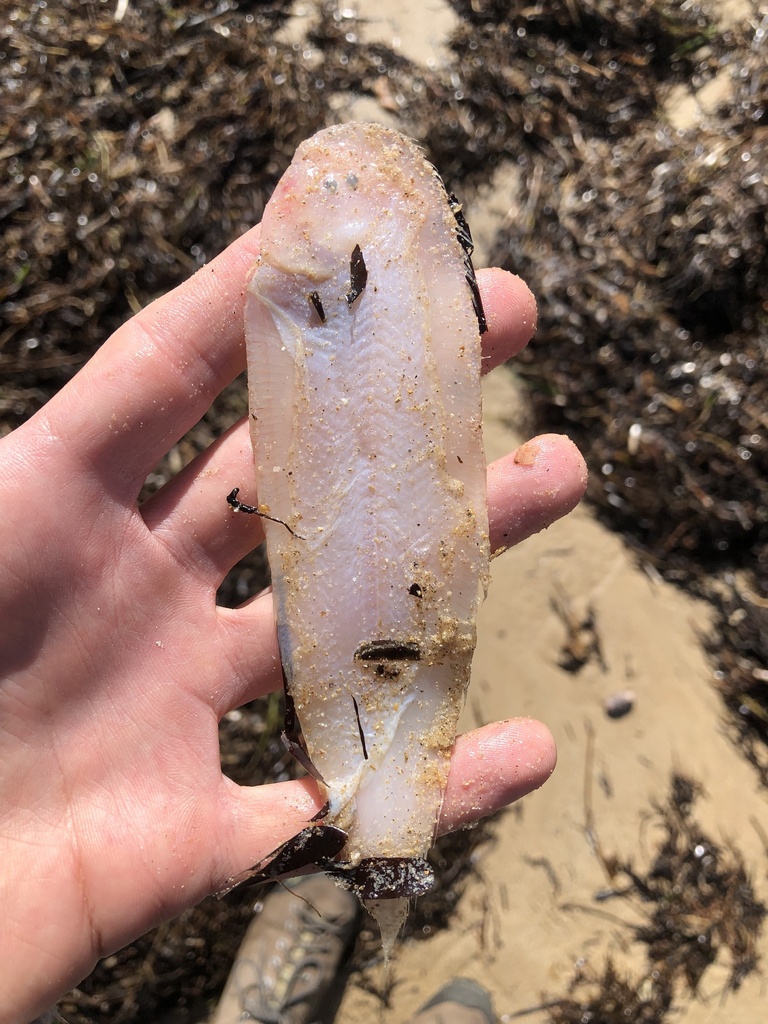 Broadhurst's Tongue-sole
Cynoglossus broadhursti
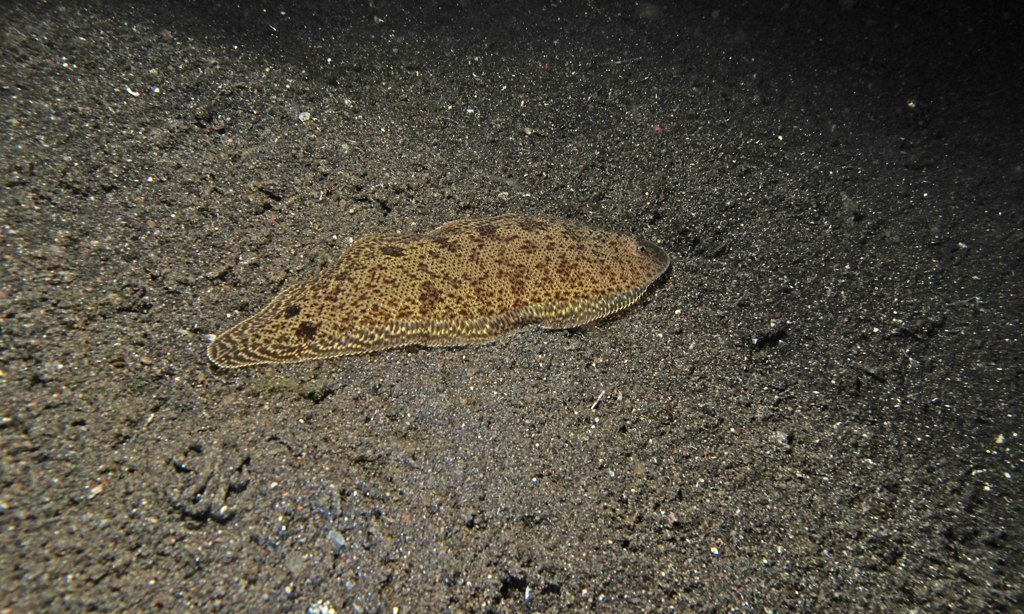 McCulloch's Tongue-sole
Cynoglossus maccullochi
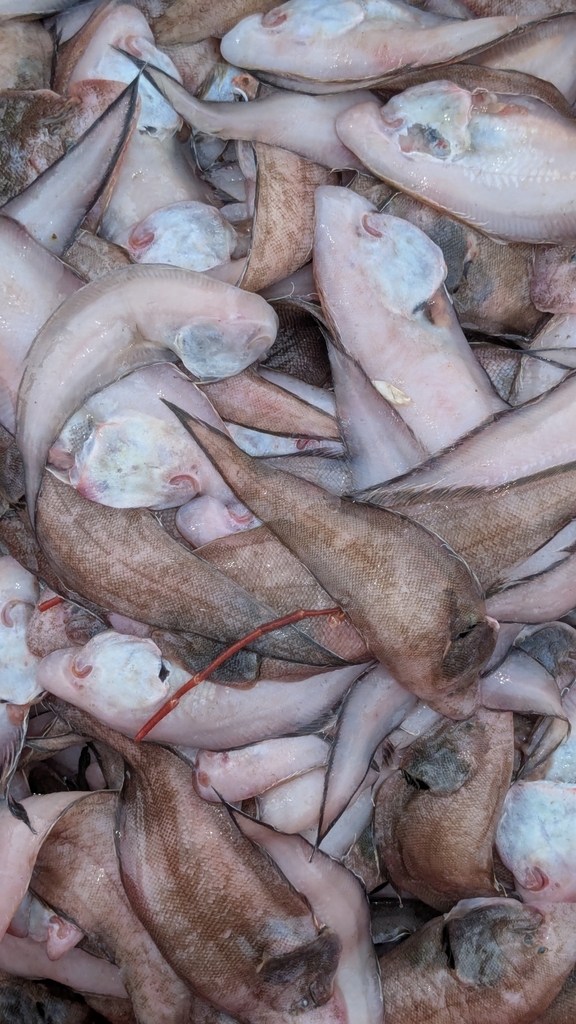 Malabar Sole
Cynoglossus macrostomus
 Speckled Tonguesole
Cynoglossus puncticeps
Sources and credits
Names and taxonomy: WoRMS (CC BY 4.0) and the GBIF Backbone (CC BY 4.0). Photos: iNaturalist observers, each under the licence shown (CC0, CC BY or CC BY-SA).
- Depth, temperature, months and maps: records from OBIS and GBIF under CC0 or CC BY.
- Descriptions: Wikipedia, licensed CC BY-SA, each linked to its article.
- Conservation status as published by GBIF (IUCN Red List).
- 396 open-data records from 1851 to 2012.
- Species data updated November 2, 2026.
Log what you see on your next dive
The free DiveHive diver app keeps your logbook with every sighting and shows what lives at the site you dive next.