
DiscoverSpeciesSharks and rays
Common stingray
Dasyatis pastinaca
- Usual depth14–50 m
- Water temperature8–26 °C
- Best monthsJuly, August, and September
- How commonOccasional
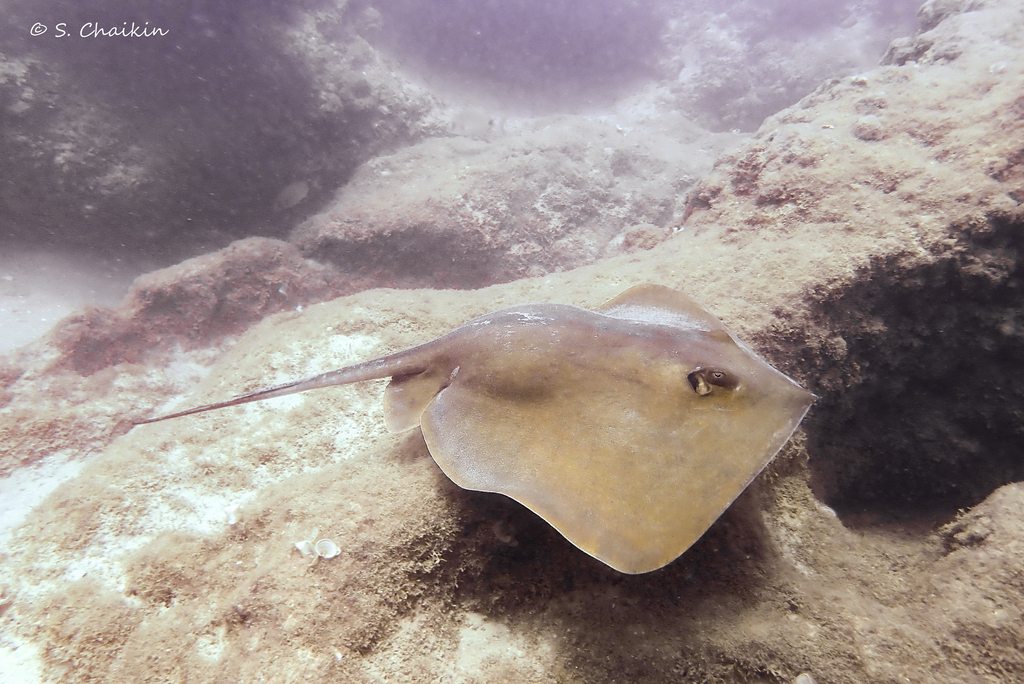
Photo credit: (c) shahar chaikin, some rights reserved (CC BY) · CC BY · iNaturalist
About this species
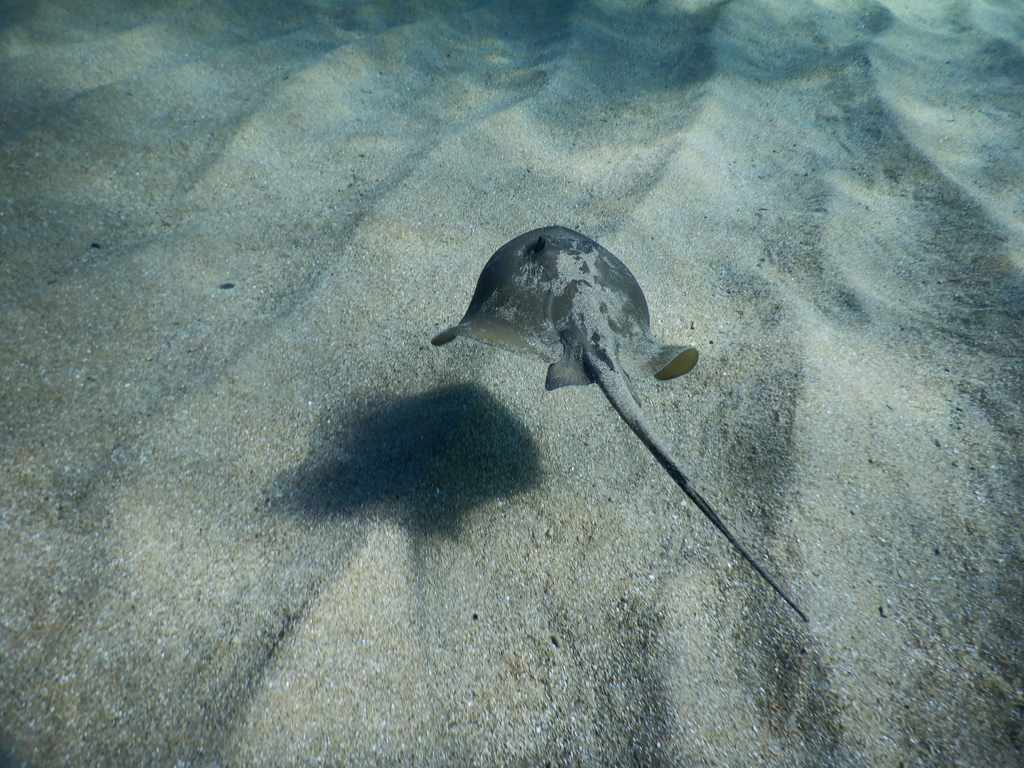
The common stingray is a species of stingray in the family Dasyatidae, found in the northeastern Atlantic Ocean and the Mediterranean and Black Seas. It typically inhabits sandy or muddy habitats in coastal waters shallower than 60 m (200 ft), often burying itself in sediment. Usually measuring 45 cm (18 in) across, the common stingray has a diamond-shaped pectoral fin disc slightly wider than long, and a whip-like tail with upper and lower fin folds. It can be identified by its plain coloration and mostly smooth skin, except for a row of tubercles along the midline of the back in the largest individuals.
Text from the Wikipedia article “Common stingray”, licensed CC BY-SA 4.0. Read the article
Where and when
Where it has been recorded
Worldwide
Loading the map
Best months
Worldwide (open data)
- January: 12 records
- February: 11 records
- March: 42 records
- April: 45 records
- May: 75 records
- June: 104 records
- July: 209 records
- August: 244 records
- September: 154 records
- October: 141 records
- November: 114 records
- December: 71 records
Depth and water temperature
Depth
Mostly recorded at 14–50 m · Deepest record: 140 m
Water temperature
Recorded in surface water of 8–26 °C
Photos
(c) Chris Taklis, some rights reserved (CC BY) · CC BY · iNaturalist 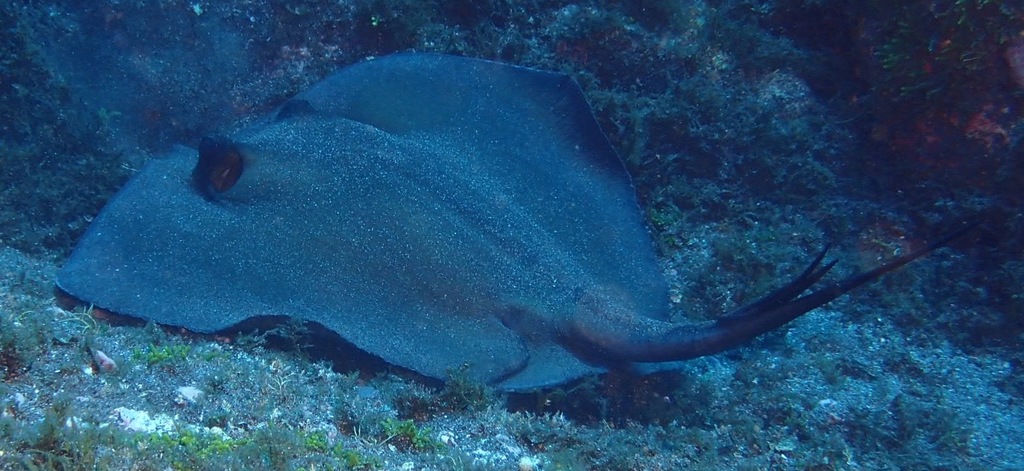
(c) jeyre, some rights reserved (CC BY) · CC BY · iNaturalist 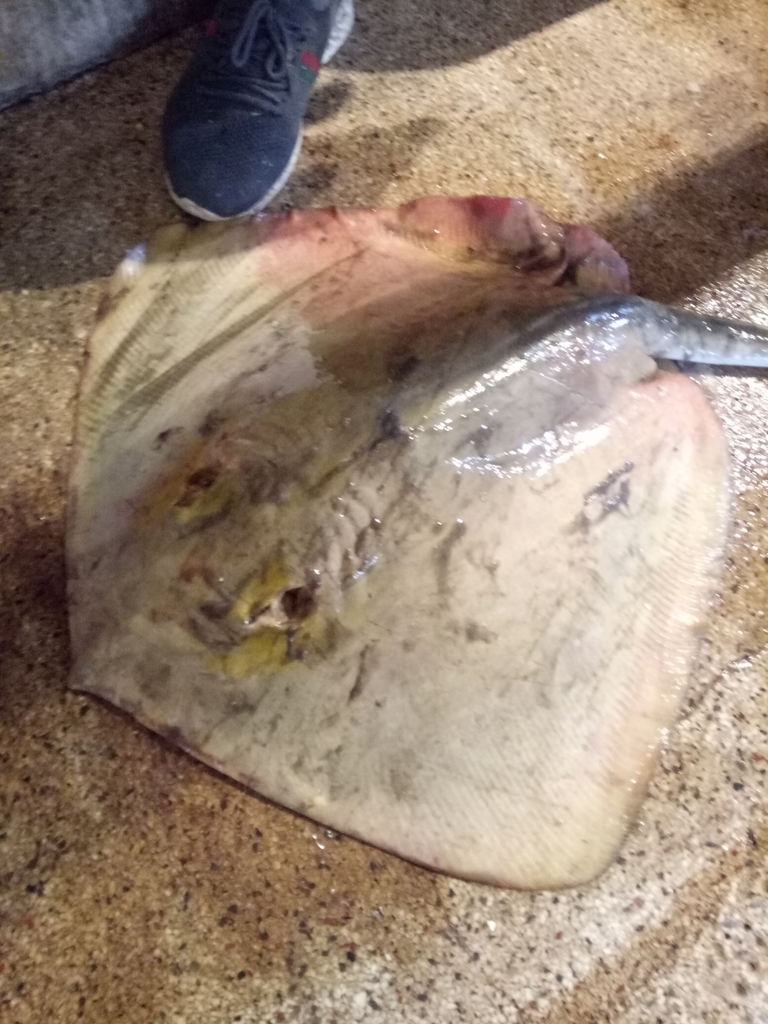
(c) Karim Haddad, some rights reserved (CC BY) · CC BY · iNaturalist 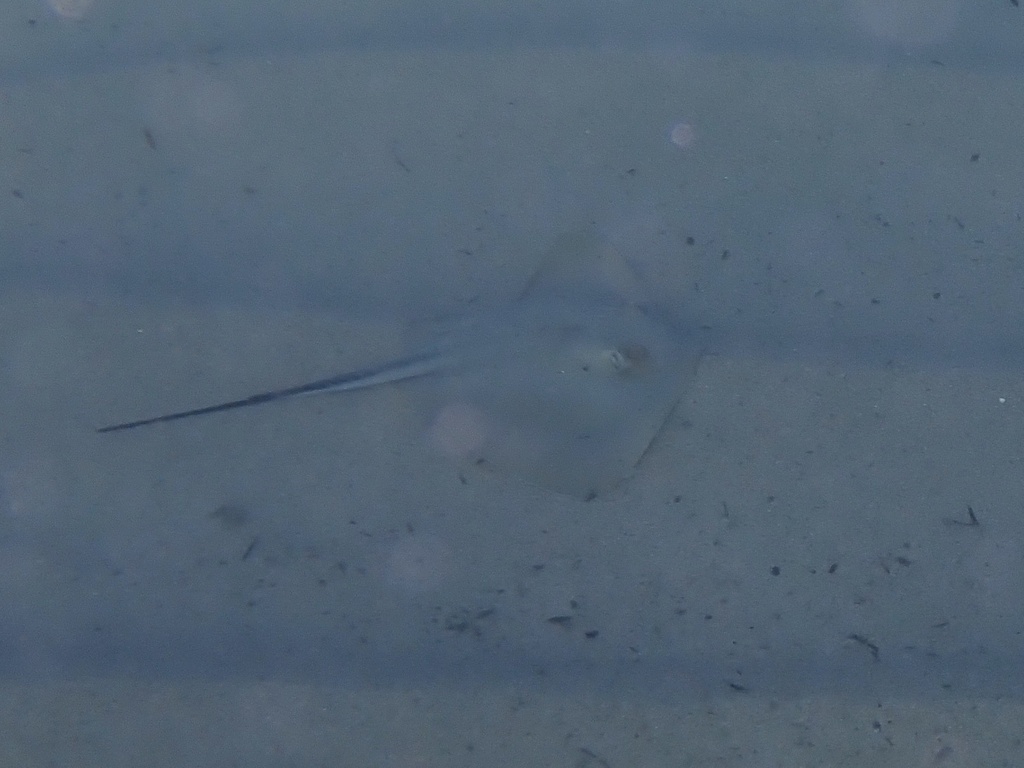
(c) Adi Peter, some rights reserved (CC BY) · CC BY · iNaturalist 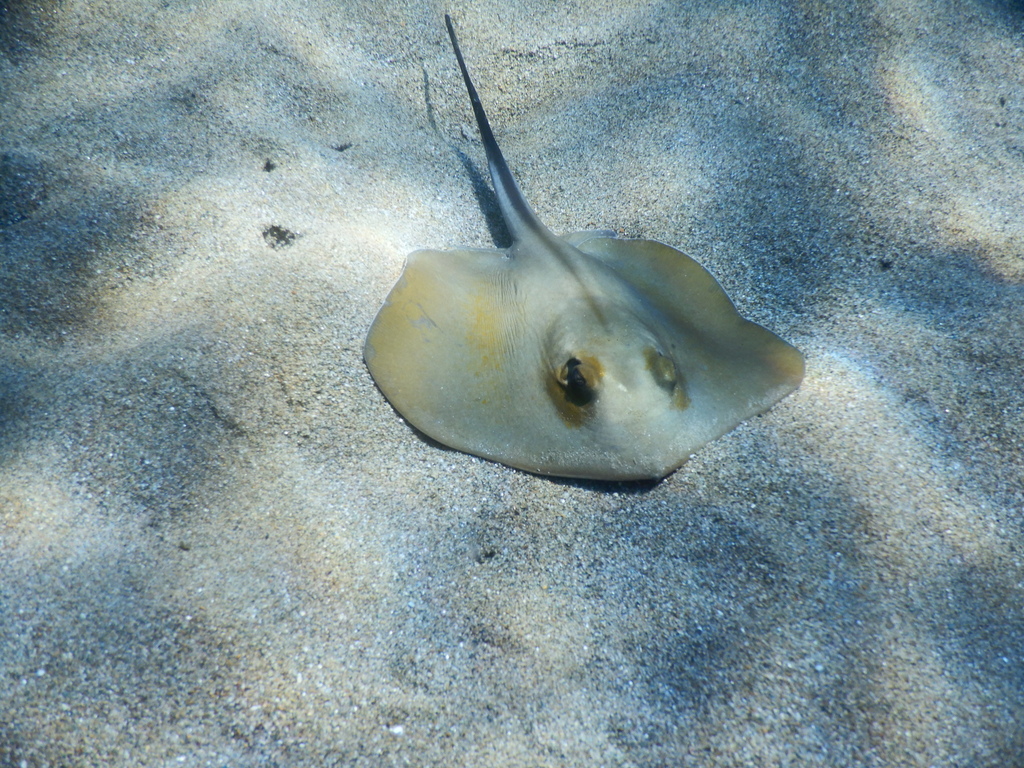
(c) Chris Taklis, some rights reserved (CC BY) · CC BY · iNaturalist 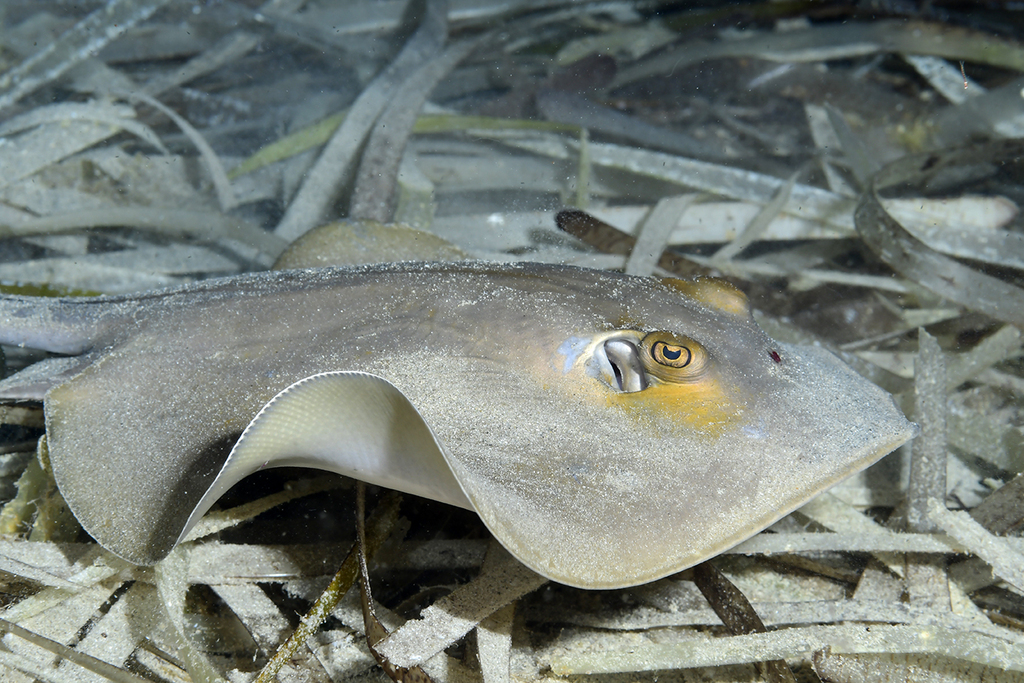
(c) Xavier Mas, some rights reserved (CC BY) · CC BY · iNaturalist 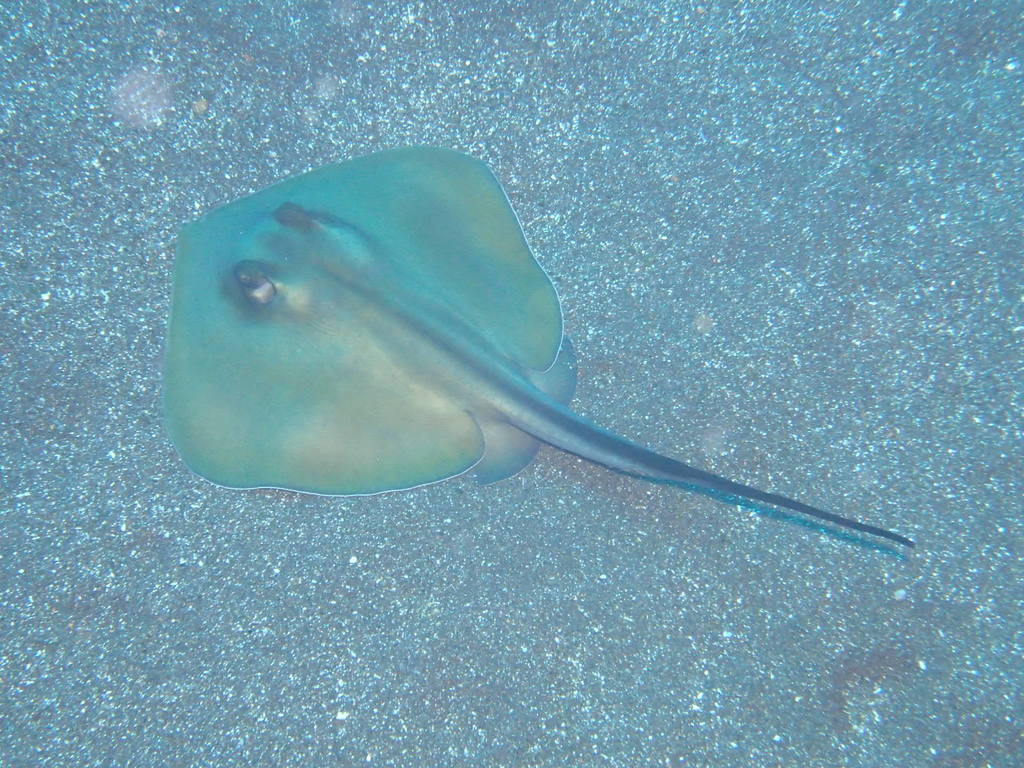
(c) jeyre, some rights reserved (CC BY) · CC BY · iNaturalist
Names and classification
- English
- Common stingray, Stingray, blue stingray, common stingray, Common stingray, Stingray, sting ray, stingray
Names in 3 more languages
- German
- brauner Stechrochen, gemeiner Stechrochen, gewöhnlicher Stechrochen, Gewöhnlicher Stechrochen, Peitschenrochen, Pfeilschwanz, Stechroche, Stechrochen
- Spanish
- Bantenaga, Chucho, chuchos, Escorsana, Escursana, Escurso, Ferrasa, milano, pastinaca, Pastinaca, Pastinaga, Pombo, raya látigo, Raya látigo común, Rayalátigo común, Rayavaca, Romaguera, Serreta, Totina, Vela latina
- French
- Bastanago, Bougnette, Coucou, Fouleux, Pastenago, pastenague, Pastenague, Pastenague commun, pastenague commune, Pastenague commune, Pastenargo, Raie-pastenague, Tare ronde, Terre, Tonare, Vastanaga
Other scientific names: Dasyatis pastinacus, Dasyatis pestinaca, Dasyatis ujo, Dasybatus pastinaca, Pastinaca laevis, Pastinaca olivacea, Raja pastinaca, Trygon pastinaca, Trygon vulgaris
Similar species
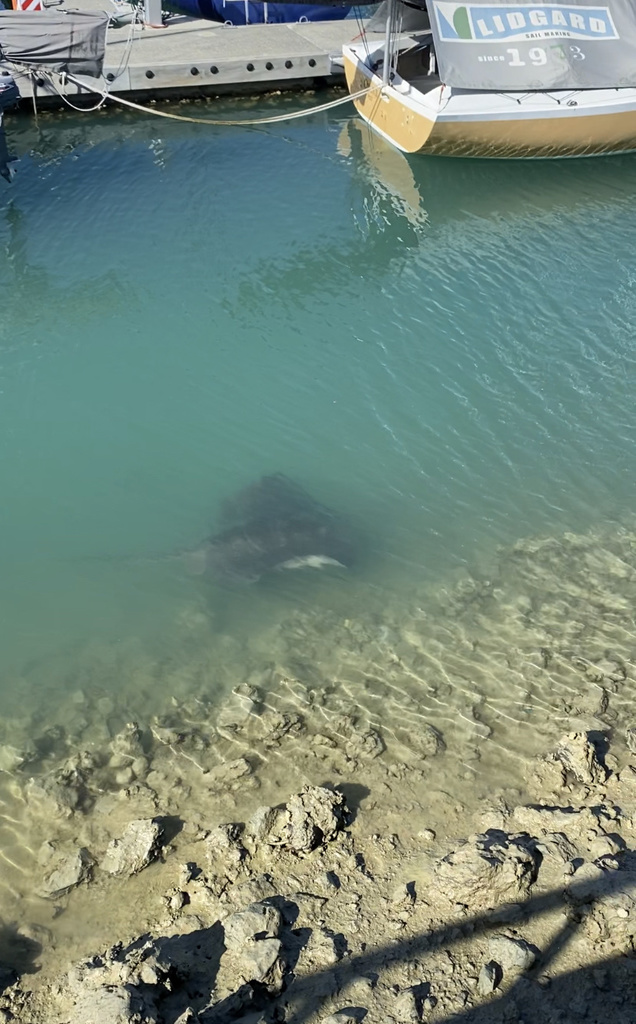 Bathytoshia matsubarai
Bathytoshia brevicaudata
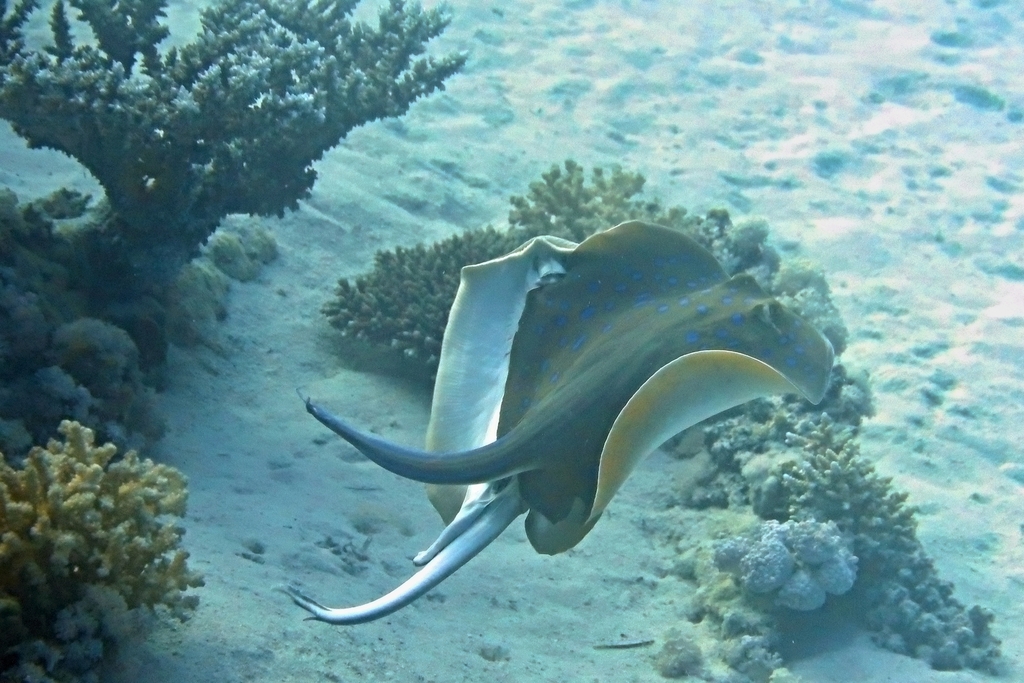 Reef stingray
Taeniura lymma
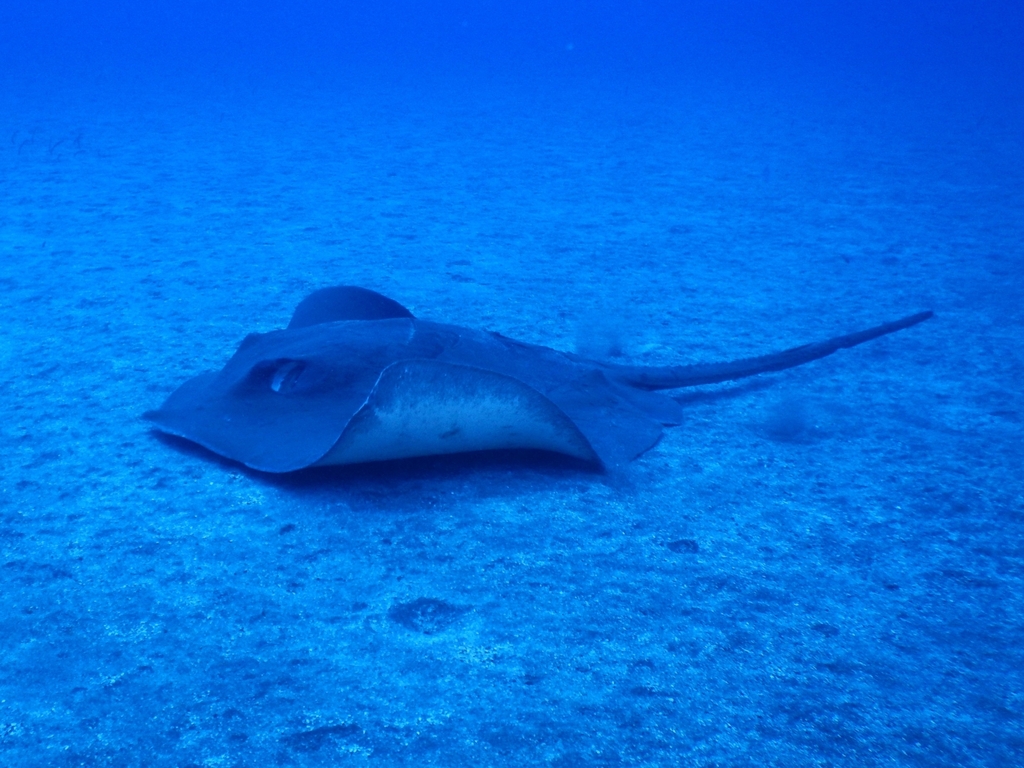 Black Skate
Bathytoshia lata
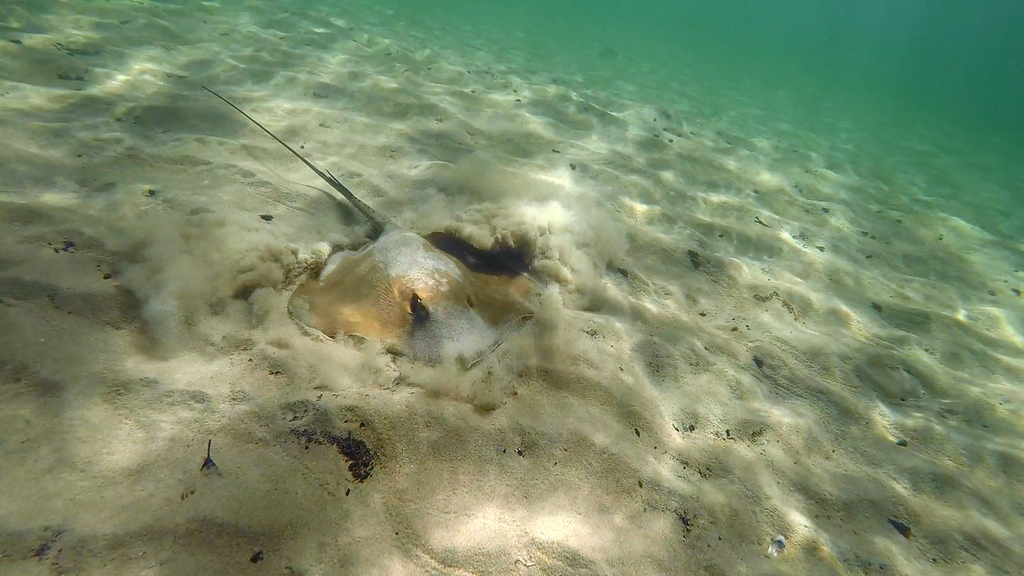 Brown Stingray
Hemitrygon fluviorum
 Australian Whipray
Himantura australis
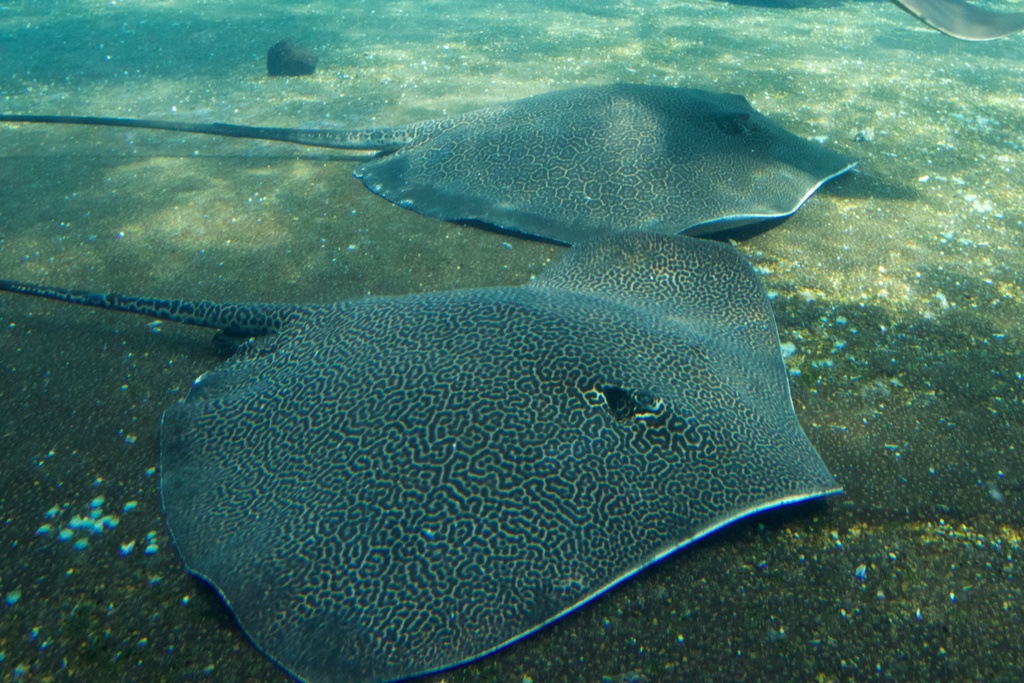 Honeycomb stingray
Himantura uarnak
Sources and credits
Names and taxonomy: WoRMS (CC BY 4.0) and the GBIF Backbone (CC BY 4.0). Photos: iNaturalist observers, each under the licence shown (CC0, CC BY or CC BY-SA).
- Depth, temperature, months and maps: records from OBIS and GBIF under CC0 or CC BY.
- Descriptions: Wikipedia, licensed CC BY-SA, each linked to its article.
- Conservation status as published by GBIF (IUCN Red List).
- 1,414 open-data records from 1758 to 2024.
- Species data updated November 2, 2026.
Log what you see on your next dive
The free DiveHive diver app keeps your logbook with every sighting and shows what lives at the site you dive next.